/pic6701539.jpg)
Nightmare Cathedral prominently features the haunting artwork by the late polish surrealist painter and sculptor Zdzisław Beksiński.
Nightmare Cathedral is a strategy game for 1–4 players, where victory is gained by controlling the map, managing resources, following objectives and selecting when to engage in fast and furious conflicts to gain strategic advantage. Over the course of the game, you will perform actions — and follow the actions of other players — to produce units, build fortifications, maneuver around the map, and spend your followers to climb the ritual track. Throughout the game, a haunting Cathedral will grow in the center of the board, and once it is completed, you will face — and gain the ability to control! — the physical manifestations of nightmares that are released upon the world. Nightmare Cathedral is a game of both strategy and tactics, where finding clever ways to follow your objectives and combining different strategies is the ultimate route to victory.
Each player has a set of Action cards. These Action cards display various effects that may be activated either on that player's own turn, or as a reaction when other players perform that action. When you are the Active Player, you will move your Dreamer to a Day space that is not adjacent to its current Night space and perform the Action associated with that Day space, as outlined on your own Action card.
Inactive Players may react to your chosen Day Action.
The game is divided into two stages. During the first stage, the titular Nightmare Cathedral is built, piece by piece, as the game progresses. Once the final Cathedral piece is placed on the main board, the Nightmare Cathedral is finished, at which point the game transitions to the second stage. From this moment on, Nightmares, powerful beings channeling the presence of the completed Cathedral, enter the game board, Devouring Units in their path. However, as a player, you may also take actions to control a Nightmare, Commanding it to do your bidding.
The game end is triggered in one of the following ways:
The Time marker reaches a certain space on the Time track.
A single player reaches the final step of the Ritual track.
A certain number of Units have been devoured.

Nightmare Cathedral Expresso

Nightmare Cathedral - Learn While Playing!

Nightmare Cathedral Playthrough
Mechanics (from transcript analysis)
Video topics + discussion points
Quotes (from this video)
- i am an accidental videographer
- the video output has been a lot less
- engine building is not a mechanism
- i've spent a lot of time zooming around with the camera
- the video versions are getting more views than the podcast downloads
References (from this video)

- Unique themes
- Intriguing artwork
- Reactive card play is interesting
- Witchcraft
Mechanics (from transcript analysis)
- Action Card Play — Players perform actions and can follow other players' actions.
- Area Control
- Building Fortifications
- Combat — Fast and furious conflicts to gain strategic advantage.
- map movement
- Objective Following
- Resource Management
- Ritual track progression — Climbing a ritual track by sending followers.
- Unit Production
Video topics + discussion points
Quotes (from this video)
- this is on the radar
- i have to admit that crescent moon is a game that snuck up on me
- there's a lot more bulk under the hood of this game than i first thought
- soldiers in postman's uniforms it really made me wonder about the subject of this game
- the amount of courage against such incredible odds is uh it it's almost it's overwhelming to consider
- Far Northwood on our list is Far Northwood that's a tongue twister
- Thematically you're trying to convince eight animal rulers to unite for the good of the forest kingdom
- The puzzle and strategy are tricky with just enough luck involved to keep things interesting
- it's really fun when your opponent tries to move past your giant rug island they get a bad roll they land on your carpet and now they have to pay you lots of money
References (from this video)

- Striking art
- Strategic gameplay
- Unique nightmare mechanic
- Satisfying progression even with negative events
- Card upgrading for better actions
- Theme is not for everyone
- Dark
- Cthulhu War
Mechanics (from transcript analysis)
- Area Majority — This is an area majority game with some very cool things like a nightmare that comes out.
- Card Play — Players will use action cards to take actions and can upgrade their cards to make even better actions.
- track movement — Players want to move up on the ritual track.
- Worker Placement — Using followers to be taken off the board to do actions like moving up the ritual track.
Video topics + discussion points
Quotes (from this video)
- I have 10 games that I previewed for kickstarters that I'm super excited for that will hopefully be coming out in 2023
- Darwin's Journey by Thunder Griff games is my number one game that I previewed in 2022 that is coming out in 2023
- Maple Valley by Kids Love Board Gaming is my number two Kickstarter game that I previewed in 2022.
- Nightmare Cathedral by Board and Dice
- Life of Amazonia by Bad Comet on my list at number four
- Bloodstones by Wallace designs
- Ryozan by Tabula Games
- Vindel to Viking by ION Game Designs
- Dark Quarter by Lucky Duck Games
- Raw which is coming out by 25th Century games is a new edition of the game.
- It's one of the best bidding games out there period.
- Donut Shop also by 25th Century games
- Copan Dying City by Holy Grail Games
- It's my surprise number 10 game to make this list
- Pampero by Eighth Games is a fun heavier Euro game about finding ways to increase wind energy
- Leaf by Weird City Games has a fun little tile placement Leaf game with some magical geometry that they used in their design
References (from this video)
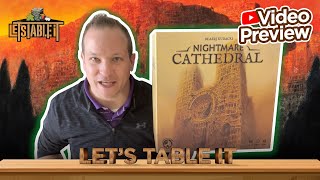
- Strong thematic integration with vivid art and minis
- Deep strategic depth combining area control, resource management, and card-driven actions
- Nightmares and devoured cathedral add variability and tension across games
- Clear core loop centered on dreamer placement and turn sequencing
- High complexity with many interacting parts and differing cards per player
- Rule explanations can be challenging to convey during teaching
- Potentially lengthy setup and decision-making time
- Control, ritual, and the intrusion of nightmares into a ritual-dominated world
- A gothic horror world centered around a haunted cathedral with dreamers and nightmares influencing a strategic map
- Thematic, unit-driven strategy with evolving threats and objective-based play
Mechanics (from transcript analysis)
- Conflict resolution — Conflicts are resolved with combat cards; forts, unit counts, and timing influence outcomes
- Conform and dissent reactions — Inactive players react to a chosen action by conforming or dissenting based on matching action cards
- Development cards — Players draw and play development cards to perform actions; cards can be upgraded to strengthen actions
- End-game trigger — Endgame can be triggered by cathedral completion or by a threshold of devoured nightmare units
- Fortify action / building forts — Players build forts, upgrading them, which influence area control and scoring; forts can protect territories
- Night space to day space dreamer placement — Players move their dreamer from a night space to an adjacent day space, determining their turn actions
- Nightmares and the devoured cathedral — After cathedral construction, nightmares enter and devour units; endgame scoring is driven by devoured units
- Ritual track — Movement along the ritual track grants endgame points and can unlock bonus actions; requires planning and sacrifices
- Shapers and Shadows — Shapers convert other units; Shadows are neutral and cannot control areas but influence conflicts
- Simultaneous Actions — Used to place more followers on the map, either where forts exist or at marked areas
- Summon action — Used to place more followers on the map, either where forts exist or at marked areas
- Upgrade cards — Upgrades attach to actions to provide stronger or additional effects over time
Video topics + discussion points
Quotes (from this video)
- this is a strategy and a tactical game for one to four players
- the game is very very strategic in that sense
- the art is from chiv bashinski from Poland
- this is definitely the game for you
- the game just surprises you because it's a totally strategic game that doesn't mean whoever controls the most of the map wins
- area control is just a small portion of the game
- this worker placement type mechanic with the action selection is really really good
- it takes the theme and holds true to it using Miniatures and art to show it off
References (from this video)
- amazing looking art and minis
- two nightmares to choose from at a time
- game differs each time
- layers of strategy not very apparent at the start of the game
- dreams vs nightmares
- land of dreams and nightmares
- Scythe
Mechanics (from transcript analysis)
- action selection — each turn players choose an action from five actions that can be upgraded
- Conflict resolution — resolve conflicts where multiple pawns are on a space; can involve nightmares
- dream and night spaces — dreamer moves along day and night spaces; action adjacency constraints create planning range
- dream cards scoring — dream cards give objectives that determine scoring and end-game points
- Engine Building — upgrading action cards to gain more powerful actions
- follower management — spawn, move, and fight with followers to fulfill dream objectives and advance the ritual track
- nightmare control — nightmares can be commanded to benefits; two chosen nightmares become available mid-game
- Ritual track — climbing ritual track grants bonuses and points; central cathedral marks midgame timing
- sacrifice and production — sacrifice followers to pay costs; produce followers or convert units to resources
Video topics + discussion points
Quotes (from this video)
- "the game plays one to four players with mechanics such as action selection engine building and follow"
- "there are many ways to score"
- "Would you dare to enter the horror taking control of your fate to rise up become the master of the nightmares"
References (from this video)
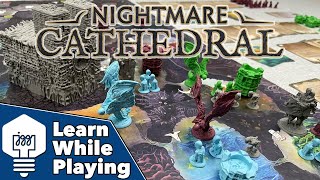
- Upgraded actions and deeper strategic options demonstrated through play
- Upgraded maneuver and other action upgrades can significantly alter tactics
- Nightmares provide powerful, flexible effects that can drive scoring
- dominating realms through dreams and nightmares
- nightmarish dreamscape
- tutorial with live gameplay demonstration
Mechanics (from transcript analysis)
- Action cards and upgrades — Every day action has an associated action card with sections for active players, conform, and dissent; cards can be upgraded to improve effects when performing actions or resolving conflicts.
- Cathedral and nightmares — Completing the cathedral triggers a second stage where nightmares enter the board and behave like shapers, enabling powerful moves and devouring mechanics.
- Conflicts — Conflicts involve selecting cards from hand, revealing a conflict card for shadows, and resolving using defense/attack icons; victories depend on domination of the zone.
- Domination of zones — Zones are dominated by the player with the most units; forts alter domination, and if a fort is present the holder dominates the zone regardless of other units.
- Dream cards and dream step — Players play dream cards with conditions to earn points; during the dream step, players may discard to draw back to two dream cards in hand.
- Dreamer movement — On each turn a player's dreamer is moved to a day action space that is not adjacent to the night action space, then the action is resolved and opponents may conform or dissent.
- End Game Bonuses — The game ends when the cathedral is fully built or when a specified devoured unit threshold is reached; final scoring includes ritual track positions, fort scoring, devoured units, upgrades, and dream cards.
- Endgame and Scoring — The game ends when the cathedral is fully built or when a specified devoured unit threshold is reached; final scoring includes ritual track positions, fort scoring, devoured units, upgrades, and dream cards.
- Forts and unit limits — Forts are placed on the board to establish zones of control and endgame scoring; unit limits restrict how many followers can be in a space, with special fort upgrades affecting limits.
- Limbo and devouring — Devoured followers go to limbo and may be used or recovered later; devouring is a key mechanic for scoring and ritual progression.
- Ritual track — Tokens are moved along a ritual track by spending followers; certain icons require spending followers from spaces with matching icons; upgrades and free bumps modify movement options.
Video topics + discussion points
Quotes (from this video)
- i'll be teaching you the rules of the game as it's being played
- this is an amazing card and certainly one we try to get played later on
- the nightmares do not exist because the cathedral has not yet been built
- the cathedral has just completed its construction
- when this piece is placed out that will be the moment that we take all of the stage two cards and shuffle those into the respective decks
- the player with the most points will be the winner
- there are four spaces for each one of the mark symbols
References (from this video)

- Strong thematic integration with euro-style mechanics that reinforce the nightmare theme
- Deep strategic planning with non-traditional area control and action-timing decisions
- Striking art and mood that reinforce the thematic experience
- High replayability through multiple nightmare types and dream card objectives
- Dynamic interaction thanks to day/night action selection and responsive reactions
- High complexity and a steep learning curve for new players
- Potentially long playtime, which may deter lighter gaming sessions
- Prototype balance and rule interpretation could shift in the final version
- Nightmares, ritual power, and map control collide in a strategic, tension-filled fantasy world.
- A gothic horror realm centered on a looming cathedral, with nightmarish rites unfolding on a shared map.
- grim, epic horror with eurogame sensibilities and cinematic art
Mechanics (from transcript analysis)
- Action-focused worker placement with follow-up actions — On your turn you perform one main action from your action cards and may trigger follow-up actions on other players' turns, creating indirect interaction and planning pressure.
- Area control with forts and shadows — Players vie for map regions using followers, fortifications, and neutral shadows to influence control and scoring.
- Combat via cards and a combat area — Conflicts use combat cards with attack/defense icons; forts and unit counts influence outcomes, and conflicts determine control of areas.
- Dream cards and objective scoring — Players hold dream cards that award points under specific conditions; these cards drive long-term goals and cycling through potential objectives.
- Dreamer movement and day/night spaces — Dreamers begin on night spaces and move to adjacent day spaces, which constrains available actions and shapes turn choices.
- Nightmares and devoured units — A central cathedral piece opens stage-based nightmare effects; nightmares devour units, with end-game scoring driven by devoured units and cathedral status.
- Reactive turn structure (conform/dissent) — After active player's action, inactive players react by conforming or dissenting according to matching action cards, shaping next turns.
- Ritual track progression — Each player moves tokens on a ritual track; advancing provides end-game points and unlocks special actions, requiring follower sacrifice and planning.
- Shapers, followers, and shadows — Shapers convert other units; shadows are neutral units that can be moved and used strategically, but aren’t directly controlled as standard units.
- Summon and upgrade actions — Units can be summoned to forts and areas; action cards can be upgraded by placing upgrade cards on top, strengthening future actions.
Video topics + discussion points
Quotes (from this video)
- This is a strategy and a tactical game for one to four players.
- a haunting cathedral will be grown in the center of the board and once it is completed all players will ultimately face and also gain control of physical manifestations of nightmares that will be released upon the world
- the game is very very strategic in that sense and it's more about balancing how to use your followers your cards
- if you want a game that has a dark theme but still has some awesome euro mechanics involved with it that'll keep your brain spinning then this is definitely the game for you
- you know exactly the theme to expect in the game but then the game just surprises you because it's a totally strategic game
- the art is from Chesapeake from Poland
References (from this video)
- Movie tie-in flavor and nostalgia
- Thematic atmosphere
- Older mechanics may feel dated
- Accessibility of rules and components
- gothic horror and dreamscape challenges
- Horror-themed, based on Nightmare film-inspired mood
- story-driven, surreal encounters
- Clue
- The Game of Life
Mechanics (from transcript analysis)
- choice-based progression — Decisions influence the path and progress toward the goal.
- story-driven questions — Players answer prompts or resolve scenarios tied to a nightmare theme.
Video topics + discussion points
Quotes (from this video)
- Ace is all in. All in, baby.
- Listen to your heart.
- The real answer for those who want to know is indeed that his first name is Philip Israel.
- Net nothing.
- I went with Cludo. It's spelled Cludo in the UK, controversy around the name.
- Canada right there.
- Here's what your wager is. This is so tricky bidding for the other person.
- The parrot place in front of me looks like this.
References (from this video)
- Creepy thematic art and atmosphere
- Two-stage structure with cathedral goal and ritual endgame
- Interactive, fast combat with direct player interaction
- Upgrade system for base action cards adds variability
- Clear visual and component quality discussed
- Potentially heavy decision space and management
- High interaction may be punishing for some players
- Prototype status means uncertain final components and timing
- horror, dream-logic, ritual power
- A nightmare realm where players build a cathedral and battle ethereal nightmares
- Array
Mechanics (from transcript analysis)
Video topics + discussion points
Quotes (from this video)
- this is a creepy game
- it's creepy this is very creepy
- i like it i like it it's a fun game
- it's a two-stage game
- everybody starts off with the same five cards
- it's fast combat
References (from this video)
- Engaging central cathedral mechanic that accelerates game pace
- Dynamic nightmares add variety and strategic depth
- Two-player interaction with clear tension and meaningful decisions
- Dream/nightmare cards offer hidden scoring and goals
- Thematic artwork and components feel thematic and immersive
- Prototype rules and components can be fragile and unclear; the video itself notes ongoing rule refinement
- Endgame and scoring rules require careful reading and can be confusing during play
- Some mechanics (e.g., shapers, limbo, and nightmares) may be non-intuitive for first-time players
- nightmares, ritual conflicts, and conquest to control regions
- Dream-haunted hellscape centered on a growing cathedral
- mythic horror with shifting factions and gothic motif
Mechanics (from transcript analysis)
- Action Drafting — on each turn players pick one of several actions not adjacent to their current position and resolve based on proximity to other players
- Area Control — players maneuver followers to control regions on the board; control yields benefits and victory tracks
- blind bidding combat — conflicts are resolved by players placing cards face down; cards are flipped to determine outcomes and casualties go to limbo
- Cathedral building — players invest followers to build a central cathedral; completion triggers escalation and endgame pressure
- Combat: Blind Bet — conflicts are resolved by players placing cards face down; cards are flipped to determine outcomes and casualties go to limbo
- Dream/nightmare cards — dream/nightmare cards provide hidden objectives, endgame scoring, and special effects that interact with progression
- Ritual track progression — advancing on a ritual track grants bonuses and points; movement and sacrifices affect progression
- Shapers and conversions — shapers can convert opponents' followers into their own; they also affect how units contribute to territory and combat
- Track Advancement — advancing on a ritual track grants bonuses and points; movement and sacrifices affect progression
- Turn-based action selection from a shared action grid — on each turn players pick one of several actions not adjacent to their current position and resolve based on proximity to other players
Video topics + discussion points
Quotes (from this video)
- i really like the building feature
- it's a game changer
- i like nightmares and there's a variety of them
- i want to play again so i can crush it
- great game
- this is cool and i like when i do like the building of the forts
References (from this video)
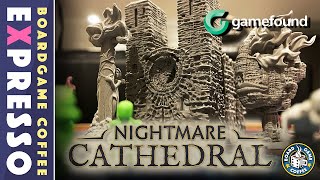
- cardplay has multiple purposes and upgrade paths
- dreams give direction and point accrual
- thematic and tense combat with gorgeous but grotesque components
- visibility of strategy with permanent action upgrades
- stackable buildings add layering and tempo
- takes time to deploy key pieces; setup can be slow
- dense rules may deter casual players
- ritual conquest, horror-inspired control, undead/demonic worship
- A dark, nightmarish dreamscape around a central haunted cathedral where followers are recruited, sacrificed, and monstrous powers unleashed to build a ritual empire.
- dark, macabre with tongue-in-cheek humor
Mechanics (from transcript analysis)
- Area Control — Players vie for control of spaces to enable actions and gain resources.
- blind bidding combat — Battle resolution occurs when players secretly choose cards to reveal, comparing damage and defense.
- Building Construction — Stackable buildings are created by spending followers to advance strategies.
- Card-driven actions — Actions are defined by cards that can be upgraded for stronger effects.
- Combat: Blind Bet — Battle resolution occurs when players secretly choose cards to reveal, comparing damage and defense.
- dream-guided challenges — Dreams impose self-selected challenges that award points when completed.
- Resource Management — Followers and fort levels influence actions, builds, and scoring.
- resource management with followers and forts — Followers and fort levels influence actions, builds, and scoring.
- sacrifice and soul economy — Monsters and other powerful pieces require flesh as currency and deliver strategic benefits.
Video topics + discussion points
Quotes (from this video)
- cards have multiple purposes, some are used to permanently upgrade the actions you take while others simply do stuff when played
- dreams help direct your action like self-appointed challenges that you select for yourself and completing these challenges will earn you some points
- genuinely feels like you've just opened up the gates to hell
- there's a lot to do on your turn