/pic6739647.jpg)













Oak Deep Dive
What the Community Thinks About Oak
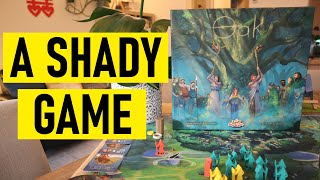
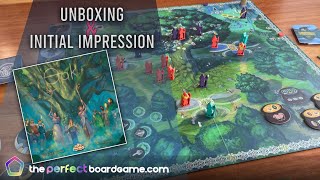
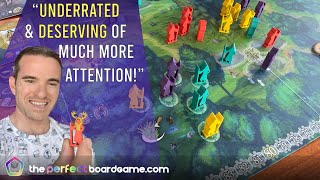
Oak stands as a deceptively elegant worker placement game that deserves far more attention than it typically receives. Despite its nature-themed presentation, the game transcends its druidic aesthetic through mechanics that reward careful planning and creative problem-solving. Reviewers consistently praise the innovative combination of worker placement with hand management, while cautioning newcomers about the initial learning curve created by its symbol-heavy components.
Core Mechanics That Define Oak
Worker Placement with Card Integration
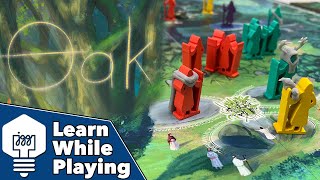
Oak's most distinctive feature is how it merges worker placement with hand management in an unusually tight system. The board contains action spaces, but these spaces carry no icons indicating what they do. Instead, actions live on cards in players' hands. To perform an action, you must simultaneously place a worker and play the corresponding card. This creates a genuine puzzle: you might have the perfect card but the action space is blocked, or you might have an open space but no card to activate it. The limitation forces players into constant trade-off decisions, preventing the domination of any single strategy. As play progresses, players can unlock advanced action cards that permit multiple plays in the same region, but this flexibility remains restricted enough to keep the decision space engaging throughout.
Druid Hierarchy and Worker Promotion
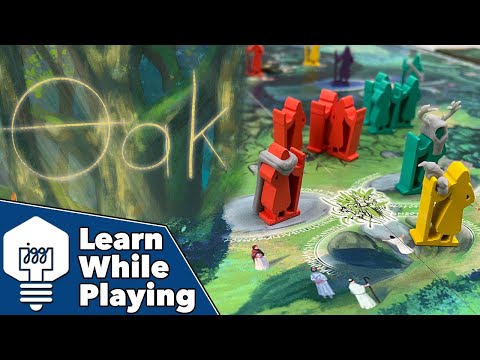
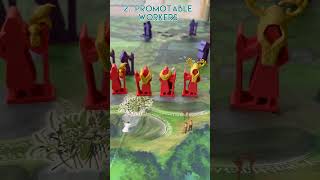
Each player commands nine druids split between active and passive workers. Active druids perform actions on the board, while passive druids gather around the central oak tree. The game allows players to promote individual workers by adding ornamental pieces that grant unique, permanent abilities. Some promoted workers lower action costs, others eliminate penalties for placing on occupied spaces, and a few unlock bonus actions. What makes this system noteworthy is that it remains secondary to the core card and placement puzzle, upgrades enhance gameplay but never dominate decision-making. Oak also features a catch-up mechanism: passive druids advance up branching paths on the oak tree, with each path terminating in a scoring multiplier locked to one player. A solstice marker creates a festival timing system where players who remain behind receive income, forcing constant evaluation of whether racing ahead or positioning for income is the winning path.
The Oak Experience
Replayability Through Ingredient Randomization
Each game features three randomly drawn potions and a shifting pool of ingredients available for collection. These ingredients change value from game to game based on which potions appear, creating distinct resource hierarchies. In one session, certain ingredients become invaluable; in the next, they're nearly worthless. This randomization forces players to reassess priorities every playthrough without feeling arbitrary, as potions and their recipes remain visible throughout the game.
Passing and Ingredient Collection
When players pass rather than place workers, they may collect ingredients from the forest, one per turn as long as druids remain available. This allows trailing players to stay engaged even after their action economy exhausts, pivoting to potion construction. The mechanic transforms downtime into meaningful decision points, as players must evaluate when to exit the main action round to secure valuable ingredients.
What Makes Oak Stand Out
Elegant Problem-Solving Framework
Oak rarely feels punishing despite its constraints. Even when competitors block a desired action, the restricted card set forces designers to create multiple viable paths. Players consistently report finding unexpected strategies when their first choice closes, the game rarely leaves you stuck. This flexibility within limitation creates a satisfying rhythm where setbacks transform into opportunities for creative solutions rather than dead ends.
Innovative Mechanical Integration
The combination of worker placement with mandatory hand management stands nearly alone in modern board gaming. Most worker placement games treat hand management as an afterthought; Oak makes it central. The requirement to match cards to spaces creates a problem-solving exercise that deepens with each playthrough as players internalize the card limitations and plan multi-turn sequences. This innovation earned recognition among designers and critics studying unique mechanical approaches to the genre.
Potential Drawbacks
Overwhelming Iconography
Oak's most significant barrier to entry is its extensive symbol system. The rulebook includes a seven-page appendix detailing every icon, and even experienced players recommend distributing photocopied symbol guides before gameplay. The icons themselves are well-designed and consistent, but their sheer volume creates cognitive load that can intimidate newcomers. Once players internalize the conventions, recognition becomes automatic, but that learning curve is genuinely steep.
Complexity and Open-Ended Play
Unlike many worker placement games, Oak provides no objectives or suggested strategies. Players receive no guidance on whether to pursue creatures, artifacts, potions, or tree advancement. Some players appreciate this freedom; others find it paralyzing. The game demands that players establish their own goals and commit to them despite tempting alternatives, which can feel overwhelming on first plays.
If You Enjoy Oak
Players drawn to Oak typically appreciate tight resource management and multi-layered decision spaces. They value games like Terra Mystica for their scoring multiplier systems and Isle of Skye for their catch-up mechanics. Those who enjoy hand management puzzles and the satisfaction of finding creative solutions within constraints will find much to love. Oak pairs well with game groups that play heavy Euro-style games regularly, as the learning investment pays dividends across multiple sessions.
What Reviewers Are Saying
"Oak centers around a Mighty Oak and this tree has been there from the beginning of time, but ultimately this is not a very thematic game. It has lovely artwork but at the end of the day this is a worker placement game in which you're trying to build a resource engine. The mechanics of Oak is how the game really shines."
— Board Game Dad
"The worker placement mechanic in this game is just thoroughly satisfying. It's the one feature that everyone has commented on. That is why I recommend the game. It's certainly why I think the game deserves more attention."
— Board Game Dad
"Oak is a natural and mythology-based game where you can use your resources to get creatures that will help your order, or you can build artifacts that will give you special actions, or you can take temple actions under the shade of the oak tree that will help you strengthen your order. The especially unique characteristic of Oak is that during the game you can upgrade your workers to give them special abilities."
— Board Game Dad