







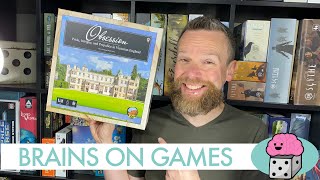




















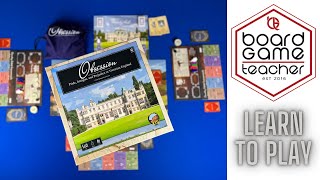



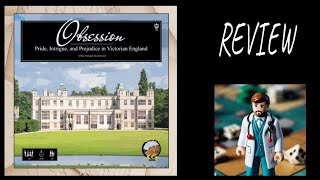

You are the head of a respected but troubled family estate in mid-19th century Victorian England. After several lean decades, family fortunes are looking up! Your goal is to improve your estate so as to be in better standing with the truly influential families in Derbyshire.
Obsession is a game of 16 to 20 turns in which players build a deck of Victorian gentry (British social upper class), renovate their estate by acquiring building tiles from a centralized builders' market, and manipulate an extensive service staff of butlers, housekeepers, underbutlers, maids, valets, and footmen utilizing a novel worker placement mechanic. Successfully hosting prestigious social activities such as Fox Hunts, Music Recitals, Billiards, Political Debates, and Grand Balls increases a player's wealth, reputation, and connections among the elite.
Each turn, players choose a building tile representing a room or outdoor space in and around their 19th century British country house. The tile chosen dictates the event that can be hosted and the guests to be invited. Players must carefully plan, however, to have the proper staff available to service the event and support guests as needed. The reward for success is new investment opportunities, permitting further renovation of the estate (acquisition of more valuable/powerful building tiles), an increase in reputation in the county, an expanding circle of influential acquaintances, and a larger and highly-trained domestic staff.
Throughout the game, a competitive courtship for the hand of the most eligible young gentleman and lady in the county presents specific renovation and reputation objectives. The player who best meets these objectives while accumulating victory points will win the hand of the wealthy love interest and the game.
—description from the publisher
Mechanics (from transcript analysis)
Video topics + discussion points
Quotes (from this video)
- I see Ian Mark uh Aak. Let me know your name so I can say your name.
- I'm Jamie from Stillmire Games. I'm here to play round two of game 87 of Rolling Realms.
- And I agree this is an interesting perhaps difficult combination of realms.
- For every resource you're about to gain, you may gain another resource type instead. Flexibility. That's good.
- I'm pretty sure I've activated all the realms every turn.
- I'm essentially just going for completion and for using all three realms.
- This was a lot of fun to see a bigger group of people hanging out and playing along.
References (from this video)
- Great combination of mechanics and theme
- Favorite solo game for a long time
- Offers a sliding scale of difficulty with solo opponents
- Expansions add variety without huge complexity
- Plays quickly
- Delightful game with emergent humor
- Good mechanical base
- Lots of variety
- Remains number one solo game
- Rated 10 out of 10
- Exciting to play
- So much fun
- Great experience
- The Gladstone family is difficult to beat
- Some beginner/intermediate solo opponents might be too easy
- Building a country estate and managing a family.
- Victorian England
Mechanics (from transcript analysis)
- Area control/Worker placement (implied) — Managing staff, family, and building out an estate to attract attention.
- Card drafting/hand management (implied) — Drawing objectives and managing resources to host events and improve the estate.
- Set Collection (implied) — Collecting resources or fulfilling objectives related to social circle, staff, and estate development.
- Solo opponent AI — Sliding scale of difficulty with different solo opponents representing families.
- Variable Player Powers (Implied) — Different families and characters offer unique challenges and abilities.
Video topics + discussion points
Quotes (from this video)
- It has been my favorite game since I believe about 2019.
- The Gladstones are just awful.
- It's great for solo play and it remains my number one solo game for what are we coming up on like seven years.
- It's also the only game that I have rated a 10 out of 10.
References (from this video)
- Gorgeous new artwork on all sides of the box.
- Rules compendium is well-organized and approachable, despite its size.
- Excellent thematic integration in the rules.
- Fantastic storage solution that reduces clutter and speeds up setup.
- Includes a playmat that replaces multiple individual boards.
- Great flexibility in organization.
- The rule compendium can be intimidating initially due to its size (117 pages).
- Victorian era
Mechanics (from transcript analysis)
- Playmat — A large playmat is included that replaces the entire board, featuring both the extended round board and the regular round board.
- Rules Compendium — This is a large book that combines rules, optional rules, content, variations, and setup instructions, separating base game and expansion components clearly.
- Storage Solution — The Victorian box serves as a comprehensive storage solution for the base game and all expansions, including a playmat and additional smaller boxes.
Video topics + discussion points
Quotes (from this video)
- So, what I'm going to do today is go through the box, talk about some pros, some cons, what I like about it, um, and ultimately where we fell on it, and why we did decide to upgrade the Dice Tower Library to this Victorian box.
- So, while the book is intimidating, I think it's still very approachable and handled in a way that you can um jump right in as a starting point if this is your first way to play. Just don't be scared by this massive compendium.
- So for me, I'm a fan of this. not going to rate it. Um, but I will say that I am a big fan.
- Dice Tower Cruise, Dice Tower East, and Dice Tower West. Fantastic conventions where we play games with wonderful people, a humongous library, and lots of other events and stuff.
References (from this video)
- fits all existing content and promos in one box
- includes organization boxes
- playmat consolidates multiple boards
- playmat fits in the box
- rules compendium answers all questions
- rules compendium has tabs and quick references
- fitting all content into one box was a headache before this product
- 17 rulebooks were previously required
Mechanics (from transcript analysis)
Video topics + discussion points
Quotes (from this video)
- this has become quite the Tetris game to try and get things to fit inside of one box and you have 17 rulebooks going on and promos and different things and it's just a little bit of a headache even though you love the game.
- There is now the Obsession Victorian Box and everything that has been made for Obsession will fit in here
- If your game has a playmat, lovely. I think playmats are great. However, if it does not fit in the box, what the heck am I supposed to do with it?
- This is every rulebook for every piece of the game all in one. Every question you could have is answered.
- So, for a game that is in my top 10 games of all time and I don't think will ever leave that list, this is an absolute must-have.
References (from this video)
- Rich theme for fans of period dramas
- Satisfying engine-building feel
- Can be heavy for new players
- Estate building to attract a marriage alliance
- Pride and Prejudice in Victorian England
- Genteel, aristocratic social maneuvering
Mechanics (from transcript analysis)
- Economic / resource management — Manage wealth and influence to win engagements.
- Resource management — Manage wealth and influence to win engagements.
- set collection — Build estates and social circles to gain prestige.
- set collection / tableau-building — Build estates and social circles to gain prestige.
Video topics + discussion points
Quotes (from this video)
- Canvas is a game where each of us we are creating our own art pieces so you have like different clear like translucent pieces of art that layer on top of each other to create a painting
- Whoever has the best Gallery wins
- we're going to play the game off camera and you'll see one of us will be in an unfortunate predicament
References (from this video)
- theme is unique and witty
- highly interactive with interesting engine variety
- heavy to learn for new players
- dinner parties, courtly status, and social maneuvering
- Jane Austen–influenced social grand manor
- satirical, tongue-in-cheek
Mechanics (from transcript analysis)
- action drafting — choose actions from a set and place workers to accomplish tasks
- asymmetric families — families confer different bonuses and capabilities
- Deck building — manipulate a deck of actions to run your house
- deck-building — manipulate a deck of actions to run your house
Video topics + discussion points
Quotes (from this video)
- it's what I always hope exploration games are gonna be
- it's the right amount of deep and simple
- it's so inviting how everything is put together
- Meadow is gorgeous I mean the artwork is incredible
- this is a racing betting game
- the cards for the national parks all look lovely
- it's basically Jane Austen and Downton Abbey in a satirical form
References (from this video)
- themes playfully mocked with a British comedic aesthetic
- cleverly integrates theme into mechanics
- fun, approachable mechanics with flavorful cards
- prestige, hosting elite guests
- British high society; genteel, upper-class households
- satirical, classy
Mechanics (from transcript analysis)
- card-based action with humorous flavor text — cards drive hosting activities and social maneuvering; witty flavor text adds humor.
- worker-like staff management — managing staff and guests to increase prestige and income.
Video topics + discussion points
Quotes (from this video)
- what I really like about this game is how thematic it is.
- the designer was inspired to make this game when he lived in Scotland.
- you buy a whole bunch of different ingredients and alcohol, mix it all together, and then you take off the top and the bottom to see what spirit you make.
- I love modular games. And this is so so modular.
- it's unbelievably easy to teach.
- the wonder that you're building is actually a physical wonder.
References (from this video)
- tongue-in-cheek character descriptions
- engaging guest/servant management loop
- theme may feel cliché to some
- can be quite long
- host guests and manage reputation and finances
- Pride and Prejudice-inspired family estate
Mechanics (from transcript analysis)
- worker/guest management — build rooms to host guests with distinct personalities
Video topics + discussion points
Quotes (from this video)
- it's a very cozy game
- this game can be so so mean
- it's like Pandora's box of but like a good Pandora's Box
- the theme and mechanics mush together like magic
References (from this video)
- thematic humor
- engaging social dynamics
- hosting events, social maneuvering
- Jane Austen-inspired high society
- tongue-in-cheek, charming
Mechanics (from transcript analysis)
- action selection — play cards that determine actions; some actions can be repeated for extra effect
- end-of-round activities — various guests and activities influence scoring
Video topics + discussion points
Quotes (from this video)
- My number 100 is In the Footsteps of Darwin.
- this is a stone cold classic.
- it's just really lovely.
- Just super silly, super fun.
References (from this video)
- Captures theme strongly
- Instant hit with household and everyone played with
- theme
Mechanics (from transcript analysis)
Video topics + discussion points
Quotes (from this video)
- an award only has the power we give to it
- obsession is something different it's something wonderful and it's something special
- horrified is a bit of a pandemic killer
- villagers is a bit of a masterclass on how to make a small game but looks good and plays well that doesn't cost the earth
- they did something i thought was impossible and that was to create a game that goes from a strategic layer right down to the inside of a house and individual soldiers within a conflict and to do that seamlessly and in a streamlined way
- paladins is the heaviest game to come out from garphill games it's a real chunky beast of the game
- putting aside the gorgeous art and tactile components the satisfying action of activating in a row and triggering a rudder power still feels good after many plays
- wingspan is a bird watchers delight wingspan is very much a game that seems to have captured the public's imagination
- Elizabeth has done an awful lot for women and board-gaming over the last year she's become a real torch bearer for their cause and continuously advocated for more inclusion of woman non-binary people and people of color and board game design and publication
- there's so much i love about the game but the presentation the aesthetics of it the theme but i really like how it can be played cooperatively all of a trader element but that the trader element in the game is opted in
- we love games where we can screw with each other we love thematic games and we love chucking dice nemesis now is that and has become an instant classic for my main gaming program
References (from this video)
- The new deluxe big box provides much-needed extra space.
- The universal rules compendium is spiral-bound and makes rules easier to access.
- The playmat is a welcome addition.
- The packaging ensured the game box arrived in pristine condition.
- The internal storage boxes are well-designed and keep components organized.
- The new box holds all expansions and previous content.
- The host loves the game and is happy it has a new home.
- The outer shipping box had a large dent.
- Victorian
Mechanics (from transcript analysis)
Video topics + discussion points
Quotes (from this video)
- After much obsessing over all the shipment dates for my Obsession Victorian box, it finally arrived.
- I needed a bigger box.
- I wanted every single rulebook to be put into one rulebook, and in this case it's spiral bound, so it's so much easier to open up, keep things on certain pages, fold it over, so you only have one page showing.
- My copy came pristine because of this boxing. Kudos to the boxing. I loved it.
- I'm just absolutely thrilled with every single um step of this process as a paying Kickstarter backer, cuz this is just a a loved game in my house.
References (from this video)
- rebuilding a fallen family reputation through estate management, hosting events, and courtship to gain the affections of heirs
- 19th century Derbyshire society
- instructional playthrough with step-by-step rules explanation
Mechanics (from transcript analysis)
- buy from builder's market — Optionally purchase an improvement tile; tiles have prestige levels, cannot have duplicates, and may require flipping.
- courtship rounds and theme cards — Courtship rounds involve scoring theme cards that influence end-of-game scoring and heir selection.
- eight-step turn flow — Each turn consists of eight steps including rotating service, round tracking, hosting, inviting guests, providing service, enjoying favors, buying, and cleaning the board.
- enjoy favors — Gain money, reputation, new guests, or VP/attack cards as rewards from the activity and invited guests.
- hire staff via butler's room — Use the butler's room to hire new staff into your expended service; staff types have substitutions and limits.
- host an activity — Take a tile representing an activity, then play guest cards from hand to join that activity and earn rewards.
- invite guests — Play guest cards from your hand exactly matching the guest requirement for the activity.
- provide service — Spend servants to fulfill the needs of the activity and its guests, with substitutions among staff types.
- Reclaim as Action — Spend reputation to gain money, refresh actions, or to refresh the builder's market; some actions are per-turn limited.
- round and turn structure — Turns have actions, builds, and passes, with round-tracking and various effects that influence play.
- special reputation actions — Spend reputation to gain money, refresh actions, or to refresh the builder's market; some actions are per-turn limited.
Video topics + discussion points
Quotes (from this video)
- the player whose family earns the most victory points over four seasons of play will win the game
- most of all players will try to marry up competing against each other to win the affections of the fairchild heirs
References (from this video)
- strong engine-building feel and pacing
- rich social/aristocratic flavor with tea events and gentry interactions
- variety of modules/variants (Nation Holiday, cabinet of curiosities) that add depth
- live stream with audience engagement enhances the experience
- rules complexity can be challenging to manage live
- chat moderation issues during a live stream can disrupt flow
- two-player constraints may limit some modules' impact
- restoring social prestige through hosting events and managing guests
- 18th century Derbyshire, England; a fallen noble family rebuilding reputation
- narrative conveyed through events, guests, and objectives rather than a linear story
- Downton Abbey
- Nova
Mechanics (from transcript analysis)
- Afternoon Tea — a hosted gathering that yields rewards (money, reputation, and guests) and requires staff to run.
- Bowling Green — an event that uses gentry to generate income and reputation, involving bringing in guests.
- Cabinet of Curiosities — a special high-value interaction that affects guest and point dynamics, tied into National Holiday and other rounds.
- Hiring staff and service expansion — five staff types (butler, housekeeper, footman, valet, ladies’ maid) used to run events; hiring and expansion tiles modify capabilities.
- Monument and round track — rounds progress with round track and monuments; players manage progress to unlock abilities.
- Nation Holiday — special round allowing players to play buildings/guests beyond normal reputation constraints; interacts with cabinet of curiosities.
- Private Study — a player spends two family members to gain income (300 pounds per village fair) and reputation, forming part of planning.
- Track advancement — rounds progress with round track and monuments; players manage progress to unlock abilities.
- Village Fair / Courtship theme cards — themes/cards that shape scoring and building choices each round; randomness adds variety per round.
Video topics + discussion points
Quotes (from this video)
- the game is all about scoring points as every game is
- it's a very nicely set up engine builder it really does
- Downton Abbey you see
- the game plays over 16 rounds
- cabinet of curiosities pins
- we're using a couple of the variable rules
References (from this video)
- Expanded content and fresh mechanics via Upstairs Downstairs and Wessex expansions
- Flexible servant roles and estate-building decisions
- Rich thematic flavor with social dynamics
- Complexity and number of decisions can be overwhelming
- Expansion-specific rules may require clarifications
- rebuilding social standing through hosting activities and managing reputation
- Derbyshire aristocratic society, a great family estate
- story-driven framework with events and social maneuvering
- IX
- Evergreen
- Lifeline
Mechanics (from transcript analysis)
- butler_room — A new feature allowing hiring on a turn when you pass, altering hiring power.
- carriage_house — Expansion tile that substitutes for footmen and adds flexibility.
- courtship_phase — Every third round features a courtship phase with powerful cards and scoring implications.
- guest_and_activity_tiles — Each round requires guests and activities that demand service from servants.
- national_holiday — Variant that lets you perform more actions by spending reputation on a holiday.
- reputation_track — Players raise reputation to unlock actions like hosting activities.
- servants_economy — Six basic servants plus supplemental servants (in expansions) power actions and influence economy.
- trash_refresh — Options to trash or refresh market tiles to access desired tiles.
- Variable Phase Order — Every third round features a courtship phase with powerful cards and scoring implications.
- village_fair — An action round that yields money and reputation and interacts with staff.
Video topics + discussion points
Quotes (from this video)
- that is the summary of this game
- it's hilarious
- we are formally great families in Derbyshire Society who have fallen upon hard times that is our story
- there's a lot of thinking in this game
- this is actually multi-stream as well on Facebook YouTube
References (from this video)
- Cooperative play adds teamwork and shared objectives
- Balancing options with Upstairs Downstairs expansion
- Clear setup and turn structure described
- Balanced with expansions; may be more challenging without them
- Complex setup and rules may be heavy for casual players
- Rival families vying for prestige within a game world
- The Darish family competes against the Sneed family to build Estates, gain reputation, and invite Prestige guests.
Mechanics (from transcript analysis)
- Compound Scoring — Players score as a team based on the team's average of scores across categories, aiming for the best scoring objectives and the worst reputation.
- cooperative actions — Three cooperative actions are available: share servants, borrow money from teammates, and borrow a teammate's servant.
- Cooperative actions and team sharing — Three cooperative actions are available: share servants, borrow money from teammates, and borrow a teammate's servant.
- Cooperative Game — The cooperative variant is designed to be played with two or three players using the base Second Edition rules and two modules from the characters expansion.
- Cooperative mode for 2-3 players — The cooperative variant is designed to be played with two or three players using the base Second Edition rules and two modules from the characters expansion.
- Market and tile mechanics — Improvement tiles are gained via a D20 roll, with tile choice determined by roll and category, including upgrades to the estate.
- Prestige Row and Scandal/Favors — Management of the Prestige row, scandals, and favors from Prestige guests affecting scoring.
- Reputation, money, and scoring — Gaining reputation and money, earning victory points via monuments, and end-game scoring rules.
- Stacking and Balancing — Balancing is done using the Upstairs Downstairs expansion; there are optional changes if not using the expansion, and a longer 20-round version with additional changes.
- team scoring — Players score as a team based on the team's average of scores across categories, aiming for the best scoring objectives and the worst reputation.
- Turn order and seven-step cycle for Sneeds' turns — On the Sneeds' turn, rounds proceed through seven steps: Round Track, Business Room, Monument, Servants Hall, Enjoy Guest Favors, Acquire from Market, and Impropriety.
- Upstairs/Downstairs balancing and variants — Balancing is done using the Upstairs Downstairs expansion; there are optional changes if not using the expansion, and a longer 20-round version with additional changes.
Video topics + discussion points
Quotes (from this video)
- The cooperative version of Obsession is designed to be played with either two or three players.
- The team will be competing against the Sneed family.
References (from this video)
- Asymmetric starting bonuses create variety (Cavendish starts with more reputation; York has strong servants; Ponsonby starts richer).
- Under-Butler and flexible servant mechanics add strategic depth and versatility.
- Monuments provide ongoing benefits and end-game points.
- Emily Bronte variant increases market variety and decision depth.
- Charles Dickens variant increases uncertainty and social-gossip dynamic during courtship.
- The playthrough is lengthy, and the host notes it was longer than expected.
- Endgame scoring can be complex, requiring careful tracking of many moving parts.
- increase the status of your family by expanding your estate, throwing lavish parties and expanding your circle of reputable friends
- Victorian era England
- Whist
- Casino
Mechanics (from transcript analysis)
- courtship rounds — Courtship rounds determine which Fairchild heir is targeted; theme cards guide goal alignment and scoring opportunities.
- economic management — Players purchase improvements with money, manage limited resources, and use the Builder Market (with variants) to refresh tiles.
- host activities — Players rotate servants, select hosted activities, invite guests, assign services, and gain reputation and money from favors.
- reputation track — Reputation increases unlock higher thresholds for actions and contribute to end-game scoring.
- Resource management — Players purchase improvements with money, manage limited resources, and use the Builder Market (with variants) to refresh tiles.
- servants and staff management — Servants rotate through servant quarters and expanded service areas; under-butler expands staffing options.
- Simultaneous Actions — Certain special actions cost reputation and provide immediate benefits like money or refreshes.
- special actions — Certain special actions cost reputation and provide immediate benefits like money or refreshes.
- tile flipping — Tiles can flip from their front side to back side, altering value and end-of-game scoring implications.
- Track advancement — Reputation increases unlock higher thresholds for actions and contribute to end-game scoring.
- variant_rules: Charles Dickens — Introduces uncertainty by sometimes revealing theme cards later, making courtship decisions more blind.
- variant_rules: Emily Bronte — End of each courtship triggers a full Builder Market refresh, increasing tile variety and future decision points.
Video topics + discussion points
Quotes (from this video)
- the game set in Victorian era England with each player in control of a somewhat neglected household
- the bowling-green itself is gonna need one of our footman
- we are instead gonna be playing with a Charles Dickens variant which is going to put some uncertainty in to when we will see what this theme card is
- monuments will generate one reputation in turn and this is worth six points at the end of the game
References (from this video)
- Beautiful components and production value
- Engaging theme with strong player immersion
- Solid solo viability and quick play once learned
- Setup can be moderately lengthy for new players
- Thematic flavor may be niche for some gamers
- aspiration, social maneuvering, and status within a domestic estate
- England, Regency-era manor house society and upper-class life
- Array
Mechanics (from transcript analysis)
Video topics + discussion points
Quotes (from this video)
- it's the midyear board game tag
- Obsession it's a beautiful game
- it's so quick to set up
- it's a new era of board games that's how it feels like to me
- I can't pick one game that's impossible
- Cascadia rolling... I love Cascadia
References (from this video)
- gorgeous theme and art
- rich combination of mechanisms
- strong thematic flavor (Bridgerton-esque) guided by Dan Halligan
- some players may find it heavy or thematic overload
- courtship, hosting events to gain favor
- English aristocratic society (Bridgerton-esque)
- historical / Regency-inspired
Mechanics (from transcript analysis)
- Deck building — build a deck of cards to influence scoring
- deck-building — build a deck of cards to influence scoring
- tile placement — place family/guests and buildings to gain points
- worker placement — place workers to perform actions
Video topics + discussion points
Quotes (from this video)
- it's like a double puzzle absolutely wonderful absolutely amazing
- the dice in this game are gorgeous
- it's quick it's beautiful it has a puzzle element
- it's basically a dice placement slash worker placement game
- I will forever love it
- Andrew Bosley is just the MVP
- Clank is just so great
- please God let it happen at some point
References (from this video)
- Strong thematic immersion and flavor text
- Compact playtime for the weight, with rich decisions
- Expansions add meaningful variety
- Longer playtime than some couples prefer; can approach an hour
- Some may feel private goals add pressure rather than fun
- Array
- British aristocratic manor life with upstairs/downstairs social dynamics
- immersive with flavor text and thematic goals
- Trekking Through History
- Trekking Through Time
Mechanics (from transcript analysis)
- Event hosting / prestige progression — Raising prestige through events and hosting them to gain dominance.
- hand management — Players manage a hand of cards with private goals to optimize scoring.
- Hand management / private objectives — Players manage a hand of cards with private goals to optimize scoring.
- Upgrades / expansions (upstairs downstairs) — Expansion adds servants that multi-use to boost various actions and hosts.
Video topics + discussion points
Quotes (from this video)
- This shelf had six games on it.
- This is staying in the collection until we finish our last two.
- I love New York Zoo. So, it\'s getting kept.
- Obsession stays. It\'s an evergreen in our collection.
- I think Trekking Through History is absolutely gorgeous, but it is time to say goodbye for us.
References (from this video)
- deep thematic immersion in Regency era
- family-like gathering mechanics with strong production quality
- rule complexity and theme may be dense for casual players
- romance, social ambition, party hosting
- Regency-era social gathering and estate management
- story-driven with social dynamics
- Calico
- Is a and something shiny (reference to Isa)
Mechanics (from transcript analysis)
- hand management — use cards representing guests, activities, and servants to influence outcomes
- hand management / card-based tasks — use cards representing guests, activities, and servants to influence outcomes
- worker placement — place workers to host events and advance in society
Video topics + discussion points
Quotes (from this video)
- Calico I love Calico it's the game I've played the most ever in my life
- this top 10 focuses mainly on games that are either solo only or games that I've played that I think are better solo than they are multiplayer
- I could talk on and on about board games
References (from this video)
- clever social dynamics
- satirical, fun flavor
- social display, manners, and domestic affairs
- wealthy British aristocracy
- tongue-in-cheek humor
Mechanics (from transcript analysis)
- Resource management — Manage a well-to-do household: build a mansion, hire servants, invite guests, and host gatherings.
- social event planning / resource management — Manage a well-to-do household: build a mansion, hire servants, invite guests, and host gatherings.
Video topics + discussion points
Quotes (from this video)
- i recommend this with ignorance is bliss
- star wars is my number one favorite anything i'm just obsessed with star wars
- this is a table hog of a two-player game
- no one owns it
- you can play this with new gamers because you can explain it very quickly
References (from this video)
- thematic appeal to many players
- strong humor and flavor text
- great for couples who enjoy social interaction and theme
- heaviest game on the list with substantial rule overhead
- not recommended for new players due to complexity
- class and social advancement via events and appearances
- High-society 1700s England; courting and social maneuvering
- humorous, satirical social simulation
Mechanics (from transcript analysis)
- negotiation — Cards and flavor text offer social dynamics and humor; the game emphasizes interaction and reading the table.
- negotiation/interaction flavor — Cards and flavor text offer social dynamics and humor; the game emphasizes interaction and reading the table.
- tile/asset management — Players acquire tiles to build a manner and increase staff; you invite guests and court others.
Video topics + discussion points
Quotes (from this video)
- it's a date night classic for us
- Escape rooms in a box
- it's such a beautiful like calm game
- it's a terrific tile placement game
- this is the heaviest of all of the games on this list
- it's a two-player only game
- it's meanest game on this list
- it's a modern classic
- Bandido is slippery
References (from this video)
- One of the most streamlined AI systems on the list.
- Allows the player to enjoy the puzzle without heavy AI overhead.
- Some feel it may not be a 'true' automa system; still included for its feel.
- Restore reputation through events and social activities.
- Victorian noble estate with servants and guests centered on social gatherings.
- Puzzle-like planning with a surprisingly minimal AI footprint.
Mechanics (from transcript analysis)
- AI opponents via simple card deck — Opponents are represented by cards with a simple, deterministic action framework.
- Combat: Deck/Hand — Opponents are represented by cards with a simple, deterministic action framework.
- D20-driven decision actions — Rolling a die to select slight variations on market actions.
- Dice rolling — Rolling a die to select slight variations on market actions.
- Tile/Map Shifting — Tile acquisition and market resets to maintain flow.
- Tile/market management — Tile acquisition and market resets to maintain flow.
Video topics + discussion points
Quotes (from this video)
- One of my favorite games of all time.
- The joy of obsession is puzzling out your servants and your guests and trying to put on the best social activities and get the money to get the improvements for your estate to restore your family's reputation.
- The AI system is brilliantly done, and it's so quick and simple to manage.
- This is about as simple as a solo opponent can get.
References (from this video)
- Crunchy, weighty design with satisfying planning and payoff
- Solo mode is straightforward and approachable
- Feels thematically cohesive and rewarding when you execute a complex activity
- Can be dense and requires substantial setup/organization
- Theme might not click for all players
- Society, reputation, and social maneuvering
- Victorian England, managing a family estate and social events.
- Richly thematic, heavy planning with event sequencing
Mechanics (from transcript analysis)
- event guests — Inviting the right guests represented by cards from a hand to execute activities.
- Events — Inviting the right guests represented by cards from a hand to execute activities.
- planning and sequencing — Careful orchestration of activities to line up complex social events.
- Worker management — Manage a workforce whose members perform specific tasks and require rest between uses.
Video topics + discussion points
Quotes (from this video)
- this is the fourth in a series of videos where I'm separating my favorite solo games into five different complexity levels
- it's my favorite as well
- no Universal scale exists so a mediumweight game to you might be a heavy game to me and vice versa
- I particularly like its clever bag building system
- this war of mine is the most profound board game I've ever played
- the solo opponent is super quick and easy to manage
References (from this video)
- unknown
- unknown
- unknown
Mechanics (from transcript analysis)
Video topics + discussion points
Quotes (from this video)
- my wish list is never ending and I get something and then 15 more games get added
- we breakout con this weekend and if i see any of these games in the bring and buy auction, you best believe i'm gonna be purchasing
- the budget does not allow for over a hundred dollar games unfortunately
- the art is gorgeous and the theme is so cute in these games
- I would love to try meadow before possibly getting the expansion
- familiar tales is one that i would love to add to the collection
References (from this video)
- strong theme, approachable to teach
- expands with Upstairs Downstairs expansion
- expansion expectations may overwhelm new players
- courtly society and hosting events
- 18th- or 19th-century English estate social scene
- table-ready roleplay with secret aspiration
- Luxor
- Rococo
Mechanics (from transcript analysis)
- hand/resource management — manage resources to upgrade rooms and attract guests
- Resource management — manage resources to upgrade rooms and attract guests
- worker placement — assign staff to host various activities and gain points
Video topics + discussion points
Quotes (from this video)
- it's a really nice concise little game
- it's like playing a movie to me
- the art style is gorgeous and the mechanism is clever
References (from this video)
- Strong theming
- Engaging guest/event interplay
- Can be lengthy with expansions
- Hosting events to build reputation and guests
- Bridgerton-inspired high society
- Glamorous, thematic
Mechanics (from transcript analysis)
- deck-building + worker placement — Choose guests and perform actions with workers.
- event planning / rooms and guests — Acquire rooms and events to boost reputation and VP.
Video topics + discussion points
Quotes (from this video)
- Concordia is fantastic.
- Endgame scoring is so cool and unique.
- Obsession is such a fun game.
References (from this video)
- Engaging theme and elegant tableau-building
- Good for teaching new players
- Strong family/estate management flavor
- estate rebuilding, family prestige
- Victorian England, aristocratic estates
- tableau-building focus with social maneuvering
Mechanics (from transcript analysis)
- hand management — manage a hand of character cards and actions while expanding family connections
- hand-management — manage a hand of character cards and actions while expanding family connections
- tableau building — assemble a hand of cards into a tableau to gain points and actions
- tableau-building — assemble a hand of cards into a tableau to gain points and actions
Video topics + discussion points
Quotes (from this video)
- Marvel Champions is the card game... still just amazing.
- This has been the best of at the Dice Tower.
References (from this video)
- Elegant theme and NPC-driven atmosphere
- Clever scoring via consistent tableau planning
- Solid engine for two-to-three players
- Rules can be dense for new players
- Setup and teaching time can be lengthy
- Estate management, social status, and family intrigue
- British estate in a Victorian-era ambience
- Historical, light roleplay-infused storytelling
- Patchwork
- Calico
Mechanics (from transcript analysis)
- hand management — Use event and guest cards to influence scoring opportunities.
- Hand management / event cards — Use event and guest cards to influence scoring opportunities.
- Pattern Building — Arrange rooms and wings of the estate to maximize scoring areas.
- Pattern building / tableau building — Arrange rooms and wings of the estate to maximize scoring areas.
- worker placement — Send family members to actions that influence income, construction, and events.
Video topics + discussion points
Quotes (from this video)
- In space, no one can hear you scream about how you didn't draw the card you need again.
- The real monsters are the other players.
- The answer here, of course, is terraforming Mars.
- This one's food chain magnet.
- Cartographers.
- The biscuit tin never has biscuits in it, does it? It's always got bubbling sewing stuff.
References (from this video)
- uniquely thematic and elegant
- private objectives add personal goals and planning
- heavy and complex; may be intimidating to new players
- pride, intrigue, and social reputation
- Victorian England family life with money, rooms, and events
- period drama with private objectives
Mechanics (from transcript analysis)
- Deck building — build a deck to access actions and private objectives
- deck-building — build a deck to access actions and private objectives
- tile placement — purchase tiles to customize your home and score points
- tile/room placement — purchase tiles to customize your home and score points
- worker placement — place workers to acquire rooms/events and amenities
- Worker placement / action selection — place workers to acquire rooms/events and amenities
Video topics + discussion points
Quotes (from this video)
- I love this game so much
- I freaking love it
- you are somebody's reason to smile
- I will see you guys in the next board game video
- bye friends
References (from this video)
- great couples game at two players
- solves solo well with a quick, streamlined mode
- hates drafting aspects may appear slower for some players
- events, guests, and reputation
- Victorian high society
- puzzle-centric with thematic ties
Mechanics (from transcript analysis)
- set collection/resource management — use resources to schedule and improve events.
- worker placement — manage servants and guests to run events and gain points.
Video topics + discussion points
Quotes (from this video)
- these are 10 games that I love where I would have a really hard time choosing between just Solo or just multiplayer
- the list actually very hard to make
- I am going to just focus on competitive games competitive games that work well both solo and multiplayer
- this list is really the way I thought about it
- it's such an amazing game
- it's a pure racing game no betting no controlling multiple cars you're one car racing around the track
References (from this video)
- Strong, cohesive theme integration with mechanics
- Indirect competition fosters thoughtful planning
- Crunchy and potentially heavy for casual players
- Requires careful timing and long-term planning
- Rehabilitating a troubled family reputation through social planning
- 19th-century English estate hosting social activities
- Thematic, with social event orchestration
Mechanics (from transcript analysis)
- Action Timer — plan activities with workers and guests, cooldowns apply
- indirect competition — interaction is mostly drafting activities; competition exists but is indirect
- timed, scheduled activities — plan activities with workers and guests, cooldowns apply
- worker and guest management — use servants for activities; guest cards drive scoring
Video topics + discussion points
Quotes (from this video)
- it's great to introduce someone to deck building
- two-player game ... you have to get both of them to the end
- tortoise and hair kind of feeling
- you can customize the map to adjust the length and difficulty
- the interaction comes entirely from the worker placement spots and blocking those
- low interaction Euro game that is mediumweight but is fairly easy to learn
- this is a game that took me a few plays but now every time I play it I just like it more and more
References (from this video)
- easy-to-manage AI
- beautiful theme and production
- randomness adds challenge and replayability
- grows on you with more plays
- initial randomness can feel punitive
- tiles/guests/objectives can be highly random
- some players may prefer less randomness
- hosting events, courting guests, and attracting esteemed attention
- Victorian era, high-society families seeking prestige
- glamorous, event-driven with scoring contrasts against AI
- Batoku
- Merchants of the Dark Road
Mechanics (from transcript analysis)
- Compound Scoring — players tally categories of rooms/themes and compare to the AI card
- courtship phase scoring — players tally categories of rooms/themes and compare to the AI card
- Dice rolling — AI turns roll a die to determine which event tiles or rooms are affected
- dice-driven AI timing — AI turns roll a die to determine which event tiles or rooms are affected
- random guests and tiles — random objectives and guests add variability and challenge
- simple AI reference card — AI scoring targets are laid out for easy tracking
Video topics + discussion points
Quotes (from this video)
- the flowchart in this is the smallest little flow chart
- the solo AI is easy to manage
- I really really enjoy the solo variant
- randomness opens me up to enjoying the challenge
- it's intimidating but not as scary as it looks
References (from this video)
- thoughtful packaging and in-box organization with nested boxes for components
- robust cooperative mode against the Sneed family adds thematic heft
- new tiles, gentry cards, and distinguished family members deepen strategy and replayability
- variant catalog adds flavor and customization options
- increasing box content can push storage limits and make organization crowded
- additional layers of rules and variants may be overwhelming for new players
- genteel society, reputation, wealth, propriety
- Victorian-era aristocratic social intrigue
- period drama, character-driven satire
Mechanics (from transcript analysis)
- Compound Scoring — Team scores are averaged to determine overall success for the cooperative side.
- Cooperative Game — Players form a team against a shared adversary (the Sneed family), collaborating to achieve objectives and assist one another.
- cooperative variant — Players form a team against a shared adversary (the Sneed family), collaborating to achieve objectives and assist one another.
- distinguished family members — Upgraded family member cards with enhanced abilities to boost dynamics and strategic options.
- propiety/initiative dice — Dice that influence events and outcomes for the opposing faction, driving tension and unpredictability.
- score averaging — Team scores are averaged to determine overall success for the cooperative side.
- solo/2-player variants — New opposition and scenarios designed for solo play or two-player formats.
- tile and card management — New tiles, gentry cards, objective decks, and other components integrated into the base game setup.
Video topics + discussion points
Quotes (from this video)
- This is a fantastic component. It puts all of your character stuff.
- The distinguished family members are dynamite.
- I love the new opportunity to gain when you pass to place out one of your guys.
References (from this video)
- lush theme with a distinct Victorian/European ambiance
- clean, heads-down euro that rewards planning and optimization
- solid end-game scoring with thematic depth
- low interaction; relatively solitary gameplay
- some players may find the pace slow or too adherent to the euro mold
- society, status, and domestic improvement through rooms and staff
- Darash countryside in a Victorian aristocratic milieu
- stately, elegant Euro with room for observation and planning
Mechanics (from transcript analysis)
- central marketplace — buy improvements and rooms to boost prestige and scoring potential
- room/building and improvement — develop a manor house by acquiring and upgrading rooms and amenities
- worker placement — activate rooms by assigning workers to a central marketplace; not focused on direct obstruction
- worker placement (non-blocking) — activate rooms by assigning workers to a central marketplace; not focused on direct obstruction
Video topics + discussion points
Quotes (from this video)
- I can't recommend it enough
- great little filler game with some really lovely artwork
- it's arguably the most solitaire game we've played outside of some Roll & Write games
- two players is best; a lot of downtime when you add more players
References (from this video)
- Gorgeous theme integration
- Elegant use of deck-building with social event host theme
- Complex, may have a learning curve
- Hosting events, social status through guests and services
- Edwardian era aristocratic life
- Taverns of Tiefenthal
- Taverns of Tiefenthal expansion Open Doors
Mechanics (from transcript analysis)
- Deck building — Gaining guests and services to form a deck that drives VP generation.
- deck-building / hand management — Gaining guests and services to form a deck that drives VP generation.
- worker placement — Workers are placed on guest cards to trigger actions and host events.
Video topics + discussion points
Quotes (from this video)
- Clank in space is fantastic
- this is quite a popular deck building worker placement game
- Concordia is not really a deck building game but it is a deck building/hand configuration game
- Lost Ruins of Arnak... the act of getting the most done on a turn as you possibly can
References (from this video)
- accessible with strong theme
- great for lighter game nights
- thematic similarity to other period-piece games
- colonial chivalry, status, and social gaming
- Victorian/Regency era manners and social maneuvering
- deck-building with tableau progression
- Merry Mr Darcy
- Dominion
Mechanics (from transcript analysis)
- deck-building — players build a deck to achieve points via actions and cards
Video topics + discussion points
Quotes (from this video)
- be an accomplice
- step out of your comfort zone
- a safe space for a minority group is not the place to prove a point
- our goal is to make this world a better place one board gamer at a time
- we need people in the trenches with us getting their hands dirty
References (from this video)
- Strong thematic integrity that reinforces the Victorian setting
- Expands dramatically with the Upstairs/Downstairs expansions
- Complexity may be daunting for new players
- Production and component setup can be fiddly
- gentry management and social events with a touch of intrigue
- Victorian England, aristocratic society
- photos that look like photos; postmodern aesthetic on character cards
Mechanics (from transcript analysis)
- asymmetric social pressure — players compete to attract and impress guests through curated events
- theme-driven action selection — players manage social engagements for Victorian gentry via event planning and resource management
Video topics + discussion points
Quotes (from this video)
- Monikers is the greatest party game ever made.
- Pitch Car, greatest dexterity game ever made and one of the greatest board games cuz it's made out of board.
- Cyclades Legendary Edition is the greatest board game of all time in my opinion.
- War Room is one of the greatest war games ever made.
- If you haven't played Obsession, then don't be a tight Victorian and go and get it.
- Station 4 is one of the most thematic games we have ever played.
References (from this video)
Mechanics (from transcript analysis)
Video topics + discussion points
Quotes (from this video)
- I made it up
- this is a good launching point
- Skies Above Britain went up three places
- it's a wonderful simulation
- I would go with Pax Premier
- Undaunted Kalisto on the list
- I Napoleon shipped in what June
References (from this video)
- Strong thematic cohesion with period flavor
- Fantastic servant meeples with unique roles
- Quality components (tile bag, art, flavor text)
- Medium-heavy euro that may deter casual players
- Theme may not overcome potential ethical concerns (gender depiction, whiteness)
- Maintaining social standing through courtship and household management
- Victorian England; family estate in Derbyshire
- Historical domestic drama flavor
- Marrying Mr. Darcy
- Legacy
Mechanics (from transcript analysis)
- card management — Manage friends and family cards to run activities and gain points.
- Market/tiles refresh — Discard and replace market tiles; manage stock and draws.
- Reputation/resource management — Reputation gates actions; high reputation unlocks guests and actions.
- Resource management — Reputation gates actions; high reputation unlocks guests and actions.
- Special turns (national holiday) — Turn order or card eligibility changes during holiday rounds.
- tile placement — Place estate tiles to gain benefits; progression reshapes your estate.
- worker placement — Assign workers to activities; some require additional servants.
- Worker placement (Gentry/servants) — Assign workers to activities; some require additional servants.
Video topics + discussion points
Quotes (from this video)
- The servant meeples are fantastic I love how each of them has a role and is unique.
- the nicest tile bag I've ever seen.
- If you are a Jane Austen or Victorian period fan you will adore this game.
- Gender roles are baked into the game and every character is white.
- This is still very much a medium heavy euro game.
References (from this video)
Mechanics (from transcript analysis)
Video topics + discussion points
Quotes (from this video)
- we are here today to do a video once again of our shelf of shame
- we are going to be focusing on our shelf of shame games to try and knock that number down
- we are going to commit to 20 games that we must play in September
- Power comes great responsibility
- that’s a big motivator
- please do
References (from this video)
- Tight design
- Strong thematic feel
- Can be punishing due to heavy decision load
- Domestic duties and social standing
- Victorian household management
- Tight, thematic
Mechanics (from transcript analysis)
- action selection — 12 core actions with tight decisions
- Resource/worker allocation — Allocate servants to tasks
Video topics + discussion points
Quotes (from this video)
- it's the Pacific and the Pacific people instead of aliens and space with seventeen hundred and seventy six owners
- I think this is a fascinating game and it treats the topic with respect
- it's a risk killer like it completely does everything that risk does only better
- your action selection is so focused and so many hard decisions crammed into a comparatively short time frame
- I learned more about antibiotics in those thirty minutes
References (from this video)
- Elegant, thematic presentation
- Rich interaction with rival players
- Thematic weight may be slow for some groups
- Complex to teach due to historical flavor
- society, status, refinement
- Regency-era drama with lavish social intrigue
- dramatic and aspirational
Mechanics (from transcript analysis)
- card-driven / auction-lite — players bid, manage estates, and navigate social maneuvering for points
Video topics + discussion points
Quotes (from this video)
- Flamecraft as a human just let me describe them and you'll know what I mean
- Fage now Mage is that fancy foodie friend who brings a curated cheeseboard to literally every Gathering
- I nailed it
References (from this video)
- strong thematic cohesion
- dramatic, immersion-rich atmosphere
- elegant production and mood
- rules can be dense for newcomers
- fancy parties, social status, and household management
- early 20th-century English aristocracy; Downton Abbey vibe
- elegant, event-driven Euro-style storytelling
Mechanics (from transcript analysis)
- Card-driven resource management — cards represent family/friends inviting parties, yielding resources and actions
- room-building and events progression — invest to improve rooms and access bigger events for prestige
Video topics + discussion points
Quotes (from this video)
- it's the best hidden roll game I have ever played
- thematic and social dynamics really shine
- there's so many discussions and you feel like this is a real thing
- you read the flavor texts and encounters have a very good narration
- this game makes you feel like you're there
References (from this video)
- Rich theme and storytelling potential
- Strong family estate management feel
- Complex for new players; heavy on rules
- British aristocracy and social maneuvering
- Gothic era family estates with intricate drama
- Story-rich, character-driven immersion
Mechanics (from transcript analysis)
- Engine-building / worker placement — Develop an estate and manage resources for prestige.
Video topics + discussion points
Quotes (from this video)
- Origin Story and Vantage again this past weekend and they are so so great.
- It was the best game of Flip Seven that I've ever had.
- I played Dave the Diver for about an hour last night and had a lot of fun with it.
- I've played Point Salad, but I have not played Point City.
- I run a board gaming club at my school in which I have been playing Obsession and Brass Lancashire.
References (from this video)
- Story prompts and character flavor
- High variability with many guests and rooms
- Expensive expansions and production scale
- Complex rules can be intimidating for new players
- Enticing the rich bourgeoisie to extract wealth
- Stately home in a late 19th/early 20th century English context
- story-driven ambiance through guests and rooms
Mechanics (from transcript analysis)
- guest/room interaction — Pair guests with rooms to unlock cascading actions and income.
- neighbor interaction — Pair guests with rooms to unlock cascading actions and income.
- tableau building — Arrange servant abilities to trigger room actions and cash flow.
- tile placement — Place distinctive rooms and spaces to shape scoring and mechanics.
Video topics + discussion points
Quotes (from this video)
- the Minis for the first edition of this game were really really terrible they were absolute dog
- we just put up with the ship Miniatures and we just good afternoon our own ball sack
- this for us is the best solo game ever created in major night
- Mage Knight never ever gets old there's always something new to discover in this game
- it's number four on this list
- it's the greatest party game ever made hands down
- the theme dead on and the action selection mechanism
- the possibilities are literally endless in Pitch car
- you could teleport directly into someone's backyard give them a good old spanking
References (from this video)
- Beautiful and heavy experience
- Expansions help reach six-player play
- Long playtime at higher player counts
- Raising Robots
Mechanics (from transcript analysis)
- Worker/resource management with expansion potential — Heavy, thematic euro with depth; supports six players with expansions; long playtime at higher player counts.
Video topics + discussion points
Quotes (from this video)
- All of our games must play from at least one to five players but a lot of our games also play up to six players.
- We want the heights of six players to be accessible to solo players, partners, and larger game nights alike.
- Simultaneous play keeps the game moving and prevents downtime from stalling the table.
- Trick-taking is a great example of short, simple turns that scale well with more players.
- Planet Unknown is a simultaneous game that plays well up to six players out of the box.
References (from this video)
- Strong, unique theme that stands out
- High potential for storytelling sessions
- Complex social dynamics may be off-putting to some players
- gossip, reputation, and social maneuvering
- aristocratic society with lavish parties
- elegant, witty, social-running
Mechanics (from transcript analysis)
- auction/negotiation feel — negotiation overlays the social score
- set collection — players curate cards representing social events
- set collection and social engine — players curate cards representing social events
Video topics + discussion points
Quotes (from this video)
- Spicy. So you might be like, Here, Sam. And maybe I'm giving him back some of his bloodline that he gave me back.
- Root's just always going to be here. I play it every day.
- Dice Town. Since we first played Dice Town and every time afterwards, I have had so much fun.
- I love Dune Imperium. I think it's a perfect of a game as you can get.
- Obsession is such a fantastic game and I will pump this game up as much as I can.
- Mountain Goats is incredible. It's a great, quick dice game.
- Red Dust Rebellion is no joke amazing.
- Three Chapters is the newest game from Amigo. And I think it's going to blow up.
- Crafting the Cosmos is so good. The UX is amazing.
References (from this video)
- Strong Downton Abbey-inspired theme and flavor
- Euro-style resource-management with room/event interplay
- Flavor text and cards give the game personality
- Relaxing yet engaging with meaningful decisions
- Rooms and flip mechanics provide strategic depth
- Significant randomness from guest cards and outcomes
- Rulebook organization can be confusing or hard to navigate
- Best experienced with three players; may constrain player count
- Theme may not appeal to all players
- reputation economy through hosting gatherings, connections, and social standing
- Downton Abbey-inspired aristocratic life in late-Edwardian England, focusing on hosting events and managing a household
- flavor-text rich with social satire and 'Lord/Lady' personas
- Dungeon Pets
- Three Two One Till Atum
Mechanics (from transcript analysis)
- card_management — Manage cards for guests/family and play/discard to meet event requirements.
- event_planning — Host events using guests and resources to gain reputation and money.
- objective_cards — End-of-game objectives grant bonus points based on fulfilled conditions.
- resource_management — Balance money, prestige, and guests to maximize scoring.
- room_building — Acquire and upgrade rooms to unlock events and scoring opportunities.
Video topics + discussion points
Quotes (from this video)
- Obsession you are at the head of the family that is broke
- you score points and it comes from money from the rooms from the parties from all the events that you build up in the game
- the more rooms you have the more kinds of events you can make
- this game for me is super relaxing
- the best thing about this game by far sir it's the theme
- cards give this game personality
- Is this a party game? If it's all about parties, I was expecting answer no
- Downton Abbey and you wanna game in that genre
- the theme is the thing I mean if you watch Downton Abbey
- fancytastic is only with three players
- the cards will tell
- the honeymoon is quite okay quite long
- there's so much random in this game
References (from this video)
- Strong thematic pull for fans of domestic life sims
- Overload of content can be overwhelming
Mechanics (from transcript analysis)
- Patience/period-piece strategy — Focus on social/estate management and aging families.
Video topics + discussion points
Quotes (from this video)
- Spirit Island is number one on the list.
- Mage Knight is the hardest but most rewarding on the table.
- Not a fan at all of Marvel IP so I wouldn't put Marvel Champions on the top 10.
- Dune Imperium is a lateral move; some people love it, others not so much.
- Final Girl is thematic and nostalgic—taps into VHS-era horror.
- Sleeping Gods feels like Breath of the Wild for board games.
- Warps Edge has the same appeal as deep space D6 — but lighter.
- The solo scene in board gaming is the best corner of hobby.