/pic4185945.jpg)




























Orbis Deep Dive
What the Community Thinks About Orbis
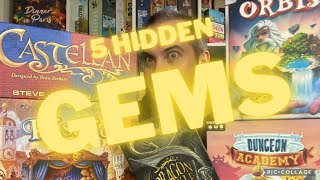
Reviewers who actually brought Orbis to the table describe the same arc: a teach that feels almost too simple, followed by a puzzle that tightens round after round until every tile placement carries real weight. No Pun Included walked through a full game and found that what starts as straightforward color matching turns into something far more demanding once a color runs out partway through the pyramid. Getting Games called the teach itself very simple and very streamlined, and still came away wanting to play again despite a stack of newer games competing for table time. Get into games put Orbis on a list of hidden gems precisely because it keeps pulling them back in even though it does not hit the table often.
Where the channels split is on presentation and pacing. No Pun Included is openly uncomfortable with the art direction, comparing its look to a freemium mobile game and arguing that it undersells a genuinely excellent design. Get into games takes the opposite view, calling the same tiles gorgeous and the game stunning to look at. Getting Games, meanwhile, found the first half of a four player game more restrictive than it needed to be, a frustration traced back to a rule about wild worshippers that the group did not catch until the game was half over.
Core Mechanics That Define Orbis
Drafting Tiles and Seeding Worshippers
On a turn, a player drafts a tile from a shared pool in the middle of the table, paying its cost in worshippers, the game's cube currency. Getting Games described how taking a tile scatters worshippers of that tile's color onto the tiles adjacent to it, so every choice changes what the next player can afford or is tempted to take. Any worshippers already sitting on a tile when it is claimed go to whoever claims it, which Getting Games singled out as the mechanic that hooked them: tiling they already enjoyed, paired with an incentive structure built around what opponents leave behind.
Building the Pyramid, Flipping to Wasteland
Tiles stack into a shrinking pyramid, and anything placed on top of two existing tiles must match the color of at least one of them. No Pun Included and Get into games both describe the alternative when a tile cannot legally go down: flip it face down into a wasteland, taking a small penalty at the end of the game in exchange for a tile that now counts as any color. No Pun Included frames this as the mechanism that redeems the whole system, since what looks like a punishment becomes a deliberate tool once a player is boxed in by their own color choices.
The Orbis Experience
A Deceptively Simple Teach
Every evaluating channel describes the rules as easy to pick up. Getting Games called it a very simple teach that still delivered a satisfying session, and No Pun Included's early turns in a first game felt forgiving before the bottom layers of the pyramid filled in and choices narrowed fast. The learning curve is less about understanding the rules than about feeling the puzzle close in around a player's earlier decisions.
A Thinky Sit With Staying Power
Getting Games clocked a four player game at a bit over an hour and called it quite thinky, while still saying it did not overstay its welcome. Get into games keeps Orbis in their collection specifically because every session that does make it to the table is a good time, even as newer releases crowd their shelf.
What Makes Orbis Stand Out
A Single God Tile With Lasting Consequences
Each player drafts exactly one god tile over the course of the game, and that single choice shapes an entire strategy. Getting Games describes drafting a god of death that cost six followers in exchange for three points at the end of the game, while Get into games notes the range of god characters on offer, each with its own bonus condition tied to the tableau being built underneath it.
Resources That Spill Onto the Shared Board
Because claiming a tile seeds its neighbors with worshippers, the board keeps reshaping itself between turns in ways no single player controls. Getting Games called this incentivization structure, combined with the tiling itself, the exact combination they look for in a game, and credited it with pulling them back toward a replay despite a backlog of unplayed titles.
Potential Drawbacks
A Game That Can Turn on One Flip
No Pun Included's biggest reservation is how much a single wasteland flip can swing the outcome. A tile that would have been a perfect fit can get flipped and snapped up by another player before it ever comes back around, and No Pun Included describes watching a game winning tile slip away this way with no chance to react.
An Art Style That Does Not Land for Everyone
No Pun Included is blunt about the presentation, describing the tile art as leaning into a freemium mobile phone aesthetic that undercuts how good the underlying game is. That reaction is not universal: Get into games calls the same components gorgeous, but the split shows up clearly across the two channels.
If You Enjoy Orbis
No Pun Included measures Orbis directly against Azul and Splendor, concluding it comes close to matching both and recommending it as a colorful next step for players who already own those two. Get into games arrives at a similar comparison from the buying side of the game, describing the tile purchasing as splendor esque. No Pun Included also brings up Concordia, arguing that if that game's dated artwork gets forgiven, Orbis deserves the same leeway for its own visual missteps.
What Reviewers Are Saying
"This is how my first game of Orbis went. There was a god tile that granted extra points for irrigation tiles. Great, I thought to myself, I'll just do those. But all it asks is to have a tile of the same color directly underneath it."
— No Pun Included
"You're actually allowed to use those followers to pay for the tile that you take. Right off the bat, I am interested in this game because it has incentivization mechanics, which I love, and also it's tiling and I really enjoy tiling."
— Getting Games
"It's a really interesting little puzzle. It just doesn't come to the table and as often as it should for me, but it also doesn't leave my collection because when I do play it, I have a good time with it."
— Get into games