/pic1918075.jpg)
Pagoda is a two-player only game in which players compete to build multiple layers of up to six pagodas. Each player has five face-up and two face-down colored cards, and they use these cards to build colored pillars and levels of the pagoda. Once a pillar has been placed on the ground floor, all other pillars placed must be of the same color. When someone places the fourth pillar on a level, he places a floor tile of the pillars' color on top, with this tile have colored dots to indicate which color of pillar can be placed on top.
Players score points each time they place a pillar, with a pillar on ground level being worth one point, a pillar on the second floor two points, and so on. When a player places a floor tile, he gains one point as well as two actions associated with that color on his individual action board. The fourth floor tile is placed upside-down to show only one colored dot. Two pillars can be placed on this dot, each worth five points, and once placed the pagoda is finished. After three pagodas are finished, players finish the round, then the player with the most points wins.


- Interesting hand management
- Cool table presence
- Too card dependent
- Underwhelming bonus powers
- Lacks long-term decision making
- Lacks longevity
- Struggled to find depth
- Building pagodas communally
Mechanics (from transcript analysis)
- Card Driven — It's a card driven game.
- Hand Management — A pretty interesting hand management system where five out of your seven cards are actually visible to your opponent.
- Objective Racing — You are still even racing for these objectives.
- Set Collection — Playing these cards mostly to build these little pillars, yellow cards will build yellow pillars and so on depending on the level of those pillars you are going to get that many points.
- Variable player powers — If you build a new platform you get a bonus power.
Video topics + discussion points
Quotes (from this video)
- Unfortunately, the tension is completely eradicated from the game when comparing it to a game like no thanks.
- I love it visually I think the artwork is really nice it has this kind of like uh Golden Age Disney fil vibe to it with these nice um gilded cards.
- Ultimately it boiled down to that card crafting system being a bit of a gimmick I think rather than an actual unique mechanism.
- This feels like this was the intended game and Cascadera was built after it rather than the other way around.
- For me if you played cascadero and not cascadeo I'd definitely recommend looking at cascadeo.
References (from this video)

- Visually appealing ('colorful yoy')
- Engaging action selection via tableau
- Satisfying central building component
- Combines multiple Euro mechanics well
- From a highly regarded design team
- Building Baghdad, specifically the Palace
- Baghdad
Mechanics (from transcript analysis)
- Building a Central Structure — Players build a Palace in the center of the game piece by piece.
- Iconic Action Effects — Actions are influenced by icons represented in the player's tableau.
- Revolving Tableau — Features a revolving tableau where cards are played, affecting actions.
- Rondel — Uses a rondel mechanic for movement and action selection.
Video topics + discussion points
Quotes (from this video)
- we wanted to come back we were like there's four running right now that we don't want to miss
- this is not an expansion for everdell it's set in the everdell world the everdell universe
- this one actually does hold the cards the lighthouse and for far just kind of sat there this one actually does hold components and stuff much like the original everdell
- this is a big Forex game so spoiler alert probably not for me
- this is a team up of people that I would play pretty much any game that they
- make sure everyone has front at the table
References (from this video)

Mechanics (from transcript analysis)
Video topics + discussion points
Quotes (from this video)
- Devir Games really need to make less games in less games in a year because then they might actually put out some belters rather than just a bunch of meh games.
- It's using the conveyor belt mechanism that I adore from uh art from AR Nova and Civilization: The New Dawn, but there's only four slots.
- All right, so this is giving me a very um pursuit to happiness vibe here, but with a slightly different take on it.
- It's a very dry mechanical game.
- This artwork looks nice. Oh, wow. Oh god. Yeah, that is pretty.
- I like Underwater Cities. It's on my shelf. Um I like this game a lot.
- Cascadia, which is already probably one of the best gateway games in existence.
- So you've got new artwork, new graphic design, updated mechanics, wooden meeples, uh same quick play time that gives a 4x feel in under 90 minutes.
- This is an expansion that's not going to really add that much to the game?
- It's basically the snorefest of themes, but this is a new version of it.
References (from this video)
- Simple, light, speedy, and quick gameplay.
- Personal player board upgrades are fulfilling.
- Enjoys the conveyor belt card system.
- Smooth and cool gameplay overall.
- Not bloated, offering plenty of options and thinking without being bogged down.
- Described as 'pretty dry'.
- Engaging in mini-games for points, moving characters around, picking up tiles and characters to upgrade skills, and dealing with other players getting in the way.
- Baghdad
Mechanics (from transcript analysis)
- Card Drafting — Players get a new card every round, with symbols affecting actions or scoring.
- conveyor belt — A card system works on a conveyor belt, with symbols at the top giving power for actions, and cards scoring points or giving bonuses when they fall off.
- Player Board — Tokens allow players to upgrade their personal player boards for bonuses.
- Worker Placement — Moving characters around to pick up tiles and characters.
Video topics + discussion points
Quotes (from this video)
- Devir Games really need to make less games in less games in a year because then they might actually put out some belters rather than just a bunch of meh games.
- It's using the conveyor belt mechanism that I adore from uh art from AR Nova and Civilization: The New Dawn, but there's only four slots.
- All right, so this is giving me a very um pursuit to happiness vibe here, but with a slightly different take on it.
- It's a very dry mechanical game.
- This artwork looks nice. Oh, wow. Oh god. Yeah, that is pretty.
- I like Underwater Cities. It's on my shelf. Um I like this game a lot.
- Cascadia, which is already probably one of the best gateway games in existence.
- So you've got new artwork, new graphic design, updated mechanics, wooden meeples, uh same quick play time that gives a 4x feel in under 90 minutes.
- This is an expansion that's not going to really add that much to the game?
- It's basically the snorefest of themes, but this is a new version of it.
References (from this video)

- interesting little mechanisms
- card system is a plus
- description sounds generic without context
- Viscounts of the West Kingdom
- The Great Wall
Mechanics (from transcript analysis)
- Card system — The game features a card system similar to a simplified version of the Viscounts of the West Kingdom.
- Worker Placement — The game involves placing workers, as implied by the general description of Euro mechanics.
Video topics + discussion points
Quotes (from this video)
- The artwork is very pretty.
- it's an aggressive area control game.
- This expansion is fixing a fundamental flaw of the original game.
- I am salivating at the mouth for this one.
- This game is the theme done justice in tabletop form.
- I do have to temper my expectations because I think Valheim's going to be a little bit trickier to bring to tabletop.
- There's not a lot of innovation in games anymore.
- But when I played it, it's like, 'Okay, that mechanism I like. Let's find out.'
- This is a very long podcast.
- But remember, it's only a game.
References (from this video)

- Prototype was enjoyed.
- Nice to have the final copy.
Mechanics (from transcript analysis)
Video topics + discussion points
Quotes (from this video)
- nobody, including us, need this many games.
- This is Divan. Mhm. I don't know anything about this game. I bought it because it looks beautiful.
- This could have easily been a Reiner Knizia game I feel like.
- And I love a reason to play Lost Ruins of Arnak Lost Ruins of Arnak because I think it's a great game.
- We have to empty our unplayed game shelf from everything that's not 2025 releases and then we'll put it in there and the rest go on the floor until we manage to play them.
- And it's based on the problem called what is called again it's based on the seven bridges of somewhere.
- I feel kind of like bad about bringing a hundred games back home.
- I I usually they go in, they go out. And that's also the thing like if I haven't played a game in a month, I will not remember the rules most of the time.
- The longest line I saw was for coffee. In the morning before the whole office.
- What's more important for you for the channel? Playing the popular ones or the less known niche ones?
- My favorite animal beside the monkey which is my favorite animal. The capybara.
- We are basically very lucky because we share a lot of hobbies.
- The building thing Ah, it was too much building. I didn't like that too much.
- It's been super fun. It's so many people. It's been so long since we did a live.
- Thank you so much for watching. Like it. We wouldn't have done this if it wasn't for you.
References (from this video)

- fun little style game
- pretty forgettable
- building pagodas
Mechanics (from transcript analysis)
- tower building — Players build pagodas using little wooden towers and placing tiles on top.
Video topics + discussion points
Quotes (from this video)
- This is a pile of mid games as I take a look at board games on boardgamegeek.com, a repository of all things about board games.
- These are games that don't get talked about as much.
- it really is a very simple game from Prospero Hall.
- This is kind of one of those games I wish I had played back in the day.
- This is one of the best fillers out there where you have a bunch of swimmers out there.
- I think A Fell is a fine game. I just think it's sort of broken.
- It's a classic for a reason.
- what a fantastic party game.
- Phoenicia Tom Lehmann killed his own game. He eventually came out with Race for the Galaxy, which was a much, much better Phoenicia, which is why this game has kind of disappeared.
- one of the longest rule books in history.
- It is so complex.
- Of all the games I talked about today, I actually I think Lynx City I like Asking for Trouble's a lot, but Lynx City is my favorite.
References (from this video)
- Nice flow
- Good table presence
- Neat hand management system
- Too tactical
- Too luck-dependent
- Limited depth/replayability
- Subtle powers could be stronger
- Building pagodas communally with your opponent.
Mechanics (from transcript analysis)
- Area Control — Players place pagodas on levels, determining the next required color, influencing opponent's choices.
- card-driven — The game is described as card-driven.
- Hand Management — Features a "pretty neat hand management system" where a portion of cards are visible to the opponent.
- Set Collection — Players build pillars of different colors and levels, with higher levels yielding more points.
Video topics + discussion points
Quotes (from this video)
- five board games that weren't quite strong enough to stay in my collection.
- So for one reason or another, these didn't quite make the cut.
- I really wanted to like this game because I thought the concept was so neat, but I was slightly concerned that this was just going to be uh another deck-building game, but maybe slightly repackaged in how it was presented to the user.
- But all in all, it's not really a game I felt like I needed to come back to and explore any more once I'd understood the mechanisms and understood how the games work.
References (from this video)
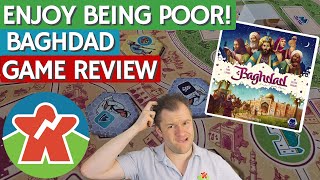
- Enjoyable card system, planning three turns ahead.
- Slotting tiles on player board for bonuses is good and requires planning.
- Tightness of the game makes players think on their toes.
- Simple rules and straightforward operation.
- Good variability through different strategies and modules.
- Decent solo mode (if you don't mind the challenge).
- Appeals to many Eurogame fans.
- Every element has something that 'grates' a little bit.
- Flukiness of knight cards can be annoying and feels random.
- Favor track is punishing at the bottom.
- Tight resources can lead to situations where you can't perform necessary actions.
- Player interaction is limited.
- Playtime can be a bit long for its simplicity.
- Artwork and components are average, built to a budget.
- Solo bot is cheaty and punishing, making higher difficulties not fun for some.
- None, just mechanics to turn out victory points.
- Adri's Dream
- Shackleton Base
- Vic Counts of the West Kingdom
- White Castle
Mechanics (from transcript analysis)
- action selection — Actions are determined by symbols on cards, requiring a certain amount of symbols to perform actions like getting books, building, or contributing to the palace.
- Area Control/Movement — Vizier character moves around the map in quadrants to collect tiles. Boats move to various ports for multipliers.
- card drafting/hand management — Players start with starter cards and can get new day/night cards. Cards have effects when they fall off the board and are one-use only. The crux of the turn revolves around these cards.
- Resource Management — Managing coins and other resources is crucial, as they are tight and needed for various actions like building and buying boats.
- Scoring Multipliers — Score points based on multipliers on palace and port boards for various categories like students, books, and artifacts.
- Set Collection — Collecting sets of tiles (e.g., students, artifacts) can provide end-game points based on multipliers.
- Tile Placement — Vizier circles the board collecting tiles that go on the player board for bonuses.
- Worker placement (implied) — Placing meeples/buildings on the map in certain quadrants triggers building effects.
Video topics + discussion points
Quotes (from this video)
- It's usually more ranting than it is raving.
- Fabio has done a few games which are kind of hit and miss for me.
- There isn't really any theme here to speak of. It's just a case of here's a bunch of mechanics and turn out some victory points.
- It's no good getting five students on your board and then the only multiplier you've got is a one victory point for your ship in port. No, you ideally want to get as high a multiplier as possible.
- This is not a quick 60minute light euro.
- The game will basically laugh at you.
- Definitely a designer who's makes games for the masochists behind us.
- I don't get lucky, I make my own luck.
- If you thought White Castle was a great solo mode because of how punishing that one was, then you're going to love the solo mode in this one.
- It's just a few things kind of just like grind away at me a little bit, which means it's not something I can really go higher than a seven for personally.
References (from this video)

- Decision tradeoffs between immediate needs and long-term goals
- Drafting new cards each turn creates evolving strategy
Mechanics (from transcript analysis)
- card play with icons — Each turn you play a card, triggering its action by icons; bottom cards provide scoring of various kinds.
- sliding card rows — Played cards slide to the right; after three cards, the bottom triggers scoring or discard.
Video topics + discussion points
Quotes (from this video)
- Everything about the design of this game is obvious. It's so intuitive how it works.
- Simultaneous worker placement. Simultaneous.
- I think that's a key identifier of a truly innovative game.