







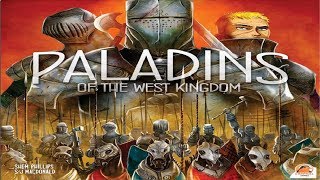




































Paladins of the West Kingdom Deep Dive
What the Community Thinks About Paladins of the West Kingdom
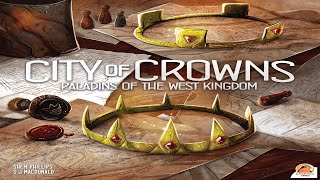
Paladins of the West Kingdom stands as a notable entry in Garphill Games' expanding slate of medieval-themed worker placement titles. Reviewers consistently position it as a significant step up in complexity and decision weight compared to earlier entries in the West Kingdom family. The game earns particular praise for its satisfying engine-building depth and the intricate cascading effects that reward careful planning and precise action ordering.
Core Mechanics That Define Paladins of the West Kingdom
Worker Placement with Color-Based Constraints
The foundation of Paladins rests on distributing workers across action spaces, but with a crucial twist: many spaces demand specific worker colors. Each round, players acquire workers through their selected paladin card and tavern card, determining both quantity and color composition for their actions. Purple workers serve as wildcards, allowing flexibility on any space, though they carry a hidden cost. Earning too many purple workers accumulates suspicion, eventually triggering penalties when the tax meter fills. This mechanic forces meaningful tradeoffs between immediate flexibility and long-term point efficiency, ensuring that resource scarcity remains central to decision-making throughout the game.
Engine Building Through Attribute Advancement
The right side of the player board features a cascading system where actions require attributes to complete, and completing those actions boosts different attributes in return. Players invest early turns into attributes like Fortification, Military Strength, and Faith, creating compound engines where later actions unlock new possibilities and generate exponential returns. The core system rewards understanding synergies between action chains: recruiting the right townsfolk early can trigger cascading bonuses that compound with every debt paid off or wall built. Multiple viable engine archetypes exist within a single game, and the rotating set of King's Orders ensures that the highest-value scoring paths shift from session to session, forcing players to adapt their engine strategy dynamically.
The Paladins of the West Kingdom Experience
Cerebral and Crunchy Decision-Making
Reviewers emphasize the intellectual demands of Paladins, noting that it genuinely qualifies as a heavy Eurogame with substantial decision weight. Each turn presents multiple action options, each with opportunity costs and delayed benefits. The order in which actions resolve matters profoundly, making timing and sequencing central to optimizing returns. Players must balance short-term competitive opportunities, such as claiming limited monk placements or outsider conversions, against long-term engine payoff. The game rewards contemplative play and punishes rushing; carefully mapping out turns in advance and understanding the full chain of cascading effects separates skilled play from fumbling through options.
Focused, Low-Interaction Play
While Paladins features some competitive moments, particularly around central board spaces like the recruit display and outsider acquisition, the vast majority of gameplay unfolds on individual player boards. Reviewers note that interaction is limited compared to games with more contested shared spaces. Most turns involve players executing their own boards' actions with minimal direct interference from opponents. This creates a solitary-puzzle atmosphere where each player optimizes their personal tableau, making it an excellent fit for players who prefer engines over conflict but still appreciate knowing their opponents are advancing simultaneously.
What Makes Paladins of the West Kingdom Stand Out
Satisfying Action Chaining and Crescendo Moments
One of the game's signature experiences is the moment when a carefully constructed engine fires on all cylinders. By mid-game, well-planned engines begin generating multiple actions per turn, allowing players to chain operations together in ways that feel inevitable yet deeply rewarding. The satisfaction of placing a single worker that unlocks three subsequent actions, each generating workers, points, and attribute progression, represents the game's highest moment. This crescendo pattern, building from constrained turn-one decisions to accelerating returns in later rounds, keeps players engaged from start to finish.
The AI Opponent as a Legitimate Threat
For solo players, Paladins offers one of the strongest AI systems in modern board gaming. The AI opponent behaves like a competent human player, competing intelligently for valuable spaces and adapting its strategy based on the rotating King's Orders. Rather than playing by different rules or receiving handicaps, the AI uses the standard game systems but benefits from perfect information about available actions and future King's Orders. The AI's aggressive early positioning forces genuine competition, making victory feel earned rather than inevitable.
Potential Drawbacks
Steep Complexity and Setup Burden
Paladins demands significant onboarding investment. With multiple action types, attribute tracks, conditional bonuses, and interactive board state, the rulebook can feel overwhelming on first play. Setup time extends to 15-20 minutes, with the solo mode requiring an additional AI player board, AI deck, and tracking systems. The game is not a casual pickup-and-play experience; players commit to a 2+ hour session that requires focused mental energy throughout. New players should expect a learning curve spanning 2-3 plays before the systems click into intuitive patterns.
Limited Player Interaction and Downtime
The high-downtime design frustrates players who thrive on direct opponent interaction. Since most actions occur on individual boards, the game can feel like solitary engine-building punctuated by occasional race moments for central spaces. In the 4-player count, this downtime becomes pronounced, with each turn involving extended waits while others optimize their boards. The game serves competitive players who enjoy the intellectual challenge of outbuilding opponents, but it does not offer the dynamic back-and-forth of interaction-heavy games.
If You Enjoy Paladins of the West Kingdom
Players who love Paladins should explore the broader West Kingdom family, beginning with Architects of the West Kingdom and Raiders of the North Sea as lighter entry points. For deeper engine-building experiences, Anachrony, Concordia, and Village offer comparable decision weight and cascading reward systems. Stone Age and Hadrian's Wall provide worker placement with simpler rules but similar strategic depth. For solo enthusiasts, Circadians: First Light and Viscounts of the West Kingdom offer AI-driven competition in the same design family, while Agricola and the original Dominion deliver comparable engine-building satisfaction through different mechanical lenses.
What Reviewers Are Saying
"This is one of the games where one action plan at the right moment can chain together with other things perfectly, sometimes the order of action matters as action could earn you more of the right color meeple so you can afford to do more actions this round."
— Meeple University
"The best thing about this game is building an engine that works, it's so damn satisfying. Paladins takes a step up from most Garphill games in terms of complexity and depth, and the engine building and paths to victory are many and varied."
— 3 Minute Board Games
"Paladins is a deep rich complex engine building game with a heck of a lot of decisions to make from the start of your turn to the end of your turn, and how you can just keep getting actions and keep maximizing your returns each and every turn building to a crescendo at the end."
— 3 Minute Board Games