/pic7068848.png)


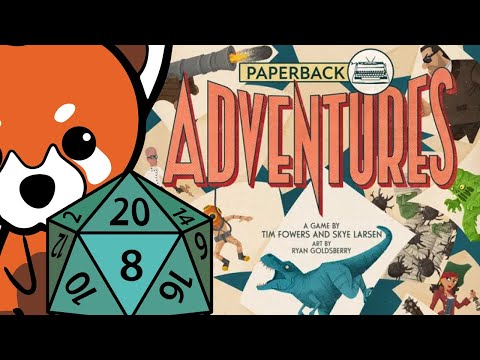







Paperback Adventures Deep Dive
What the Community Thinks About Paperback Adventures
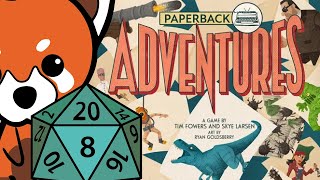
Paperback Adventures has captured the imagination of solo board gamers across the community with consistent praise for its clever design and engaging gameplay. Reviewers consistently highlight how the game succeeds in being both deeply strategic and genuinely fun, something many deck builders struggle to achieve. The game has shown remarkable momentum, jumping over 500 positions in the People's Choice Solo Board Game List year-over-year, indicating growing appreciation among serious solo gamers. While some found it ranked lower than expected given its quality, most who engage with the game report returning to it repeatedly, drawn by its unique combination of word-building mechanics and roguelike deckbuilding systems.
Core Mechanics That Define Paperback Adventures
Word Building as Strategic Engine
At its heart, Paperback Adventures asks players to build words from letter cards drawn each turn, but the game transcends simple word games through brilliant mechanical integration. Unlike typical word games where longer words are always better, Paperback Adventures forces continuous tactical decisions about word construction. Players must consider not just the letters available, but which card should end up on top to trigger its special ability. Each letter card has abilities on both sides, and splaying cards right or left determines which abilities activate. This means a short word with the right ability often outperforms a longer word with weaker effects. The wild card and enemy vowel provide flexibility, but using the wild card costs a bonus. Every turn presents a fresh puzzle where word validity and strategic positioning intertwine.
Deck Building Within Narrative Progression
Players progress through six encounters organized into three books, each containing a smaller enemy and a boss. This structure creates natural escalation of difficulty, with each boss presenting unique threats that force adaptation. Between battles, players spend currency called Boons to purchase new letter cards or special items, gradually improving their deck. The genius of the design lies in how purchasing decisions immediately affect upcoming challenges. Defeating enemies grants healing and rewards based on how much health the player retained, directly incentivizing intelligent play. Health persists across all six battles, transforming the experience from a single sprint into a tense marathon where every decision compounds. Unlike most deck builders where your deck improves steadily, Paperback Adventures strips cards from circulation when they're used as the top card of a word, forcing careful management of your shrinking library.
The Paperback Adventures Experience
Roguelike Satisfaction Through Unique Runs
Each playthrough feels distinctly different because of the random enemy encounters, variable item availability, and the multiple playable characters. The game captures the addictive loop that made Slay the Spire and its digital descendants compelling: complete a run, evaluate your strategy, adjust your approach, and immediately want to play again. Reviewers noted that the word-building layer keeps it feeling genuinely novel rather than copying another game's systems. One player described the final turns as perfect: completing a run where everything aligns, where cards synergize beautifully, where a seemingly random hand of letters yields exactly the word you need with the ability you need. These moments of satisfaction transcend the mechanical satisfaction of standard deck builders because they require actual word-craft, not just resource optimization.
The Solo Game as Meditation on Writing
The game deliberately mirrors the act of writing itself. Letters getting fatigued from use represents editing and revision. Word analysis paralysis translates directly to writer's block. The core loop of forming words under pressure maps onto the creative struggle of authorship. This thematic integration means the game works on a narrative level beyond pure mechanics. Playing as Paige Turner and her various protagonists, you literally write their trilogy over the course of six battles. The game rewards both clever word choice and strategic acumen, making each playthrough feel like a story emerging from your decisions rather than a predetermined challenge you're solving.
What Makes Paperback Adventures Stand Out
Design Precision Over Content Volume
Unlike many ambitious games that drown players in options, Paperback Adventures achieves exceptional replayability through elegant design rather than expansive content. The core mechanisms create emergence from limited pieces. Every boss has scripted attack patterns that you can see in advance, removing luck from enemy actions and focusing challenge entirely on your ability to respond with clever word construction and deck management. Each enemy's weakness and special abilities feel thematic and distinct, from a flirtatious suitor who heals after every turn unless you deal enough damage to stun him, to paladin-like bosses that accumulate increasingly dangerous boons. The limited card pool forces constant decision-making about what to purchase, and the limited hand size of four cards means you're rarely overwhelmed with options.
Accessibility Without Simplification
Reviewers consistently praised how the game remains approachable despite tactical depth. Starting with only four-letter hands means you're rarely fumbling with obscure words. The game doesn't require wordsmith mastery; most words formed are short, common, and intuitive once you grasp that abilities matter more than length. Yet the depth emerges naturally for engaged players who discover how splaying direction, card positioning, and ability timing create a decision space far richer than traditional word games. One reviewer noted that even terrible spellers can succeed if they understand game systems, because the constraints themselves guide valid word construction.
Potential Drawbacks
Component Quality and Packaging Frustrations
Reviewers had significant complaints about the physical product despite loving the design. The rulebook received particular criticism for being poorly organized and difficult to reference mid-game. The metal stat trackers that slot into plastic trays cause finger discomfort when inserting and removing them. Most problematic, the game includes exactly enough sleeves as cards, meaning a single sleeve tear requires purchasing additional sleeves that aren't included. This design choice seems punitive for a game that explicitly requires shuffling.
Complicated Publishing Model and Multiplayer Design
The core box requires purchasing a separate character box to become playable, similar to Final Girl but potentially confusing for new buyers. While the separate character boxes introduce useful content, the core characters feel mechanically similar enough that the distinction matters less than it could. The included two-player variant received mention as awkward and clunky, with reviewers suggesting that sharing decisions cooperatively works better than the official two-player rules. Additionally, the digital version exists and launched shortly after the physical release. Some players found the digital version easier to learn but felt the tabletop version's tactile crunch and manual complexity created the superior experience.
If You Enjoy Paperback Adventures
Players drawn to Paperback Adventures should explore the original Paperback and Hardback games, though reviewers noted those lack the refined polish and thematic integration. The obvious comparison point is Slay the Spire, though Paperback Adventures achieves something distinct through its emphasis on player agency over randomness. Since enemies reveal their actions in advance and the challenge emerges entirely from building optimal words and managing your deck, every loss feels attributable to your decisions rather than bad luck. Fans should also consider Final Girl, which shares the core box plus character boxes structure and similarly delivers emergent decision-making from limited components. Players who value roguelike structure and repeated short gameplay loops should examine other solo titles on the People's Choice list like Mage Knight or Marvel's Midnight Suns, though neither incorporates word-building mechanics.
What Reviewers Are Saying
"I love paperback Adventures. It's my favorite solo game, it's my favorite deck builder, it's one of the best games we have ever reviewed as a game. I love it, I recommend it, I hug it, I raise it in the air like a lion cub to bestow it on the populace."
— No Pun Included
"Paperback Adventures does a great job of doing this roguelike thing where you're going through a run and if you ever die like that's the end of your run, you're seeing if you can beat the run, and it's going to be a unique build every time of different powers that come together. I absolutely love that formula."
— Rolls in the Family
"The word uh version of final girl in that you have like that core box really I have to try you know not rolling but it is yeah like I just I really really love um yeah that system of I'm not into I don't like word games but just this gives you so much so much stuff to do as you're creating the words."
— Beyond Solitaire