


























The characters of Alice's Adventures in Wonderland are having a Parade!
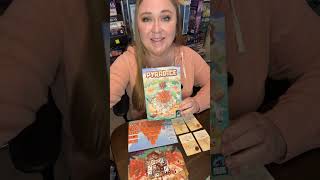
All players are producers of this parade. Characters from Lewis Carroll's books such as Alice, The White Rabbit, and The Hatter are steadily invited to join this weird procession.
On your turn, you play a card (from your hand of five) to the end of the parade. Unfortunately, that card might cause other cards to walk off the parade. These cards count as negative points in the end.
The length of the parade line is important. If the number of the card you just played is less than the line length, you may receive the excess cards (counting from last played to the first of the line). But you don't take all the relevant cards, only the cards that meet one of these requirements:
1. the color is the same as color of the card just played, or
2. the number is the same or lower than the card just played
The game ends when the draw deck is exhausted or when one player has collected all six colors in their point piles. Then everyone plays one last card. From the four cards remaining in their hand, players choose two cards to add to his or her point piles. The player who has the least negative points after this is the winner.
Scoring:
Normally, negative points are same the number on the card. But if you have the most cards in a certain color, each of your cards of that color counts as only 1 negative point!
Thus, play your cards well!
- Great two-player game
- 20-30 minute playtime with quick setup
- Strong emphasis on strategy and thinkiness without a long playtime
- High replayability due to random setup and varying objectives
- Clear iconography and helpful visuals on the player aids
- Array
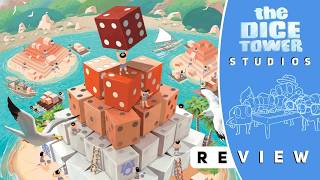
- Pyramid-building, ancient Egypt-inspired
- informational/review
- World Wonders
Mechanics (from transcript analysis)
- dice drafting — Players take dice from a central pool to place on their pyramid.
- dice placement — Dice must be placed with support from cells below; the pyramid structure grows upward.
- Dice placement with supporting requirement — Dice must be placed with support from cells below; the pyramid structure grows upward.
- End-game scoring based on objective cards — Objective cards and row objectives determine scoring; game ends when the pyramid is full.
- Pattern/row-based objectives and color-specific scoring — Objectives require color dice to meet patterns and color-based scoring cards.
- Randomized setup with variable objectives — Pyramid dice are randomized; four objective cards are randomly selected and mapped to colors.
- Unique player powers — Each player has optional abilities that can manipulate dice already in their pyramid.
- Variable player powers — Each player has optional abilities that can manipulate dice already in their pyramid.
Video topics + discussion points
Quotes (from this video)
- Paradise is a great two-player game.
- There's just enough thinkiness and strategy.
- The variability from game to game gives you a lot of different, you know, things to shoot for and to think about.
- Set up quickly, and have a good time with.
References (from this video)
- Array
Mechanics (from transcript analysis)
Video topics + discussion points
Quotes (from this video)
- pack small box games they're easier to pack
- laminate two sheets and then we've got sheets that we can reuse and reuse and just clean off as we go
- we only play like two or three games a day
- souvenir games we always we always buy a game we always look at the board game store whatever city we're in
- they're gonna be in another language when you're in another country so good to keep in mind games that are either language independent
- space to bring back gloomhaven home from italy would be a real mistake
References (from this video)
- Artwork is gorgeous; approachable for new players
- Complex decisions lead to memorable moments
- Some tension around avoiding bad cards and managing colors
- Color/sequence management and risk-taking
- Alice in Wonderland-themed parade of cards
- Whimsical, narrative-rich
Mechanics (from transcript analysis)
- card drafting — Play a card and discard others; color majority flips reveal points
- Card drafting and color counting — Play a card and discard others; color majority flips reveal points
- Color-wide scoring — Most of a color flips over and counts as one; high total loses
- Compound Scoring — Most of a color flips over and counts as one; high total loses
Video topics + discussion points
Quotes (from this video)
- parade would be my number one because i love this game
- this is like the best bang for your buck you're gonna find
- it's an absolute blast
- it's so worth it
- this has been the game of the summer for us
- we've played this like most nights this summer
References (from this video)
- Cool, distinct miniatures with strong visual design
- Thematic integration of terrain and character abilities
- Relatively quick 20-60 minute play with replayable scenarios
- KO revival mechanic adds strategic tension
- Intuitive dice system with potential for big rolls
- Rulebook is confusing in prototype and contradictory
- Some character sheets have ambiguous ammo and ability text
- Overpowered card like Perfect Timing can end the game quickly
- First-player advantage makes early rounds potent
- Dice are large and fiddly; slows down rolling
- Lack of player aids and scoring clarity in early prototype
- Mad Max–like factions clashing over objectives
- savage post-apocalyptic wasteland
- skirmish-focused with character-driven abilities and KO revival
- Heroescape
- Warhammer
Mechanics (from transcript analysis)
- Card draft — Players draft action cards pregame that alter dice and trigger abilities.
- card drafting — Players draft action cards pregame that alter dice and trigger abilities.
- Compound Scoring — Different scenarios provide various VP routes (central objectives, destroying targets, etc.).
- Cover bonuses — Cover provides +2 dice to defense rolls.
- Dice system — Dice have doubles, hazards, blanks, and successes; more dice can yield more damage and chances for double successes.
- end game bonuses — Cover provides +2 dice to defense rolls.
- Focus action — Focusing adds two dice to the turn's attack.
- KO revival — When a unit is knocked out, it can be revived at the start of the next round, at a VP cost to the opponent.
- Measurement Movement — Movement uses a ruler for 1-3 range; attack range determined by weapon.
- Range measurement — Movement uses a ruler for 1-3 range; attack range determined by weapon.
- Scenario objectives and positioning — Objectives influence placement and endgame scoring; revives add strategic depth.
- scenario-based scoring — Different scenarios provide various VP routes (central objectives, destroying targets, etc.).
- Simultaneous Actions — Each character gets two actions per turn, with only one allowed to be an attack.
- terrain and positioning — 3D terrain and water tower provide line-of-sight and elevation considerations.
- Two actions per turn — Each character gets two actions per turn, with only one allowed to be an attack.
Video topics + discussion points
Quotes (from this video)
- Paradise is a skirmish style miniatures game set in a savage post-apocalyptic world.
- beer and pretzels a trash gaming Mad Max themed.
- The KO system influencing positioning.
- Paradise runs quite true to time. It says 20 to 60 minutes and 60 minutes felt really on point.
- I would easily play this again.
- I would 100% play this over Heroescape.
References (from this video)
- Juicy, decision-rich two-player interaction
- Distinct 3D pyramid centerpiece adds visual and tactile appeal
- Clear, varied scoring options that reward forward planning
- Accessible and compact playtime around 30 minutes
- Strong production alignment with theme
- Setup can feel fiddly due to the required order for bonus tiles
- Four-player variant is less engaging according to the reviewer
- Some scoring bonuses are relatively small compared to the main color/ dice-card scoring
- abstract puzzle with a sandy, pyramid-building motif
- Pyramid-building between two players with a dice-driven, tile-placement system
- abstract
Mechanics (from transcript analysis)
- bonus tiles with immediate actions — Bonus tiles grant instant actions when a die is placed, and must be arranged in a specific order.
- dice drafting — Players select dice from a central pyramid, constrained by visibility (three sides) and color.
- end of round / end of game scoring — Final scoring combines row/column bonuses and color majority points for each color.
- pattern recognition / spatial reasoning — Players weigh which dice to take to satisfy on-board scoring patterns while advancing their own pyramid.
- set collection and color-based scoring — Each scoring card ties to color groups and patterns; final points depend on color dominance and placements.
- tile/board placement — Placed dice build a multi-level pyramid on each player's board, influencing future options.
Video topics + discussion points
Quotes (from this video)
- there's a little bit of fiddliness, I think, in setting the game up.
- not getting too thinky. This is just enough brain power, I think, for a back and forth good two-player game.
- I found it to be enjoyable.
- I'd give this game a seven out of 10.
- This is a game that says here 30 minutes.
- I'm always going to pick the color bonus I think.
- From Arcane Wonders, definitely check it out.
References (from this video)
- Brilliant, under-the-radar discovery at a booth
- Concise abstract strategy with high interaction
- Easy to grasp for 2-4 players; quick sessions
- Strong focal point on watching and countering opponents' objectives
- Limited public information and uncertain publisher identity
- No published data about designer or year
- Very little external coverage at time of discovery
- Competitive objective-blocking; players aim to foil others' plans
- Abstract strategy arena for up to 4 players; short playtime
- abstract/minimalist
- Santorini
Mechanics (from transcript analysis)
- Action Interruption — Players can influence or hinder opponents' plans to deny them victory.
- interference / blocking — Players can influence or hinder opponents' plans to deny them victory.
- multiplayer interaction — Supports up to four players with dynamic, confrontational play.
- Objective-based play — Players have personal objectives that influence the shared state; success depends on achieving them while contending with others.
- Positive player interaction — Supports up to four players with dynamic, confrontational play.
Video topics + discussion points
Quotes (from this video)
- Be watchful of other people's objectives and preventing the game state from going into their favor.
- it's up to four players
- I thought it was brilliant.
- one of these like very looked over booths
- I already posted a cc short of that
- we'll see what day two has in store for us
References (from this video)
- stylized pirate theme with serious tone
- rich artifact components and artwork
- strong synergy between area control and card usage
- serious pirate-era adventure with crew upgrading and area control
- pirate world with sea raids, pillage, and treasure
- weighty, thematic pirate conquest with strategic decisions
- Spectacular Riverside titles
- Sea-themed heavy euro peers
Mechanics (from transcript analysis)
- Area Control — map-based control of territories during play
- crew upgrading and ship enhancement — players upgrade their crew and boats to improve capabilities
- Multi-use cards — cards serve multiple purposes: actions, combat, and crew management
- pillage and resource gathering — players pillage and collect treasure as a core resource loop
Video topics + discussion points
Quotes (from this video)
- a 3D tile placement environment. Very lovely.
- cozy Japanese style
- each turn, you're going to be meditating
- it's a deck building cooperative game.
- we love a deck builder and deck builder doing like cooperative sounds super cool.
- Let's jack in.
- this is a deck building dice allocation rally game like racing game
- the action cards and the dice allocation is going to tell you how good your pilot is going to be
References (from this video)
- Elegant twist on a classic shedding game
- Accessible and tactical with timing decisions
- Can rely on luck due to card draws
- Ghost
- Palace
Mechanics (from transcript analysis)
- cemetery mechanic — A second-hand area (cemetery) for cards drawn or played unpredictably influences future hands.
- climbing shedding — Players aim to get rid of all cards by playing higher cards to a central pile, with special cards affecting play.
- shedding — Players aim to get rid of all cards by playing higher cards to a central pile, with special cards affecting play.
Video topics + discussion points
Quotes (from this video)
- Lovely production nice artwork it's been around for years now
- it's a push your luck game and it's quite simple but tense
- it's a game of chicken and the dungeon gets bigger and scarier
- it's a neat little decision
- it's a classic trick taking game
References (from this video)
- Supports up to six players
- Good fit for watch it played team at events
- May be too thinky for casual players
- Parade-style competition
- Thinky card game for groups
- Strategic, slightly abstract
Mechanics (from transcript analysis)
- Card play / thinky card drafting — Six-player capable party game with heavy decision making.
Video topics + discussion points
Quotes (from this video)
- this is the first time we're bringing out cabo deluxe deluxe
- it's the easiest thing to grab on the shelf
- this is the physically biggest one that we have
- not alone without location powers
- Parade plays up to six
- Jack's Friends is a streamlined Not Alone with different locations
References (from this video)
- fast, approachable filler
- unique q-system creates tense, small-turn decisions
- beautiful art and approachable for families
- visuals may be too busy for some
- scoring can feel random if not careful with timing
- light-hearted, whimsical
- Alice in Wonderland-inspired parade routes
- fill-collection and push-your-luck with a quirky twist
- Cockroach Poker
Mechanics (from transcript analysis)
- q-system / queue drafting — players place cards into a row and skip past cards based on the value
- set collection / scoring by type — end-of-game scoring based on card types collected
Video topics + discussion points
Quotes (from this video)
- i think this game is actually a huge step up when it comes to decisions choices
- it's not the best game in the world but it's fun
- the more you upgrade the jeep track, the more movement you get in your park
- this is did it so well that replaced the game for you
- it's a race game and the more you upgrade, the more income you receive
- the q system is really clever and unique
References (from this video)
- unique take on card interaction and drafting rhythm
- tension and golfing-style scoring adds excitement
Mechanics (from transcript analysis)
Video topics + discussion points
Quotes (from this video)
- Mandala blew me away this year
- Chinatown is the best negotiation game out there
- barrage is a 10 out of 10 game for me
References (from this video)
- Compact, quick rounds
- Tactile/card feel adds charm
- Requires some familiarity with concept; may be less intuitive to new players
- card management / favorites
- Card-based social interaction
- card-centric
- Kalimala
- Glen More II
- Fort
Mechanics (from transcript analysis)
- card drafting/collection — Players identify and track favorite cards; reveals and discussion influence scoring in a social context.
Video topics + discussion points
Quotes (from this video)
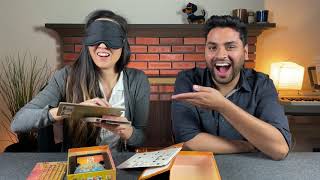
- hello everyone we are here with another video this is something a little different something we've never done before
- blindfold board game challenge
- please go follow them at on tick tock or on youtube at one minute board games they're awesome
- we did three games each
- oh my gosh i'm in love with this game so much
- it's a deck building
- it's not easy euphoria no
- thank you to rayna and phil for this inspiration
- close your eyes and have somebody hand it to you you'll see what i mean
- you guessed it yeah
References (from this video)
- Elegant multi-color/value interaction
- Interesting theme with a challenging first-play experience
- Rules explanation can be heavy on first play
- orderly sequencing and color/value matching
- Alice in Wonderland-inspired card play
- Alice in Wonderland
Mechanics (from transcript analysis)
- set collection / sequencing — Play cards in numerical order and color-based sets to score
Video topics + discussion points
Quotes (from this video)
- Hanabi is such a unique game I don't think I've ever really played anything super like it before
- we have never been so in sync in our lives
- it's a riot every time we play it
- this is a true top ten they are ranked
References (from this video)
- fun, family-friendly vibe
- strong thematic feel for a party/rowdy game
Mechanics (from transcript analysis)
Video topics + discussion points
Quotes (from this video)
- it's a beautiful kind of story
- you need to play with the right group
- it's not cute
- it's like comfort food games
- the rules are simple
- oh my god it's so good
- it's a ramp... chaos
- this is an easy one to just flick some discs around
References (from this video)
- clever, thinky gameplay
- great with groups and at conventions
- can be punishing if you misread opponents
- not ideal for very small groups
- card manipulation and bluffing
- Alice in Wonderland-themed parade
- intense, social, competitive
- Love Letter
- Cockroach Poker
Mechanics (from transcript analysis)
- Betting and bluffing — bluff and deduce opponents' choices
- color card management — manipulate sheets of cards to optimize parade cards
- multi-color card management — players push or pass cards to manage a color's score toward a goal
- Multi-use cards — players push or pass cards to manage a color's score toward a goal
- opponent signaling and bluffing — bluff and deduce opponents' choices
- set collection and bluffing — players try to influence outcomes by what cards they push and when
Video topics + discussion points
Quotes (from this video)
- it's a really intense game
- this is the meanest tree game out there
- it's the best trick-taking game of all time
- the economy in this game is probably one of the most interesting parts
References (from this video)
- tight, strategic decisions
- high interaction for an abstract game
- can be brutal or unforgiving
- art style may not appeal to everyone
- mean-spirited and competitive parade vibes
- abstract procession and parade
Mechanics (from transcript analysis)
- abstract strategy — players maneuver tokens to create optimal parade formations.
Video topics + discussion points
Quotes (from this video)
- it's amazing you were right it was 34
- now everyone can stop watching and go play a game
- how I Met Your Mother and I knew that Neil Patrick Harris was a really big nerd
- follow me on Siege on games on Twitter and I'm trying to do a lot more Instagram there