/pic5159421.jpg)
































Paris Deep Dive
What the Community Thinks About Paris
Paris has earned genuine affection from the board game community for combining elegant simplicity with surprising strategic depth. Reviewers consistently highlight how deceptively complex the game becomes once players engage with its interlocking systems. The consensus is that this is a game that looks straightforward at first but reveals itself as a tightly-tuned strategic challenge that rewards careful planning and adaptation.
Core Mechanics That Define Paris
Area Control Through District Majorities
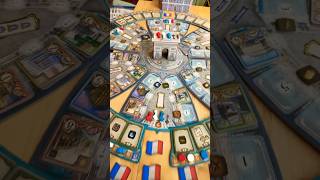
The heart of Paris revolves around establishing majority control across six districts. Players spend the entire game positioning their keys on buildings, and whoever holds the highest combined value of buildings in each district claims those precious points at game's end. The system forces players to make meaningful choices about whether to compete heavily in one district or spread keys across multiple regions. As reviewers noted, "there's a big ring of bonus tiles around the outside which influences a lot of the strategy of the game," creating constant tension between quick money grabs and long-term positioning.
Resource Management and Money Economy
Every action costs careful management of francs, prestige tokens, and building materials. Placing a key in a district bank generates money; but cheaper districts provide less currency than wealthier ones. Players must decide whether to secure quick funds or use the Arc de Triomphe for flexibility and commit their coins to eventually moving keys onto expensive buildings. The economy creates a cascading decision tree: do you have enough money to move that key? Can you afford the building materials needed for an eight? Should you sell resources back for cash? Reviewers found this system masterfully balanced, noting that "there's always only one copy of these bonuses and so you've got to pick what's most valuable to you and what you think other players aren't going to get."
The Paris Experience
Quick But Thoughtful Turns
Despite the abundance of scoring pathways, Paris plays with surprising speed once players understand the rhythm. Each turn consists of a single action; place or move a key; yet that simplicity masks the decision-making happening beneath. Reviewers appreciated that "the actual game is it's really quick like you just take one key from your supply to the board or move one key from the already out there to a building paying the cost." The real-time tension comes not from fiddly mechanics but from the strategic weight of choosing where to invest limited keys and resources. Bonus tiles can be claimed within moments, yet planning to cash them in at exactly the right moment adds a breezy yet tactical pace.
Dynamic and Responsive Gameplay
Players can't plan too far ahead because buildings get seeded semi-randomly throughout the game. This creates an interactive, responsive experience where you must adapt to what the board offers while trying to block opponents from ideal positions. Reviewers noted the compelling push-and-pull: "these get seeded in randomly you quickly learn you don't have that much control over what's going on but you just have to respond which which is pretty nice." The fact that you can move your key around the outer bonus track in one direction only; advancing as far as you want but unable to retreat; creates tense decision moments that linger in memory.
What Makes Paris Stand Out
The Prestige Token Engine
Building landmarks becomes the game's most rewarding moment, converting bronze, silver, and gold prestige tokens into satisfying victory points. Reviewers found themselves collecting these tokens throughout the game specifically to have enough for a late-game landmark building explosion. This creates a second layer of strategy beyond district control: do you prioritize collecting prestige early, or focus on getting keys onto buildings? The answer depends on the scoring situation, and the flexibility of choice attracted praise.
Beautiful 3D Production and Table Presence
The Arc de Triomphe centerpiece; a 3D cardboard model; gives Paris genuine visual appeal at the table. Reviewers singled out the production quality: "I really like the setup of the board it's really pretty and in the center the actor triomphe 3d gives a good table presence." The player screens shaped like 3D buildings add personality without overwhelming gameplay. The components feel tactile and pleasant without being essential to the experience.
Potential Drawbacks
Many Tiles Demand Careful Setup
Paris requires significant setup, with building tiles needing to be organized by district and placed in specific order. Reviewers acknowledged this friction: "there's so many tiles that have to be placed in specific orders it's quite a big quite a big setup time." However, they added that once the game gets rolling, this setup time pays off in a smooth, engaging experience.
Requires Multiple Plays to Fully Grasp
The abundance of bonus tiles with unique scoring conditions means new players benefit from at least two plays before strategy crystallizes. Reviewers found that "it takes a couple of plays to understand to understand what's going on but it does play through pretty quickly after that." The game sits in that sweet spot of "not thematic in any way" but mechanically sound, meaning it rewards study and adaptation rather than relying on intuitive theme immersion.
If You Enjoy Paris
Paris fans should explore Michael Kiesling's other work, particularly Azul and Miyabi; games that share his signature approach of simple rules with genuine hidden depth. Players who appreciate area majority scoring systems will recognize familiar ground here, but Paris' addition of the landmark building system and prestige token conversion creates its own identity. The responsive, adaptive gameplay suggests fans of games like Seven Wonders Duel and light Euros who want decisions without analysis paralysis will find Paris rewarding. The game respects your time while still offering the mental satisfaction of strategic optimization.
What Reviewers Are Saying
"It's quite a bit of depth I think... there is so much depth within it itself and decisions and yeah it's very complex once you start... there's a lot of decisions I think that make the game really good."
— Meeple University
"We really enjoy the tile laying. This is very clever in the way that you're building it out. We've played a lot of polyomino tiling games but this one does it differently because it gives you a sense of loss. It's like a tug of war because it's two player only and it's a shared board, and it's so tactical."
— Before You Play
"The fact that you can move your piece forward as far as you want... you've got to pick what's most valuable to you and what you think other players aren't going to get... there's all those sorts of timing things that come into play."
— Meeple University