
Take the reins of your Civilization and make the choices that will make it the most prosperous. It doesn't matter which path you take, as long as it leads your people to glory. Research new technologies to improve your nation's Science, Military strength, Spirituality, Culture and Industrialization. Grow the greatest Philosophical current of humanity. Use your Philosophers to become one of its forerunners and thus decide its evolution. Send your Builders to create wonders from your territory that will outlive everything, even men. Grow your Population so that the most illustrious Leaders are born from it and change the world forever, even after their death. Develop your Military Legacy so that the name of your civilization is enough to make your opponents tremble. And if that is not enough, send your army to defeat even the most distant External Threat. Use your Sages and the knowledge of your civilization to solve the great Challenges of humanity that will mark its history.
In Path of Civilization, from the very first second of the game you must make choices that will have repercussions until the end of the game. The game is played simultaneously and works with a simple card and resource management system. The diversity of its cards guarantees enormous variability.
—description from the publisher


Images

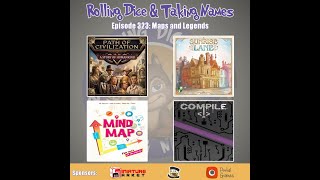
- Little downtime
- Flows well and rounds end up quickly
- Good iconography, making it easy to understand and teach
- Variability with different leaders and wonders each game
- All cards in the technology, wonder, and leader markets remain available throughout the game, allowing for planning.
- Doesn't feel like a traditional Civ game due to lack of player-vs-player combat and a non-linear tech tree
- No map exploration or direct player interaction
- Requires significant sticker application for the card trays
- Building a civilization through technology, military, culture, and industry.
Mechanics (from transcript analysis)
- Card Drafting — Players acquire multi-use cards that can be used for assigning cubes to trays or advancing on tech trees. The technology market is always available, with unpurchased cards remaining for future rounds.
- Engine Building — Acquiring better cards, technologies, wonders, and leaders to create a more efficient civilization over the course of the game.
- Resource Management — Players manage various resources (cubes, research points) to purchase technologies, wonders, and leaders.
- Tech Tree — Players advance on technology tracks, purchasing technologies that provide bonuses and contribute to end-game scoring. Unlike traditional Civ games, players can jump to any technology without a strict prerequisite order.
- Worker Placement — Cubes (workers) are assigned to different trays (battle, wonder, philosophy, etc.) to perform actions or gain abilities.
Video topics + discussion points
Quotes (from this video)
- I know for myself I'm going to start saving money right now I ain't ever moving again I ain't ever moving myself again no some I'll paying somebody to come in and pack up this house and load it up
- Well the one for 268 makes sense because we did the Mozart game oh yeah yeah yeah yeah
- I really like that too and it makes resolution of who gets what very quick and snappy alleviating any downtime
- This is why for me it's a solid Euro game with a Civ theme.
- The conversation that was occurring after we were revealing was just as entertaining as watching people struggle to try to put it in relationship on this XY graph
References (from this video)

- technology/science, military, and culture growth
- civilization development with multiple branches
Mechanics (from transcript analysis)
- simultaneous_play — simultaneous card/resource management with tech trees
Video topics + discussion points
Quotes (from this video)
- this is a trick taking game
- this is a deck shedding ladder climbing game for two players
- don't break space-time Continuum
- I strongly recommend you subscribe to it
References (from this video)

- Civilization
Mechanics (from transcript analysis)
- civilization building — A civilization game.
- Track Advancement — A civilization game with track advancement.
Video topics + discussion points
Quotes (from this video)
- look how cute this is fabulous game as well
- look how great this is like components like just soing amazing
- look at this like amazing amazing
- this is a really fun social deduction
- it's really like you you should bit shy on social deduction you can you can like a little bit of a puzzle deduction as well
- this is a very popular game when it was out
- it's a logic game
- puzzle deduction game
References (from this video)

- accessible while feeling substantial
- strong track-based progression with interlocking economy
- box size may be large; not overly complex
- civilization progression with resource and track advancement
- Ancient civilization development
- simultaneous card play and track-based progression
- Brass
Mechanics (from transcript analysis)
- card-driven resource engine — Cards determine resources and track advancement; evolving engine across rounds.
- nine rounds with end-game leader dynamics — Fixed number of rounds with changing objectives and leaders.
- Simultaneous action selection — Players choose actions concurrently and reveal, driving pacing.
- Simultaneous Actions — Players choose actions concurrently and reveal, driving pacing.
Video topics + discussion points
Quotes (from this video)
- I love the theme it's renewable energy
- I love the engine building element
- it's a good challenge
- it's a really fun two-player game Simple Rules it's just many possibilities to win
- I think what stood out to me is that I enjoyed it and it's a Cooperative deck building game
- the economic part of it
References (from this video)

- great engine building
- simple actions using multi-use cards
- track advancement focused
- no explicit map for area control
- civilization
Mechanics (from transcript analysis)
- Area Control — Includes some area control elements, but lacks a physical map for placing meeples.
- Card Drafting — Players choose four cards each round to determine their actions, with cards having multi-use functions for resources or actions.
- Engine Building — Features engine building typical of civilization games.
Video topics + discussion points
Quotes (from this video)
- Goblin vaults this year is not only that game but it's all the way up in my top five
- the closest analog I haven't really seen anything exactly like it but the closest analog is Great Western Trail in terms of how the secondary scoring Market works
- for me this takes classic Great Western Trail and adds that Medium interaction I'm looking for
- I like Expeditions more than Scythe but I like Scythe
- I really like a good two-player abstract and this is a really good two-player abstract
- this has got this Euphoria bumping mechanics love it love it love it
- this really hits the mark there is a lot of medium Euro interaction in this game
- my number one game of 2023
- this is my favorite of Great Western Trail well Great Western Trail Argentina is close second but I decided okay I can't really you know I just want to put one great won Trail as one game one entry
References (from this video)

- Plays quickly
- Highly replayable
- Makes you feel clever
- Plays at a good speed
- Simultaneous play works well
- Artwork could be improved
- Civilization building
- Seven Wonders
Mechanics (from transcript analysis)
- Card Drafting — You have these different cards, and you're you have five cards. Each turn you play two cards on each side, and then you this and then you're you're coloring one forever.
- Leveling up — You're also getting leaders and Leveling up.
- Tableau Building — you're always going to buy a new one also at the end of every turn. So you always have five cards.
Video topics + discussion points
Quotes (from this video)
- The most carefully named top 10 we've ever done.
- It is just kind of almost the game that I just keeps giving.
- Every time I play it I'm like, 'Man, I just I love this game. I really, really enjoy it.'
- Planet Unknown is great.
- It's a lot of fun. It's silly fun but also it's very stressful.
- This one if you have not played it because of how intimidating it looks, give this a try because this is a fantastic game.
- It is a classic for a reason.
- Oh my goodness, do I love this game? It's so good.
- Everyone has a plan until you get punched in the mouth.
- It is so chaotic, and you're right. Afterwards, you need to sit there and be like, 'I need to relax a little bit.'
- It's it's it's fantastic. I love it.
References (from this video)

- Wasn't super impressed
Mechanics (from transcript analysis)
Video topics + discussion points
Quotes (from this video)
- I made three videos earlier this year. Three videos where I cover the different games I want to play, some games, some expansions, some games in 2024, all the various categories.
- Now, I've shown off some of the things they have in the past. I have this kind of messily over here right now. Just the various uh bits and bobs of various ways you can track 10 by 10 lists or you know uh the 5x5 lists or any different kind of challenges using fun little uh blanks that go in here and then you use little meeples to track the various uh scores you the various games you've played in order to see how well you're doing on your personal challenges.
- Um, I mean, I've played a bunch of games and I have various games I will want to play, but stick around to the end of this video and you'll see me uh put together on the fly with subject to change a challenge board for me to go through separate from my uh current challenge.
- Speaking of my current challenge, I have a package from him that just showed up over here.
- As much as Vegas Geek 3D does fun little magnetic boards, if you want a fun place to put your fun little magnetic board, check out these shelves behind me from Allplay, the table from AllPlay.
- Long story short, uh he saw that I have this challenge for myself of games I want to play. And so he said, "Hey, what if I think a challenge board for you?" And I was like, "That would be awesome."
- Do I actually have 35? 1 2 3 4 5 6 7 8 9 10. No, this is a 50 challenge board. Oh no, I need to add 50 games to the mix.
- I'm going to go ahead and open up the tokens and simply see how well we've been doing.
- Middle Ages is one of the games that I wanted to play and I have played Middle Ages.
References (from this video)
- Got that one done
Mechanics (from transcript analysis)
Video topics + discussion points
Quotes (from this video)
- I made three videos earlier this year. Three videos where I cover the different games I want to play, some games, some expansions, some games in 2024, all the various categories.
- Now, I've shown off some of the things they have in the past. I have this kind of messily over here right now. Just the various uh bits and bobs of various ways you can track 10 by 10 lists or you know uh the 5x5 lists or any different kind of challenges using fun little uh blanks that go in here and then you use little meeples to track the various uh scores you the various games you've played in order to see how well you're doing on your personal challenges.
- Um, I mean, I've played a bunch of games and I have various games I will want to play, but stick around to the end of this video and you'll see me uh put together on the fly with subject to change a challenge board for me to go through separate from my uh current challenge.
- Speaking of my current challenge, I have a package from him that just showed up over here.
- As much as Vegas Geek 3D does fun little magnetic boards, if you want a fun place to put your fun little magnetic board, check out these shelves behind me from Allplay, the table from AllPlay.
- Long story short, uh he saw that I have this challenge for myself of games I want to play. And so he said, "Hey, what if I think a challenge board for you?" And I was like, "That would be awesome."
- Do I actually have 35? 1 2 3 4 5 6 7 8 9 10. No, this is a 50 challenge board. Oh no, I need to add 50 games to the mix.
- I'm going to go ahead and open up the tokens and simply see how well we've been doing.
- Middle Ages is one of the games that I wanted to play and I have played Middle Ages.
References (from this video)
Mechanics (from transcript analysis)
- Action cards — Action cards are used to determine when the automa will take an action during different phases of the game, with difficulty levels affecting their timing.
- Automa Tableau — The automa tableau displays interest tracks and arrangements of action cards that dictate the automa's actions and difficulty.
- difficulty levels — Bronze, silver, and gold levels determine the difficulty of the automa's actions, with gold being the toughest.
- Interest Track — The interest track on the automa tableau is used to break ties when multiple cards match the automa's interest.
- Market Row — When the automa acquires a wonder or leader card, a card is removed from the market row matching the type depicted on the automa action card.
- Victory Points — Victory points are accumulated at the bottom of the action cards for the automa and serve as a base score to beat for the player.
Video topics + discussion points
Quotes (from this video)
- hello everyone welcome to the board gaming doctor my name is Phil and I'll be your board game doctor today
- good luck and have fun and thank you for Consulting the board gaming doctor for this rules overview take care
References (from this video)

- technologies, leaders, wonders, population, battles
- civilization building game spanning nine rounds
- instructional tutorial with step-by-step setup and playthrough
Mechanics (from transcript analysis)
- Agent deployment and population limit — Agents are deployed using colored cubes; the total cubes cannot exceed the current population as tracked on the population track.
- Card Drafting — Players start with five cards and each round select four to place in four horizontal slots, managing ancient technologies.
- Card drafting and deployment — Players start with five cards and each round select four to place in four horizontal slots, managing ancient technologies.
- End Game Bonuses — From round three onward, a challenge or battle is resolved for points, involving military power calculations and rewards.
- End-game scoring — Points come from multiple sources including tech cards, population, leaders (alive or dead), wonders, and endgame objectives.
- End-of-round events and battles — From round three onward, a challenge or battle is resolved for points, involving military power calculations and rewards.
- Multi-Use Cards — Spend research points to buy exactly one technology card from the market and place it on the player board to gain its bonuses.
- phase-based rounds — The game progresses through nine rounds, each with phases A-F (project, deployment, evolution, research, technology purchase, end of round event).
- Philosophy track and benefit tiles — Advancing on the philosophy track allows gaining benefit tiles, with first-to-advance timing affecting benefits for the rest of the game.
- Technology market and purchase — Spend research points to buy exactly one technology card from the market and place it on the player board to gain its bonuses.
- Track Advancement — Advancing on the philosophy track allows gaining benefit tiles, with first-to-advance timing affecting benefits for the rest of the game.
- Variable Phase Order — The game progresses through nine rounds, each with phases A-F (project, deployment, evolution, research, technology purchase, end of round event).
- Wonder and Leader purchasing via bidding — Wonders and Leaders are purchased by bidding builders; bidding results are resolved by category priority if contested.
Video topics + discussion points
Quotes (from this video)
- phase a is the project phase
- phase e is to purchase a new technology card
- compendium for full details on them
References (from this video)
- intriguing take on the 4X/ civ-build space
- high level of thematic ambition
- unclear how tightly designed the systems integrate
- my memory of earlier misses may affect enthusiasm
- civilization-building with limited X mechanics
- Story of humankind; civilizational arc
- civilization-building with narrative-driven decisions
Mechanics (from transcript analysis)
- civilization-building — crafting a civilization through decisions and actions
- partial 4X flavor — inspired by 4X concepts without full 4X footprint
- Resource Management — managing resources and decisions across eras
- resource/transition management — managing resources and decisions across eras
Video topics + discussion points
Quotes (from this video)
- It's a deck building game that kind of gives me vibes of like let's go to Japan, like you're building your deck, but you're playing through your story and your life as you go through it.
- The art looks great. I'm very intrigued by the art.
- A 7.2 rating does not make me think it's going to fall into the need to add.
- This is a meta game around the hobby that we're in featuring all these various games as you deal with the worker placement.
- I love chaining rewards.
- Keyflower... I thought it was absolutely brilliant.
- Production holds it back a bit; I hope for a deluxeified version.
References (from this video)
- Engaging when remembered rules are applied
- Pleasant pace and solo-friendly play
- Rules can be forgotten after a break; strategy depth may be similar to Seven Wonders
- lower interaction at times
- Seven Wonders
Mechanics (from transcript analysis)
- Card Drafting — Buy cards to gain icons and resources that enable advancement.
- card market / card drafting — Buy cards to gain icons and resources that enable advancement.
- progress tracks (military, philosophy, etc.) — Advancement on multiple tracks via purchased cards and objectives.
- solo/multiplayer interaction — Limited card interaction; later-stage potential to contest wonders/leaders.
- Track Advancement — Advancement on multiple tracks via purchased cards and objectives.
Video topics + discussion points
Quotes (from this video)
- and so I really like that the ramping difficulty is really nice as well
- thematic integration the push your luck mechanism of brewing your beers feels what I imagine to be very thematic
- I soundly lost
- I feel like it is a marriage between The Best of Both Worlds
- I would happily play if someone recommended it
- I really enjoyed the puzzle that this game provides
References (from this video)
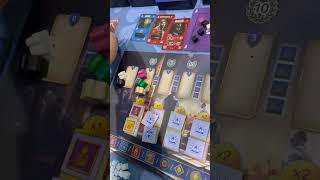
- Low player-to-player conflict compared to other Civilization games
- Clear multi-phase structure enabling strategic planning
- Card-driven income mechanism ties hand management to board progression
- Competition for the same card can require priority resolution
- Description implies potential for contention during card selection, which may impact pacing
- Civilization development, leadership, monuments, philosophy and strategy.
- A civilization-building board game spanning nine rounds, focusing on resource management, card-driven actions, and historical progression.
- Strategic abstraction with procedural progression and event-driven scoring.
Mechanics (from transcript analysis)
- Card Drafting — Players start each round with five cards, discard one, and purchase another to form their hand.
- card drafting/hand management — Players start each round with five cards, discard one, and purchase another to form their hand.
- Event cards and scoring objectives — End-of-round event cards introduce challenges or objectives that players must meet.
- Income from card placement — Playing cards on the left side of the board yields workers; the right side yields developments, providing income.
- Low direct conflict by design — Compared with other civilization games, this title emphasizes limited direct confrontation between players.
- Phase-based actions — Round phases drive progression: playing cards, advancing in philosophy, building monuments, and attracting a leader.
- Priority and card contest — When multiple players want the same card, the board shows how priority is determined to decide who gets it.
- Variable Phase Order — Round phases drive progression: playing cards, advancing in philosophy, building monuments, and attracting a leader.
Video topics + discussion points
Quotes (from this video)
- path to civilization is played through
- nine rounds with each round following the same pattern and all players doing the same thing at the same time
- but unlike other Civilization games this one has very little player-to-player conflict
References (from this video)
- breezy and snappy civ experience
- well harmonized mechanics
- allows wings it if desired
- autonomy not very strong
- could be improved with repeated plays to unlock depth
- build up civilization through phases, tracks and technology
- civilization themed progression
- accessible civ game focusing on pace and choice
Mechanics (from transcript analysis)
- engine building / card cycling — buy new cards to improve your options or contribute to objectives
- Hand Management — use small hand of cards to place actions and gain resources
- phase/track advancement — climb tracks to gain currency, military, or end objectives
- varied end objectives — end of round goals that give direction to scoring
Video topics + discussion points
Quotes (from this video)
- this is a lovely little kind of Tableau building game as you are collecting these different flowers to try and combo them together and score in different ways
- it's very fast very Punchy kind of a minimalist feeling game with small scoring actually
- flip town which is a flip and write style game with a Wild West theme
- pretty breezy and snappy
- for a full blown Civ game you can probably play in around an hour
- this is punked the wackiest of the bunch that I played
- you can move your pieces on top of your opponent's pieces
- it's pretty rapid and it has that addictive quality
- a game of attrition where you want to wear down your opponents
References (from this video)
- Fast, tight solo mode with approachable rules
- Simultaneous play keeps momentum and reduces downtime
- Rich tech progression with varied leaders and wonders
- High replayability from different leaders, wonders, and challenges
- Well-designed components and storage implementation
- Automa can feel prescriptive or in the way for some players
- Learning curve remains moderate due to multiple tracks and card interactions
- Starting technology cards are weak and require cycling to stronger options
- Some players may miss direct interaction that is more prevalent in multiplayer games
- Civilization progression through technological development across five domains: cultural, scientific, spiritual, military, and industrial, with leaders and wonders shaping strategy.
- A solo, civilization-building game that unfolds over nine rounds, where the player competes against a configurable Automa system that simulates rival civilizations.
- Play-by-play commentary with setup explanations, strategic reasoning, and round-by-round decision narration, delivered in a relaxed, first-person solo playthrough voice.
- Seven Wonders
Mechanics (from transcript analysis)
- Automa system — A solo AI opponent uses an Automa board with priority and battle/challenge cards that influence pacing and strategic pressure.
- Combat and challenges — Battles and challenges appear in select rounds; outcomes affect military strength and scoring, while the Automa may also gain advantages.
- Component and storage design — The game uses organized trays and color-coded components; setup and organization contribute to a clean and readable experience.
- End Game Bonuses — End-game tallies include technology points, Wonders, Leaders, and history-type points from cultural and sages; scoring can be substantial with the right mix.
- End-game scoring and history points — End-game tallies include technology points, Wonders, Leaders, and history-type points from cultural and sages; scoring can be substantial with the right mix.
- Five research tracks — Cultural, Science, Spiritual, Military, and Industry tracks advance as cards are purchased, generating workers, researchers, and eventual scoring opportunities.
- Simultaneous Actions — Rounds are played with concurrent decisions; players select technology cards and execute actions without turn-by-turn sequencing, keeping gameplay fast-paced.
- Simultaneous Play — Rounds are played with concurrent decisions; players select technology cards and execute actions without turn-by-turn sequencing, keeping gameplay fast-paced.
- Tech Trees — Start with five ancient technology cards; each round four are chosen to stay, one is discarded, and the rest upgrade to unlock better cards and future scoring.
- Technology card progression — Start with five ancient technology cards; each round four are chosen to stay, one is discarded, and the rest upgrade to unlock better cards and future scoring.
- Track Advancement — Cultural, Science, Spiritual, Military, and Industry tracks advance as cards are purchased, generating workers, researchers, and eventual scoring opportunities.
- Wonders and leaders — Wonders and Leaders provide one-time effects and scoring; availability and selection shape early-game strategy and late-game momentum.
Video topics + discussion points
Quotes (from this video)
- This is one of the few civ building games that has a solid solo mode.
- It's simultaneous game, which is part of why it's so good and it's not nearly as long as a lot of other Civ games.
- Path of Civilization is played over nine different rounds.
- You can see you spend so little time on that. You spend so much more time on your board.
- Seven Wonders vibe, but in a slightly more complex way.
- You're not drafting. Instead, you're choosing your technology cards, and it's so cool to start with these five terrible cards and then level them up.
- This game plays super fast once you get the rules down.