/pic586432.jpg)
Players take control of the civilizations of ancient Greece. Through auctions in each of the 8 rounds, the players develop their civilizations, adding territory through Land Tiles and prestigious buildings through the Building Tiles. These increase the civilizations' inhabitants, luxury, wealth and power. Luxury goods allow flexibility in providing for a player's population, while some tiles also offer protection against the many disasters that happen during the game. Only through a balance of inhabitants, land and buildings can a player claim victory and join the heroes of Peloponnesian history.
Los jugadores toman el control de las civilizaciones de la antigua Grecia. A través de subastas en cada una de las 8 rondas, los jugadores desarrollan sus civilizaciones, añadiendo territorio mediante losetas de terreno y edificios de prestigio mediante las losetas de construcción. Estos aumentan los habitantes, el lujo, la riqueza y el poder de las civilizaciones. Los bienes de lujo permiten flexibilidad a la hora de abastecer a la población de un jugador, mientras que algunas losetas también ofrecen protección contra los numerosos desastres que ocurren durante el juego. Sólo mediante un equilibrio de habitantes, tierras y edificios puede un jugador alzarse con la victoria y unirse a los héroes de la historia del Peloponeso.

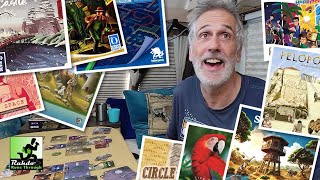
- Greatest auction game of all time
- Greatest civilization building game
- Tense auctions
- Flexible bidding strategy
- Interesting disaster mechanic
- Phenomenal civilization engine
- Civilization building
- Stone Age civilization
- Nations
Mechanics (from transcript analysis)
- Auction — Features tense, one-round auctions with a minimum bid and the ability to transplant bids.
- civilization building — Players develop their civilization through resource management, population growth, and construction.
- event cards — Disaster tiles are flipped, triggering events that affect all players.
- Set Collection — Collecting tiles that offer various benefits.
- Tile Placement — Tiles are placed to represent buildings or territory.
- Variable player powers — Buildings can provide protection against disasters.
Video topics + discussion points
Quotes (from this video)
- This is number 25 in my top 100.
- I think it might be a bit too complex for some, but it's a really, really satisfying experience.
- This is number 24 in my top 100 countdown.
- It is a cooperative aviation game that is incredibly tense.
- It is incredibly challenging and it's difficult to win.
- This is number 23 in my top 100.
- It's a game where you're strategically placing dice.
- This feels like a very engaging game, and every turn felt important.
- This is number 22 in my top 100 countdown.
- It's such a fast-paced game.
- It's an incredibly elegant design.
- Satisfying engine building.
- This is number 21 in my top 100 countdown.
- It's an incredibly immersive game.
- It pulls you into the story.
- It's a difficult game, and you can get knocked out quickly.
- It's a fantastic narrative-driven campaign game.
References (from this video)
- one of the most punishing, but rewarding, experiences
- tight control over risk and mitigation
- punishing curve can frustrate casual players
- heavy discipline required to manage tokens and resources
- civilization management under pressure
- ancient Mediterranean / empire-building
- punishing, survival-based
Mechanics (from transcript analysis)
- disaster mitigation timing — tokens reveal threats that magnify consequences if not prepared.
- population / food balancing — feed a growing population and avoid starvation penalties.
- resource management with disaster risk — end-of-round disasters require mitigation and careful planning.
Video topics + discussion points
Quotes (from this video)
- it's just a very fun and a pretty accessible experience considering how much is going on here
- I love the way this game develops
- this game does what it promises
- This is a puzzly tile placement Style game
- I split you choose Style game
- Peloponnese is definitely one of the most punishing games I have but I love it for that reason
- Luna does stand on its own and feels different to the rest of them
References (from this video)
- strong disaster mechanic adds tension and variability
- balanced mix of engine-building and risk management
- thematic clarity can be abstract
- disasters can feel punishing if drawn late
- disaster-averse civilization building
- garden/road-building themed with disasters and growth
- strategic with tension from disaster events
Mechanics (from transcript analysis)
- Auction / Bidding — players bid for tasks that drive growth and scoring
- bidding / task selection — players bid for tasks that drive growth and scoring
- disaster/disruption tokens — at end of rounds, disaster events trigger penalties that shape play
Video topics + discussion points
Quotes (from this video)
- there aren't that many euros that do take an hour or less
- tons of different ways to win this game
- it's a very nice looking game you know nice fantasy feel
- this has a very distinct gamer; nothing else like this in my collection
- Ra has one of the best time-to-depth ratios I've ever seen
References (from this video)
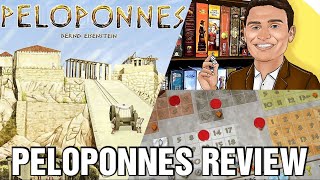
- tight 45-minuteEuro with meaningful decisions
- dynamic disaster system creates variety each game
- high replayability through variable tiles and towns
- scales well from 3-5 players
- conquest bidding mechanic adds strategic lock-in
- production and artwork are divisive; thin player boards
- finding a copy can be expensive or difficult
- some may find it crunchy and heavy for non-Euro players
- Resource-based building and disaster mitigation
- Ancient Greece-inspired city-state management
- Eurogame with crunchy, strategic planning
Mechanics (from transcript analysis)
- conquest/minimum bid with conquest tile — Conquest tile introduces higher minimum bid but protection from outbid.
- constrain/lock-in actions — If you win a bid but cannot afford the tile, you may lock it in by spending a coin later.
- disaster tokens and trigger mechanism — Two disaster tiles revealed each round; three of the same type or a tile triggers a disaster.
- end-game scoring with dual tracks — Score based on tiles plus population-related points; the lower total counts as final score.
- landscape tile resource linkage — Certain tile types require following resource type alignment (stone with stone, etc.).
- population feeding and scarcity — Food must feed population; deficits reduce population, impacting scoring.
- Resource Management — Maintain wood, stone, food, population, and luxury goods across income phases.
- resource management and production — Maintain wood, stone, food, population, and luxury goods across income phases.
- round-based tile reveal (A/B/C phases) — Tiles are revealed in rounds with varying costs and bonuses.
- tile bidding — Players bid coins to claim tiles that grant resources and victory points.
- Tile Placement — New tiles must match existing symbols to be immediately played; otherwise require resources.
- tile placement with symbol matching — New tiles must match existing symbols to be immediately played; otherwise require resources.
Video topics + discussion points
Quotes (from this video)
- i absolutely love this disaster token system that really does to get it take that pace the game makes each game feel different
- 45 minutes probably at maximum to play this one which i think is utterly brilliant
- the bidding mechanism itself is rather simple
- peloponnese is a delightful little euro
References (from this video)
- ancient Greece, civilization-building
Mechanics (from transcript analysis)
Video topics + discussion points
Quotes (from this video)
- you start rich and you're trying to blow as much money as you can as quickly as possible by making bad investments
- this one however has a quite a different feel to a lot of the other rolling rights
- it's strictly two player puzzly abstract style game
- this is the newest printing of the bunk
- this one actually uses the between two cities mechanism where you're working with the people to your left and right except on this one
- it's a game that's fascinated me
- the idea of puzzle this stuff around get the ideal family photo
- gamers bingo
References (from this video)

Mechanics (from transcript analysis)
Video topics + discussion points
Quotes (from this video)
- Every day this week you guys are getting content whether it's podcast or YouTube channel
- This is where we get into our in-depth reviews of different games and we thought hey this was pretty popular with folks so why not drop it on YouTube and use it as a litmus test
- The Easter eggs in that are my all-time favorite
- 4X meaning for an exchange cannot wait for that game
- I do wish I could have delved in a little bit on SpaceX but I wasn't allowed to