/pic1707205.jpg)
/pic1643310.png)
/pic7083841.jpg)
/pic2833631.jpg)
Pixel Tactics is a head-to-head game of tactical combat for two players. Each player has an identical deck of 25 cards, from which they draft a leader. The leader's abilities alter vastly the strategy and playability of every other card in the deck, making the game playable in 25 different ways.
In the game, players take turns placing cards and attacking. Each card can activate in various ways, taking on offensive capabilities in the front rows of the unit, or support powers in the back rows. Cards can also be played as orders – powerful single-time effects that can turn the tide of battle.
Play continues until either player's leader is defeated. A typical game is best of three or five rounds.
Pixel Tactics takes place in the same world and uses many of the characters from Level 99 Games' BattleCON: War of Indines, but its game play is entirely unrelated.
This page includes videos and mentions from the whole Pixel Tactics family. Drill into a specific game below.
/pic1707205.jpg)

Mechanics (from transcript analysis)
Video topics + discussion points
Quotes (from this video)
- I would caution you not to donate specifically for the perks because they're just not they're not priced at their value it wouldn't be worth it honestly my hope is that instead you'd be donating based on the value of the series to you
- Seth jaffy the designer of eminent domain a game we featured in our series kindly contacted me before the fundraiser and said hey I want to do something special for you I want to design a special watch it play print and play game that you can give away during your campaign how cool is that
- Scott King he's a fantastic photographer writer an allaround nice guy he does these wonderful pictures of board games he's lend his talents a number of different projects and once again he's creating another calendar for 2015 but he's also creating a special watch it played Edition
References (from this video)
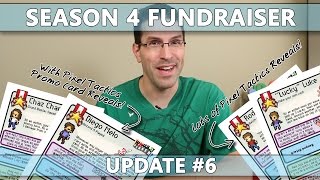
- promo cards featuring team members and designer
Mechanics (from transcript analysis)
- Card Drafting — Players have a team of cards and any of the cards can be the leader of the team or otherwise they end up becoming sort of the member of your team's crew.
Video topics + discussion points
Quotes (from this video)
- well I hadn't intended it to be that way it was either going to be you're going to donate get the one promo where you donate the trio level and get three or the highest level where you can get all of the promos revealed but that is the way I word it and I would feel bad if people had read it that way and thought well I'm going to get four cards instead of three so that's the way it's going to be my intentions or not
- these are just two gentlemen who volunteered to do the work you'll see their names in the credits of our videos because of that work and now you'll find them in your pixel tactics games
- I'd really like to get pixel tactics on the show and show you guys how that works as well
- congratulations you just won descent labyrinth of ruin
References (from this video)
Mechanics (from transcript analysis)
Video topics + discussion points
Quotes (from this video)
- we are just over 80% of our funding goal and I have to just say a huge huge thank you
- you know this past week on Tom bassel's board game breakfast episode he talked about the value of encouraging media creators and people doing things in the hobby that you enjoy and appreciate and I have certainly felt that this week
- if you haven't already consider donating the minimum $5 but by law I have to make this available everyone unless I want to go through all kinds of rig rolles of getting licenses and other things which I don't want to do it's just a game giveaway
- he is one of the nicest guys you're going to meet in this industry and he's been a real advocate for watchet plate he values what we're doing here
- I have to say this is kind of a crazy time to be running a fundraiser
- listen if our release schedule for videos is a bit sporadic for the next probably four weeks I apologize for that I assure you you guys have given me every reason to be throwing every last bit of energy into watch it played and I have been doing that but it's just not man esting itself in videos being released right now aside from these updates
References (from this video)
Mechanics (from transcript analysis)
Video topics + discussion points
Quotes (from this video)
- So, thanks again, James and Carrie, for the kind gift.
- If you're a fan of the game Eclipse, then you're going to like this expansion because it provides you with unique ships for all of the different factions, plus some additional tiles and things.
- Congratulations to all of our mispronounced winners.
References (from this video)
- high replayability due to many champions and deck variations
- short, tactical duels with meaningful decisions
- health tracking requires counters or dice
- dueling champions with asymmetric abilities
- two-player fantasy combat with cards
- arcade-like combat abstraction
Mechanics (from transcript analysis)
- card-based champions — every card can be a hero with different abilities depending on placement.
- grid-based combat with activation — cards placed on a 3x3 grid; actions are activated from front-line and other positions.
Video topics + discussion points
Quotes (from this video)
- this is a puzzle game realistically where you're trying to make that work
- not a victory point game realistically you're just trying to get to the threshold before anyone else
- this is a hidden gem that no one ever talks about
- i cannot recommend equinox enough
- every single card can be a different champion
- it's basically scrabble without the words
References (from this video)

- If you like Pixel Tactics, you'll like the second one.
- More cards
- Can mix them together
- A lot of fun
- Pixel Tactics
Mechanics (from transcript analysis)
- grid placement — Cards mean different things based on where they are in the grid.
Video topics + discussion points
Quotes (from this video)
- Hens is a game I didn't like at all.
- Gobblet is a simple game in which you are to stacking pieces and trying to get four in a row, but bigger pieces cover up other pieces.
- Dice as resources to buy cards, kind of like a Dominion-style game. And it was fine. It just didn't have any kind of air of excitement to it.
- And it's a big, grandiose Euro-style game that I thought worked pretty well.
- The biggest problem with Echoes of Time is I think it's almost too short.
- It's a cool mechanism. This is the game that should have it.
- It's a very different feeling of Lost Cities. It's not as good as Lost Cities, but it's still pretty cool game.
- It's very Ameritrashy.
- It's a lot going on in this game.
- I think my favorite of those is Pixel Tactics 2.
- Thanks as always for joining me in my pile of mid games.
References (from this video)
- Host's favorite of the games discussed in this segment.
- Really enjoy that little series.
- Hasn't played it in a while and needs to get it back to the table.
- Pixel Tactics (series)
Mechanics (from transcript analysis)
Video topics + discussion points
Quotes (from this video)
- Hens is a game I didn't like at all.
- Gobblet is a simple game in which you are to stacking pieces and trying to get four in a row, but bigger pieces cover up other pieces.
- Dice as resources to buy cards, kind of like a Dominion-style game. And it was fine. It just didn't have any kind of air of excitement to it.
- And it's a big, grandiose Euro-style game that I thought worked pretty well.
- The biggest problem with Echoes of Time is I think it's almost too short.
- It's a cool mechanism. This is the game that should have it.
- It's a very different feeling of Lost Cities. It's not as good as Lost Cities, but it's still pretty cool game.
- It's very Ameritrashy.
- It's a lot going on in this game.
- I think my favorite of those is Pixel Tactics 2.
- Thanks as always for joining me in my pile of mid games.
References (from this video)
- Compact playtime (~30 minutes) fits two-player sessions well
- Strong tactical depth with layered mechanics (leaders, heroes, spells, orders)
- Intercept provides meaningful defense and positioning choices
- Corpse/space management adds strategic weeding of the board
- Clarified rules and playthrough examples help new players grasp core concepts
- Potentially high complexity for newcomers to grasp all interactions
- Corpse management can clutter the board and slow pace in longer sessions
- Numerous mechanics require careful reading and reference during play
- Array
- Fantasy world
- Competitive tactical dueling
Mechanics (from transcript analysis)
- Action economy — Each wave provides a limited number of actions (two per player per wave), with options to draw, recruit, move, etc.
- Card Drafting — Draft a leader from your hand at the start of play to determine your initial setup and abilities.
- Corpses / corpse management — Defeated heroes become corpses that occupy slots unless discarded, requiring tactical clearance for space.
- Deck/hand management — Players draw and manage a hand of cards, with a hard limit of five cards in hand.
- Grid-based combat / unit placement — Players place heroes into a 3x3 unit grid, with row-based positioning affecting abilities and play.
- Hidden Information — Some actions or cards (orders) are revealed only when played, creating hidden information dynamics.
- Intercept — Certain heroes have the intercept keyword to block attacks aimed at the leader.
- Orders and spells — Orders are played from hand to grant effects; spells are cast from units depending on their position.
- Ranged vs melee targeting — Attacks have range or melee defaults; positioning and intercept influence which targets can be attacked.
- Wave-based battlefield — The game uses waves ( Vanguard, Flank, Rear ) to structure turns and where actions occur.
Video topics + discussion points
Quotes (from this video)
- Pixel Tactics... it's tactical.
- This is a two-player game.
- Heroes in this unit have intercept.
- intercept means it will block a melee or range attack that's going to target your leader.
- This knight will protect my Kadaf, my leader, because it has intercept.
- clear a corpse says discard a corpse in your unit.
- you only have up to five cards in your hand.
- I think it's it's basically an enhanced version of this game.
- Pixel Tactics. It's tactical.
References (from this video)
- Strategic depth from leader abilities and intercept mechanics
- Two-player setup with distinct color decks adds variety
- Clear, tactile combat using a grid and varied attack types
- Open discussion of rules demonstrates willingness to learn and adapt
- Rules are complex and prone to misinterpretation during playthrough
- Occasional production-side issues (camera shake) noted
- Need to frequently verify rule interactions indicates a learning curve
- Array
- Fantasy
- live_lets_play
Mechanics (from transcript analysis)
- Area Control — Each unit is placed on a 3x3 grid around the leader, affecting melee and ranged interactions.
- Asymmetric Player Powers — Each leader provides unique stats and a special ability that influences play.
- Card Drafting — Players select a leader from a starting hand of five cards, shaping the initial setup.
- Casualties and End-of-Wave Resolution — Casualties are checked at the end of each wave; heroes with damage equal to or exceeding life are defeated.
- Damage tracking — Damage on leaders and heroes is tracked (in this playthrough) with dice tokens.
- draw and hand management — Players draw cards to start and manage hand size, with a maximum hand size of five.
- Grid-based Area Control — Each unit is placed on a 3x3 grid around the leader, affecting melee and ranged interactions.
- Hand Management — Players draw cards to start and manage hand size, with a maximum hand size of five.
- Intercept / Defensive Interactions — Some heroes have intercept to reduce incoming damage and influence target selection.
- Leader Abilities / Asymmetric Powers — Each leader provides unique stats and a special ability that influences play.
- Spells and Wave-based restrictions — Spells are cast as actions and, after corrections during play, are restricted to the current wave rather than any wave.
Video topics + discussion points
Quotes (from this video)
- I will be using kind of the pinkish red deck and then Alex here will be using the blue deck
- This is a two-player game
- My heroes and leader take one less damage from attacks
- Spells can be used from any wave
- We check casualties after we each take actions
- You actually can only use spells that are in the current wave
References (from this video)

- Thinky, multi-use cards
- Compact engagement
- Not as expansive as larger titles
- Duels with multi-use cards
- One-vs-one tactical duel game
- Thinky / card-driven
Mechanics (from transcript analysis)
- dueling mini-game — Two-player tactical skirmish using cards
Video topics + discussion points
Quotes (from this video)
- it's a euro style game that plays up to six
- it's fully simultaneous
- Concordia Venus ... brings in team play and that lets you play two on two which is a four player game and it also lets you play two versus two which is a six player game
- not a euro game really it's more of a deduction style game where it's one versus many
- I started to work on that video and I'm hoping to make it happen
- Miniatures don't do anything for me