/pic8623640.jpg)



















Popcorn Deep Dive
What the Community Thinks About Popcorn
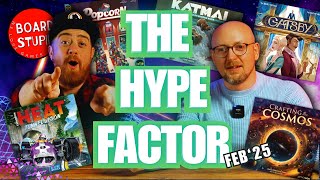
Popcorn has generated notably diverse reactions from the board gaming community. While some reviewers find the game utterly delightful, others struggle with its execution despite acknowledging its charming theme. The game's strongest appeal lies in its nostalgic setting and the satisfying mechanics of running an 80s-era movie theater, but player perspectives on the competitive elements vary considerably.
Core Mechanics That Define Popcorn
Bag Building and Audience Management
At the heart of Popcorn lies bag building, a mechanism that gives the game real thematic weight. Players accumulate audience members of different types in a personal bag and draw randomly each turn during showtime. This fundamental system creates genuine uncertainty and drive from turn to turn. Rather than merely serving as a mechanical abstraction, the bag-building system embodies the core fantasy of the game: filling your theater with the right mix of moviegoers to appreciate your film lineup. Players can place advertising tokens to influence which audience members show up at their theaters, adding a layer of strategic control that separates skillful play from passive hoping.
Drafting and Movie Selection
The drafting phase is where players acquire movies to show in their theaters. Each movie has different costs and values depending on whether it matches the audience preferences and theater setup of the purchasing player. Movies become less valuable over time as their theatrical runs age, forcing players to constantly refresh their offerings. This system elegantly represents how blockbusters and indie films cycle through real theaters. The combination of which movies to draft, when to upgrade theaters, and how to time advertising creates a satisfying engine-building loop that rewards investment in your infrastructure.
The Popcorn Experience
Nostalgic and Whimsical
Popcorn taps directly into nostalgia for the 1980s moviegoing experience, when cinema was a cultural center rather than a secondary entertainment option. The game's movie cards are filled with hilarious parody titles and references that reward fans of film. The whimsical tone permeates every element, from the theme of trying to attract the perfect audience to the charming artwork that makes running a cinema feel like a genuine accomplishment.
Accessible Yet Strategic
Despite its multiple interlocking systems, Popcorn feels intuitive to learn. The game explains itself through its theme: of course movies attract certain types of moviegoers; of course you want those moviegoers in comfortable seats where they'll be happy; of course older movies attract fewer people. Players with minimal rules explanation can grasp the core loop immediately, yet deeper strategic choices emerge around which movies to acquire, when to upgrade theaters, and how to manipulate audience composition.
What Makes Popcorn Stand Out
Thematic Coherence
Every mechanic reinforces the movie theater theme rather than feeling arbitrary. The theatrical run system that covers movie cards represents aging films losing their box office appeal. The simultaneous showing phase mirrors the real-world moviegoing experience. The audience bag directly embodies how theater patrons are a mixed group. Reviewers specifically praise how the game makes sense to newer players because the theme is so thoroughly integrated into every decision.
Satisfying Engine-Building Loop
Once players establish their setup with movies, upgraded theaters, and seating arrangements, they experience genuine satisfaction when orchestrating a strong turn. Matching the right colored audience member to the right seat in front of the right movie, triggering multiple bonuses in sequence, feels rewarding. The game rewards strategic investment in your infrastructure with tangible payoff.
Potential Drawbacks
Luck-Dependent Execution
The bag-building mechanic that makes the game thematic also introduces randomness. Reviewers noted that for some players, drawing the wrong audience members from your bag feels frustrating rather than exciting. While advertising and player powers provide mitigation options, a string of bad luck can derail carefully laid plans. This unpredictability works beautifully for some tables but creates genuine tension and occasional frustration for others.
Competitive Interaction and Take-That Elements
Some reviewers found the game's competitive elements more aggressive than expected. The advertising system allows players to drain audience members from others' potential pools. Moments where one player's strategic move directly blocks or diminishes another player's options registered as "too mean" for some in the community. Players seeking purely cooperative experiences or lighter social gaming may find these moments uncomfortable.
If You Enjoy Popcorn
Fans of Taverns and Tiffen and Grand Austria Hotel will recognize familiar ground: seating guests, satisfying their preferences, and earning points from successful placements. Those who loved the bag-building tension will appreciate Popcorn's core mechanic. For players drawn to Downforce and its racing theme paired with economic decision-making, Popcorn's movie theater setting offers similar strategic depth with more personality. Anyone who remembers the 80s movie experience or who appreciates economic simulations grounded in relatable themes should investigate this one.
What Reviewers Are Saying
"Everything about it makes sense. Everything from the movie selection and the audience member who likes the movie and the seat to the movies becoming worse as time goes on, as the weeks keep passing. I played this game with my kids. They loved it. I hardly even had to explain things. It just makes so much sense. Brilliant, innovative game."
— Board Game Dad
"I'm feeling totally vindicated. I put this near the top of my most anticipated games for 2025. It is so lovingly recreated with so many fun little nods. But even if you don't care about humor or wit, you can enjoy this just based off its gameplay. This is a wonderful fusion of a really underserved theme."
— Rahdo Runs Through
"Great looking game, hilarious theme, great formula, great artwork. But the execution just fell flat for us. It doesn't flow well and it's a little too mean in areas."
— The Dice Tower