/pic8498535.jpg)








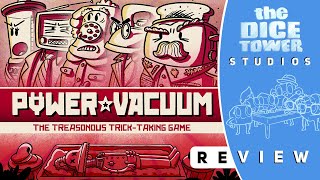







Power Vacuum Deep Dive
What the Community Thinks About Power Vacuum
Power Vacuum has captured the imagination of board gamers across multiple YouTube channels, with reviewers praising its unique take on the trick-taking genre. From family-friendly streams to competitive analysis, the game consistently draws acclaim for its clever mechanics and political intrigue. Reviewers highlight how the game transcends traditional trick-taking by layering negotiation, manipulation, and hidden agendas into a deceptively compact package that feels both accessible and strategically rich.
Core Mechanics That Define Power Vacuum
Trick-Taking with a Twist
At its heart, Power Vacuum is a trick-taking game, but one that fundamentally reimagines what winning tricks means. Players compete to win tricks using numbered cards in four colored suits, with red serving as the trump suit. However, the twist that makes Power Vacuum special is that both winning and losing tricks matter equally. The player who wins a trick gains points through victory, while the player who played the lowest-valued card gains the power to manipulate the control board. This dual reward system means that strategically playing weak cards can be just as valuable as dominating the table. The spy cards add another layer of deception, remaining hidden on their backs as cards of various colors while secretly belonging to a spy faction that can only be beaten by red trumps.
The Control Board: Area Control Through Card Play
The control board represents the central arena where appliances vie for dominance. Players who play low cards manipulate power tokens and move connection plugs between character positions, effectively shifting resources and setting up future scoring opportunities. This isn't arbitrary manipulation either, the board state directly determines which characters will have the most and least power at round's end. Players don't just draft cards; they engineer power dynamics, deciding whose position to strengthen and whose to weaken based on their hidden agenda cards. This turns board manipulation into a form of political gameplay where openly visible actions conceal secret intentions.
The Power Vacuum Experience
Hidden Agendas and Risk-Reward Timing
Each round, players hold a secret agenda card indicating which character should have the most power and which should have the least. The brilliance lies in when to reveal this agenda. Revealing early, when holding eight cards, nets eight points per correct prediction. But waiting until later in the round reduces the points-per-card value. The ultimate gamble is holding the agenda facedown until only four cards remain, forcing both predictions to be correct to score the full sixteen points. This creates exquisite tension where players must balance the certainty of early points against the potential windfall of a successful late reveal. Reviewers noted how this mechanic transforms the game from a straightforward trick-taker into a push-your-luck experience where information control becomes paramount.
Building Your Monument to Self-Glorification
Victory comes not from acquiring the most power throughout the game, but from being first to collect enough points to build a complete statue. Players gather ten power tokens to purchase a statue piece, with four pieces needed to win. This creates a race dynamic that prevents runaway leaders from dominating endlessly. Interestingly, the statue pieces are exquisite corpses, players can mix and match different body parts (legs, torsos, heads) to create unique monuments to their appliance overlord. This whimsical artwork choice reinforces the game's comedic tone while keeping the endgame pacing tight and celebratory.
What Makes Power Vacuum Stand Out
Political Comedy Wrapped in Kitchen Appliances
Power Vacuum's theme of appliances vying for control after the vacuum cleaner's death is delightfully absurd. The game takes inspiration from real-world power vacuums, the Soviet Union period where leaders competed for succession, but wraps it in retro-styled household appliances rendered with 1960s aesthetic. A blender revolutionary fighting a crafty iron while a toaster politicks from the sidelines creates emergent comedy from the disconnect between weighty mechanics and silly components. Reviewers across all channels appreciated how the theme supports rather than overshadows the gameplay, giving the political maneuvering a humorous edge without becoming a joke.
Accessible Trick-Taking with Hidden Depth
The game welcomes new players with straightforward trick-taking rules, follow suit, red trumps, highest card wins, yet reveals sophisticated strategy on repeat plays. Players gradually discover that winning isn't always the goal, that partnership through shared agendas creates temporary alliances, and that the lowest card can be the most powerful card at the table. Reviewers noted that while a single playthrough tells one story, subsequent plays unlock a deeper understanding of how board positioning, agenda timing, and hand management interact to create situations of genuinely difficult decisions.
Potential Drawbacks
Weak Hand Frustration
One reviewer noted that sometimes players find themselves dealt weak hands where they have limited options or cannot meaningfully influence the game state. With only eight tricks per round and no hand management before play begins, a player who draws predominantly low cards or a single suit may feel constrained. While this reflects the luck inherent in trick-taking games, it can occasionally leave a player feeling like a passenger rather than an active agent in their own fate.
Rules Complexity Around Edge Cases
Reviewers mentioned that certain rules interactions, particularly around spy cards, tied trick values, and the precise order of board manipulation, required clarification during play. The physical prototype components and fiddly board positioning can slow down rhythm-conscious players. While these issues seem to be addressed in the production version, the game asks players to track multiple simultaneous conditions: who has which suit visibility, which spy cards are hidden, what the current power distribution looks like, and where the plugs will move next.
If You Enjoy Power Vacuum
Players who love trick-taking games with a negotiation angle will find Power Vacuum immediately welcoming. Those who appreciate political games like Skull King or who enjoy the bluffing in Claim will recognize familiar territory. Power Vacuum shares DNA with Inside Job for its hidden information and cooperative-competitive nature, while the trick-taking foundation appeals to fans of Fox in the Forest. For Northwood fans seeking a game that layers manipulation on top of auction mechanics, Power Vacuum delivers. Ultimately, Power Vacuum speaks to players who want trick-taking to mean something beyond just winning tricks, players ready for a game about power, secret agendas, and the appliances that would rule them all.
What Reviewers Are Saying
"It's a clever card game. It's a neat game. It has a very interesting little way that it goes about social manipulation and stuff. The game is impressive with what it does with trick taking as its base."
— Chris Time, Dice Tower
"It's such a fun looking game... the art on the cards, it's something you want to look at. It's a really quirky, funny, interesting game with these retro appliances. The mechanics are really clever about how you can manipulate power, and it's just so treacherous and fun to play."
— Our Family Plays Games
"It's one of the best trick takers I've ever played... really unique and really interesting. The control board mechanic and how you're moving these plugs to manipulate power, combined with the hidden agenda system, creates this incredible sense of hidden information and political gameplay that makes every decision feel weighted."
— Foster the Meeple