
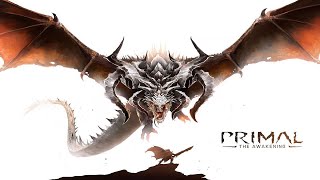
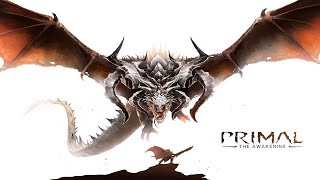
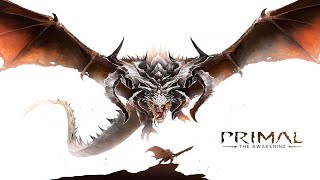





















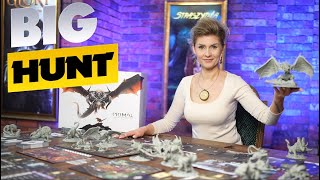



Primal: the Awakening is a fully cooperative monster hunting miniature boardgame for 1-4 players set in a fantasy world where humans struggle to survive an untamed wilderness. The game is played in a series of multiple sessions throughout an epic campaign where you will take the role of hunters fighting monstrous creatures and unveiling mysteries about their origins.
In Campaign mode, players will choose their path through the story by completing quests and unlocking special rewards and achievements. Each mission you choose will lead to different developments of the story and to plenty of unique opportunities like crafting options, unique items and rare hunts to be played. The consequences of your actions will impact the story as the campaign progresses towards the epic finale. Players can also play one-shot encounters in the Hunt mode. Specific setup and rules are provided for single combat scenarios at different levels of gear and difficulty. The Hunt mode also offers the opportunity to play special end-game quests using your campaign characters.
The gameplay is centred on an intense and challenging boss-fight system that combines tactical positioning on the board, hand management and cooperative play. The combat is designed to be fast paced while focusing on card combos and player interaction. Each monster is a unique challenge that hunters will have to face as a group, completing specific objectives and adopting different strategies. Monsters have their own specific deck of cards which represents their specific combat behaviour including attacks targeting specific areas on the board, special abilities, but also weaknesses and vulnerabilities that hunters can take advantage of during combat.
The game also focuses on a deep character customization. As the campaign progresses, players will unlock a large variety of crafting options as they upgrade and expand the Forge depending on the specific monsters they slay.
As the hunters level up from session to session, players will also have multiple choices to customize their deck of ability cards in order to build better synergies, card combos and group strategies.
—description from the publisher
- Array
- Array
- arcade-like puzzle combat driven by card sequences
- Array
- Monster-Hunter-inspired boss encounters with a hunt-focused arc
- Array
- Array
- Array
Mechanics (from transcript analysis)
Video topics + discussion points
Quotes (from this video)
- The battle flow in Oathsworn is brilliant.
- It's easily the most accessible of the three.
- Inverted combat paradigm sounds cool on paper.
- It's barely controlled chaos.
- Kill monster, get pants is the perfect description.
- A violent math equation.
- Not that. Skip Primal if you want a sprawling adventure.
- Portability is zero.
- The storage for Atto is a crime against humanity.
- Oathsworn hits that sweet spot of fun, story, and tactics.
References (from this video)
- Extremely deep and replayable buildcrafting thanks to gear, mastery, and deck interactions.
- Stunning minis and striking visual design with clear, readable card art and color-coding.
- Rulebook and campaign rule flow are well organized, with strong examples and clarifications.
- Dynamic, thematic boss battles driven by a robust reaction/trigger system.
- Campaign and expedition modes provide long-tail replayability and scaling variety.
- Expansion storage and packaging can be chaotic, with many small boxes and complex organization.
- High price and base-box value concerns; base game plus expansions can be a sizable investment.
- Occasional rule ambiguities and reliance on FAQs; a few timing/terrain interactions can be confusing.
- Paper material footprint and need for many organizers to manage 2000+ cards when sleeved.
- Progression within a single campaign scenario can feel limited for some players.
- Array
- Fantasy island with monsters and archaeologists
- Lyrical, lore-forward with in-world flavor texts
- Frosthaven
- Oathsworn
- Aeon Trespass
- Grimcoven
Mechanics (from transcript analysis)
- Aggro and exposed sides — An aggro token determines the active monster target and exposed sides on the boss determine when red (attack) cards can be used.
- Attrition and threat management — The boss uses an attrition deck and threat tokens to drive damaging effects; threats can trigger unleashes.
- Deck building — Players build a deck from gear and mastery cards to influence actions.
- Trigger timing and priority — Players resolve multiple triggers with a defined priority/order to manage overlapping timings.
- Turn-based action economy with stamina — Movement and card play are governed by stamina; you generate stamina by discarding cards and spend it to move and play cards.
Video topics + discussion points
Quotes (from this video)
- The secret sauce here is the deck building.
- Combat combat combat.
- The map felt huge. Like, genuinely, the map feels so big and it is just four squares, it's ridiculous.
- I love the reaction mechanic, oh my god, it's amazing.
- This game is a boss battler with a deckbuilding core and massive customization.
References (from this video)
- Introduces new hunters (Zara the Spear and Dusk the War Drum) and expands play variety with multiple biomes.
- Gold Arcs biome creates exciting timing windows that reward precise planning and sequence optimization.
- Pierce and guard interactions offer meaningful tactical depth and synergy between players.
- Rhythm/Resonate mechanics on Drusk add a dynamic support role that can significantly influence damage output.
- The video demonstrates how the new mechanics interact in a solo playthrough, providing practical examples.
- Increased complexity may be challenging for newcomers or solo players without prior familiarity.
- The number of new rules and interactions can be easy to forget during a live session, potentially slowing down play.
- Some value assessments (e.g., designer, year, precise weight) are not explicitly stated in the video and are not definitive from the transcript alone.
- cooperative strategy with risk/reward choices, card-driven combat, and biome-driven modifiers.
- A fantasy monster-hunting world where hunters explore shifting biomes to combat colossal creatures.
- procedural, rules-driven combat with emergent storytelling from individual fights and biome effects.
- Primal the Awakening (base game)
- Primal: Heart of the Wild expansion
- Primal: Gold Arcs Biome expansion
- Primal: Thunder Mountains Biome expansion
Mechanics (from transcript analysis)
- attribute tracking (sounds like plateaus and aggro management) — Positioning and aggro management across front, flank, and rear sectors, with plateaus and taunts affecting monster orientation and attack eligibility.
- Attrition — Phase-based damage and discard interactions that manage how damage and penalties cascade through rounds.
- biome-triggered doubling — Gold Arcs biome provides rounds where all damage dealt and received are doubled, creating high-risk, high-reward windows.
- Combat: Damage Based — Phase-based damage and discard interactions that manage how damage and penalties cascade through rounds.
- guard — A defensive option that allows players to reduce stamina costs and protect allies by discarding guard-enabled cards when another player defends.
- pierce — A temporary damage modifier that increases damage of red attack cards when the pierce level is maxed, substituting base weapon damage with pierce damage.
- reclaim — Card recycling mechanic: certain yellow cards restore themselves from discard to hand under specific triggers.
- Reclaim as Action — Card recycling mechanic: certain yellow cards restore themselves from discard to hand under specific triggers.
- resonate — A keyword that doubles the effect of the immediately following resonance card when two resonance cards are played in sequence.
- rhythm — A tracking resource for Drusk (the War Drum). It increases when the same-type/discard match occurs and can empower attacks or other effects when high enough.
- shields and armor — Temporary shield bonuses that reduce incoming damage or alter damage calculations, sometimes interacting with doubling effects.
- take that — Player actions that influence which player the monster targets, including taunt moves by other players to shift aggro.
- taunt/aggro control — Player actions that influence which player the monster targets, including taunt moves by other players to shift aggro.
Video topics + discussion points
Quotes (from this video)
- This video is sponsored by publisher Reggie Games.
- I'm playing with both new hunters, Zara the Spear and Dusk the War Drum.
- in rounds 2, 5, 8, 9, and 10, all damage is doubled. Both damage dealt and damage received.
- Pierce level must be built up over the course of the fight.
- Gold Arcs biome... empowering both the monsters and the hunters.
References (from this video)
- Unique prehistoric theme
- Engaging strategic depth
- Complex rules for new players
- Limited availability in some regions
- Survival, evolution, and clan development
- Prehistoric world with beasts and tribal dynamics
- Story-driven progression with evolving challenges
- Lords of Waterdeep
- Primal: The Awakening
Mechanics (from transcript analysis)
- Action/resource allocation — Players gather resources to nurture their tribe and advance.
Video topics + discussion points
Quotes (from this video)
- RAW is the best.
- And this is Maestro from the main box.
- This is Thor from Marvel Crisis Protocol.
References (from this video)
- Two-player friendly with interesting assist mechanics
- Keeps the puzzle engaging even with two protagonists
- Two-character management can divide attention
- Solo play is good, but two-player flow is preferred
- Two-character teamwork, equipment and deck synergy
- Fantasy adventure with two-character control
- Cooperative storytelling with assist mechanics
Mechanics (from transcript analysis)
- Two-character deck management with assist plays — Each character has its own deck and equipment; assists allow playing cards out-of-turn to help the other player
Video topics + discussion points
Quotes (from this video)
- Daybreak this is a fantastic solo game
- this is just so fantastic a cooperative game
- two players it's the sweet spot
- I think this one's perfect for sort of a more casual two-player experience
- this is one of the best four-player cooperative games out there
References (from this video)
- deep tactical decision space with satisfying combos and tempo
- solitary playthrough that scales with escalating challenge
- mechanics like stun and mastery reward planning and sequencing
- high complexity and punishing heat/terrain interactions
- deck fatigue and attrition can lead to difficult late-game rounds
- edge-case rule interactions may require house rules or clarifications
- Survival and tactical combat within a hostile, elemental landscape against a formidable foe.
- A volcanic, lava-drenched environment where heroes navigate rivers of lava while confronting a primal monster amid thinning air.
- Boss-focused, narrative-driven combat with deck-building, stance changes, and mastery progression.
Mechanics (from transcript analysis)
- Combat: Deck/Hand — The monster has its own deck yielding peril dynamics, rampage effects, and escalation phases.
- deck-building / hand management — Players construct and manage a hand of action cards to perform attacks, moves, and special actions.
- enemy behavior deck / peril cards — The monster has its own deck yielding peril dynamics, rampage effects, and escalation phases.
- heat / attrition damage — Environmental effects and fatigue accumulate; when decks are exhausted, players suffer heat damage in addition to normal fatigue.
- Resource management — Stamina and potions are managed; discarding and recycling affect draws, damage output, and survivability.
- resource management: stamina, potions, discards — Stamina and potions are managed; discarding and recycling affect draws, damage output, and survivability.
- stance / mastery system — Stances and mastery counters drive late-game power and unlock stronger actions once thresholds are met.
- stun / assist mechanics — Stunning the monster and using assistive actions can disrupt opponent turns and provide cooperative advantages.
- terrain-based movement restrictions — Terrain like fire and lava restricts certain actions and requires strategic positioning to avoid penalties.
- tokens / wound / attrition tracking — Damage and wound tokens track progress; card color interactions trigger effects and potential counters.
Video topics + discussion points
Quotes (from this video)
- so we're in round one so we're going to discard one card
- this is going to let me discard the top card of my deck and if it's red I can add it to my hand
- oh my goodness we need 24 just to do one wound
- okay definitely getting hit that's it that's the end of the round
- this has been a little bit of a disaster
- thank you so much for watching and goodbye
References (from this video)
- Deep, strategic, card-driven combat with dynamic boss behavior and responsive reactions
- Solid solo and campaign pathways with clear progression and mastery system
- Rich interaction between terrain, peril, and status effects that influence turn planning
- Steep learning curve for new players and a lengthy setup
- Solo play can feel punishing due to escalating peril and attrition mechanics
- Component management for terrain, peril, and tokens can be fiddly
- Cooperative boss battler with deck-driven actions, tactical positioning, and narrative progression through boss phases and peril mechanics.
- Fantasy world where humans struggle to survive against monstrous beasts; players take on the roles of Hunters defending humanity and uncovering the mystery behind The Awakening.
- Procedural, turn-based combat driven by card sequences, with evolving boss stances and peril events shaping the story.
Mechanics (from transcript analysis)
- aggro and turn order — an aggro token indicates which player the boss is targeting; aggro shifts influence who acts first and who suffers repercussions.
- Combat: Damage Based — boss health is tracked via a health value; wounds convert damage in increments; attrition cards simulate the boss attacking as the round progresses.
- fire and burning — fire terrains trigger hazards; burning inflicts damage when decks cycle, adding risk as the round progresses.
- health, wounds and attrition — boss health is tracked via a health value; wounds convert damage in increments; attrition cards simulate the boss attacking as the round progresses.
- mastery and focus flip — player mastery cards flip to their focus side after meeting token thresholds, unlocking powerful ongoing benefits.
- peril and terrain effects — peril cards introduce risk, while terrain/plant tokens modify attack power or impose additional constraints (e.g., terrain that enhances attacks or creates hazards).
- Resource management — cards have stamina costs; players generate stamina by discarding cards and spend it to play cards or move; stamina management drives decision cadence.
- stamina economy — cards have stamina costs; players generate stamina by discarding cards and spend it to play cards or move; stamina management drives decision cadence.
- stance progression — the boss advances through stance levels as health is reduced; each stance changes vulnerability and the difficulty of proposals to wound the boss.
- volley and card sequencing — red/blue cards interact with sequencing; specific card effects trigger based on order, color, and adjacency within a turn sequence.
Video topics + discussion points
Quotes (from this video)
- Full solo playthrough of Primal The Awakening this Cooperative boss battler
- our goal is pretty straightforward we just need to to take down veraxen all the way to zero Health before 10 rounds are up
- veraxen killed keep in mind that as soon as you get their health to zero you automatically instantly win and so there you go that was a complete playthrough of the prologue
- we're only going to be using the starting cards so the ones that have an S here at the bottom of the card we're going to shuffle up all of those cards into a deck and then deal our starting hand of five cards
- boom there we go veraxen is down to 7 health
References (from this video)
- clever card play
- strong cooperation
- varied equipment/gear
- high price point; large box
- cooperative boss battles with gear and leveling
- prehistoric/boss-battle mythic theme
- mythic adventure progression
- Monster Hunter (video games)
Mechanics (from transcript analysis)
- boss battler — teamwork to overcome increasingly difficult bosses
- Cooperative boss battles — teamwork to overcome increasingly difficult bosses
- leveling and gear progression — unlock equipment and upgrade capabilities over time
Video topics + discussion points
Quotes (from this video)
- Itto is one of the best party games ever made. It is a Dice Tower essential.
- Message from the Stars is such a great deduction game. I got a chance to teach it again recently and it just blows people's minds every time.
- I love this theme of the psychotherapists... it's so good, so rewarding.
- Rainbow has this fantastic mix of For Sale where you're trying to win different trenches of cards in the middle of the table—the depth is remarkable for such a tiny box.
References (from this video)
- Innovative boss-reaction system with dynamic behavior
- Cooperative play with multiple Hunters and planning depth
- Strong flavor and campaign progression with craft and Mastery options
- Rule clarity can be challenging for new players
- Keywords are not bolded on cards, which can slow quick comprehension
- Cooperative tactical boss battle with deck-building, terrain interaction, and dynamic boss behavior.
- A volcanic island and scarlet forest setting on Aloria; the Valleys west of Walar, with a dragon boss and shifting terrain.
- Story-driven prologue and campaign arc guiding players through a hunt for the Vrixen dragon and the island's secrets.
- OnStop Co-Op Shop Jason's play of another boss
- Mike's older playthrough of another boss
Mechanics (from transcript analysis)
- Aggro token — Active player marker that determines boss focus and turn order, driving strategic targeting.
- Attrition deck — Boss reaction deck that is drawn each round; cards resolve boss reactions and triggers.
- Burning and Fatigue — Deck fatigue and burning tokens impose ongoing damage; deck management is crucial as fatigue accrues.
- Combat: Deck/Hand — Deck fatigue and burning tokens impose ongoing damage; deck management is crucial as fatigue accrues.
- cooperative actions — Offensive combinations (e.g., red attack + blue maneuvers) that compound damage and unlock special effects.
- Deck building — Characters gain new cards and Mastery options via crafting, forges, and campaign progression.
- deck-building progression — Characters gain new cards and Mastery options via crafting, forges, and campaign progression.
- stance cards — Dynamic boss behavior; stance changes alter vulnerability and wound thresholds, shaping attack patterns.
- Terrain interactions — Terrain pieces (fire tokens, bushes, beans) affect attacks, healing, and movement; can grant bonuses or penalties.
- Threatened/Threat tokens — Threat mechanics influence movement and card-play; players can mitigate by repositioning or consuming dodges.
- Volleys and Combos — Offensive combinations (e.g., red attack + blue maneuvers) that compound damage and unlock special effects.
Video topics + discussion points
Quotes (from this video)
- I absolutely love boss Battlers
- This is a die and retry game
- I love how this works
- Mea is the MVP in that game; she did insane amounts of damage
- The plan is now we're going to complete distance skies in a couple weeks and we're going to play through the 11 chapters of Primal
References (from this video)
- Strong Monster Hunter aesthetic and feel
- Licensed/game style alignment fans will enjoy
- High price and licensing concerns mentioned
- Monster Hunter-inspired action deck with variable weapons
- monster-hunting fantasy world
- campaign-like monster hunt with boss encounters
- Monster Hunter
- Mage Knight
Mechanics (from transcript analysis)
- Action deck — Character abilities are driven by a dynamic action deck
- variable weapons / monster targeting — Diverse weapons with monster encounter patterns
Video topics + discussion points
Quotes (from this video)
- it's basically a big game of Among Us
- the board game, the way they've done it, looks amazing
- I just want the price to come down
- the wife will probably actually play this one with me
- this looks like the perfect Monster Hunter game
- I went all in on this
- I am super hyped for this game
References (from this video)
- Engaging cooperative boss battle with rich thematic terrain and upgrade options
- Dynamic interaction between terrain (bush, water, plateau) and card play creates tense planning
- Strong sense of progression and variety via upgrades and potential expansion content
- High complexity and many rule triggers; learning curve can be steep
- Live streaming of rules and triggers can obscure details for new players
- boss-battle campaign with drafting/upgrading gear, environmental terrain effects, and tactical sequencing in a cooperative setting.
- Coastal frontier with tidal seas, riverlands, outposts, and coral correlative landscapes; exploration and expeditionary activity against a sea monster.
- scenario-driven narrative with lore excerpts and in-game text describing locations, the monster, and objectives.
- Marvel Champions
Mechanics (from transcript analysis)
- attrition and wounds — the monster and players accumulate wounds/struggle; reaching thresholds triggers phase changes and additional effects.
- boss battler — the Coran (the boss) has multiple health thresholds, phases, weaknesses, and boost effects that alter gameplay each round.
- boss health, phases, and abilities — the Coran (the boss) has multiple health thresholds, phases, weaknesses, and boost effects that alter gameplay each round.
- Combat: Damage Based — the monster and players accumulate wounds/struggle; reaching thresholds triggers phase changes and additional effects.
- Deck-building / card play — players manage a hand of Attack, Defense, and Special cards to deal damage, apply effects, and manage fatigue.
- stamina management — cards require stamina to play; costs can be modified by effects and mastery rules.
- stun and timing interactions — stun tokens cancel monster actions for a portion of the round; timing determines the effectiveness of counterattacks.
- terrain and action modifiers — board elements like bushes, water tiles, and plateaus modify movement, pausing turns, and attack opportunities.
- upgrades / forging and expansions — new forge items and expansions introduce new gear and terrain options that alter deck construction and strategies.
Video topics + discussion points
Quotes (from this video)
- this game is amazing
- massive blow makes me super happy
- you just took him out
- I love this game
- Stun the monster
- epic play
References (from this video)
- incredible components
- multiple expansions with new characters
- can play with 5 players with expansions
- new campaign content
- boss battles
- action
- fantasy
Mechanics (from transcript analysis)
Video topics + discussion points
Quotes (from this video)
- one of the best if not the best boss battler out there
- this is the must get expansion if you're only going to get one
- you've never seen dragons quite like these they are stunning
- Simone Luciani strikes again
- freaking brilliant
- one of my top three favorite Thematic settings in board games
- live the best life you can
- be the best human being you can
- probably my game of the year
- there is no way it doesn't make it into my top 10 of the year
References (from this video)
- Excellent miniature quality and detail
- Engaging interactive game state that constantly evolves
- Cards have real consequences for play timing decisions
- Multiple expansions available with new themes and mechanics
- More interactive than similar deck-building games like Marvel Champions
- Boss battling
- Monster hunting
- Fantasy adventure
- Deck building with strategic card play
- Marvel Champions
Mechanics (from transcript analysis)
Video topics + discussion points
Quotes (from this video)
- you don't take my word for it folks I was watching the uh Dice Tower Essen excitement list
- I vouch for each of these quite highly
- so much game play depth in less than 15 minutes
- one of the prettiest games you will ever see
- a good tile layer needs to be so kind of connected together
- I want a statue to myself
- it just really seems like a very exciting modern trick-taking game
- beautiful and then you see the completed thing that's one of my favorite things