/pic710936.jpg)
Puzzle Strike: Bag of Chips is all that and a bag of chips!
Puzzle Strike is a card game played with cardboard chips instead of cards that simulates a puzzle video game called puzzle fighter that, in-turn, simulates the fighting game street fighter that is emulated in puzzle fighter
If you don’t understand any of that, that’s ok! Puzzle Strike is a complete game in a box that has the fun of a customizable card game without the marketing scheme of selling you parts of the game in random packs. You build your deck *as* you play the game. Every game is different because the bank starts with a different set of chips each game. Also, there are 10 characters to choose from, each with different gameplay. Between all that, there are over 411 MILLION starting conditions in a 4-player game.
A built-in comeback mechanic means that when you're on the edge of losing, you're also able to do even more combos than usual.
Shuffling cards takes too long and is boring, so in Puzzle Strike you just put your cardboard tokens in a bag and shake them up to shuffle! Plus, it’s pretty ballin’ to play a game with chips. Play it on your yacht, impress potential mates, etc.
Though the game is fun even if you're terrible at it, it's also balanced for high level play by veteran asymmetric game balancer David Sirlin (Street Fighter HD Remix, Puzzle Fighter HD Remix, Kongai, Yomi, and Flash Duel.)
Puzzle Strike contains:
Almost 350 cardboard chips
4 cloth bags
8-page full color rulebook
Colorful box with inside designed to separate the chips by type, for storage
Re-implemented by:
Puzzle Strike: Third Edition


Puzzle Strike - How To Play (Part 1)

Puzzle Strike - Game Play 4

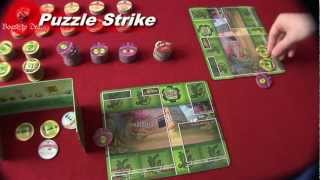
- Production quality is amazing
- Upgrade kit components are useful (play mats, player screens)
- Blank chips included for custom content
- Rule book is short and easy to read
- Chips are not very balanced
- Characters are not very balanced
- Can't choose who you attack
- Flash Duel
- Yumi Battle Games
Mechanics (from transcript analysis)
- action selection — Players play action tokens with banners that allow them to perform specific actions, such as gaining more actions, drawing chips, or saving chips.
- Bag Building — Players put tokens into a cloth bag and draw from it. When the bag is empty, the discard pile is shuffled to refill it.
- Deck Building — Players buy tokens (chips) using gems, which go into their discard pile. When the bag is empty, the discard pile is shuffled to form a new draw pile.
- Player Elimination — The game ends when only one player remains. A player is eliminated if they have 10 gems in their gem pile during their cleanup phase.
- Set Collection — Gem tokens range from 1 to 4, and players collect them to buy more tokens. Combining two gems can create a more valuable gem.
Video topics + discussion points
Quotes (from this video)
- Puzzle Strike
- Striker bag of chips what says bag of chips here where it does I never noticed that
- We're giving it 5.5 strikes out of 10
References (from this video)
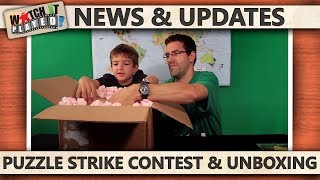
- null
- null
- null
Mechanics (from transcript analysis)
Video topics + discussion points
Quotes (from this video)
- to enter the contest it's really simple all you have to do is send an email to watch it played at live.com and then the subject heading in put puzzle strike contest
- first of all what was the name of the fictitious game that I mentioned in the very first episode of our puzzle strike series
- secondly what is the name of the publisher who publishes puzzle strike and thirdly and this is the important one who do you think is going to win the puzzle strike playthrough
- one person is going to win puzzle strike Third Edition and the other person is going to win puzzle strike Shadows which although it's an expansion is a fully Standalone game
- I've been joined by Luke Smith and we're getting ready to go into this box
- the game is called fluffy
- this is a wonderful pick for Keith to send us so thank you very much Keith
- Keith you didn't tell me you were sending me more games
- it's always a real surprise to get these gifts of games from our viewers it really means a lot to us
- Luke go ahead this is your chance one time one time
References (from this video)

- Can be played for free online.
- Third edition includes screens, playmats, updated rulebook, Panic time and Danger time, Clockwork mode, free-for-all dynamic, and an improved box insert.
Mechanics (from transcript analysis)
- Deck Building — Mentioned in the context of the game being played online and the tactile feeling of the physical copy versus online play.
Video topics + discussion points
Quotes (from this video)
- this is a little game called the scent 2 Dungeon Crawler no one cares about that
- so all of that is going to be um on www.ser games.com for pre-order if it's not up there already
- and of course after that I believe it will be available um through other means as well
- wow fluffies all right well what's right on top here game
- he's right actually these are all these are all white fluffies and you found the one pink one good for you
References (from this video)
- Looks neat on paper
- Cool production quality with acrylic gems
- Did not care for whatsoever
- Too chaotic and much stuff to juggle
- Annoyingly fiddly turns
- Breaks immersion and theming
- Weird and dissatisfying endgame with multiplayer
- Not well developed
- Games can get out of hand
- Gem-based combat
- Puzzle Quest app game
- King of Tokyo
- Wii game
Mechanics (from transcript analysis)
- Deck Building — A deck building game with chips pulled from a bag.
- Gem Combat — Sending gems back and forth to opponents, similar to Puzzle Quest.
- Resource Management — Consuming gems to get bonuses.
Video topics + discussion points
Quotes (from this video)
- it's just a silly fun little game
- really really fun definitely recommend it
- it's fun all the way around pretty much until the very end
- the production is lavish and great and lots of fun
- just that last end game thing which I don't think will happen every time but I think it will happen frequently
- it just sours me a little bit I wish there was kind of a different way
- I would definitely recommend folks take a look at it pick it up
- it's a lot of fun just the end game can be a little bit dissatisfying
- Dune Imperium was my favorite game of 2021
- I feel like the rise of IX is a is a required expansion to me
- This one I could kind of take or leave and I think especially for a first play I would never add in the Immortality expansion
- it's almost like the card pool is almost too watered down now at this point
- the expansion is funky it just adds some funky stuff and I don't know if it improves or worsenses the gameplay I really can't tell you
References (from this video)

- innovative components
- interesting features
- copies of Dominion mentioned; many editions
- Dominion
Mechanics (from transcript analysis)
- chip-based resources — chips act as the primary resource instead of cards
- Deck Building — build a deck to gain advantages; parallels to Dominion
- deck-building elements — build a deck to gain advantages; parallels to Dominion
Video topics + discussion points
Quotes (from this video)
- Escape, on the other hand, I love this game.
- One Night Ultimate Alien is one I liked because I felt like it had some really weird powers.
- Soviet Kitchen is not as great because it doesn't work as good for kids.
References (from this video)

- Highly played at conventions
- Fun deck building
- Unique gameplay
- Artwork is polarizing
- Dominion
- Bejeweled
- Whirling Witchcraft
Mechanics (from transcript analysis)
- Deck Building — Players are building their decks throughout the game.
- Gem passing — Players pass gems to the next person to attack.
- Hand Management — Players manage their hands to attack opponents and overflow their deck.
Video topics + discussion points
Quotes (from this video)
- The most carefully named top 10 we've ever done.
- It is just kind of almost the game that I just keeps giving.
- Every time I play it I'm like, 'Man, I just I love this game. I really, really enjoy it.'
- Planet Unknown is great.
- It's a lot of fun. It's silly fun but also it's very stressful.
- This one if you have not played it because of how intimidating it looks, give this a try because this is a fantastic game.
- It is a classic for a reason.
- Oh my goodness, do I love this game? It's so good.
- Everyone has a plan until you get punched in the mouth.
- It is so chaotic, and you're right. Afterwards, you need to sit there and be like, 'I need to relax a little bit.'
- It's it's it's fantastic. I love it.
References (from this video)

Mechanics (from transcript analysis)
Video topics + discussion points
Quotes (from this video)
- hi Rodney Smith here from watch it played
- I'm still in Gen Con recovery mode doing some fun family vacation things but I want to give you guys a quick update here about the fundraiser and thank you for helping us reach our first $5,000 goal in the fundraiser incredibly overwhelming thank you so much for your support support that really means a lot
- I also though want to give you a little additional perk level at $7,000 I thought what I'd do is I still have some of these Harvey Walters figures remember that Harvey Walters is certainly a key character in in a couple of our different games and we were giving these uh at a certain perk level in the last fundraiser but the last I think I have four of them left I like to just give them away so if you've already donated to this fundraiser then you're already in the draw you don't have to worry about contacting me but listen if you're not able to donate I don't want you to feel penalized all you have to do is send me an email at watchitplayed live.com and just put in the subject heading Harvey Walter's contest you'll be added into the draw as well
- now I know the map isn't updated yet guys I've just it's been really crazy busy here but the next time you see me which will be uh the start of our puzzle strike playthrough which I'm really excited about getting started on the map behind me will be updated I'll even try to make a point of doing a nice close-up shot of the map maybe at the beginning or at the end of of each episode so you can see the pins as they spread across the map
- let me say Gen Con which was my first gaming convention ever was an absolute blast I had such a great time I got to play a bunch of games I got to meet a bunch of Publishers people that I've worked with on the series like the guys that PL Hat games I got to talk to some new people that I hadn't talked about before I think we've secured a couple of really exciting games that we'll be able to talk about in the coming months
- he runs a video series as well at a really nice time we get to sit down and actually combine forces so we shot a little video together he does reviews of course we do playthroughs and so we smashed that together uh to do a video series on smashup a game from AEG so we're going to be working on editing that and hopefully having that up for you soon
- my primary focus is going to be getting back into the actual gameplay episodes with puzzle strike we're also going to be working on the mice and Mystics instructional video for plat Hat games so you might see that released around the same time as we're working on the puzzle strike video as well
- eminent domain is a card drafting deck building game this is a game that's ranked very highly on Board Game Geek and I've just never had a chance to play it so I'm very interested in being able to give it a shot in short over the course of the game you are executing orders to add cards to your deck enabling you to specialize in the way that you grow and expand your Colony so I'm really looking forward to giving this game a try I've heard a lot of good things about it
- Village is a worker placement game which was getting a lot of Buzz and something I wanted to pick up but I was having trouble tracking down a copy of it so it was a real treat to have Kevin rodkey contact me after he'd already sent a donation to our series and let me know that he had an extra copy of both Village and eminent domain and was interested in donating them to our Series
- thanks again for watching everyone truly appreciate when people take the time to contribute to our series and send us games or just send us your positive feedback on the series we had lots of that lately it's so incredibly kind we love that we're able to share our passion for the gaming hobby with you and that you guys want to do the same thing back to us
References (from this video)
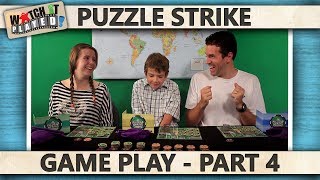
Mechanics (from transcript analysis)
Video topics + discussion points
Quotes (from this video)
- The way you resolve instructions on a chip though is from top to bottom left to right which means you first have to decide which of the two options am I going to take and then resolve both of the options
- The game is over and the person with the lowest number of gems which is Luke would win
- Wow that was a close call
- Good game you were close
References (from this video)
Mechanics (from transcript analysis)
Video topics + discussion points
Quotes (from this video)
- welcome back to watch it played
- this is our cute little yeti
- I made a mistake when you use combos or hard it goes back to the bank I don't get to use that again and again and again
- you are in the lead yes I am the yeti is in the lead
- this game teaches you your math
- I'm feeling pretty confident right now I feel like I've got a bunch of really good strong chips and I think winning this game might actually be a bit of a cakewalk
References (from this video)
Mechanics (from transcript analysis)
Video topics + discussion points
Quotes (from this video)
- cheaters are jerks
- combos are hard
- This has to be the only action I play on my turn
- you've shifted things around you at six you're the winner you're the person we're trying to get now
References (from this video)
Mechanics (from transcript analysis)
Video topics + discussion points
Quotes (from this video)
- I'm going to put a graphic up on the screen showing you the chips.
- The suggestion that I got that got the most votes came from Black Warrior 2003.
- Good thing you reminded me to ant so I'd have something to crash over to you.
- So, I am going to put this in your gem pile, Luke. Sorry to get so aggressive so early on.
- Hi, Andrea. Um, just playing Puzzle Strike. Why wasn't I invited?
- Well, uh, do you want to play? I'm crashing this party.
- So, when you run out of chips in your bag, that's when you take everything that's in your discard pile, you dump it in your bag, give it a shuffle, of course, and then you draw whatever you need.
- Man, I hummed about this for a while.
- I am really u bumping up my buying power.
- So, I'm going to use the chromatic warp, which is another one of my special abilities.
- I think we'll pause here and I'll let you guys see my hand and you guys can over the course of the break between this episode and next episode help me decide what you think I should do next.
References (from this video)
- Exciting chip purchases like 'combos are hard'
- Strategic use of actions like 'Marshall Mastery' and 'Versatile Style'
- Direct player interaction through 'crash gem' mechanic
- Accidental peeking at hands due to close seating.
- Potential for 'combos are hard' to be a mistake.
Mechanics (from transcript analysis)
- action selection — Players choose from a variety of actions provided by the chips they play.
- Deck Building — Players acquire chips to add to their discard pile, which then get shuffled into their deck.
- Drafting — Players can sometimes choose specific chips or gems from a common pool or bag.
- Hand Management — Players manage the chips they draw into their hand for actions and purchases.
- Set Collection — Players acquire specific gems to meet the cost of purchasing chips.
- Take That — Players can directly impact opponents by crashing gems into their piles.
Video topics + discussion points
Quotes (from this video)
- cheaters are jerks
- combos are hard
- This has to be the only action I play on my turn
- you've shifted things around you at six you're the winner you're the person we're trying to get now
References (from this video)
- The game involves strategic decisions about when to take a sure thing versus taking a risk for potentially greater reward.
- The game mechanics encourage player interaction through actions like crashing gems.
- The game flow is presented as clear, with explanations of phases like 'ante up', 'action phase', 'buy phase', and 'cleanup phase'.
- Players can forget to perform the 'ante phase' at the start of their turn.
- Running out of chips in the bag requires dumping the discard pile, which might not always yield desired chips.
Mechanics (from transcript analysis)
- Anti Phase — Players must take a one gem from the bank and put it in the gem pile at the start of their turn. This is something players can forget.
- Bag Building — Chips are drawn from a bag, and when the bag is empty, the discard pile is dumped into the bag and shuffled.
- buy phase — Players spend collected gems (money) to buy new chips to add to their bag.
- Cleanup Phase — After actions and buying, chips are placed in the discard pile and players draw a new hand.
- Crash Gem — A gem that can be used as an action to send a gem to another player's gem pile, potentially earning an extra dollar.
- piggy bank — Some actions allow players to 'piggy bank' chips, which affects the number of chips drawn during the cleanup phase.
- special abilities — Chips like 'Future Sight', 'Versatile Style', 'Chromatic Warp', and 'Creative Thoughts' grant players unique actions or benefits.
- Trashing Gems — Players can trash a non-purple gem from their hand as part of an action, which then allows them to collect a gem with a higher cost value.
Video topics + discussion points
Quotes (from this video)
- I'm going to put a graphic up on the screen showing you the chips.
- The suggestion that I got that got the most votes came from Black Warrior 2003.
- Good thing you reminded me to ant so I'd have something to crash over to you.
- So, I am going to put this in your gem pile, Luke. Sorry to get so aggressive so early on.
- Hi, Andrea. Um, just playing Puzzle Strike. Why wasn't I invited?
- Well, uh, do you want to play? I'm crashing this party.
- So, when you run out of chips in your bag, that's when you take everything that's in your discard pile, you dump it in your bag, give it a shuffle, of course, and then you draw whatever you need.
- Man, I hummed about this for a while.
- I am really u bumping up my buying power.
- So, I'm going to use the chromatic warp, which is another one of my special abilities.
- I think we'll pause here and I'll let you guys see my hand and you guys can over the course of the break between this episode and next episode help me decide what you think I should do next.
References (from this video)
- Players seem to enjoy the strategic decisions and the interactions between chips.
- Mistakes in rules application (e.g., combos are hard returning to the bank) can happen.
Mechanics (from transcript analysis)
- crash — A mechanic where a gem is broken into two smaller gems.
- Deck Building — Players buy chips to add to their deck, which then get shuffled into their bank and drawn.
- Gem collection — Players collect gems as currency to buy new chips.
- Hand Management — Players manage the chips in their hand to decide which actions to take.
- piggy bank — Players can choose to save chips from their current draw to their discard pile instead of drawing new ones on their next turn.
- Set Collection — Certain combinations of chips can be combined to perform stronger actions.
- trash — Chips are moved from a player's hand or bank to a discard pile.
- Wound — A negative chip that players may be forced to buy or take, which can hinder their progress.
Video topics + discussion points
Quotes (from this video)
- welcome back to watch it played
- this is our cute little yeti
- I made a mistake when you use combos or hard it goes back to the bank I don't get to use that again and again and again
- you are in the lead yes I am the yeti is in the lead
- this game teaches you your math
- I'm feeling pretty confident right now I feel like I've got a bunch of really good strong chips and I think winning this game might actually be a bit of a cakewalk
References (from this video)
- The game is engaging and keeps players on their toes.
- Close game with a surprising end.
- Good for viewers interested in seeing how the game is played.
Mechanics (from transcript analysis)
- chip drafting — Players draft chips to perform actions and buy new chips.
- Gem collection — Players collect gems, which are used as currency and to track game progress.
- Hand Management — Players manage the chips they have in hand to perform actions effectively.
- Set Collection — Players combine gems to form higher values.
- Take That — Players can directly affect opponents by sending gems or chips to them, or by causing them to discard.
- Variable player powers — Implied through different chip abilities and player actions.
Video topics + discussion points
Quotes (from this video)
- The way you resolve instructions on a chip though is from top to bottom left to right which means you first have to decide which of the two options am I going to take and then resolve both of the options
- The game is over and the person with the lowest number of gems which is Luke would win
- Wow that was a close call
- Good game you were close
References (from this video)

- received as a surprise gift
- Yomi
- Flash Duel
Mechanics (from transcript analysis)
Video topics + discussion points
Quotes (from this video)
- if I left the show I wouldn't be missed but if they did I don't know I might have a riot on my hand
- that game is going to drive me insane
- Yomi is another game that you play with cards like Flash Duel but instead of having just two or three abilities you have an entire deck full of abilities for your fighter and then you face off against another opponent who also has their own unique deck of cards
References (from this video)
Mechanics (from transcript analysis)
Video topics + discussion points
Quotes (from this video)
- welcome back to watch play my name is Lou Smith and this is Rodney Smith and we are doing an unboxing video and a draw video for puzzle strike
- for the last 5 days I've been scripting filming editing and and uploading that video it's actually uploading right now so it should be online in a day or so
- we're going to have another draw we're doing well in the Indiegogo fundraiser and we reached a perk level where I said I give away some more stuff
- Gamers you never fail to disappoint always a treat to get boxes from you guys a lot of fun
- we've opened a box we've done a draw we've given you some updates the next time you see us we're going to be playing and Mystics
References (from this video)
- The game can go back and forth with crashing mechanics.
- Double crash gems allow for more gems to be sent.
- Risky Move chip offers a good reward for a risk.
- Knockdown chip can shut down opponent's reactions.
- Sneak Attack chip allows for additional attack actions.
- Draw Three chip lets you draw more chips.
- Gem Essence chip allows for playing multiple actions.
- Self-Improvement chip helps with hand management by trashing weaker chips.
- One Punch chip allows for two additional actions.
- One of Each chip provides multiple benefits.
- Combos are Hard chip is incredibly powerful for grabbing two chips from the bank.
- Playing a double crash gem when you only have one gem results in a wasted gem and less money.
- Using Combos are Hard early in the game might be less effective as you wait for the acquired chips to cycle back.
- The Combos are Hard chip must be trashed after use, making it a one-use chip.
Mechanics (from transcript analysis)
- action selection — Choosing which actions to take during a turn.
- attack — Chips that have a negative effect on opponents.
- Bag Building — Chips are drawn from a bag, which can be refilled.
- buy phase — The phase where players can buy chips.
- counter counter crashing — If gems are sent back to you from a counter crash, you have the opportunity to counter counter crash.
- counter crashing — If an opponent crashes gems at you, you can play a counter crash gem to send some of your gems back, which may cancel out some of the gems they were sending.
- crashing — When you play a crash gem, you are able to pick a gem from your gem pile and send it to your opponent's gem pile.
- Discard pile — Where discarded chips are placed.
- drawing chips — Drawing chips from your bag to your hand.
- gem pile — Where gems are placed.
- Hand Management — Managing the chips in your hand.
- ongoing effect — An effect that lasts for multiple turns or until a condition is met.
- Reaction — Playing chips in response to an opponent's action.
- trashing — Taking a gem and putting it back in the bank.
Video topics + discussion points
Quotes (from this video)
- you can only react once to each event
- the player with the least number of gem points in their gem pile is going to win
- basically you can grab any two chips you want from the bank
- it's a one-use chip but it is incredibly powerful
- the value of trashing chips is it allows you as you start collecting better and better chips to get rid of the older and not so great chips from your hand
References (from this video)
- Updated components
- Updated rules and game modes
- Comes with player mats to help organize game elements
- Everything comes in the base set now (boards and mats)
- Overloading opponents with gems to crash them out of the game
- Flash Duel
- Puzzle Strike Shadows
Mechanics (from transcript analysis)
- Deck Building — The game is a deck building game where chips are used instead of cards.
Video topics + discussion points
Quotes (from this video)
- this is our first watch it played exclusive
- we're actually getting the game before the designer has even gotten a copy of the game
- so this is the very first copy that is currently out
- it's a very interactive deck building game
- so i contacted him to see if he'd be willing to partner with us to make that series happen
- he did one better he told me to hold off
- david sterling has been hard at work and has also released an additional standalone expansion puzzle strike shadows
- david i hope you're enjoying the view from there as you get to see the first glimpse of the third edition of puzzle strike as well as the very first print run of puzzle strike shadows
- now for the rest of our viewers i'm going to tell you what exactly this game is as we look at some of the components
- so what is puzzle strike
- well i've been asked on more than one occasion if i would consider covering a deck building game on watch it played and that's what this is except instead of cards the game uses chips
- lots and lots of chips
- the game can be played with two to four players and it's modeled after the old puzzle fighter games where you are trying to overload your opponents with gems to crash them out of the game leaving you as the winner
- so it's a very interactive deck building game
- to help keep your chips hidden you store them in a bag like these
- which means you end up with a bag of chips don't get hungry
- and the game comes with player maps as well to help you organize the various game elements
- in the earlier editions you could get these different elements separately the boards and the mats but now everything comes in the base set
- if you were a kickstarter funder you should be getting your copy in or around september and then the game will be available online at cerlian games as well and in shops beginning around october
- now you might be wondering does a game like this that i can play with my eight-year-old really offer strategic depth of play
- well i'm not going to answer that because we're not a review series
- when you watch us play puzzle strike you're going to have to decide for yourself
- but that said david sterling and his team have produced an almost hundred page strategy guide for the game so that might suggest to you some of the strategic potential that this game has to offer
- now obviously it's a real treat to get early access to this game
- if you have any questions at all about the third edition of puzzle strike or puzzle strike shadows feel free to put them in the youtube comments below
- talking about bags of chips is making me hungry
References (from this video)

- Shares characters from other games but is a very different kind of game.
- Comes with over 300 chips.
- Offers variety by allowing mixing of base game and expansion chips.
- Starting deck is a mix of basic chips and character-specific chips that guide strategy.
- The game includes a mechanism to keep chips in hand (banking) using piggy bank symbols.
- Allows for chaining multiple actions through chips with plus arrows.
- Wound chips are bad because they are useless when drawn and take up space in the hand.
- Gems in hand are discarded at the end of the turn, so there's no benefit to holding onto them.
- Higher cost chips like the Double Crash gem take time to acquire.
- Flash Duel
- Yomi
Mechanics (from transcript analysis)
- chip drafting — Players add better chips to their collection over the course of the game to improve their capabilities.
- Deck Building — Players start with a small deck of chips, some decent and some not so great, and add better chips to their collection over the course of the game to have better things to do on their turn. Instead of cards, players use over 300 cardboard chips.
- Push Your Luck — Players gain a bonus to their draw based on the number of gems in their gem pile, encouraging them to accumulate gems but risking losing the game if the total value reaches 10 or more.
- Set Collection — Players can combine two gems in their gem pile with a total value of four or less to replace them with a single gem of their combined total value.
- Take That — Players can crash gems into their opponent's gem pile, accelerating the opponent's collection of gems. Opponents can defend with crash gems, and four gems cannot be blocked.
Video topics + discussion points
Quotes (from this video)
- This is the game we're going to be playing puzzle strike third edition.
- Basically at the start of the game you're going to have access to some of these chips some of them will be decent some of them not so great and over the course of the game you're going to try to add better chips to your collection so that on your turn you'll have better things to do to give you an advantage in the game.
- As soon as a player has gems in their gem pile totaling 10 or more at the end of their turn they lose the game and then the other players look at the value of the gems in their gem piles and whoever has the smallest total wins the game.
- Wounds are bad because they're useless when you draw One into your hand later in the game you've basically got one less chip in your hand that can potentially do something good for you.
- You get the idea you just can't trade in any two gems that would total more than four so I couldn't combine a three and a three because there isn't actually a six gem to put together.
- The only time that chips go from your discard pile into your bag is when you go to reach in your bag to draw a chip and there's none there that's when you're allowed to dump your discard pile into your bag and then continue drawing as needed.
- For each piggy bank symbol that you play during your action phase you can choose to keep a chip in your hand rather than discard it.
- If I don't know the answer I'll go to the designer and we'll get David Serin to answer the questions for us.
References (from this video)
Mechanics (from transcript analysis)
Video topics + discussion points
Quotes (from this video)
- This is just a good example of the functional benefits of a custom insert.
- This is just much more efficient.
- The inserts are shipped unassembled.
- Assembling these is very simple.
- The other nice thing about this insert over the original is that the cards are all in snug.
- Pretty clever design.
- So, I've switched over to using these Ultra Pro standard sleeves because they fit the inserts perfectly.
- But enough about inserts. Let's talk about bit boxes.
- But until the next episode, thanks for watching.
References (from this video)

Mechanics (from transcript analysis)
Video topics + discussion points
Quotes (from this video)
- As a rule I do not create Kickstarter previews but once a year I seem to break that rule.
- I am not being paid for this video and I am personally backing the game myself.
- Hopefully this video can help if you're interested in the game do keep in mind everything you see here is a prototype although the card design and art is final.
- In this way the game is completely asynchronous in other words when you're taking your turn the other player cannot interrupt you.
References (from this video)
- Clear rule explanations with a visual example to help understanding
- Includes multiple bank decks and notes expansion with additional content
- Dynamic scepter mechanic introduces meaningful player interaction
- Complex rules and a lot of symbolography can be hard to learn
- Gem management and penalty mechanics can be punishing for new players
- Puzzle Strike
Mechanics (from transcript analysis)
- block and tokens — Block symbols remove gem tokens from the incoming area; there are temporary action tokens gained via symbols to use during the action phase.
- buy phase and bank decks — During the buy phase you must buy one face-up card; costs and bank structures (grand melee and birthday bash) determine how gems flow and when new cards are drawn.
- crash and height bonus — Crashing moves gems from your pile to color-mapped meters and can send gems to your opponent; crashing multiple gems can grant a height bonus and extra gem tokens.
- gem pile management — Gems are collected into a gem pile; at the end of the anti-phase and end of the action phase, gems drop into the pile and you must not exceed the bust threshold.
- scepter of power — Holding the scepter changes targeting and requires the holder to drop incoming gems at the start of their action phase; the scepter can be passed (yielded) to another player at the end of a turn.
- super moves and meters — Gems crashed fill super move meters; when a meter is full, it activates its special effect, sometimes granting extra actions or card draw.
- swap and deep swap — Cards allow swapping adjacent gems (optional, up to two swaps) and deep swaps allow swapping non-adjacent gems as a special case.
Video topics + discussion points
Quotes (from this video)
- it's all about maintaining a careful balance
- the scepter is powerful but it's also dangerous
- grand finale
References (from this video)
Mechanics (from transcript analysis)
Video topics + discussion points
Quotes (from this video)
- it's all about maintaining a careful balance
- the scepter is powerful but it's also dangerous
- grand finale
References (from this video)
- Fast-paced, high-interaction puzzle-strategy
- Distinct gem-crash mechanic with color placement and synergies
- Solid solo and co-op modes with scalable difficulty
- Thematic components (giant gems, scepter) feel distinctive in a deck-building space
- Early balance issues in legacy editions (noted historically by players) but addressed over time
- Ambitious production can feel oversized or busy (large gems and accessories)
- High randomness in gem drops can lead to brutal turn outcomes
- puzzle-fighting deck-building with real-time gem manipulation
- arena-style competitive clash with a dragon boss, using colored gems and a market-driven engine
- gameplay-forward, tutorial-esque expository run-through with live commentary
- Dominion
- Puzzle Fighter
- King of Tokyo
- Yomi
Mechanics (from transcript analysis)
- anti-up — cards that accelerate gem flow into the shared supply and increase action allowance over time.
- Boss Battler — solo or co-op boss with attack patterns based on power and colors; scales with players and anti-up effects.
- boss/dragon mechanics — solo or co-op boss with attack patterns based on power and colors; scales with players and anti-up effects.
- Card/Chit Market — buy market cards to add to your discard pile, influencing future draws and options.
- color-coding and positioning — gems of different colors interact with specific cards and bonuses; strategy revolves around color order.
- crash chains and energize — crashing gems can trigger additional effects; accumulating energy enables powerful actions.
- Deck Building — start with a basic 10-card deck; acquire cards from a market to improve your deck.
- deck-building — start with a basic 10-card deck; acquire cards from a market to improve your deck.
- Engine Building: Triggered/Cascading — crashing gems can trigger additional effects; accumulating energy enables powerful actions.
- gem drop and crash — incoming gems drop into positions; players can crash groups to deal damage and trigger bonuses.
- Market cards — buy market cards to add to your discard pile, influencing future draws and options.
Video topics + discussion points
Quotes (from this video)
- Puzzle Strike 2 is a 1 to four player competitive game that also has a solo co-op mode
- it's a great take on competitive deck building
- The gems are really big and chunky
- There are 10 characters in the base game
References (from this video)
- clever, puzzle-like feel
- fast-twitch gameplay that scales well
- can feel solitaire-ish for some players
- assemble combos to construct a puzzle-strategy
- puzzle-based deck-building
- abstract, puzzle-driven
- Dominion
- Ascension
Mechanics (from transcript analysis)
- deck-building — players build a deck to perform actions and combos.
- push-your-luck/stacking combos — the goal is to execute efficient sequences before your opponent.
Video topics + discussion points
Quotes (from this video)
- welcome to the Going Analog Quiz Show
- you've earned a place on the leaderboard today
- the name is Mallory, but the game is Megaland
- it's War of Mine—the board game, not the video game
- Puzzle Strike's puzzle-strategy vibe is surprisingly satisfying
References (from this video)

- fast, accessible gameplay
- great for lighter sessions and families
- less depth for heavy-game players
- randomness can dominate at times
- deck-building with resource-based abilities
- abstract fantasy/arena confrontation
- board-game abstraction with competitive play
Mechanics (from transcript analysis)
- deck-building with market chips — buy chips with special abilities into your deck and play from it
- sack-drawing and attack — draw and use chips to attack opponents
Video topics + discussion points
Quotes (from this video)
- it's not at its peak right now it's just gonna keep getting better and better
- I enjoyed Twilight Imperium, I really enjoyed it, it's just a shame that it took like six hours and two turns
- Legacy of Dragonholt looks cool; it's closer to a role-playing game than a board game
References (from this video)
- Fast, tactile and accessible
- Abstract feel may not appeal to all players
- Lightweight, abstract puzzle flavor
- Card-based action economy with chip tokens
- Procedural, tactile gameplay
- Deck-building games
Mechanics (from transcript analysis)
- bag-building / chip economy — Players assemble chips to activate combos and actions.
Video topics + discussion points
Quotes (from this video)
- The hobby has become all about quantity.
- More stuff is always better.
- Bag building is a worse version of deck building.
- House ruling should only happen if a question scenario is not addressed in the rule book or BoardGameGeek.
- Ties in games are fine, especially if they're rare.
- Kickstarter exclusives will kill a game in the long term more than it helps the game in the short term.
- The great thing about board games is we can create new types of auctions that don't work in real life.
- Phase 10 is not as bad as some people make it out to be.
- I would rather air on the side of smaller boxes than bigger ones.