/pic1405247.jpg)
Game Info
Year
2012
Players
2-4
Age
8+
Playtime
45 min
Collection
Ratings
Creator Score
Mechanic profile
Not enough video data yet
Vibe profile
Not enough video data yet
Description
In Qin players colonize the Chinese hinterland, seize territories, and expand their influence by placing tiles and pagodas.
A move is simple: You choose one out of three tiles from your hand, place it onto the grid of the board, then draw a new tile. Each tile shows two landscapes. If you create a territory that consists of at least two spaces of the same landscape, you seize it. You can also expand your territories, take over territories from other players, and connect your territories to villages on the board. All of this enables you to place pagodas. The player who is first to get all his pagodas on the board wins.
Featured Videos

Ask a Rules Question
All mentions
Browse transcript mentions, sentiments, pros/cons, mechanics, topics, quotes, and references.
Total mentions: 35
This page: 35
Sentiment:
pos 25 ·
mix 3 ·
neu 3 ·
neg 0
Showing 1–35 of 35
Video yljDrbUfzUg
Ryan and Bethany Board Game Reviews Discussion at 9:34 sentiment: neutral
video_pk 101612 · mention_pk 286736

Click to watch at 9:34 · YouTube ↗
Overall sentiment (raw)
neutral
Pros
none
Cons
none
Thematic elements
Comparison games
none
Mechanics (from transcript analysis)
- Card game — The card game from Panosaurus.
Video topics + discussion points
No key topics recorded for this video.
Quotes (from this video)
- Sleep is for new dad, I think.
- I thought it was really fun. It's very complex, but it was really short.
- the shuttle actually worked today uh right away. In fact, it was awesome. and the drivers in cosplay as the Joker eth leisure edition era.
- There's a pinball alley where there's just dozens and dozens of pinball machines all the way down. Uh which is awesome. Other way to spend on money.
- One of the things I really like about the Mly Kit area is that they have this ticketed craft you could do every day, but they always have free crafts that you can do every day, too.
- Everything smells like a spice cabinet.
- Um kind of a deck buildingish thing. You got these little mech dudes.
- People may not know this, but Chad and I, the two people running all play, love heavy economic and deeply strategic games.
- All right, we're about to head into a super secret hidden wrestling match uh for Pandasaurus.
- the cutest wrestling dog ever.
- he's wrestling the mind. The card game from Panosaurus.
- We're about to play Just Sayo, and it has the world's most adorable uh snowman pawn.
- Wrestling was insane.
- Tomorrow's going to be a doozy, though, cuz it is a little late.
References (from this video)
No references stored for this video.
Video VTOYOO9i6ZA
Our Family Plays Games Event Coverage at 10:19 sentiment: positive
video_pk 94218 · mention_pk 256733

Click to watch at 10:19 · YouTube ↗
Overall sentiment (raw)
positive
Pros
- Fun to see other people's creations and compare
Cons
none
Thematic elements
- A game played on a 3x3 grid, focusing on seeing how others' solutions compare to your own.
Comparison games
- Green Team Wins
- Three of a Kind
Mechanics (from transcript analysis)
- grid placement — Played on a 3x3 grid.
- Pattern Building — Implied by the comparison to 'Three of a Kind' and seeing how close one's solution is to others.
Video topics + discussion points
No key topics recorded for this video.
Quotes (from this video)
- Yo, give me something to dance to.
- Um, I would have to say Cretaceous Rails by Amber Melee Journey. She is a local designer. It is such a wonderful game.
- Yeah, Ticket to Ride with Dinosaurs.
- But, uh, yeah, if you like heavy strategy games, yeah, definitely get Wondrous Creatures.
- It's like playing Civilization on the table, except in the way Stefan Feld always goes.
- It's a trick-taking push-your-luck kind of game.
- Um, I'm kind of sort of on a trick-taking kick right now.
- It's so hard though.
- The heart is very cute.
- I have two favorite games. I have my game Rainbow Boulevard which is designed by Adam Wise which is going to be on Kickstarter later this year.
- And then I actually played Nippon last night. I hadn't played the new edition which was amazing.
- It's not that. It's us. It's the human beings and the community that Starla and everyone on the team has put together here.
- Yeah. And it's the best community.
- My expectations were pretty low cuz I've been to a lot of first-year conventions. And this one definitely outdoes that.
- It's already outgrown itself.
- The vendor hall is just kind of out of sight, out of mind.
- It is really exciting to hear that I think they've already outgrown this space.
- And one one of the things that I really liked has been how inclusive everything has felt.
- And lately I've preferred regional cons over the big cons because of that reason.
- Um, and the events that are here are just more games.
- This is games with more intentionality.
- The only thing is that the tables are six long.
- So I really like that they did the BGG Con hot games type of day because at BGG Spring you have the Spiel des Jahres where they decided it all up and then anyone could come and then they have teachers. So they did that here with the hot games where they had teachers sitting there and then they set up the the games, they know it and anyone can walk up and just sit down and play.
- And just personally for me, the my favorite thing about this convention is not just the timing of it, but the location.
- It's worth the drive, though.
References (from this video)
No references stored for this video.
Video pNctGeuFzwY
Nights Around a Table Discussion at 3:50:30 sentiment: neutral
video_pk 90251 · mention_pk 240880
Click to watch at 3:50:30 · YouTube ↗
Overall sentiment (raw)
neutral
Pros
none
Cons
none
Thematic elements
Comparison games
- Reversi
- Th
- Santorini
- Dominion
- Dice Forge
- Onama
- Cosmic Frog
Mechanics (from transcript analysis)
Mechanics unknown.
Video topics + discussion points
No key topics recorded for this video.
Quotes (from this video)
- I think Yin is an abstract two-player game think of reversi or th but a lot more interesting
- it's the number two ranked abstract strategy on BGG right now
- I'm not an abstract guy at all at all I run from abstract games
- when I the first time I played Mythic Mischief against my friend Derek I I did win
- I find that when people teach me games I don't like them is that weird
- I kind of have to sit there and I have to be immerse myself in the rule book and read every single little curb case and Rule and exception and absorb that and process it and and teach my brain the game and then I'm excited to play it
- Santorini was taught to be by a different by another person I didn't read the instructions
- it kind of felt like they were leaving the design to me you know what I mean they're like yeah I don't know here's a big pile of rules you go find out what's fun I'm like well no you're the designer you tell me the prescribed experience that you want me to have
- it's almost like you were playing the same game but you weren't playing within the same parameters do you know what I mean
- the sifting through pictures on BGG is frustrating it's like it's like really slow and weird and it I don't know I wish I wish it was more like Google image search where it just gives you a huge like big ass array and you can just more easily grab the picture you want instead of this weird really slow moving Carousel that doesn't feel really responsive
- Cosmic frog is a game of collection combat and theft on a planetary scale
- each player controls a TW mile tall Immortal Invulnerable frog likee creature that exists solely to gather terrain from the shards of eth the fragments of a long ago shattered world
- your frogs jump around and eat chunks of planets and then you barf them into patterns to score points
- it's amazing hot damn
- man it looks like an abstract strategy game when you look at that board like that what a trip
References (from this video)
No references stored for this video.
Video vmG9n5oDRkE
Watch It Played Top 10 List at 15:20 sentiment: positive
video_pk 88966 · mention_pk 235574

Click to watch at 15:20 · YouTube ↗
Overall sentiment (raw)
positive
Pros
- Clever hand management that forces difficult decisions
- Good thematic integration
- Theme helps make the abstract mechanics understandable
Cons
- Difficult to find a copy in Canada
Thematic elements
- Photography
- Japan in the 1960s
Comparison games
none
Mechanics (from transcript analysis)
- Hand Management — Players have a hand of cards and on a turn adds one to three cards to the front of their hand without changing their order moves one card in their hand closer to the front then discards as many cards from the back of their hand as the number of cards that they added.
- Set Collection — You want to play the cards so that matching colors stay together and the value of the cards are relatively in order.
Video topics + discussion points
No key topics recorded for this video.
Quotes (from this video)
- Humans sensors indicate that board game entertainment shall henceforth commence into sending numerical order a surge of excitement emanating from watch it played regarding these board games has been detected because these games caught their eye do you require medical assistance these are games picked up by radar 10 times
- I don't know this script writing software sounds pretty Loof for something lacking a soul supposedly lacking us all I admit that it's take on the game does match my own experience from when I got to play it with my friend Shea avrata runs through and his own channel rtfm
- Seriously I did several things I regret that's because as a human person I'm driven by emotion not logic let's see a script writing robot do that
- Who in the bloody blue blaze is talks like that
- The house of X set is a perfect place for new players to jump into the versus system two-player card game because this giant size 200 card issue has everything for two players to jump in and is available right now
- I suspect a lot of people will be discovering and perhaps rediscovering this board game classic
- I think the Bots alliteration is getting worse even I admit it's approaching extreme amplification.
- I play treat taking games I feel like there is a traitor even in games where there is no traitor
- I couldn't even tell the difference I mean with this chatbot we won't even really need your writing scripts at all anymore
- I got it oh Chaz you are a lifesaver
- I love the idea of clever hand management that forces you to make decisions that you immediately regret.
- It is definitely on my radar as Rodney demonstrates being introduced to games by others can be a great way to discover new ones that you may have otherwise overlooked.
References (from this video)
No references stored for this video.
Video 0cGLc6bRWuQ
Meeple University Vlog at 20:44
video_pk 88341 · mention_pk 232655
Click to watch at 20:44 · YouTube ↗
Pros
none
Cons
none
Thematic elements
Comparison games
none
Mechanics (from transcript analysis)
- melding — A card game, described as a melding game.
Video topics + discussion points
No key topics recorded for this video.
Quotes (from this video)
- look how cute this is fabulous game as well
- look how great this is like components like just soing amazing
- look at this like amazing amazing
- this is a really fun social deduction
- it's really like you you should bit shy on social deduction you can you can like a little bit of a puzzle deduction as well
- this is a very popular game when it was out
- it's a logic game
- puzzle deduction game
References (from this video)
No references stored for this video.
Video Q-TzxPHRSpA
Meeple University Top 5 List at 17:03 sentiment: positive
video_pk 88104 · mention_pk 231411

Click to watch at 17:03 · YouTube ↗
Overall sentiment (raw)
positive
Pros
- Dynamic action timing
- Disadvantage mechanisms add interesting tension
Cons
- Timing mechanics may be tricky for new players
Thematic elements
Comparison games
none
Mechanics (from transcript analysis)
- Card Drafting — Draft cards to gain advantages and incur disadvantages.
Video topics + discussion points
No key topics recorded for this video.
Quotes (from this video)
- it's a game of pure negotiation
- you hang these little bird pieces on elastic telephone wires
- like escape room puzzle in the Box type of thing
- the cards are great so cute the pieces are cute this cheese worth points
- the turns are really quick you are limited to do the next action depending on what action you take before that
- it's a Euro with high interaction
References (from this video)
No references stored for this video.
Video ZbMWOjDAqk4
Brains On Games Review at 0:27 sentiment: mixed
video_pk 87577 · mention_pk 229116
Click to watch at 0:27 · YouTube ↗
Overall sentiment (raw)
mixed
Pros
- Gorgeous magnetic board and components
- High replayability due to many piece types and strategic options
- Encourages forward planning, budgeting of pieces and spaces
- Hidden movement and bluffing add depth
Cons
- Rule book is poorly organized and hard to learn
- High learning curve; patience required
- Two-player limit can constrain table availability
- Often benefits from watching a how-to-play video for clarity
Thematic elements
- hidden movement, bluffing, piece identity, resurrection
- Abstract two-player strategy with magnetized, visible and hidden elements; center-focused play with an iris mechanism
- tactical, deduction-forward with emphasis on memory and planning
Comparison games
- The Duke
- Chess
- War Chest
- Pantheon
Mechanics (from transcript analysis)
- Artifical light restriction — Initial setup cannot include the artificial light piece.
- Face cloning / cloning pieces — Faces on pieces can be swapped or cloned to mislead the opponent.
- Gateway spaces and iris center — White gateway spaces and an iris center affect movement options and end conditions.
- Hidden Movement — Pieces can have hidden identities or be used to bluff about what they are capable of.
- Hidden movement and identity — Pieces can have hidden identities or be used to bluff about what they are capable of.
- magnetic attachment — Pieces attach to a magnetized board, allowing top-heavy pieces to balance and remain on the board.
- Piece powers and capture hierarchy — Each piece has unique abilities and there is a hierarchy governing who can capture whom.
- Resurrection board and piece reintroduction — Captured pieces are placed on a reserve area and can re-enter later, subject to rules.
- Stacking and Balancing — Pieces attach to a magnetized board, allowing top-heavy pieces to balance and remain on the board.
- Totem resurrection — A totem allows resurrecting a captured piece once per game.
Video topics + discussion points
No key topics recorded for this video.
Quotes (from this video)
- gorgeous board
- rule book is poorly organized
- patience will be rewarded
References (from this video)
No references stored for this video.
Video VVeaZzhp9F0
Chairman of the Board Discussion at 10:23
video_pk 87249 · mention_pk 227588

Click to watch at 10:23 · YouTube ↗
Pros
none
Cons
none
Thematic elements
none
Comparison games
none
Mechanics (from transcript analysis)
Mechanics unknown.
Video topics + discussion points
No key topics recorded for this video.
Quotes (from this video)
- this is where I talk about all of the games that I have acquired over the last couple of months
- this is one of the most interesting um combat systems that I think I've ever seen
- one of the coolest components um of the year for sure that is these pens and shields
- Arboretum which which is one of the best card games probably ever made a very nasty game but um but it's brilliantly designed
- it did feature on a a ranking video and it didn't do as good as I thought it would
- it's safe to say it's not for me
- it has this kind of beer and pretzel feel to it
- I'm sure it'll do well because I know these kind of games have a big audience
- so I'm going to be doing again a full video covering the gy series and talking through them in my you in my priority order and how much I like them
- definitely diversifying in what I cover on the channel here
References (from this video)
No references stored for this video.
Video glO84_uY1dk
Chairman of the Board Top List at 7:41 sentiment: positive
video_pk 86790 · mention_pk 225886

Click to watch at 7:41 · YouTube ↗
Overall sentiment (raw)
positive
Pros
- Burst onto the scene into the top 100.
- Beautifully elegant.
- Has one of the best passive catch-up mechanisms.
- Mechanically cannot be criticized.
- Richness, elegance, and simplicity.
Cons
- Need to be in the right headspace to play it, like most abstract strategy games.
Thematic elements
Comparison games
none
Mechanics (from transcript analysis)
- abstract strategy — Players move discs over tokens, flipping them to their opposite side, aiming to create five in a row of their color.
- area influence — Creating five in a row of your color moves you closer to winning.
- Set Collection — The goal is to achieve a condition (five in a row) multiple times.
Video topics + discussion points
No key topics recorded for this video.
Quotes (from this video)
- hey everybody and welcome back to my top 100 board games of all time today I'll be continuing the series with games 90 through 81
- one of the simplest area control games that I've played yet still one of the best
- if you want a a dice driven game with tons to M over really carefully strategize about what you want to do planning to the nth degree um it doesn't really get much better than trist ma Justice
- hopefully you have enoyed enjoyed it if you have please be sure to hit like And subscribe to the channel and check out my other content too
- for everybody else I'll see you next time on chairman of the board bye-bye
References (from this video)
No references stored for this video.
Video navw8T9-GE0
Chairman of the Board Other at 4:33 sentiment: positive
video_pk 82279 · mention_pk 317320
Click to watch at 4:33 · YouTube ↗
Overall sentiment (raw)
positive
Pros
- Happy with my original Qin
Cons
none
Thematic elements
Comparison games
none
Mechanics (from transcript analysis)
- Domino
Video topics + discussion points
No key topics recorded for this video.
Quotes (from this video)
No quotes stored for this video.
References (from this video)
No references stored for this video.
Video k5rABLKEiUM
The Dice Tower Other at 12:49 sentiment: other
video_pk 81546 · mention_pk 203190

Click to watch at 12:49 · YouTube ↗
Overall sentiment (raw)
Intrigued
Pros
none
Cons
none
Thematic elements
Comparison games
- Hadara
- Crown of Emara
- Livingston
Mechanics (from transcript analysis)
Mechanics unknown.
Video topics + discussion points
No key topics recorded for this video.
Quotes (from this video)
- Hens is a game I didn't like at all.
- Gobblet is a simple game in which you are to stacking pieces and trying to get four in a row, but bigger pieces cover up other pieces.
- Dice as resources to buy cards, kind of like a Dominion-style game. And it was fine. It just didn't have any kind of air of excitement to it.
- And it's a big, grandiose Euro-style game that I thought worked pretty well.
- The biggest problem with Echoes of Time is I think it's almost too short.
- It's a cool mechanism. This is the game that should have it.
- It's a very different feeling of Lost Cities. It's not as good as Lost Cities, but it's still pretty cool game.
- It's very Ameritrashy.
- It's a lot going on in this game.
- I think my favorite of those is Pixel Tactics 2.
- Thanks as always for joining me in my pile of mid games.
References (from this video)
No references stored for this video.
Video Wedusl6NmOY
The Dice Tower Event Coverage at 3:04
video_pk 80700 · mention_pk 197356

Click to watch at 3:04 · YouTube ↗
Pros
none
Cons
none
Thematic elements
Comparison games
none
Mechanics (from transcript analysis)
Mechanics unknown.
Video topics + discussion points
No key topics recorded for this video.
Quotes (from this video)
- Hey everybody, Tom Vasel here and we are going to the opening day of a board convention here in the Philippines and this is the first day.
- So, the game buying area is finished.
- Here's one of these from Table Toys, one of the Spiel des Jahres nominees.
- And here's the big stage where this morning's They'll have a presentation this morning.
- This is the view from the stage. You can see kind of the whole thing. They're expecting 20,000 guests, at least 10,000, 15,000. It's going to be a packed thing.
- The energy here is pretty high.
- The ultimate play for fun, board card game.
- I just think it's kind of neat, you know, you have all this and then you can just go outside and see sort of a jungle-esque nature here.
- It's 9:30, the convention really opens at 10:00.
- We did our bingo game, our Metro Bingo, which was a lot of fun.
- The line is almost all the way out the door.
- But this is not bad for the convention for people to buy this many games.
- Well, that was a long day.
- I had a good first day. A great time, a lot of people.
- I saw tons of games being played and bought. It was a really great time.
- Thank you everybody for joining me. We'll come back to you for more. There's still three more days of the convention to go.
References (from this video)
No references stored for this video.
Video qrHeippm_Kw
kovray Discussion at 8:12 sentiment: positive
video_pk 80242 · mention_pk 194943
Click to watch at 8:12 · YouTube ↗
Overall sentiment (raw)
positive
Pros
- A lot of fun.
- Great party game.
- Surprising level of interaction.
Cons
- Host not usually a fan of party games.
Thematic elements
Comparison games
none
Mechanics (from transcript analysis)
- Party Game — Considered a great party game.
Video topics + discussion points
No key topics recorded for this video.
Quotes (from this video)
- I think Castle Combo has been a game this year in particular. off castle.
- It's a simple draft game where you have to spend resources to play cards and you're building a nine card tableau. Super easy, super simple.
- I think it's definitely on the lighter side when it comes to hobby games as well.
- I feel like every time we play that game, you see people's faces light up and we want to come back to it again and again.
- What cult of the old game, so like 10 years old, have you discovered just this year?
- Last Will.
- Oh, it's so good.
- But the last will is hilarious because your whole goal is you got to spend money and you got to spend all of it
- Oracles of Delelfie.
- I played this game I think two or three years ago at a convention and I loved every minute of it and I have just not been able to find it.
- I'm really intrigued because I love Sweetland so much. I want to try Rosalie.
- I will shout out another store uh local to us called Pomemetto Games run by the owner of David. He is a phenomenal human being.
- A shout out I have is a Instagram creator named Dana from Better Mood Board Games.
- Dana is one of the most talented creators out there.
- What is your personal favorite piece of content we've created this year?
- Most recently, I think the UKG video we did, the tend to demo, tend to buy.
- I think my favorite video I like the one we did in the park.
- That'd be a long video.
- What game right now can you teach from heart? Setup and everything. You just take out the box, you teach the game.
References (from this video)
No references stored for this video.
Video QHAgRkQgbc0
Grant Lyon Discussion at 1:11 sentiment: positive
video_pk 80142 · mention_pk 194557
Click to watch at 1:11 · YouTube ↗
Overall sentiment (raw)
positive
Pros
- Really liked this party game
- Definitely a good party game
Cons
none
Thematic elements
- Writing answers to categories on a 3x3 grid
Comparison games
none
Mechanics (from transcript analysis)
- Party Game — This is a party game.
- Word Game — You write answers to categories on this 3x3 grid.
Video topics + discussion points
No key topics recorded for this video.
Quotes (from this video)
- I think the most popular game with everybody was probably the new version of Guillotine.
- This is a dexterity game where you are trying to stack uh books and cards and build a bookshelf and we liked it but we never won once.
- I will say my 9-year-old nephew really loved this game.
- This is a definitely a good party game.
- It's a very social cooperative game.
- This one didn't go over as well.
- Keshi was an interesting one because I played this with my brother and my 9-year-old nephew, and my nine I was worried it would be too much strategy for my 9-year-old nephew, and we certainly had to help him out at times.
- This is a game made by high schoolers in the Pacific Northwest.
References (from this video)
No references stored for this video.
Video onD3HjbOLVQ
Review at 0:04 sentiment: positive
video_pk 79946 · mention_pk 193596
Click to watch at 0:04 · YouTube ↗
Overall sentiment (raw)
positive
Pros
- Easily accessible and simple to learn.
- Interesting blend of word association and Tic-Tac-Toe mechanics.
- Cards are well-written and provoke interesting discussions.
- Offers some strategic depth despite its simplicity.
- Discussions and humorous moments are a highlight.
- Feels familiar yet unique.
- Easier to get to the table than similar games.
- Has scoring, unlike Just One.
Cons
- English rules could be clearer regarding player turns for selecting topics.
- Some cards may not be suitable for younger players.
- More fun with more players; less ideal at lower player counts (e.g., 4).
- End of round can come up quickly for new players before they've said all their words.
Thematic elements
Comparison games
- Just One
- Green Team Wins
- Dixit
- Stella Dixit Universe
- Codenames
Mechanics (from transcript analysis)
- Set Collection — Players aim to fill rows and columns with circled words for bonuses.
- Voting/Selection — Players secretly write words and then try to get them matched by others.
- word association — Players think of words to match with others.
Video topics + discussion points
No key topics recorded for this video.
Quotes (from this video)
- Jinxso, won the Spiel des Jahres, which is the most prestigious award in gaming.
- This essentially is like word association with Tic-Tac-Toe, which is an interesting sort of little blend where you're coming up thinking of words to to to try to match other people, but there's also some strategy there.
- The secret sauce here are the cards are written well.
- The discussions, like in most party games like this, are the best part.
- The game feels familiar, but yet it's also feels unique, which is kind of a hard thing to get away with.
- Overall, I enjoy the game. It's not going to do anything super super super new, but that's not what this game is trying to do.
- It's fun. It's probably easier than all of those. It's probably easier to get to table. There's actually scoring unlike in Just One. It's not cooperative. Um I like the other two better. I think those two feel very special where this one just seems cool. It's fine. It's good.
References (from this video)
No references stored for this video.
Video Ckeqjqquwh8
Meeple University Rules Teach at 0:11 sentiment: neutral
video_pk 69912 · mention_pk 231795

Click to watch at 0:11 · YouTube ↗
Overall sentiment (raw)
neutral
Pros
- Circle action spaces are stronger than square actions.
- End condition and final round design give a clear closing and last chance scoring.
Cons
- The rule set is lengthy and complex, which may be challenging for new players.
Thematic elements
- Magic guild competition to protect the village by collecting resources and capturing Gins
- Village setting with a magic guild defending against the mystical Gins
- Competitive, resource-capture with modular board setup and progression
Comparison games
none
Mechanics (from transcript analysis)
- boss_gins_and_corking — Boss Gins are captured or corked into bottles; capturing rewards and triggers bonuses.
- capture_gins — Capturing Gins costs magic and is required to gain points; you may capture multiple Gins per location by spending power.
- circle_vs_square_actions — There are six action types with square and circle variants; circle variants are stronger.
- End Game Bonuses — The game ends when no boss Gins remain; scoring includes trophies, bottles, and common objective cards.
- end_game_and_scoring — The game ends when no boss Gins remain; scoring includes trophies, bottles, and common objective cards.
- move_and_resolve_actions — On a turn you place your Apprentice on a path entrance and resolve square actions; you must move forward to the next space and resolve actions there.
- secret_passages_and_archives — Secret passages modify actions and unlock stronger actions; archives provide multiple subactions per location.
Video topics + discussion points
No key topics recorded for this video.
Quotes (from this video)
- Circle action spaces are stronger than the square.
- End game is triggered when there are no longer any boss Gins on the board.
References (from this video)
No references stored for this video.
Video jSk4ZLEiCew
Top List at 19:41 sentiment: positive
video_pk 69571 · mention_pk 166112
Click to watch at 19:41 · YouTube ↗
Overall sentiment (raw)
positive
Pros
- Elegant design and sophisticated gameplay
- Best catch-up mechanism seen
- Satisfying tactical moments
- Fast-paced and well-executed
Cons
- Can have a subtle advantage for the opponent if you have fewer rings
- Could have been number one
Thematic elements
Comparison games
none
Mechanics (from transcript analysis)
- Blocking — Players can use ring placements to block opponents from taking certain moves.
- catch-up mechanism — When a run of five is created, one of the player's rings is removed from the board. The objective is to collect three rings.
- ring movement — Place a token inside a ring, then move a ring along an axis. Skipping over tokens flips them to the opposite color.
- Run formation — Players try to create runs of five of their color.
Video topics + discussion points
No key topics recorded for this video.
Quotes (from this video)
- hopefully you have enjoyed the video as much as I've enjoyed playing these fantastic abstract strategy games I highly recommend checking them out all of them out actually if you um if you do uh enjoy abstract strategy games
References (from this video)
No references stored for this video.
Video Q3HmgHw574w
Discussion at 0:09 sentiment: positive
video_pk 69511 · mention_pk 166038

Click to watch at 0:09 · YouTube ↗
Overall sentiment (raw)
positive
Pros
- Uses the Packer game system with small cards.
- Features multi-use cards.
- Allows for special abilities.
- Includes betting on horses.
Cons
none
Thematic elements
- horse racing
Comparison games
none
Mechanics (from transcript analysis)
- Betting — Players can bet on the winning horses.
- Card-driven movement — Horses are moved along by players' actions and possibly card play, implied by the 'Packer game system' and 'small little cards'.
- special abilities — Players can use special abilities during the game.
Video topics + discussion points
No key topics recorded for this video.
Quotes (from this video)
- today we're talking about how we're going to win
- May the best horse win
References (from this video)
No references stored for this video.
Video weDcShuzPXE
Unknown Channel Promotion at 2:56 sentiment: positive
video_pk 67370 · mention_pk 163474

Click to watch at 2:56 · YouTube ↗
Overall sentiment (raw)
positive
Pros
- dynamic dice-driven gameplay
- encourages interaction and competition
Cons
- push-your-luck can be risky for some players
Thematic elements
- Dice-driven card collection race
- Card-dice game with push-your-luck elements
- excited and competitive
Comparison games
none
Mechanics (from transcript analysis)
- Card Collection — Amass cards to win.
- Dice Rolling — Push-your-luck dice rolling to acquire cards.
Video topics + discussion points
No key topics recorded for this video.
Quotes (from this video)
- I love to that all of these games have a QR code on them.
- Winners will be announced on August 10th.
- Three three places to enter, three entries you can win, and one of you will be the lucky winner.
- They are all card-based, and they are all a good time.
References (from this video)
No references stored for this video.
Video GYX9nO_zjAY
Ryan and Bethany Board Game Reviews Review at 6:54 sentiment: positive
video_pk 62250 · mention_pk 154765
Click to watch at 6:54 · YouTube ↗
Overall sentiment (raw)
positive
Pros
- engaging rerun of betting and racing dynamics
- mechanics shift with rounds to maintain tension
- fits the small package philosophy
Cons
- theme may feel less abstract for some players
Thematic elements
- racing, risk management, and luck
- Travel-sized micro-game collection; horse racing with betting
- playful, competitive
Comparison games
none
Mechanics (from transcript analysis)
- betting/auction-style action selection — Players allocate money to horses and use card layout to influence moves.
- dynamic turn-order — First player gains most options; order shifts to rebalance each round.
Video topics + discussion points
No key topics recorded for this video.
Quotes (from this video)
- eight full board games in this one little pouch
- this set is absolutely brilliant absolutely genius
- we were blown away with how much you can do in such a little package
- the cards are two-sided one is positive one is negative feel upside down
- in Sly you're drafting these cards face down into the hen house
- this is a horse racing game
References (from this video)
No references stored for this video.
Video CMeyPa0n0B8
Let's Table It Review at 2:42 sentiment: positive
video_pk 61912 · mention_pk 154534
Click to watch at 2:42 · YouTube ↗
Overall sentiment (raw)
positive
Pros
- Portable and quick to play
- Interesting stacking and capture mechanics
- Good components (plastic pyramids)
- Supports multiple players and social interaction
- Encourages strategic baiting and timing
Cons
- Die roll introduces luck
- Can be complex for new players due to stacking rules
Thematic elements
- stacking, capturing, and center-control to win
- 3x3 grid, abstract strategy with pyramids
- rules-focused instructional
Comparison games
- Jinx
- Victory High Jinx
Mechanics (from transcript analysis)
- board entry — Off-board pieces enter the grid onto the space directly in front of the starting position.
- capturing/destroying — Landing on top of a piece destroys the lower piece if the moving piece is the same size or larger.
- center-based victory — To win, you must have the topmost piece in three in-a-row spaces that include the center square.
- Cube Tower — You may move any tower you control; all pieces on top move with the bottom piece.
- dice-rolled movement — A die determines which size of piece you may move on your turn.
- Grid Movement — Pieces move one space orthogonally (no diagonals) on the grid.
- Hidden Victory Points — To win, you must have the topmost piece in three in-a-row spaces that include the center square.
- multiplayer stacking — The game supports multiple players with the same core rules and components.
- orthogonal movement — Pieces move one space orthogonally (no diagonals) on the grid.
- Tower movement — You may move any tower you control; all pieces on top move with the bottom piece.
Video topics + discussion points
No key topics recorded for this video.
Quotes (from this video)
- it's a tic-tac-toe variant type game that require some strategy to position yourself in a way to be the top of the three spaces including the center space
- the die might work with you or against you
- these are quick abstract strategy games that you can take anywhere
References (from this video)
No references stored for this video.
Video X2-flKt2FwQ
Board With Steve Top 10 List at 8:10 sentiment: positive
video_pk 37123 · mention_pk 222281

Click to watch at 8:10 · YouTube ↗
Overall sentiment (raw)
positive
Pros
- wonderfully simple yet deeply satisfying head-to-head play
- very smooth and elegant abstract experience
Cons
- some players may find it too simple or short
Thematic elements
- color-dynamic positioning game
- Abstract strategy with color-changing pieces
- minimalist, elegant abstract
Comparison games
none
Mechanics (from transcript analysis)
- abstract strategy with jumping and color flipping — Move circular pieces to form five in a row; pieces flip color when jumped over
Video topics + discussion points
No key topics recorded for this video.
Quotes (from this video)
- balance is everything in this game it's deliciously tense and every move is important
- it's so satisfying when you manage to work together and pull off a successful landing
- the rounds are odd round you draft cards and on even rounds you pick up the cards you played for goods from the previous round
- the theme is an absolute lie this is not a Cy game
- it's such a quick intense game because of it
- one of the most interesting things you can do is drawing two cards on your turn by taking a RIT
- it's my favorite two-player game of his and that's really saying something
- the drafting in this game is so good and having three win to win is so fun
- the highest card of a suit a seven is cancelled by the lowest card of the same suit a two
- this is one of OU Rosenberg's greatest designs
- fields of all is a worker placement sandbox game that splits into two sides summer and winter
References (from this video)
No references stored for this video.
Video POEGiiO4XG4
Board Gaming Ramblings Discussion at 5:43 sentiment: positive
video_pk 30963 · mention_pk 91288
Click to watch at 5:43 · YouTube ↗
Overall sentiment (raw)
positive
Pros
- Interesting combination of tile drafting and action ordering
- Potential for different strategy paths
Cons
- Complexity may be high for some players
- Not a lot of concrete details in the transcript
Thematic elements
- abstract/tiling action economy
- General board game setting
- mechanics-forward
Comparison games
none
Mechanics (from transcript analysis)
- action ordering / area control — Order of placement affects future rounds; boats area majority is mentioned
- Area Control — Order of placement affects future rounds; boats area majority is mentioned
- tile drafting — Back-building drafting of tiles to unlock actions
- Worker Placement — Workers are placed to perform actions
Video topics + discussion points
No key topics recorded for this video.
Quotes (from this video)
- "it's not Star Wars and deck building games"
- "Earth super hyped up Kickstarter game"
- "I have enjoyed my place so far"
- "the kickstarter version comes with a 42 Page Long book"
- "this is about Brewing yes and it's actually about distilling"
References (from this video)
No references stored for this video.
Video UBWD1-4dF48
Rolls in the Family Top List at 32:30 sentiment: positive
video_pk 13008 · mention_pk 112736

Click to watch at 32:30 · YouTube ↗
Overall sentiment (raw)
positive
Pros
- deep strategy from simple rules
- great for two players
- replayable with different openings
Cons
- can be punishing or fiddly for newcomers
Thematic elements
- Minimalistic play with flipping pieces
- Two-player abstract strategy
- Elegant, deeply strategic despite simple rules
Comparison games
- Oni Tama
- Shu
Mechanics (from transcript analysis)
- Catch-Up — Reducing rings as you score keeps pressure on players
- Catch-Up Mechanic — Reducing rings as you score keeps pressure on players
- Ring placement and flipping — Place rings and flip pieces when rings move; pursuit of a line of five
Video topics + discussion points
No key topics recorded for this video.
Quotes (from this video)
- the improvements or twists I guess that they make on the original Splendor formula are so much fun
- this game is going to be a keeper in the collection
- the overbuilding rules... room for creative strategic plays
- this mission was just tight and interesting
- Best in Class in terms of worker placement engine building
- three win conditions and deeds tokens make the game dynamic
References (from this video)
No references stored for this video.
Video npuWLDM8ynM
Beyond Solitaire Interview at 13:57 sentiment: positive
video_pk 12004 · mention_pk 103733
Click to watch at 13:57 · YouTube ↗
Overall sentiment (raw)
positive
Pros
- Ties language history to a tangible, ethical cause (donations to sign language education).
- Introduces a living language example that feels grounded in real-world culture and activism.
- Encourages collaborative storytelling with physical interaction.
Cons
- The live-action and physical components may require space and accessibility accommodations.
- Requires thoughtful facilitation to keep focus on culturally sensitive material.
Thematic elements
- Language birth, Deaf culture, community-driven language evolution.
- Based on the history of Nicaraguan Sign Language and the social/political context of language emergence.
- live-action, collaborative storytelling with a focus on real-world linguistic history
Comparison games
none
Mechanics (from transcript analysis)
- channeling board — A board-and-planchette mechanism that guides symbol interaction and language representation.
- live-action play — A physically engaging, gesture-forward experience inspired by a real language emergence event.
- philanthropic play — Proceeds support a language-education charity in Nicaragua, integrating ethics and impact into play.
Video topics + discussion points
No key topics recorded for this video.
Quotes (from this video)
- Language is deeply generative; storytelling and language are closely intertwined.
- these games are designed to be language independent to some sense; you can translate the rules and still have a rich experience.
- we want to talk to humans, see them do it, we want to experience language and culture.
- Language as code or as something to crack; how would you approach translation with that mindset?
- Language is an essential reflection of identity and community; it's worth exploring deeply through play.
References (from this video)
No references stored for this video.
Video gr6g5bQHUMI
Chairman of the Board Top List at 14:22 sentiment: positive
video_pk 10703 · mention_pk 92962
Click to watch at 14:22 · YouTube ↗
Overall sentiment (raw)
positive
Pros
- Elegant catch-up mechanic, subtle and effective
- Fast, smooth play with deep micro decisions
Cons
- No thematic flavor; abstract focuses on pure strategy
Thematic elements
- Abstract capture and catch-up with ring removal
- Matrix-like grid with rings
- Two-player abstract strategy
Comparison games
- Gip project
Mechanics (from transcript analysis)
- End-game scoring with board presence balancing — Scoring point reduces board presence, enabling comeback
- Flip scoring and catch-up — When scoring, a ring is removed, increasing catch-up for opponent
- Rings moved on a board matrix — White tries to align five rings; crossing pieces flips them from white to black
Video topics + discussion points
No key topics recorded for this video.
Quotes (from this video)
- this game looks gorgeous and especially the planet tiles they look so like hyper realistic just a wonderful artwork
- I don't like that core mechanism of just rolling dice to try and hurt your opponent
- it's a strong strong design that's for sure
- the strongest the next strongest die on the board is taken away
- this is a brilliant little abstract game
- probably my favorite catch-up mechanism of all time
References (from this video)
No references stored for this video.
Video ZguUHq_gxI8
TheGameBoyGeek - Hi Quality Hi Energy Board Game Reviews Review at 0:54 sentiment: positive
video_pk 8862 · mention_pk 123565
Click to watch at 0:54 · YouTube ↗
Overall sentiment (raw)
positive
Pros
- Compact, surprisingly strategic for a small pack game
- Clever use of randomized draw to constrain actions and create tension
- Engaging betting system with hidden bets adds depth and bluffing opportunities
Cons
- Initial learning curve around the betting and flip mechanics
- Dynamic market costs can be tricky to optimize, depending on others' bets
Thematic elements
- Racing and betting mechanics with hidden bets
- Horse racing track with betting
- Light, competitive race game with hidden information
Comparison games
- Longot
- Longshot the Dice Game
Mechanics (from transcript analysis)
- action selection with flip mechanic — After selecting an action, a card is flipped to reveal others’ options and prevent opponents from taking that action
- Betting and Bluffing — Players place secret bets on horses; bets influence scoring and can escalate costs as more bets are placed on the same horse
- betting and market dynamics — Players place secret bets on horses; bets influence scoring and can escalate costs as more bets are placed on the same horse
- Card-driven movement — Movement options are determined by randomized action cards that show how many spaces a horse may advance
Video topics + discussion points
No key topics recorded for this video.
Quotes (from this video)
- it's a nanoepic game
- hand management twist is amazing
- punching way above its weight class
- tiny little nano game
- this is a nano epic game where like it feels like a much bigger game than it is
References (from this video)
No references stored for this video.
Video ERjSaMu5STI
Chairman of the Board Review at 0:00 sentiment: mixed
video_pk 7600 · mention_pk 101730
Click to watch at 0:00 · YouTube ↗
Overall sentiment (raw)
mixed
Pros
- Clean central mechanism: the moving map to select actions is intuitive and provides forward momentum.
- Strong engine-building feel through upgrades and modular progression (Mages, artifacts, and archiving).
- Endgame trigger is player-influenced, creating strategic pacing and late-game decisions.
- Modular map layout and variability offer replayability and a sense of evolving strategy.
- Production quality is high: distinct components, attractive artwork, and well-presented helper pieces.
- Clear objective: rallying to bottling Gins and accumulating points is straightforward to understand.
- Tension from competition for spaces and resources adds meaningful interaction.
- Good scalability; lighter end of mid-weight Euros with approachable rules for newcomers.
Cons
- Lacks a distinct hook or unique core mechanic to differentiate from other Euro engine-builders.
- Feels slightly shallow or open-ended at times; many plays can become predictable once you’ve seen the map layouts.
- A touch of luck can influence end results, particularly if you’re able to phase out enemies or grab key bonuses.
- For heavier Euro players, the game may feel lighter and not provide enough depth or sub-variations across plays.
- Endgame balance can hinge on timing, which can reward efficient play but may also hinge on suboptimal luck in certain setups.
Thematic elements
- Engine-building and resource management centered on capturing, bottling, and upgrading magical Gins to score points.
- Fantasy world featuring magical Gins, Mages, bottles, corks, and a modular action-map that players navigate to gather resources and capture Gins.
- Procedural, optimization-focused gameplay with clear objectives and evolving infrastructure as the game progresses.
Comparison games
- The Crown of Amara
Mechanics (from transcript analysis)
- Bottling and corking — Captured Gins are placed into color-matched bottles and corked; corks enable securing Gins and scoring points, with sets of three of the same color yielding bonuses.
- Card Crafting — Equipment cards come in three tiers (Body, Head, Staff) and upgrade the magic board; collecting all pieces enables higher thresholds on magic and unlocks follow-up actions.
- Combat with Gins — Fighting Gins costs magic power; smaller Gins cost 4 magic, boss Gins cost 4 plus 2 per other Gin on the same space. Mages and color-matching bonuses can boost combat strength.
- End-of-round and archiving progression — The Archive action and other spaces unlock new follow-up actions, flip characters, or reveal new options that accelerate progress.
- endgame trigger — Endgame is reached when all Boss Gins leave the board (either by capture or fleeing), with additional incentives for repeated capture of the same color Gins.
- Equipment and upgrade cards — Equipment cards come in three tiers (Body, Head, Staff) and upgrade the magic board; collecting all pieces enables higher thresholds on magic and unlocks follow-up actions.
- Modular action-map / worker placement — Players move a Mage along a map of action spaces; first action placement is free across the board, subsequent moves follow a forward momentum along a track, and occupancy by other players can block or require payment to use spaces.
- Player interaction / competition for spaces — Using a space may require paying or bypassing other players who occupy it; there is competition for equipment, Mages, and objectives.
- Resource conversion — Actions allow converting Scrolls, money, corks, and vials; upgrading and storing resources (bottles, corks, money, Scrolls) feeds into future actions and endgame readiness.
- Resource Management — Actions allow converting Scrolls, money, corks, and vials; upgrading and storing resources (bottles, corks, money, Scrolls) feeds into future actions and endgame readiness.
- Two-slot storage limitation — Early in the game, players are constrained to two storage slots for Gins, encouraging planning and preventing stockpiling.
Video topics + discussion points
No key topics recorded for this video.
Quotes (from this video)
- I think this is a very nice Central mechanism
- This is essentially a mish mash of collecting things, exchanging things, etc.
- The endgame trigger is somewhat player determined or they have some kind of autonomy about when the game is going to end.
References (from this video)
No references stored for this video.
Video v0WbCPMMG1M
Actualol Discussion at 28:57 sentiment: positive
video_pk 5805 · mention_pk 93112
Click to watch at 28:57 · YouTube ↗
Overall sentiment (raw)
positive
Pros
- interesting twist on older games like tamps
Cons
- not fully explored in the talk; could vary by group
Thematic elements
- hidden information and social deduction
- hidden identity pairing game
- lighthearted
Comparison games
- Tamps
- Coup
Mechanics (from transcript analysis)
- Hidden information / deduction — players try to deduce partner's intent by signaling with subtle cues
Video topics + discussion points
No key topics recorded for this video.
Quotes (from this video)
- great negotiation game about building casinos in Vegas
- it's an epic negotiation game
- cooperative with limited communication
- one of the only deck-building games that I really like
- cooperative storytelling with survival mechanics
References (from this video)
No references stored for this video.
Video cTlt1T1OJGI
Adam in Wales - Board Game Design Discussion at 10:05 sentiment: positive
video_pk 5511 · mention_pk 109186

Click to watch at 10:05 · YouTube ↗
Overall sentiment (raw)
positive
Pros
- Unique, elegant abstract with tactile appeal
- High strategic depth
Cons
- Not immediately accessible to casual players
- Theme is very abstract
Thematic elements
- territorial influence via color lines
- abstract two-player strategy on a ring/board
- stern, cerebral abstract
Comparison games
- Tic-Tac-Toe
Mechanics (from transcript analysis)
- color-flip dynamics — Pieces flip to their opposite color when jumped, creating toggling positions.
- ring/line placement — A solid disc is placed on a ring, then lines must move in straight lines to new locations.
- scoring by color balance — The line of five pieces and color counts determine scoring; the first to reach three points wins.
Video topics + discussion points
No key topics recorded for this video.
Quotes (from this video)
- Bandu is fantastic and hasn't really been surpassed as a simple dexterity stacking game
- extremely accessible extremely fun for all different ages
- this is essentially the European version but it goes down a very different route in terms of its graphics and puzzles
- Libertalia I find hugely enjoyable, it's got a fantastic theme and there's so much going on that you barely notice the frustration of that car play and not being able to judge what other people are going to do
- San Juan holds up to this day
- in Yin one player is black and the other white
- it's a master piece
- Power Grid fantastic game
- Tigris and Euphrates is a masterpiece
References (from this video)
No references stored for this video.
Video IYZfimT67rI
Board to Death TV - Board Game Reviews Review at 0:00 sentiment: positive
video_pk 4238 · mention_pk 96476
Click to watch at 0:00 · YouTube ↗
Overall sentiment (raw)
positive
Pros
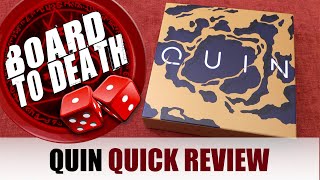
- High production quality—magnetic board, included coasters, and tangible premium components
- Excellent replay value due to every game starting from a different lineup
- Accessible iconography helps new players walk through the rules
- Strategy book adds depth beyond the base rules
- Short playtime makes it ideal for quick two-player sessions
Cons
- New players can be quickly overwhelmed and may lose early if not careful
- Not highly innovative relative to other abstract strategy games
- Some exploits are possible without house rules (e.g., memory swapping with light), requiring optional house rules
Thematic elements
- Light-driven pursuit to reach the center and control the board
- Abstract space-themed two-player arena with light pieces and totems
- Strategic puzzle-like abstract with variable setups
Comparison games
- Strateggo
- chess
Mechanics (from transcript analysis)
- Center-first win condition — The first player to get their light piece to the center iris wins, or by capturing the opponent's light.
- Flash and reveal — If you move onto an opponent's piece, a flash reveals the two pieces and the outcome (capture, swap, or mutual destruction) is determined.
- Light piece captures all — The light piece has sweeping capture power; if it is captured, the attacker wins by material advantage.
- Movement by piece-specific steps — Each piece has a movement value that determines how many spaces it may move per turn, with movement allowed frontwards, backwards, or sideways (no jumping).
- Pattern Movement — Each piece has a movement value that determines how many spaces it may move per turn, with movement allowed frontwards, backwards, or sideways (no jumping).
- Power usage — On your turn you can use your power in addition to your normal action.
- reinforcements — You can reinforce into your starting grid to prevent the opponent from resurrecting on your starting spots.
- Resurrection totem — A resurrection totem lets you resurrect one captured piece and place it on the opponent's starting spot if available; it is a free action.
- Simultaneous Reveal — If you move onto an opponent's piece, a flash reveals the two pieces and the outcome (capture, swap, or mutual destruction) is determined.
- Starting lineup and clone — Before playing, you choose a lineup of 10 pieces from your available pieces and may include a clone; the artificial light cannot start on the board.
Video topics + discussion points
No key topics recorded for this video.
Quotes (from this video)
- Quinn is an abstract game for two players, which plays a little bit like chess meets Strateggo in space.
- On your turn, you can do one of five options: Move, flash, use your power, bring in reinforcements, or resurrect.
- Every game is different really adds to the replay value.
- House rules. This game is ready for house rules such as you're not allowed to use memory to swap with light.
- If you're a fan of these games, Strateggo, chess, and things like that, you should check out Quinn.
References (from this video)
No references stored for this video.
Video HDLB2ECYdMc
Rolls in the Family Top 50 List at 31:23 sentiment: positive
video_pk 2127 · mention_pk 116610

Click to watch at 31:23 · YouTube ↗
Overall sentiment (raw)
positive
Pros
none
Cons
none
Thematic elements
Comparison games
- Dixit
Mechanics (from transcript analysis)
Mechanics unknown.
Video topics + discussion points
No key topics recorded for this video.
Quotes (from this video)
- We put in the work to rank them; it was a grind but worth it.
- Shame is the secret word for the entry in case you forgot.
- This is the first installment; the series only gets better.
References (from this video)
No references stored for this video.
Video 4B_lv0UK_xA
Chairman of the Board Top List at 6:22 sentiment: mixed
video_pk 899 · mention_pk 120019
Click to watch at 6:22 · YouTube ↗
Overall sentiment (raw)
mixed
Pros
- Clean, tangible goal
- Good player interaction
Cons
- Lacks distinct mechanic, longevity may be limited
Thematic elements
- gathering resources and battling entities (Gins) to bottle them
- traditional Euro-style map navigation and resource collection
- classic euro tactile
Comparison games
none
Mechanics (from transcript analysis)
- Map Navigation — trigger actions on the map as you move
- puzzle optimization — optimizing bottle-capturing of Gins
- resource collection — collect various resources to accomplish goals
Video topics + discussion points
No key topics recorded for this video.
Quotes (from this video)
- Hidden Gem
- I think this one's going to have his audience if you can kind of dabble with Euro games but Euro games aren't your main focus
- it's a fantastic job of being so broadly appealing
References (from this video)
No references stored for this video.
Video KYb_BEfVTnw
Rolls in the Family Top List at 13:20 sentiment: positive
video_pk 733 · mention_pk 87676

Click to watch at 13:20 · YouTube ↗
Overall sentiment (raw)
positive
Pros
- tight, thinky abstract that surprises with board state changes
- catch-up mechanic adds tension and accessibility
Cons
- quite punishing for beginners; depth may be intimidating
Thematic elements
- abstract strategy with spatial ring manipulation and capture dynamics.
- A strategic abstract duel framed around rings and line-based control.
- thin thematic veneer over deep strategic play
Comparison games
- Santorini
Mechanics (from transcript analysis)
- five-in-a-row capture victory — You aim to create five in a row of your color; achieving five-in-a-row three times wins the game.
- ring placement and movement — On your turn you place a chip within your ring; the ring can move in a straight line and flip to the other side.
Video topics + discussion points
No key topics recorded for this video.
Quotes (from this video)
- this is one of the greatest deck building board games I've ever played
- it's pure joy, pure fun
- the energy in the room when Ready Set Bet is going
- thematic immersion in Thunder Road Vendetta is spot on
- Age of Innovation feels like the definitive evolution of this family of games
References (from this video)
No references stored for this video.
Video qSfN9Dhj_Ys
Tabletop Minions Discussion at 1:22:16 sentiment: positive
video_pk 330 · mention_pk 110932

Click to watch at 1:22:16 · YouTube ↗
Overall sentiment (raw)
positive
Pros
- value starter set
- plenty of miniatures
- cards system
Cons
- limited range of models
Thematic elements
- skirmish with activation cards
- sci-fi fantasy clash with tiny plastic troops
- tabletop skirmish
Comparison games
- Blood Bowl
- Blitz Bowl
Mechanics (from transcript analysis)
- activation_cards — unique activation card system
Video topics + discussion points
No key topics recorded for this video.
Quotes (from this video)
- the catch is is there's a fourth tab that is basically AI stuff, and you have to pay to use that.
- The proof is in the pudding.
- Maybe not even cautiously optimistic. Mostly optimistic.
- Blood Bowl is a little more in-depth when you're teaching newbies on Thanksgiving.
- The next plastics they do. I'd love to see a hell faction, trench ghosts.
- The game where two robots fight. Chrome Rangers.
References (from this video)
No references stored for this video.
Transcript Navigation
Showing 1–35 of 35