/pic2840020.jpg)
























Quadropolis Deep Dive
What the Community Thinks About Quadropolis
Quadropolis stands as an underrated gem in the city-building genre that resonates deeply with those who discover it. Reviewers consistently praise its elegant design and clear presentation, describing it as a game that looks inviting and functions beautifully. The consensus positions it as a sophisticated puzzle wrapped in a streamlined experience where every decision carries weight. While some note the game creates genuine strategic tension, the overall response emphasizes that Quadropolis delivers compelling gameplay that deserves far more recognition than it typically receives.
Core Mechanics That Define Quadropolis
Architect-Based Tile Selection
The signature mechanic that makes Quadropolis tick is its spatial selection system. Instead of simply picking from a common pool, players deploy numbered architects (1 through 4) around a central construction site. The architect's number determines which tile you collect from that row or column, counting from your architect's position. This creates a fascinating puzzle within the drafting process. Players must anticipate not just what they want, but how to position their architects to reach it while predicting opponent moves. The mechanism ensures accessibility for new players while rewarding forward planning and tactical awareness.
Constrained Placement and Scoring Integration
Once tiles are collected, placement constraints mirror the selection mechanism: a tile collected with architect number two must go in row or column two of your city grid. This elegant link between selection and placement creates a continuous puzzle. The constraint system forces meaningful decisions because players cannot freely build wherever they wish. Tower blocks can stack up to four floors, apartment buildings attract inhabitants, and factories need adjacencies to scoring buildings. Harbors must form connected rows and columns. Every building type has specific scoring conditions tied to its position and surroundings, ensuring that the placement puzzle extends through the entire game.
The Quadropolis Experience
Strategic Tension and Stressful Decision-Making
Reviewers note that Quadropolis creates moments of genuine stress as players weigh competing priorities. The constrained selection and placement mechanics mean that good moves are scarce and contested. Players frequently encounter situations where they must choose between their ideal placement and accepting less optimal positioning. This tension builds naturally from the game's elegance rather than from chaotic luck, creating a satisfying if occasionally agonizing experience. The push-and-pull of wanting specific tiles while recognizing that opponents want them too generates the kind of decision paralysis that signals a game with real strategic depth.
City Building That Rewards Resource Harmony
At its core, Quadropolis asks players to balance three resource flows: housing (inhabitants), industry (energy), and quality of life (parks and services). A purely industrial city chokes under pollution and lacks workers. A purely residential zone sees inhabitants with nowhere to work. Successful play requires recognizing how different building types create synergies. Factories score points for adjacent shops and harbors. Parks earn points based on nearby tower blocks. Public service buildings grant bonuses when spread across your four districts. The satisfaction comes not from maximizing one strategy but from orchestrating these elements into a harmonious whole.
What Makes Quadropolis Stand Out
Elegant Integration of Theme and Mechanics
Quadropolis succeeds because its mechanics reinforce its theme in every turn. The numbered architect system captures the feel of urban planning where you allocate resources to specific projects. The row and column constraints model the reality of land use zoning and spatial limits. Inhabitants and energy represent the city's life and needs. The design never asks players to ignore theme to follow rules or abandon mechanical elegance for thematic flourish. Instead, each component serves both purposes simultaneously, creating the kind of design coherence that experienced players recognize and value.
Accessible Entry Point for City Building Fans
While containing surprising depth, Quadropolis teaches quickly and plays smoothly once understood. The color palette is vibrant and welcoming. The iconography is clear. A new player can grasp the basic flow within a single round. This accessibility opens city-building experiences to players who might find heavier games intimidating. Yet the game never feels simplified once you engage with the puzzle. The decision space remains rich throughout, ensuring that experienced players continue discovering new approaches and strategic nuances.
Potential Drawbacks
Delayed Gratification and Scoring Complexity
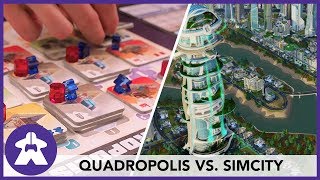
Quadropolis follows most modern city builders in delaying scoring to the end game, creating a SimCity-on-pause dynamic where players build without immediate feedback. The final scoring involves tracking multiple building types, adjacencies, and district coverage. Players must sometimes make difficult resource allocation decisions midway through without knowing exactly how much point value remains locked in unfinished synergies. This delayed payoff suits puzzle enthusiasts but may frustrate players seeking more immediate gratification or clearer turn-by-turn progress signals.
Initial Rules Complexity and Learning Curve
The interaction between selection mechanics, placement constraints, building types, and scoring conditions creates genuine complexity despite an elegant design. New players sometimes struggle with the simultaneous demands of understanding what's available, where they can place pieces, and what scoring chains might form. The rules teach logically but require playing through a round or two before the system clicks. Groups that enjoy instant playability might find the setup investment steeper than expected for a game that plays in under ninety minutes.
If You Enjoy Quadropolis
Players drawn to Quadropolis appreciate games that merge puzzle-solving with strategic building. Between Two Cities shares the city-building framework but emphasizes cooperation and negotiation instead of pure puzzle solving. Cascadia offers terrain tile placement with gentler rules and quicker play. For deeper complexity, Carcassonne provides open drafting and tile placement with dynamic board growth. Those who appreciate the selection mechanism itself should try Droplets, which shares Days of Wonder's design philosophy. If the resource management elements appeal most, Clank combines worker allocation with real-time tension.
What Reviewers Are Saying
"This is a really fantastic puzzle. I really like tiling games in general. I like city-building games, and Quadropolis adds that really extra interesting unique tile selection mechanism."
— Going Analog
"The art is so good. It pops. The color flow is way more inviting. The buildings kind of look like a lot of video games that you see like village-building games. It's just everything about it was good to me."
— BoardGameGeek
"Quadropolis is one of those games where everyone will be pitching in ideas on what to do. It's an underrated gem that goes under the radar and it's way, way better than the buzz around it."
— Board Stupid