/pic1753681.jpg)
Quiddler challenges players to create words from an ever-increasing number of letter cards in their hand. The game lasts eight rounds, with three cards being dealt to each player in the first round, four cards in the second, five in the third, and so on. Each card has one or two letters on it as well as a point value.
On a turn, a player draws the top card from the deck or discard pile, then discards a card. When a player is able to use all of the cards in his hand (with one left for discarding) to spell words — each of which must contain at least two cards — he may go out by placing the words on the table. Each other player takes one final turn, then plays as many cards as they can in words. Each player now scores, adding the point value for cards used in words, then subtracting points for any cards remaining in hand. In addition, the player with the most words and the player with the longest word each receive 10 bonus points; in case of a tie, no one receives the bonus. Whoever has the highest score after eight rounds wins!
Quiddler also includes rules for a solo variant.


- Fast-paced, exciting drafting that creates tension
- Dice-based scoring adds tangible, tactile interaction
- Clear weekly structure with evolving strategic decisions
- Supports 2–6 players and various house-rule adaptations
- Keeps players engaged through news events and potential keeper-style options
- Dice-driven outcomes can introduce randomness that might frustrate some players
- Rule complexity may require careful setup or house-rule tweaks for new players
- Component-heavy setup (boards, trays, dice, timer) may be daunting for casual players
- Fantasy football competition and roster management
- Fantasy football season simulation with a fast-paced draft and weekly play
- Simulation-driven with high tempo drafting, weekly news events, and keeper-like flexibility
Mechanics (from transcript analysis)
- Dice Rolling — Weekly scoring determined by rolling dice for each player, with team-based dice interactions and bonuses
- Drafting — Fast and furious draft using chips and a timer to select players for each position
- Events — Weekly news cards can affect teams or individual players, influencing dice results or performance
- News cards and events — Weekly news cards can affect teams or individual players, influencing dice results or performance
- Resource Management — Slots for quarterback, running back, wide receiver, tight end, flex, kicker, defense, and bench; strategic placement affects scoring
- Roster management — Slots for quarterback, running back, wide receiver, tight end, flex, kicker, defense, and bench; strategic placement affects scoring
- Season progression — Season consists of multiple weeks (up to 10 noted in rules) with playoffs and a champion
- Track Advancement — Season consists of multiple weeks (up to 10 noted in rules) with playoffs and a champion
- Waiver/free agency — Optional weekly pickup mechanics to improve rosters mid-season
Video topics + discussion points
Quotes (from this video)
- huddle is going to be a simulation of what fantasy football would be like.
- It's fast and furious cuz you only have a short amount of time.
- This game has a lot of potential.
- I am super pumped to try it out.
References (from this video)
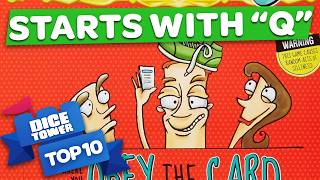
- Cute artwork stands out.
Mechanics (from transcript analysis)
- Card game — A card game with numbers on cards.
Video topics + discussion points
Quotes (from this video)
- I really want to push up this uh, you know, the tradition track because that'll help me score big. And they bring up this moral dilemma and you go, oof, I am not very personally on the side of tradition here, but I want the points. So, we're going to go that way anyway.
- Quadropolis. Quadropolis did it first. #justice for Quadropolis.
- This is an auction game where you have infinite dollars, infinite money that to spend on on everything.
- Brilliant. So simple, so straightforward. You know, I'm surprised that hasn't been stolen yet by any other deck building game.
- Specifically saying plus commodities.
- No. Without commodities, QE would not have been my number one.
- It adds something for second place for lack of better.
- Quest for El Dorado is my number one.
- It's almost cozy at this point. You know what I mean?
References (from this video)

- Faithfully captures the feeling of fantasy football.
- Excellent draft simulation.
- Realistic simulation of player news and events.
- Fun dice-driven player performance mechanic.
- High-quality, hefty poker chips.
- Contains a lot of luck due to dice rolls.
- Some initial confusion regarding rules, possibly due to house ruling.
- Can feel 'swayy' based on dice rolls, though longer seasons mitigate this.
- Managing a fantasy football team
- Fantasy Football league
- Descent: Legends of the Dark
Mechanics (from transcript analysis)
- Dice Rolling — Dice are rolled to determine player performance for a given week.
- Drafting — Players draft players using chips to fill team positions.
- event cards — Team cards introduce random positive or negative effects.
- season simulation — Each game session simulates a fantasy football season, with varying lengths possible.
- Set Collection — Players collect players for specific positions on their team.
Video topics + discussion points
Quotes (from this video)
- We're transitioning into a food podcast, and I think that's okay.
- We're the bad boys of board gaming.
- Baseball for me is more of a social experience than a sporting experience.
- The designers wouldn't say it's a more stuff expansion, but it really is.
- This is like my jam. This is my jam.
- I love that. That's really It's one of these it to me, this is a great version.
- The idea is to come away from this game with as few points as possible.
- It's a brilliant simple but brilliant card game.
- It really depends on the group, but it is a wonderful, wonderful game.
- I wanted to talk about my experience with Huddle, the fantasy football game.
- The game does such a wonderful job. They couldn't have done better to make it feel like a fantasy football game.
References (from this video)

- Fast-paced and tactical.
- Surreal art.
- Genuinely interesting choices.
- Collecting cards with a total value of 21 points
- Duck and Cover
Mechanics (from transcript analysis)
- Card Play — Playing cards from your hand.
- Set Collection — Be the first to collect cards with a total value of 21 points.
- Tableau Building — Selecting sets from the table and strategically building collections.
Video topics + discussion points
Quotes (from this video)
- So, come along as we combine the latest hotness along with some cool recommendations.
- Part of Excalibur's charm is how simply and immediately everyone has a reason not to trust anyone else, which means that the bluffing and the accusations and downright deviousness can start right away.
- This sets up and streamlines the chaos getting players right into the action making this game a lot of fun right off the bat.
- Bringing a group of friends together to immediately sow distrust among them.
- So, for being a whimsical-looking light card game, Quibbles still has a tense and meaningful decision space.
- Past decisions you've made will come back to haunt you.
References (from this video)
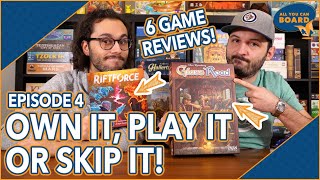
- Unique theme and tactile component
- Interesting strategic choices
- Good family-weight game that plays within an hour
- Good design, especially for a family-weight game.
- Temple cards (common goals) feel specific and don't always give enough points, leading to players spending too much time on them for little reward.
- Might not be a "must-own" game.
- May not be played often currently due to a young baby.
- Feathered snakes (quaddles)
- Clank
- Azul
- Sagrada
- Gingerbread House
- Nusfjord
Mechanics (from transcript analysis)
- End game trigger — The game end is triggered by the first player to complete their third quaddle, similar to Clank.
- Pattern Building — Players are building patterns with snake pieces to meet objective cards.
- prophecy cards — Players use these cards to define scoring conditions for their snakes.
- Set Collection — The game involves collecting pieces to build snakes and fulfill scoring conditions.
Video topics + discussion points
Quotes (from this video)
- it's just not something that i think like is a must own for everyone
- but for me uh the games i've played so far just kind of felt a little bit flat
- i do like it quite a bit i think it's a really good design especially as this kind of like family weight game that plays within an hour
- The biggest and I mean I should say the only criticism I can come up with and I mentioned with you is personally I don't I I would have found a different way to differentiate the lanes and then just laying down the cards I find that the a little bit clumsy sometimes the cards are moving
- it's always a fairly quick game and it does quite a bit of like unique and novel novel stuff
- this is an asynchronous game in the sense that one person is going to be the creature and everyone else is going to be basically trying to survive
- i'm going to give it a play but and i i'm not going to give an asterisk because i feel like every time we're doing these on my own risk on this one i'm going to give it a play but i will say that as you play it consider how often you think you'll get this to the table with four plus
References (from this video)

- Accessible, license-free fantasy football experience
- Tactile components and box design create immediate appeal
- Event mechanics add variety and narrative flavor
- Self-published status may affect distribution and support
- Learning curve for drafting and hand-management at higher player counts
- Strategic sports management and season-long competition
- Fantasy football league with fictional players and teams
- Tabletop simulation of a season with drafting, bench management, and weekly events
- Stratomatic
Mechanics (from transcript analysis)
- Drafting — Players draft fictional players using cards or tokens and bid to assemble competitive rosters.
- Drafting and bidding — Players draft fictional players using cards or tokens and bid to assemble competitive rosters.
- Event-based disruption — Weekly events (like weather or injuries) shift outcomes and require strategic adjustments.
- Season tableau and bench management — A player board shows starters and bench; performance is simulated using dice and event cards.
Video topics + discussion points
Quotes (from this video)
- the player whose turn it is is choosing an action type, and all players get to activate all abilities of that action type.
- almost every single action in Apiary is built around concepts of positive player interaction, especially in terms of positive interaction.
- Even if you lose the race, you can win the game.
- I love talking about positive interaction. Those are three examples.
- Huddle the Fantasy Football Game... the box doesn't show you that much
References (from this video)
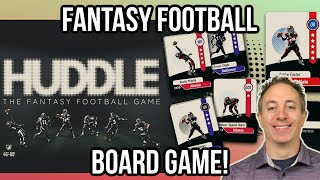
- Nice heavy clay chips with good production quality
- Successfully captures the feel of fantasy football
- Features real-time negotiation and trading between players
- Team stacking mechanic adds depth similar to real fantasy football
- Auction-style draft is engaging
- Good for beer and pretzels style gaming
- Easy to teach
- Rules have been improved and updated online
- Works well with the right group
- High price point of $70 for the experience offered
- Heavy reliance on poker chips drives up cost
- Generic player names instead of clever tongue-in-cheek names
- Too random for some players
- Original rulebook was very poor and incomplete
- Randomness can be frustrating even when playing optimally
- Primarily appeals to fantasy football enthusiasts
- May not be enjoyed by players unfamiliar with football
- fantasy football
- sports
- team building
- auction mechanics
- Football Highlights 2015
Mechanics (from transcript analysis)
Video topics + discussion points
Quotes (from this video)
- Football season is here and like a lot of people, fantasy football is a huge thing.
- The nice heavy clay chips, they're really nice. They feel good in your hands.
- This is an experience type of game... having it there is a positive.
- Fantasy football is completely utterly frustrating and random. This game could be that, too, but it does feel true to what it wants to be.
- If you're comparing it to other games, it's a high price point for what this game is.
- The majority of that is probably the poker chips.
- If you don't like random events screwing with your plans, it might not be the game for you.
- This is designed to be an experience game, beer and pretzels game.
References (from this video)

- Kramer's design quality
- Clever twist on take-that
- Potentially high replayability
- Could be chaotic for some groups
- Unclear balance without playtesting
- Push-your-luck with take-that twist
- Urban market/modern city positioning
- Clever, design-driven twist on a familiar mechanic
Mechanics (from transcript analysis)
- Push Your Luck — Players push their luck in risk-taking as part of scoring and outcomes
- Take-that style interaction — Player actions impact other players' opportunities and risk
Video topics + discussion points
Quotes (from this video)
- this could be his twist on something like the quax equivalent bug
- I'm definitely I'm gonna give this game a look
- the app integration the four player strict Play account and the idea that this is going to take probably at least two hours to play
- going into the more traditional European Renaissance theme
- the dice only has two meanings so if you're drafting say a dice of the value five on it the five is going to represent the number of resources you'll take of that type but the higher the number of resources you take it means the weaker action you'll have in association with that
References (from this video)

- Thematic to real fantasy football
- Fun for gamers and non-gamers
- Unpredictable gameplay
- Unique draft order mechanism
- Draft and play fantasy football simulation
- Fantasy Football
- Sports draft and gameplay simulation
- Real Fantasy Football
Mechanics (from transcript analysis)
- Chip Bidding — Players use poker chips to draft players in one-minute rounds
- Dice Rolling — Players roll dice based on player star values to determine weekly performance
- Draft Drafting — Build a fantasy football team through strategic bidding
- Round-robin Tournament — Teams play against each other in a regular season format
Video topics + discussion points
Quotes (from this video)
- Do you go all in on the five-star running back? Or do you keep it cheap and go for a same team stack that'll save you money for the waiver claims later?