/pic5235769.png)
Many centuries ago, the Greek, Persian and Assyrian empires controlled vast amounts of land and riches. Yet, despite their fortifications and imposing armies, rumours began spreading of a formidable foe in the lands above the Black Sea. They came on horseback. Fierce warriors, both male and female. Skilled with the sword, axe and bow. But they weren’t mindless savages. Their artisans were renowned for their ability to craft detailed trinkets of gold. They fashioned leather armour and improvised the recurve bow. They trained eagles for hunting and war. Some even believe they inspired the Greek tales of the Amazons. But they were more than legend or fable. They were the Raiders of Scythia.
The aim of Raiders of Scythia is to be the player with the most Victory Points (VP) at the game’s end. VP are gained by raiding Settlements, taking Plunder and completing Quests. Players will need to assemble a Crew, train Animals and gather Provisions. The game ends when there is only 2 unraided Settlements or 2 Quests remaining on the Main Board.
—description from the publisher
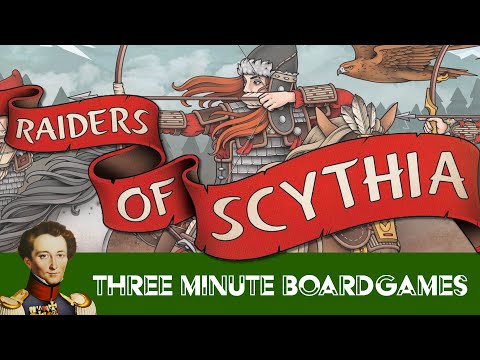



- Elegant and unique worker placement mechanic
- Expansion adds new elements
- Raiding and exploration
- Ancient Scythia
- Raiders of the North Sea
Mechanics (from transcript analysis)
- action selection — It's kind of dual action system in a worker placement game, you only have one worker, but that worker changes throughout the game.
- Set Collection — The omens I think are kind of like foretelling like bad things that can be happening. So you're trying to adjust and make use of the opportunities that are coming up.
- Worker Placement — It's a worker placement game where you're going to be placing workers into different areas of the board, taking an action, and then pulling a worker back off of the board and taking the action of that space as well.
Video topics + discussion points
Quotes (from this video)
- Fall is coming. And the best way to enjoy the fall foliage is from inside while playing a board game and looking out the window.
- It's September. That means it's Christmas, basically.
- This is hell of a deal.
- I love, again, I love board games. Board gamers nerding out about their nerdy hobby. It's my favorite thing to do.
- The best gateway games aren't that. If they're just like light with no depth, that's not a good gateway game.
References (from this video)
- Fixes issues from the previous game
- Tweaks imperfect aspects of Raiders of the North Sea
- Not completely new
- Art is completely different from Raiders of the North Sea
- Raiders of the North Sea
- Raiders of the North Sea
- Through the Ages: A New Story of Civilization
- Through the Ages: A Story of Civilization
- Feast for Odin: Norwegians
Mechanics (from transcript analysis)
Video topics + discussion points
Quotes (from this video)
- I really like this expansion because it brings even you know the better feeling when i play wingspan
- it's not as tight uh a friendlier game i guess
- so the fortune is a for me it's a really good addition to try to help me.
- i feel like taji's one of those sleeper games that only uh gamers feel like they know about
- it is just such good cooperative game simple quick fun um easy in and out achievement unlocked
- it adds something it's something quite innovative i haven't really seen before
- i see it as it is to raiders of the north see what through the ages and new story of civilization was to through the ages of the story of civilization
- So it's really nice simple quick game Castles of Tuscany.
- I almost feels outdated because it does that because you don't really see the the ticket to ride mechanic in many serious games these days
- it is really neat game
- It added a newer element to the game than anything else has.
- It's a nice different spin on classic Pandemic.
References (from this video)
- Gorgeous artwork
- Many components enabling creative photography
- Striking diagonal composition
- Architects of the West Kingdom
- Paladins of the West Kingdom
- Code Names
Mechanics (from transcript analysis)
Video topics + discussion points
Quotes (from this video)
- there's so much magic and beauty in games that you just don't see every day
- we get to do something different every time and we get to learn something in different every time
- this year is all about discovery we started this channel in about October of 2020
- now i want to play raiders of scythia
References (from this video)
Mechanics (from transcript analysis)
Video topics + discussion points
Quotes (from this video)
References (from this video)
- adventure and conquest
- mythic ancient world with raiders
- mythic adventure
Mechanics (from transcript analysis)
Video topics + discussion points
Quotes (from this video)
- you were so close to it
- it's been a while since we played that one
- we time this is interesting
- i forgot about dune
References (from this video)
- Well-tuned gameplay with explosive raids
- Intriguing management and timing of raids
- Plenty of options for multi-use cards and engine building
- Place one worker, take one worker mechanic
- Superior to Raiders of the North Sea in several aspects
- Lacks some expansion content from Raiders of the North Sea
- New art style may not appeal to everyone
- Nomadic horse tribes raiding Assyria, Persia, and Greece
- Scythia, a vast land on the steppe
- Players are leaders of nomadic tribes seeking riches and fame.
- Raiders of the North Sea
Mechanics (from transcript analysis)
- card management — Cards in this game have multiple uses.
- Dice Rolling — We then roll the dice shown here as well as one yellow dye per region with gold.
- Engine Building — Throughout the game you will assemble a crew with different special powers.
- Worker Placement — Each turn you will place workers in locations to get the associated benefits.
Video topics + discussion points
Quotes (from this video)
References (from this video)

- Unique worker placement mechanic
- Appreciated artwork
- Good solo mode that mirrors multiplayer
- Large footprint makes it hard to get to the table often
- Viking-themed
- Raiders of the North Sea
Mechanics (from transcript analysis)
- Worker Displacement — Referenced by the host as a mechanic where workers are placed and then removed to determine actions.
- Worker Placement — A core mechanic where players place workers to take actions. The game features a unique variation where placing a worker and then taking another worker determines actions for the turn.
Video topics + discussion points
Quotes (from this video)
- I always get excited about your list and I get weary about my wallet when talking about your list.
- it's gorgeous. Like the the cards are beautiful. The card art is amazing. Um the dice are even more beautiful.
- And you don't really have to know how to play. Um, kids can play as long as they can, you know, use their fingers or something to hit hit the disc.
- This one I could probably
- So, my number three, we have Legendary, a Marvel deck building game.
- This one has great replayability as well. You can have um mix and match.
- So, this number two is Marvel Champions.
- I just love the comic book theme. Like like the uh the overall theme of it is is very fun.
- My number one is a gentle rain.
- So, this is a solo must. Like, if you're a solo player, I do recommend you give this a try.
- This is the game for me that I just immediately pull out. I don't have to think too too hard.
- It scratches the right itches of like cozy kind of game. Like this is a very cozy experience.
References (from this video)
Mechanics (from transcript analysis)
Video topics + discussion points
Quotes (from this video)
- This is my worst pick. This is actually the pick my lowest pick on this whole list.
- I feel like this one's going to be pretty good.
- That dropping down to your eighth pick is wild.
- Oh my god, that's not good.
- Again, that is what I expected. That is your lowest pick of your draft.
- For a nine pick, that's a gift.
- That's a solid score for a nine.
- Wow, that's low for your nine.
- That's a really great Your nine and 10 were really solid.
- For a total of 54,000.
- Helge, if you're watching this, you screwed me over, damn it.
- Multiple in the top 100, yeah.
- It came down to three.
- The worst designer? Yeah, who's got the worst bottom seven?
References (from this video)

- A classic in this household
- Favorite of the Raider series and West Kingdom series
- The rhythm and tempo of placing/picking up workers works wonderfully
- Great rhythm, propulsion, forward momentum
- Conquering Greece feels amazing
- Adding the twist of warriors with unique capabilities feels really cool
- Snappy, fast, attractive
- Don't need any expansions
- The whole package effectively a second edition of Raiders of the North Sea and its expansion compliment
- Conquering territory
- Scythia, leading to conquering Greece
- Raiders of the North Sea
Mechanics (from transcript analysis)
- action selection — Placing workers activates spots.
- Resource conversion — The backbone is built around resource conversion.
- Worker Placement — Actions involve placing a worker, picking up a worker, and activating spots.
Video topics + discussion points
Quotes (from this video)
- And considering it's one of my favorite genres of all time, and we just did a review of Kinfire, which caused me to noodle on this top 10 list again.
- But nonetheless, no matter how you slice it, Dune Imperium does a really great job of mixing worker placement with some light elements of deck building, effortlessly weaving together this economic backbone that works so well for the world of Frank Herbert.
- This is some of the most fun worker placement that I've done with my family, with my friends.
- Viticulture Essential Edition which I think is just one of the best purest worker placement games that you can get.
- It just feels refined and smart and elegant and propulsive and nuanced.
- But I still think Viticulture Essential Edition as is, is just one of the tightest, most easily recommendable midweight Euro purchases you can give to anyone.
- It's just man everything I love about board games.
- But the lantern action when you draft one of the lower value dice, which yes, they are less powerful dice, but still functional.
- it's just a beautifully presented, tight, small box Euro that gives you so much to do in such a really pleasing package that just makes you frustrated when you play that you can't get more out of any of your turns.
- Let me know in the comments below what are your favorite worker placement games.
References (from this video)

Mechanics (from transcript analysis)
Video topics + discussion points
Quotes (from this video)
- the armor track is gone and instead players can buy eagles and horses equip to their crew members giving more range of bonuses
- there's now a solo mode
- result is not heavily based on dice roll
- you can easily mitigate it by having strong crews
- there were always hard and interesting choices to make
- there's a lot of interesting options for building your engine with crew cards
- this can be really powerful if you do a lot of reading adding extra resources and pathways to victory
References (from this video)

- Enjoyable worker placement games
- Neat system where everyone uses the same workers
- Met expectations from previous games in the series
- Unique art
Mechanics (from transcript analysis)
- Worker Placement — The game uses a worker placement system where players pass workers back and forth.
Video topics + discussion points
Quotes (from this video)
- i adore this game it's just so much fun to play
- it's actually one of the few games i feel like i can not stop playing like i always feel like i can play this game
- it looks very cozy it looks very fun and relaxing it's not it's a little bit stressful
- tyler keeps taking all your pieces like he does in every other game
- it is paladins of the west kingdom
- i really really just i just love this game
- every time we have people over or we play games tyler asks if we can play paladins
- it's not exactly easy to teach
- there's a lot of depth to the game so you have to be willing to put in the time to really learn it
References (from this video)

- deep, crunchy design with thematic cohesion
- distinctive worker-then-crew action economy
- iconography and design alignment with Garle Games
- heavier rules footprint; not a quick, casual play
- complexity may challenge newcomers
- Raiding civilizations, assembling crews, and completing quests
- Ancient Near East (Greece, Persia, Assyria) with mythic undertones
- heroic crew-building with ongoing and discard-triggered actions
Mechanics (from transcript analysis)
- hero and crew synergy — each set includes a hero with a special ability and a secondary crew member
- Multi-Use Cards — cards that can be used in multiple ways depending on context
- quest tiles & raids — revealed quest objectives when raiding sites for victory points
- Resource Management — spend provisions and crew strength to perform raids; horses and other tokens aid power
- resources and provisioning — spend provisions and crew strength to perform raids; horses and other tokens aid power
- Worker Placement — place workers to raid sites and gain resources or actions
- worker/crew placement — place workers to raid sites and gain resources or actions
Video topics + discussion points
Quotes (from this video)
- I really enjoyed this one
- it's a very small box
- multi-use cards
- basically you're just trying to get to these different I guess like neighborhoods
- the solo mode is actually super easy
- Nova Roma which is another one that I've been really wanting to play solo for a while
References (from this video)

- Room for future exploration of the game
- Potential for interesting mechanics via promo content
- Limited information available in this video excerpt
- unknown
- unknown
- promo cards discussed for generic use
Mechanics (from transcript analysis)
- Multi-Use Cards — promo cards received as add-ons; specifics not detailed in the talk
- promo card integration — promo cards received as add-ons; specifics not detailed in the talk
Video topics + discussion points
Quotes (from this video)
- I started to do the board game Garden full time.
- I can't stop thinking about Wild Gardens; it was immersive and wholesome.
- Legacy of You, I backed this on Kickstarter and I am so excited to dive in.
References (from this video)
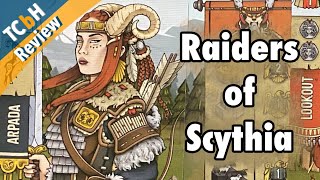
- strong sense of development, both personal (leaders and followers) and civilizational (distance and reach)
- tight, two-action turn structure (one-in, one-out) that creates forward momentum
- synergistic combination of leaders, followers, and special tokens that enable varied strategies
- compact, attractive production with a strong table presence
- solid solo mode with approachable puzzle feel
- board readability can be challenging due to dense symbols and small text
- busy components can overwhelm beginners and obscure key conditions for raids
- limited variability in core strategy for many plays, which may feel repetitive for some
- the tightness that fans love may deter players who prefer higher variability
- tribal leadership, raiding, and civilization-building through crew development
- Ancient Scythia; raiding distant civilizations to grow a tribal civilization
- progressive civilization-building arc tied to raids and quests
- Raiders of the North Sea
Mechanics (from transcript analysis)
- Deck Building — You assemble a crew of followers and leaders, equip eagles and other modifiers to trigger extra abilities, and upgrade workers as you explore further from home.
- Deck/crew management and upgrades — You assemble a crew of followers and leaders, equip eagles and other modifiers to trigger extra abilities, and upgrade workers as you explore further from home.
- One-in, one-out tempo — Each turn you remove a worker after performing the action, creating a sense of immediacy and forward momentum that pushes you toward the endgame.
- Raids and quest-driven progression — Raids require meeting minimum crew and supplies; successful raids grant glory or wounds—wolves and rewards drive progression to farther lands via wagons and quest tokens.
- Resource and table presence management — Abstract economy of goods, horses, eagles, and quest tokens; board setup is visually rich but can be visually busy, demanding attention to symbol interpretation.
- Resource Management — Abstract economy of goods, horses, eagles, and quest tokens; board setup is visually rich but can be visually busy, demanding attention to symbol interpretation.
- Worker Placement — On your turn you place one worker on an action space, perform that action, then pick up a worker—one in, one out; turn sequence is two actions chosen from the available and from spaces already occupied by others.
Video topics + discussion points
Quotes (from this video)
- one in one out
- the tempo that one in one out that i keep on talking about
- tight old-school euro game
- the board looks kind of awesome and has a great table presence but as far as functionality it is busy and is sometimes hard to overlook
- it's a consolidation of that game and the best aspects of the subsequent expansions
- i'm a big fan of raiders of scythia
References (from this video)

- well-tuned pacing between building the war band and executing raids
- the classic 'place one worker, take one' mechanic drives a satisfying engine
- multi-use cards and evolving leader powers create depth and replayability
- leaner design compared to Raiders of the North Sea while maintaining sharp tension
- clear thematic through-line of raiding for points and progression
- quick to teach and engaging in 1-4 player games
- does not include all expansion content available for Raiders of the North Sea
- art style may not appeal to everyone
- some players may miss the depth of Valkyries/armor mechanics from North Sea
- slightly fewer options for theme variety due to streamlined system
- raiding for wealth and fame through organized war bands, leadership, and crew upgrades.
- Scythia, a vast steppe where nomadic horse tribes raid nearby civilizations (Assyria, Persia, Greece).
- episodic, card-driven progression with modular leader powers and raid missions
- Raiders of the North Sea
Mechanics (from transcript analysis)
- card_management — Cards have multiple uses across different zones (village benefits, raid actions, and leader powers), enabling engine-building and strategic flexibility
- Engine Building — Players assemble a crew with distinct powers and synergies, enabling stronger raids and more varied options over time
- engine_building — Players assemble a crew with distinct powers and synergies, enabling stronger raids and more varied options over time
- Multi-Use Cards — Cards have multiple uses across different zones (village benefits, raid actions, and leader powers), enabling engine-building and strategic flexibility
- raid_resolution — Raids require a war band and provisions; dice are rolled (region dice plus a yellow die per region with gold); wounds are assigned to casualties and VP is gained via quests and rewards
- Worker Placement — Players place a worker to claim rewards at village locations; the action economy emphasizes tempo, allowing a subsequent take-action to grab a second benefit
Video topics + discussion points
Quotes (from this video)
- Raiding is a whole different thing! You'll need a war band and provisions to go raiding.
- the best thing about this game is the place one worker take one worker mechanic.
- it's leaner and meaner than Raiders of the North Sea, taking out some of the system's I never cared much for like Valkyries and armor, replacing them with wounds, variable leader powers and animal upgrades.
- if you love multi-use cards and engine building there's plenty of options to explore here as well.
- Raiders of Scythia, like North Sea, only pithier.
- Raiders of Scythia is a well-tuned game where you build up your war band with measured moves and then take explosive and dramatic raid actions.
References (from this video)
- Deep, multi-layered worker-placement with integrated raid system
- Thematic coherence between village actions and raid outcomes
- Varied resources and card powers create replay potential
- Clear endgame tension with distinct scoring avenues
- Steep learning curve and lengthy setup
- Complex raid calculations requiring many prerequisites
- Relies on accurate tracking of wounds and strength; potential for analysis paralysis
- Raid and resource management with mythic/sci-fi flavor
- Ancient Eurasian steppes and surrounding villages with raiders and settlements
- historical fantasy
Mechanics (from transcript analysis)
- card drafting/hand management — Hero and crew cards provide powers, with top/bottom powers and eagle tokens to trigger extra effects.
- Dice combat — During raids, dice are rolled to determine strength and wounds.
- dual-action buildings — A single turn often involves two actions by placing two workers into two buildings and triggering both actions.
- end-of-game scoring — Scoring comes from quest points, animal cards, crew powers, and remaining resources.
- endgame triggers — End conditions include remaining raid settlements or quest tiles reaching a threshold; game then ends after final turns.
- raid mechanics — Raid spaces require workers and resources to attack, involve strength totals, dice, wounds, and a payoff tile.
- Resource Management — Gaining coins, kumis, provisions, cattle, etc., and managing limits of hand and coins.
- Worker Placement — Players place workers to perform actions, often in pairs to execute a double action across two buildings.
Video topics + discussion points
Quotes (from this video)
- the stables action players gain one new animal
- raid spaces are organized in groups of two in one settlement
- the numbers on the dice we rolled is strength
- two game end triggers
- you gain one two or three victory points for having three four or five eagles respectively
- finally players gain victory points for their remaining colored resources they gain two victory points for each gold one victory point for each equipment one victory point for its wagon and one victory point per two livestock
References (from this video)
- familiar core system with fresh twists
- appeals to fans of the original
- less favored than the original by the speaker
- mythic Viking exploration with its own nuances
- expansion/spin-off universe around Raiders of the North Sea
- Raiders of the North Sea
Mechanics (from transcript analysis)
- Core worker-placement with its own spin — uses familiar mechanics from Raiders but adds distinct twists
- Worker Placement — uses familiar mechanics from Raiders but adds distinct twists
Video topics + discussion points
Quotes (from this video)
- it's a cool theme with good components and artwork, and a little twist on the normal worker placement
- Game of Life as a Euro game that's the best way to describe it
- deck-building very fast, almost Dominion speed deck building
- I love it; it's quick and easy once you get used to it
References (from this video)
Mechanics (from transcript analysis)
Video topics + discussion points
Quotes (from this video)
- it's a lifestyle it's a lifestyle we've just committed
- we're all human
- stay positive don't let the travels of this country get you down
- we want everybody to be at the table contributing at that table
- this is a tall order
- we're counting down this is 20 and 21
References (from this video)

- Solid base mechanics familiar to Raiders of the North Sea
- Beautiful board and play mat
- Engaging bidding and coin-upgrade system
- Strong thematic cohesion with North Sea lineage
- Art style not to the reviewer’s taste
- Rule explanations can be unclear and some components fiddly (e.g., stand for coins)
- Wound/dice combat randomness can feel harsh
- Setup can be fiddly and time-consuming
- Viking-era raiding, crew management, and resource gathering
- Nordic/early medieval raiding with mythic elements; inspired by North Sea style explorations
- semi-historical with mythic embellishments
- Raiders of the North Sea
Mechanics (from transcript analysis)
- Area conquest/combat — Attack regions with crew strength, rolling dice to determine wounds and points as you gain resources.
- Area Control — Attack regions with crew strength, rolling dice to determine wounds and points as you gain resources.
- Card-like tiles and drafting — Acquire and place cards/tiles (eagles, horses) to enhance future actions and bonuses.
- Coin upgrade/dynamic economy — Upgrade coins to higher values to improve bidding power in auctions and card/tile acquisition.
- End Game Bonuses — Victory points are earned through regions, resources, and chief/tile bonuses, driving end-game scoring.
- End-game scoring — Victory points are earned through regions, resources, and chief/tile bonuses, driving end-game scoring.
- Leader/flag actions — Leaders provide special actions and can unlock flag actions if included in your crew.
- Resource Management — Acquire resources via tiles and actions, then use them to buy components (horses, eagles) and trigger actions.
- Resource/board management — Acquire resources via tiles and actions, then use them to buy components (horses, eagles) and trigger actions.
- Worker Placement — Place a meeple on an action space to perform that action, then reclaim the meeple to resolve the action and move on.
Video topics + discussion points
Quotes (from this video)
- it's a great game beautifuls all get out i love the look of the board
- the crux of the game is pretty straightforward
- i'm not the biggest fan of this art style it's just not for me
- this is basically a bidding game for those who love bidding—it's quite cool
- the rulebook is not great with this one
- iconography is not intuitive in this game
- the stand with the coins is fiddly and annoying