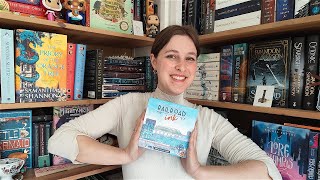
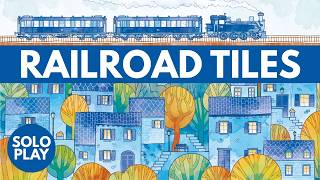
Railroad Tiles, a sequel to the roll-and-write series Railroad Ink, is a quick-playing tile placement game in which you pick tiles and place routes to build an interconnected community.
The game is played over eight rounds. You start each round by drafting your tiles from the sets available in the common pool, then you place your routes in front of you, trying to make as many connections as possible; be careful not to lock yourself in with choices that are too constraining. Each round, you can also place cars, trains, or travelers to populate the tiny little landscape you're creating...as long as you have free space on your tiles. The available actions change from round to round, so you need to prepare in advance!
The more pieces of the same kind each new placement connects to, the more points you earn. You can also score bonus points at game's end for placing tiles in a large rectangle without gaps and for creating sets of three adjacent city tiles.
—description from the publisher
- Accessible solo variant
- Short, tight play sessions
- Multiple scoring avenues via objectives
- Tile rotation and mirroring adds flexibility
- End-game scoring can feel fiddly for some players
- Requires planning to hit a large city within eight turns
- Railroad Inc.
Mechanics (from transcript analysis)

- end-game scoring by rectangles and city size — Scoring depends on the size of the largest rectangle and the number/size of cities; penalties for open ends
- grid/adjacency placement — Placing tiles so roads, railways, and town blocks connect; empty sections must align properly
- tile drafting — Drafting columns of tiles from a pool and choosing what to place in your city
- variable player objectives — Objective tiles provide end-game scoring conditions you can trigger via placement
Video topics + discussion points
Quotes (from this video)
- Railroad Tiles is a spin-off of the Roland Wright game Railroad Inc.
- It's a very cute and quick playing game
- The game's eight turns long.
- We ended the game with 61 points. We needed 50 to get a three star.
- That metropolis piece will already score.
- If you're interested in becoming a member, you can join on YouTube or my Patreon at www.patreon.com/tottotabled.
- You'll gain access to my new exclusive podcast, Table Talk, as well as unboxing videos and whatever extra stuff I come up with.
- As always, thank you so much for watching and goodbye.
- I'd like to thank all the financial supporters of Totally Tabled, including the totally radical Mitch Fischer, Hextra, John Kohler, Scott Meers, and Jay Satterhite, as well as the totally bodacious Melinda Humphre.
References (from this video)
- Engaging interaction and tactical choices
- Compact playtime (~30 minutes) with high replay via objectives
- Clear visual production and theme
- Kickstarter timing may affect accessibility
- Complex for absolute beginners without experience with drafting games
- Rail industry and city growth
- Railroad network expansion across cities
- Strategic, abstract
- Railroad Inc
Mechanics (from transcript analysis)
- network building — Drafted tiles are placed to form an interconnected network; longer paths score.
- Network/route building — Drafted tiles are placed to form an interconnected network; longer paths score.
- Point Salad — Points are earned for paths, largest rectangle, and adjacency of town/city sections; penalties for open paths.
- scoring via routes and city tiles — Points are earned for paths, largest rectangle, and adjacency of town/city sections; penalties for open paths.
- tile drafting — Players draft tiles from a center board in columns, shaping their network.
Video topics + discussion points
Quotes (from this video)
- Railroad tiles takes the same concept of network building from the railroading series however it brings it into a tot New Direction
- the more you place in the same path of the same type and the more points they score
- it's on Kickstarter for a few more days and then it will be available as a late pledge
- by the time you see this video either it's just ending or will have ended but you can still uh get a hold of it
- gives a feeling of something like Patchwork
- the production of this game it looks really really sweet
- Spotlight is a hidden objects game for one to five players
- Moon chasing you
References (from this video)
- Fast play (roughly 20-30 minutes)
- Clear, clean visual design on tiles and boards
- Reduced housekeeping compared with the dice version
- Engaging cluster drafting with meaningful initiative decisions
- Short learning curve and repeatable gameplay
- Differences from Railroad Inc. are subtle; may not justify owning both for some players
- Lower variability and dopamine compared to the dice version
- Some players may miss the chaotic feel of the original's dice-driven gameplay
- Rail transport and urban planning via tile clusters
- Abstract tile-placement on a personal map simulating network development
- Strategic, cluster-driven scoring with initiative tracking
- Railroad Inc.
Mechanics (from transcript analysis)
- Compound Scoring — End-of-round points are awarded for forming large rectangles or squares on your map.
- initiative track — Stronger groups of tiles advance you along the initiative track, making you last to act; higher value groups may yield earlier access next turn.
- Optional modules — Add-on buildings or modules that score in unique ways for additional variability.
- Roads/trains/pedestrians interplay — Place tiles to connect roads and train tracks; populate areas with pedestrians for scoring opportunities.
- Square/rectangle scoring — End-of-round points are awarded for forming large rectangles or squares on your map.
- Tile drafting in clusters — Draft tiles in groups instead of individually to form strategic clusters.
- tile placement — All placements occur on each player's board, making planning and pruning important.
- Tile placement on personal map — All placements occur on each player's board, making planning and pruning important.
Video topics + discussion points
Quotes (from this video)
- Railroad Tiles um has the same premise of the original.
- it's not the most complex of games in terms of rules overhead.
- it's very fast. I think it's only like eight rounds or so.
- I do prefer the scoring system in the original simply by trying to connect the edges to the edges.
- Therefore, I'll just stick with the original. You know, it's a third of the box size. It's just as fast.
- I would definitely stick with the original.
- the dopamine is a bit higher when it comes to rolling those dice
- If you definitely lean towards tile placement games, you're going to like it.
- it's not really different enough from the original.
- Notwithstanding, the tile version is a solid option if you lean toward tile placement games.
References (from this video)
- King Domino-style drafting provides a familiar, approachable lane for new players.
- Base game is solid and family-friendly, with smooth, quick rounds (roughly 45 minutes for four players).
- Expansions add meaningful crunch and variety without sacrificing accessibility.
- Collector's Edition packaging is practical: modular pouches and easy add-ons; rules are concise.
- Base game can feel light for players seeking denser spatial-puzzle challenges.
- Expansion density can dilute certain base-game strategies if not chosen thoughtfully.
- The collector's box is larger than the base game box, which may affect storage for some players.
- Rail transport infrastructure and city-building elements expressed through tile drafting and placement.
- A stylized, modular map where players build their own rail networks, connecting cities, towns, roads, and future expansion elements.
- Procedural drafting with evolving goals and tokens that influence each round's placement options.
- Railroad Ink
- King Domino
Mechanics (from transcript analysis)
- Expansion-driven variability — The collector's edition includes multiple expansions that add new mechanics (e.g., lakes, farming, boats) and variants.
- Pattern and rectangle scoring — End-game scoring rewards compact, rectangular networks and adjacency, with penalties for loose ends or suboptimal layouts.
- Set-collection and scoring tokens — Car/trains/person tokens influence scoring; placing tiles with matching symbols in networks yields points.
- tile drafting — Players select a subset of available tiles each round in a King-Domino-style draft, determining turn order and future options.
- tile placement — Selected tiles are placed on a personal board to form networks of roads, cities, rail links, and buildings.
- token-driven actions — Time tokens and objective tiles govern which actions or placements are available on a given round, creating strategic tempo.
Video topics + discussion points
Quotes (from this video)
- Absolutely. This is a pretty straightforward game, but the puzzle is, of course, you're trying to see which tiles you will be able to place.
- The base game is a very solid family weight game.
- Eight expansions in the collector's edition, and I love how the box is organized—pouches for each expansion you can grab and go.
- I would add an expansion to this game every time I play it.
- I think this is a good game; with expansions, it becomes a crunchy, still relatively light experience.
References (from this video)
- Standalone tile laying game based on popular Railroad Inc.
- Massive collector's edition with many expansions included
- Quick to play at 30 minutes
- Multiple expansion options available
- Building railroad networks using tiles
- Railroad/Transportation theme
- Gameplay-driven
- Railroad Inc.
Mechanics (from transcript analysis)
- set collection — Game includes multiple expansions that can modify gameplay
- tile laying — Players lay tiles to build railroad networks
Video topics + discussion points
Quotes (from this video)
- I love cards that score off of other cards and trying to create combos and synergies
- if I turn this, then this wheel's turning
- I love tile lane games
- that is definitely a different kind of theme that you don't see in board games
- We're big fans of The Crew
- is something better going to come or or do I take what's here
- There hasn't been any deduction games that I know of. Um, I mean, there probably are. Our Gen Con release, but this is the one that really stood out to me
- it's more about the journey than the destination
- pleasantly surprised with how I much I enjoyed uh this two-player fighting game
References (from this video)
- expands with expansions for more complexity
- tile-laying with engaging route options
- could require multiple expansions for depth
- tile-laying with a thematic railroad network
- railway network construction
- light and accessible
Mechanics (from transcript analysis)
- tile laying with bidding — place tiles to create routes; bidding affects turn order.
Video topics + discussion points
Quotes (from this video)
- This game has a lot going on.
- the middle player counts works pretty well for this one.
- It's not cooperative. It is too short.
References (from this video)
- Easy to learn and relaxing
- Nice baseline drafting/engine for lighter play
- Pleasant components and throughput when played as a filler
- Lacks depth; base game can feel repetitive
- Expansion content is often needed to add variety
- Many plays begin to blend together rather than differentiate
- Rail routes and sharing a common supply
- Lightweight rail network building with tile drafting
- Relaxed, casual media-game vibe
- Kingdomino
Mechanics (from transcript analysis)
- round_objectives — Achieve round-by-round scoring goals as you expand
- route_building — Place drafted tiles to extend and optimize your personal map
- tile_drafting — Draft tiles from a shared offer to build your own rail network
Video topics + discussion points
Quotes (from this video)
- it's one hell of a looker. This is a this is a really good looking game.
- I don't like this game.
- Playtime's important. It's sort of like when you watch those comedies and horror movies from like the 90s and early 2000s, they all clocked in under 90 minutes.
- This game does have a beautiful board but the mechanics aren't as deep as the art.
- If you're not the biggest Euro fan, you're not going to like Forestry.
References (from this video)
- clearly explained scoring with helpful examples
- tight and strategic tile placement
- accessible family weight with strong route-building theme
- AP potential for tile selection in some rounds
- risk of reduced engagement with fewer players
- transportation networks
- Rail network and highway connections forming a map
- family-focused
Mechanics (from transcript analysis)
- rectangular network scoring — maximize the largest rectangle and adjacency bonuses.
- scoring via pinpoints — end-of-round scoring based on network connections and pinpoints.
- tile drafting — draft tiles from a pool to place on your board.
- tile placement — place tiles to connect networks with alignment rules.
Video topics + discussion points
Quotes (from this video)
- This is not a racing game. It's a deck building game with dice that help you perform your actions.
- Production value top-notch, of course.
- It's chaos, y'all. It is total chaos.
- The sweet spot probably four to five players.
- This looks like a racing game on the cover, but they talk about deck building, and this is not a racing game.
References (from this video)
- easy to teach
- pleasant thematic flavor of early rail/road building
- feels slightly slight; not very punchy
- lacks depth compared to other tile games
- railroads and roads forming a small tableau
- railroad town-building with tile-laying mechanics
- abstract, modular scoring
Mechanics (from transcript analysis)
- own tableau scoring — each player builds a personal tableau and scores from placed tiles
- tableau building — each player builds a personal tableau and scores from placed tiles
- tile placement — players place tiles to connect roads and rails on their own board
- Tile-laying — players place tiles to connect roads and rails on their own board
Video topics + discussion points
Quotes (from this video)
- There is a ton of theme involved.
- The theme is super there. And if you love this idea of a game, go for it.
- it's cozy. It's one of those games that has some cool thinkiness to it.
- placing a number in between two other numbers and collecting one of those numbers that you placed in between of.
- I think that it offers a nice balance between thinking and social interaction.
- the balance and the cool synergies of the engine
- this is one of those cozy games where you can hang out and talk with people
References (from this video)
- tight, elegant choice with always a decision
- clear visual appeal
- not very deep
- urban development, trains and pedestrians
- city-building with rail and transportation
- light, crunchy strategy with spatial placement
- Vroom
- Planet X
Mechanics (from transcript analysis)
- end-game scoring via open ends — unconnected tile ends give negative points
- planning and optimization — choose lines for maximizing points and minimizing negatives
- spatial reasoning — layout planning affects scoring
- tile laying — place lines of tiles to build routes
Video topics + discussion points
Quotes (from this video)
- The best thing about this game is the story book.
- The writing is just as good as it was in Neon's Trespass.
- It's full of chaos. It's like Jiannis said, it's one of those old arcade games.
References (from this video)
- Relaxing, calming
- Beautiful pastel art
- Replayability via expansions
- Expansions can multiply rules
- network expansion with pastel aesthetics
- cozy tile-placement, railroad/road network building
- calm, relaxing
- Railroad Ink
Mechanics (from transcript analysis)
- scoring by connectivity — points earned from network patterns.
- tile placement — build a network with tiles in a shared market.
Video topics + discussion points
Quotes (from this video)
- They're terrible. Terrible. Don't buy those people.
- We love Hannabi. We talked about it a ton.
- Merry Christmas.
- You deserve it just like we deserve.
References (from this video)
- stunning artwork, strong puzzle feel
- punchy and quick for family play
- better with a few plays to optimize paths
- grid-based tile drafting to build routes
- railroad expansion era
- puzzly, elegant
- King Domino
Mechanics (from transcript analysis)
- grid/route building — lay connections while avoiding unfinished routes.
- tile drafting — choose tiles to place in a grid to build roads and rails.
Video topics + discussion points
Quotes (from this video)
- This is a critical darling, a bestseller of the year, and one that really earns that place with its interesting gameplay and punchy return of investment in time to game play.
- Really love this one. Certainly one to play if you value your time.
- gorgeous world that you are living in for those 30 minutes to an hour.
- This is a really neat game that also plays very quick because you are drafting them into your deck.
- one of the funniest games that you will have your entire family rolling on the ground laughing about.