


























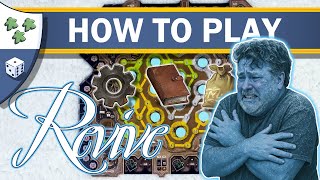
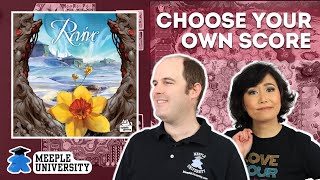



Revive civilization, 5000 years after everything was destroyed. Lead your tribe and explore the frozen earth. Harness its resources. Recruit surface survivors to your cause. Build factories with powerful machines. And populate ancient sites to relearn your tribe's forgotten technologies.
--
Revive is a game for 1-4 players with asymmetric player powers, highly variable setup, and no fighting or direct conflict. Playing through the 5-part campaign unlocks additional contents, and once all contents have been unlocked, the game can be replayed indefinitely.
At the beginning of the game, each player gets a set of citizen cards, a tribe board, as well as a huge dual-layer player board. The tribe board shows your unique tribe ability and the ancient technologies that you may relearn during the game. The dual-layer player board is where you place your custom machines and upgrade your card slots.
A main goal of the game is to reach and populate the large ancient sites. These ancient locations are randomized, and as they are important sources of victory points, they will shape your strategy differently each game. The game ends when all artifacts have been taken, and the player with the most points wins.
On your turn you take two actions:
Play a card (its effect is determined by which card slot you use)
Explore (reveal an area tile and recruit a new citizen card)
Populate (populate an ancient location to learn a new technology)
Build factory (the adjacent terrains determine which machine tracks you advance)
- creepy atmosphere and mood
- clear payoff through interconnected stories
- compact length (about 160 pages)
- strong sense of place in Japanese settings
- enjoyable translation cadence
- existential and slice-of-life horror with unsettling mood and creeping dread
- Anthology of short stories set in Japan; contemporary era; interconnected tales
- interconnected, episodic stories with shifting narrators and ambiguous explanations
Mechanics (from transcript analysis)
- Interconnected short stories — Stories reference shared elements to create a larger payoff across the collection.
- Short chapters and paced reveals — Each story is brief (around 15 pages) to maintain mood and suspense between entries.
Video topics + discussion points
Quotes (from this video)
- there you go. That is Revenge uh by Yoko Agawa.
- it's a bunch of short stories, but each of them are connected in some way.
- slice of life horror
- I think you'll enjoy it.
- I love going to weird little bookstores.
- it was published... 1998.
References (from this video)
- Satisfying engine-building and tight card interactions
- Multiple viable paths and engine combos
- Asymmetric factions with meaningful late-game depth
- Clear endgame scoring and map-incentivized choices
- Moderate interaction that keeps Euro flavor
- Campaign story is criticized as nonsensical or weak
- Setup can be fiddly with many components
- Theme not deeply integrated with mechanics
- Campaign promises may outpace its execution
- Rediscovery and competition between emergent factions with distinct powers
- Post-apocalyptic world where humanity emerges from underground to reclaim the surface
- Magnificent
Mechanics (from transcript analysis)
- action_selection — Two actions per turn with optional card-driven bonuses
- Area Control — Building structures and placing meeples to gain bonuses and influence scoring
- area_control_and_planning — Building structures and placing meeples to gain bonuses and influence scoring
- deck_building — Drafting and layering cards to form an engine of actions and effects
- engine building — Upgrading the machine track and abilities to unlock new options
- engine_building — Upgrading the machine track and abilities to unlock new options
- Resource management — Balancing food, gears, crystals and energy for placement and upgrades
- resource_management — Balancing food, gears, crystals and energy for placement and upgrades
- set collection — Collecting artifacts and upgrade tokens that grant ongoing benefits
- set_collection — Collecting artifacts and upgrade tokens that grant ongoing benefits
- tableau building — Arranging selected cards on the player board to unlock powers
- tableau_building — Arranging selected cards on the player board to unlock powers
Video topics + discussion points
Quotes (from this video)
- it's a very satisfying very tight way of doing things
- mechanically spectacular
- this is a very good Euro game
- if you're a Euro game fan and you're not trying to get a copy of this then you are missing the boat
- the top of the list has to be just the overall mechanics
- exceedingly exceedingly well
- I think it's great
References (from this video)
- Charming, adorable theme and artwork
- Bright, beautiful components
- Simple, quick, and accessible
- Two mechanics (push your luck and bag-building) integrated cleanly
- Replayability due to different tile sets
- Two-player game not as strong as higher player counts
- Wished for more bag-building variety
- Walk length and pacing can vary with player count
- Meandering nature walk, weather danger
- Forest walk with a looming storm; two to four players
- Light, charming, walk-through theme with subtle storm tension
- Quacks of Quedlinburg
- Can't Stop
Mechanics (from transcript analysis)
- bag building — Add tiles to your bag and spend boots to acquire more tiles.
- bag-building — Add tiles to your bag and spend boots to acquire more tiles.
- Push Your Luck — Draw tiles from a bag to add to your walk; decide when to stop before storms hit.
- push-your-luck — Draw tiles from a bag to add to your walk; decide when to stop before storms hit.
- tile placement — Place drawn tiles face-down along a walking route; some tiles carry storms.
- Weather track / storm mechanic — Storm tiles must be added to a weather track; too many storms cause players to rush home.
Video topics + discussion points
Quotes (from this video)
- The theme for Refuge is very charming.
- I love that you're just like Meandering.
- It's a nice walk game, it's quick and charming.
- Push your luck is really at the heart of this game.
- Two players doesn't shine as much.
References (from this video)
Mechanics (from transcript analysis)
- asymmetric factions — Different factions have distinct boards and abilities; exploration and track climbing.
- Asymmetric Mechanics — Different factions have distinct boards and abilities; exploration and track climbing.
- Deck building — Decks slot into boards to unlock actions and bonuses.
- deck building and engine building — Decks slot into boards to unlock actions and bonuses.
Video topics + discussion points
Quotes (from this video)
- this is really interconnected worker placementish game.
- it's surprisingly smooth for how many moving parts there are.
- it's a game of inches where every space matters.
- there's way too many moving parts to explain here, but it is very very satisfying.
- you can definitely not just follow one thing and focus on one thing.
References (from this video)
- Compact, quick-to-play solo experience
- Good for travel and tour schedules
- Accessible for solo players
Mechanics (from transcript analysis)
- mini-games — Compact solo game designed for quick play sessions; suitable for travel and short sessions (roughly 10–15 minutes).
- Solo Play — Compact solo game designed for quick play sessions; suitable for travel and short sessions (roughly 10–15 minutes).
Video topics + discussion points
Quotes (from this video)
- a great little solo game
- you can play in like 10 15 minutes
- it's really good and really solid
- it's been a blast
References (from this video)
- Deep, heavy gameplay
- Expansion adds new dimensions
- Heavy for casual players
- Building and expanding a city through layered actions
- City revival/ice-melt expansion theme
- Dense, strategic
Mechanics (from transcript analysis)
- deck-tuck — Tuck cards to determine resource generation.
- Multi-track progression — Three tracks that unlock buildings as you progress.
Video topics + discussion points
Quotes (from this video)
- Concordia is fantastic.
- Endgame scoring is so cool and unique.
- Obsession is such a fun game.
References (from this video)
- clear phase progression and visibility for all players
Mechanics (from transcript analysis)
- multi-phase card flow — cards go through available/active/resting phases across rounds
Video topics + discussion points
Quotes (from this video)
- my five favorite board game mechanics
- cards have multiple uses regardless of what your hand draw is
- I love games that engage you when it's not even your turn
- every player gets to do something at the same time
- not only when you pull your workers you get something but every other player also has the option of pulling their workers back at the same time
- stock buying mechanic ... the objective is to have the most money at the end of the game and the way you get the most money is by buying stock in the players
References (from this video)
- Deep engine-building with multiple interacting systems that reward careful planning and sequencing.
- Clear progression through a five-game campaign that adds structure and variety across plays.
- Solid mix of exploration, drafting, and building decisions that produce emergent strategy each session.
- Slot modules and color bonuses create meaningful micro-choices and synergies with drafted cards.
- Solitary play is approachable yet provides meaningful complexity for longer sessions.
- The game presents a fairly steep rules footprint and dense iconography, which may be intimidating for new players.
- Tracking many moving parts (tracking distances, resources, and multiple tracks) can be error-prone without careful setup.
- Campaign spoilers can diminish later plays if you haven’t finished the arc in a single run.
- Civilizational revival through exploration, city-building, technology advancement, and resource management.
- A post-apocalyptic ice age scenario where civilizations attempt to rebuild from a frozen world, guided by a player-led tribe.
- Solo narrative with campaign framing and explicit pacing toward endgame scoring.
Mechanics (from transcript analysis)
- Card-driven action slots — Cards are slotted into top, bottom, or side areas, delivering different effects and advancing the action marker after each placement.
- Distance-based placement — Each action has a travel distance measured from existing structures; distance costs food and affects planning.
- Endgame scoring via artifacts and energy — Final scoring incorporates artifacts, beaker icons, energy on hand, and proximity bonuses to water spaces.
- Exploration and card drafting — Exploring reveals new spaces at a food cost and grants points plus access to a draft pool for new cards.
- Hibernate (round end) mechanic — A round-end reset that recovers energy, reactivates resources, advances a hibernation track, and yields end-of-round rewards.
- Population placement — Meeple placement on locations unlocks abilities, adjustments to tracks, and often enables new actions or bonuses.
- Resource management — A multi-resource economy (gears, books, food, and energy/crystals) that drives action economy, building costs, and movement across tracks.
- Slot modules and color-coding — Placing certain modules unlocks permanent bonuses and triggers color-aligned bonuses when matching cards are played.
- Tech tracks and artifacts — Advancement on yellow/gray/green tech tracks unlocks bonuses, energy usage, and artifacts that boost endgame scoring.
- Track advancement — Advancement on yellow/gray/green tech tracks unlocks bonuses, energy usage, and artifacts that boost endgame scoring.
Video topics + discussion points
Quotes (from this video)
- This game uses a five game campaign.
- The five game campaign so the first thing we would do is read the top card from that deck that says stop on it.
- In the solo game we're not playing against another opponent we're just trying to get a high score and this marker is tracking how many more card actions we have until the end of the game.
- Five different actions that you can do on your turn it's all shown right here.
- Hibernate which is kind of like ending the round.
- We're going to pass and then hibernate, and when you hibernate you get all your energy back and reactivate your switch.
References (from this video)
Mechanics (from transcript analysis)
Video topics + discussion points
Quotes (from this video)
- I'm Alex Radcliff from Board Gameco. I hope you enjoyed this video.
- I logged 1374 games last year.
- I want to end 2026 by getting backlog down to at least 100 red or fewer.
- I dropped 40 lbs this year instead of the 10 I was aiming for.
- There were 738 videos added to the channel in 2025.
References (from this video)
- Strong synergy across multiple viable paths to victory
- Distinct player powers encourage diverse strategies
- End-game objectives provide clear, strategic goals
- Some luck due to card availability
- High complexity and setup may be challenging for some players
- Cooperation, long-term strategic planning, and player-specific strengths shaping the path to victory.
- Post-cataclysmic Earth revival and planetary repopulation with individualized objectives.
- Campaign-driven, objective-based with unlockable powers.
- Carnegie
- Food Chain Magnate
Mechanics (from transcript analysis)
- Card-driven resources and actions — Resources are acquired by playing cards onto your player board to pay for actions and advance your plan.
- End-game objectives with multipliers — Players receive objective cards that determine scoring multipliers, encouraging alignment of strengths toward a unified strategy.
- Player boards with unique abilities — Each player has a board granting specific strengths and advantages that can be unlocked over the course of the game.
Video topics + discussion points
Quotes (from this video)
- Strategy is the process of creating a set of well-aligned activities with the aim of occupying a valuable position in a competitive landscape
- Tactics are single activities and aligning them together is what comprises a strategy
- There is no luck for the rest of the game
- The five games do have that little something extra
- Carnegie this is a kind of a complicated game to explain
- I did do a full length review about this game so I'll be sure to make links available for that
References (from this video)
- Concept of flipping tiles and bonding is interesting
- Abstract approach to pattern-building and color manipulation
- Poor component quality noted (gems, board)
- Rules ambiguity about four-in-a-row outcomes
- Take-that dynamics and potential dead turns
- Gameplay can feel repetitive and unenjoyable
- color manipulation, pattern-building, set-collection-like objective
- Abstract board game with tiles and gems; no strong real-world theme
- abstract, procedural
Mechanics (from transcript analysis)
- action selection by color — use color-identified gems to trigger color-based special actions
- bonded gem — placing a gem on the same tile creates a bond that unlocks a special action
- color changing — purple gems can switch color with another gem
- gem placement — place gems on the board, up to three per player
- objective/line building — aim to form a line of four bonded gems to earn crystals
- set-up randomness — initial tiles are laid out randomly to create variability
- tile flipping — flip a board tile to reveal or hide its color and enable actions
Video topics + discussion points
Quotes (from this video)
- weave is a game that is uh you're trying to get four in a row
- I think deep down there's an interesting idea there, but I just can't recommend it beyond that.
- There are so many problems with weave.
- the flipping the tiles and taking back and forth, it just feels like a very dead dud of a game.
- Oh boy, there are so many problems with weave.
References (from this video)
- Strong engine-building and combos
- Solid solo mode that works well
- Thematic hooks can feel thin for some players
- Group experience can vary depending on synergy
- Euro engine-building
- Raccoon Tycoon
- Ra
Mechanics (from transcript analysis)
- Endgame scoring via chart — Fixed number of turns and card plays; player uses rejuvenation action to recover cards
- Endless combos / engine-building — Traditional euro with multiple combos; solo mode available
Video topics + discussion points
Quotes (from this video)
- this is where I talk about all of the non new to me games that I have been playing
- thoroughly thoroughly enjoyed this recent play
- it's just a lovely T placement game
- this is one of the best two-play games of all time
- I love this game
- an absolute blast of a game
- the combos are fantastic
References (from this video)
- sandboxy feel with strong engine growth
- private objectives create personal goals
- wide power variety and expansion potential
- complex setup and learning curve for new players
- engine-building and discovery
Mechanics (from transcript analysis)
- card_driven_engine_building — players build engines via unique powers and card interactions
- engine building — players build engines via unique powers and card interactions
- private_objectives — secret objectives guide player strategy
Video topics + discussion points
Quotes (from this video)
- "This is a deck deconstruction game where you want to be the first player to abandon all of your artichokes"
- "hidden movement games are a strange one for me"
- "it's a very light game it's very quick bit of silly fun"
- "the more weird a theme is the heavier the game is"
- "Revive is such a great card driven Euro"
- "best game from 2022 No Doubt"
References (from this video)
Mechanics (from transcript analysis)
Video topics + discussion points
Quotes (from this video)
- Our crossovers are like popcorn.
- I adore Revive.
- Planet Unknown. Highly enjoy it.
- Mind Management is a hidden movement puzzle that really shines.
- Bruge is a fantastic engine-builder with a huge stack of cars and cards.
- Too Many Bones remains a powerhouse for me.
- Isla and Something Shiny is something I won't forget.
- Phantom Opera is one of the clever hidden movement implementations I know.
- Feast for Odin is one I keep coming back to.
- Northwood is a logic puzzle in solo form that I love.
- Lord of the Rings trick taking game is a clever cooperative twist.
References (from this video)
- Solid mechanical implementation
- Good puzzle design
- Weak theme integration
- Lacks strong thematic elements
- Feels purely mechanical without narrative context
- Limited interaction between players
- Similar to many existing Solver Zero games
- Weak/minimal theme
- Mechanism-heavy design
- Solver Zero games (general category)
Mechanics (from transcript analysis)
- Limited player interaction
- Positive player interaction
- Pure mechanism focus
- Solver Zero-style mechanics
Video topics + discussion points
Quotes (from this video)
References (from this video)
- engine-building depth
- strong production values
- designers with quality track record
- can be heavy or slower-paced for some groups
- Strategic engine-building with thematic discovery
- Engine-building and discovery with multiple factions
- Competitive multi-faction engine-building with discovery
Mechanics (from transcript analysis)
- engine building — Players develop their engine to perform powerful actions
- engine-building — Players develop their engine to perform powerful actions
- Faction Asymmetry — Different factions offer varied abilities and paths
- Resource management — Managing actions/resources to optimize engine output
- variant/objectives — Optional hidden/public objectives alter tension
Video topics + discussion points
Quotes (from this video)
- hidden movement games are something that I I'm kind of interested in but I've not really found the one for me
- I love bidding games
- the more people in this queues the more money you have to spend
- this is one of my most anticipated games from last year
- this is basically a game within a game
- it's lightning quick too it only takes around 15 minutes to play
- you can get a three-player game of this done in about an hour
- it's a passion project with some good historical context
References (from this video)
- Deep engine-building with cascading synergies
- Tight five-action system that remains smooth and engaging
- Excellent production quality and board/card art
- High replayability with multiple player boards and campaign option
- Clear sense of progression and end-game depth
- Colorblind accessibility issues due to color palette and similar orange/green tracks
- Some scoring can be swingy if objectives align strongly
- Some turns can feel lengthy or meandering to new players
- Technology progression, exploration, and resource management
- Futuristic space-age with modular tiles, hibernation tracks, and artifacts
- Sandboxed engine-building with open-ended progression
- deck-building games (as a general reference)
Mechanics (from transcript analysis)
- action selection — On a turn, a player may take two of five actions (with possible duplicates) or perform a Hibernate refresh.
- Building placement — Spend resources to build small or large buildings, with range-based placement and adjacency bonuses.
- Campaign-mode and player boards — Character boards offer unique powers and a progression path; campaign mode is optional.
- Card play and slot-based bonuses — Play cards from hand either using top or bottom halves by tucking into the board, triggering bonuses if colors match slot modules.
- End-game scoring with private/public objectives — Points come from various sources including artifacts, objective cards, and track bonuses.
- Energy tracks and hibernation — Energy is tracked on multiple tracks; hibernate recycles cards, resets energy, and reopens options.
- Resource management — Manage four resources (crystals, gears, books, food) and convert them for points and track progression.
- resource management and conversion — Manage four resources (crystals, gears, books, food) and convert them for points and track progression.
- Technology discs and artifacts — Advance technology discs to unlock abilities; artifacts contribute end-game points and strategic bonuses.
- Tile exploration and placement — Reveal and place tiles with range costs depending on proximity to the tile.
- tile placement — Reveal and place tiles with range costs depending on proximity to the tile.
Video topics + discussion points
Quotes (from this video)
- staying true to that smooth kind of five Action System
- this is one of the best games of 2022
- the depth and layers to your decisions
- it's not linear at all
- this game has legs
- it's polished I think it's smooth
- the cascading effect of improving your end game scoring
- this is a Chairman's Commendation
References (from this video)
- Noted for its unique track-crossing mechanism
- Memorable art and engagement
- Older design; may feel dated to some players
- Unknown
- Unknown
- Unknown
- Recall (sequel in conversation, not a direct comparison)
Mechanics (from transcript analysis)
- Crossing track movement — Track-based movement with intertwining routes
Video topics + discussion points
Quotes (from this video)
- you can't stop
- the more people are into it, the better it is
- it's a Dice Tower essential
- a masquerade of classic and modern designs
References (from this video)
- Diverse strategies and interesting objective tension
- Good balance of exploration and engine-building
- Some players may find the path to max points non-obvious at first
- Resource-driven exploration and objective pursuit
- Exploration and track climbing on a shared map
- Euro-style engine-building
Mechanics (from transcript analysis)
- Area/track progression — climb tracks and gain technologies and benefits
- Public and private objectives — balancing public goals with private point multipliers
- Track advancement — climb tracks and gain technologies and benefits
Video topics + discussion points
Quotes (from this video)
- Caesar's Empire is a great game to try, and it plays well at multiple player counts
- this game is so simple and smooth that I absolutely love it
- Rise has a lot of potential to stay evergreen
- Tell Atom... the core twist on this game is that when you are drafting these Dice and community resources...
References (from this video)
- Clever building mechanism that increases interactivity and potential bonuses
- Engine-building element from completed missions adds depth
- Intrigue mechanic introduces tension and conflict in a measured way
- Thematic Venice setting with attractive production and components
- Multiple paths to scoring via orders and councils
- Fiddly components that are hard to handle and can slow play
- Two-player variant relies on dummy boats and can feel unsatisfying
- Board can feel cluttered and large, especially with multiple players or dense canal paths
- Some rules interactions and management complexity can bog down turns
- Product decisions obscure board symbols when workers are placed
- Relatively limited replayability with similar order cards and powers
- trade, political intrigue, and city-building in a bustling Venetian environment
- Venice, Italy, canal network with docks, buildings and bridges
- engine-building / route optimization with order-driven scoring
- Ragusa
- Fast Sloths
- Oracle of Delphi
Mechanics (from transcript analysis)
- bridges / travel shortcuts — Building or using bridges affects travel costs and can trigger intrigues; passing over bridges yields rewards.
- end game bonuses — Ending conditions tied to the council track or depletion of the order deck, with final scoring rounds.
- endgame triggers / scoring — Ending conditions tied to the council track or depletion of the order deck, with final scoring rounds.
- engine building — Completed missions provide ongoing bonuses that influence future turns.
- engine-building powers via missions — Completed missions provide ongoing bonuses that influence future turns.
- gondola movement / route planning — Move your gondolier along canals with costs and bonuses based on passed buildings and docks.
- intrigue track / penalties — Intrigue adds risk and can disqualify the leading player if not managed; interacts with route choices.
- Network/route building — Building or using bridges affects travel costs and can trigger intrigues; passing over bridges yields rewards.
- order cards / objectives — Complete orders for VP and coins, drawing from a deck that scales with players.
- Pick up and deliver — Collect resources and move them to destinations to earn points and rewards.
- Pick-up and deliver — Collect resources and move them to destinations to earn points and rewards.
- set collection — Limit on cube types and strategic swapping to maximize orders and bonuses.
- set collection / resource management — Limit on cube types and strategic swapping to maximize orders and bonuses.
- worker placement — Place workers to activate bonuses at various locations; can push opponents' workers for better gains.
- worker placement on buildings — Place workers to activate bonuses at various locations; can push opponents' workers for better gains.
Video topics + discussion points
Quotes (from this video)
- the building mechanism i think is really clever
- intrigue track is going to be quite important because it can really make or break your game
- it's not massively taxing
- the intrigue is okay but bogs things down
- I cannot recommend Venice
- the box artwork is phenomenal
- engine building motion
- the game could have been great... it had the ball been a bit bigger
- I love the idea and premise of it
- it feels like you're doing the same thing from game to game
References (from this video)
- innovative dual-sided cards enabling varied strategies
- clever card play and integration that supports immediate benefits and later reuse
- modules create satisfying engine-building synergies
- distinct character art and powers with thematic fit
- public objectives encourage forward planning and strategic positioning
- mechanics flow is approachable for Euro-game fans while preserving depth
- theme can feel thin relative to the dense mechanics
- heavy euro mechanics with potential for analysis paralysis and long play
- endgame can become repetitive point-chasing rather than thematic storytelling
- player interaction is not as high as some players crave, with limited disruptions until late game
- campaign/legacy treatment viewed by some as unnecessary or spoil-laden
- rebirth through exploration, resource management, and technological advancement
- post-apocalyptic Earth; tribes attempt to rebuild civilization
- teased through exploration and artifact discovery rather than a fixed story
- Concordia
Mechanics (from transcript analysis)
- artifact-driven endgame scoring — endgame triggers conclude when the last artifact is taken; victory points accumulate based on artifacts and engine progress
- campaign/legacy-style elements — campaign components unlock new mechanics and narrative depth over multiple sessions
- deck-building with immediate use and recirculation — cards can be played as they are drawn and later re-enter the deck for reuse, creating a dynamic draw/discard flow
- dual-sided top/bottom cards — cards present two modes of effect; players choose top or bottom, then can flip or adjust orientation to alter outcomes
- exploration and tile reveals — explore new tiles to gain benefits; first you resolve tile benefits then flip for future use
- lever/slider interaction to affect actions — a lever/slider on your board enables actions that can influence your own or others' boards, encouraging interaction
- module/tech-slot system — modules attach to a personal board to generate resources and enable combos; placement drives engine progression
- public objectives and spatial competition — public objectives across the map corners push players to plan and compete for scoring multipliers
- tracks and advancements with bonus actions — three tracks unlock additional actions; bonuses are constrained by animal tokens and lightning bolts
Video topics + discussion points
Quotes (from this video)
- I do agree that the cards are very interesting and that I don't remember any game that has that kind of top bottom card and that you can spot it in different ways to use a different benefit
- I love the card play I think it's really clever and it's pretty unique at least I don't see it in a lot of games the fact that all these cards have two sides on them; the top side is more about resources or the bottom side it's more of a some sort of more unique power and you decide whether or not you want to put it under your Tableau facing up or facing down
- the luck component has a very very small impact on the entire area
- the deck building portion of the game is something I really like; whatever card you get you can play right away and then you may get to use it again later
- I would give the game maybe a six
- I would land it about probably an eight
- it's the most euro of euro games
- legacy campaigns feel unnecessary; campaigning is nonsense; open it up and play
- I want more player interaction and I like the forward planning though the game pushes you toward objectives