/pic1504549.jpg)
In the card-driven board game Rialto, the goal is to earn the most victory points (VPs), which are awarded for a variety of things. The game board displays the six districts of Venice, and players earn VPs for placing council members into these, for building bridges and placing gondolas to connect the districts with one another, and for building advantageous buildings.
The game is played over six rounds, with each round consisting of three phases:
1. Acquire cards: Each player takes a set of cards.
2. Play cards: Players use cards to perform certain actions.
3. Activate buildings: Players may take advantage of their buildings and use their powers.
In phase 1, sets of eight cards are displayed (with six cards face-up and two face-down). Each player takes one set, then reduces his hand to seven cards. A card shows one of six specific characters (Architect, Merchant, etc.) or is a wild card.
Phase 2 consists of six sub-phases in a fixed order, one for each character. In each sub-phase, players choose whether or not to play one or more cards of that specific character. Each card allows them to perfom that character's action, for example:
Take one piece of gold for each Merchant card you play.
Place one council member into the current district for each Council card you play.
Take a building with a value equal to or lower than the number of Architect cards played. The higher its value, the better its function.
Whoever plays the most cards in each such sub-phase receives a bonus of one free action of that type. In case of a tie, whoever is farthest along the "Doge" bar gets the bonus – and of course to advance on the Doge bar, players need to play Doge cards.
Finally, in phase 3, players may take advantage of their buildings. For each piece of gold paid, a player may use one of his building's ability.
Players collect VPs both during the game – from special buildings and by building bridges between districts – and at the end of it – for majorities of council members in each district. The value of each district evolves during the game: Each district is adjacent to four other ones, and at the end of the game, they will be connected either via bridges or gondolas. A bridge increases the value of the adjacent districts by 3-6 victory points, whereas a gondola increases this value by 1 point. The player with the most council members in a district earns VPs equal to the district's total value, the player with the secondmost council members earns half this value, and so on. While it's important to establish majorities in the districts, it's also crucial to control their values by cleverly placing those bridges and gondolas.


- clear, elegant integration of drafting and spatial placement
- interesting card draw and drafting mechanism that changes per session
- older edition; some players find it slower or heavier to learn
- downtime can occur with multiple players building simultaneously
- area influence via councillors; bridges and gondolas scoring
- Venice with multiple islands and bridges
- High Society
Mechanics (from transcript analysis)
- card-draw/drafting with timing — a dozer-like track determines who drafts hands of cards; you draft from a set and place them to build your area
- hand management and tableau building — you build a tableau on your side and score via proximity to bridges and gondolas
- island majority scoring — the player with the most councillors on an island scores the reputation/points for that island
- no-tuck stacking and placement rules — you can cover cards, but only if icons match; you cannot tuck and must maintain stacks
Video topics + discussion points
Quotes (from this video)
- I love it
- the fact that the game has you making a long-term strategy and really thinking lots of turns ahead but forcing you to reconsider your plans at every step of the way
- I was not expecting to like this game at all what happened is that I not only liked it but I loved this game
- this is dominating all of my desires to play games over this last month
- it's a very light style game
- this is absolutely a puzzle style experience
- the randomness of input adds freshness
- the beating heart of this game is the bag
References (from this video)

Mechanics (from transcript analysis)
Video topics + discussion points
Quotes (from this video)
- beyond the sun is such a good game
- i am loving that game
- i would definitely not mind having a copy of kingdom
- it's a wonderful world expansion ... corruption and ascension
References (from this video)

- looks very nice
- already done a speed review
Mechanics (from transcript analysis)
- Trick-Taking — A card game where players play cards in rounds, with one player winning each round.
Video topics + discussion points
Quotes (from this video)
- March of the Ants is uh from Tim Eisner. So, same guy who did uh Canopy and some guy who did Leaf. Um, and I have talked highly about both of those games. Uh, this one is a reimplementation of an older game, March of the Ants. This is an area control game, quite an aggressive area control game.
- Now, when you put those two things together along with Board of Dice, you usually expect a very complicated, heavy, oh my god, there's so many rules type game.
- The demo did a good job of teasing me, thinking, 'Wow, this game didn't feel that complicated.' It was It was very in-depth.
- This could be one of the better David Turczi games I've played in recent uh you know tried out in recent um years.
- They didn't want to just make it White Castle with two players because to be honest, White Castle worked best as a two-player game.
- This is a two-player area control game um where basically you have followers, dudes on the map.
- But it's beautifully produced. You got these translucent dice, these lovely artwork cards, these wooden followers.
- Yes. Sorry, there is a spider on one of these pictures. I didn't see that coming, but uh I've seen scarier spiders, but still
References (from this video)
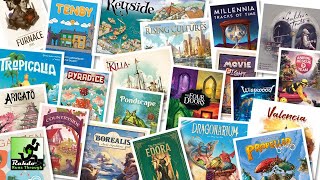
- Multi-use card drafting in a brilliant way
- Great anime aesthetic
- Super duper fast and tense
- Publisher Ludonaut is one of the final two games they will ever publish.
- Card Drafting / Recipe Fulfillment
- Seven Wonders
- Sushi Go
Mechanics (from transcript analysis)
- Card Drafting — Features close hand card drafting.
- Multi-Use Cards — Similar to Achilia, likely involves multi-use cards.
- recipe fulfillment — Players engage in recipe fulfillment as part of the gameplay.
Video topics + discussion points
Quotes (from this video)
- And countryside is a freaking phenomenal.
- This is one of the best engine building games I have played this year.
- It is very likely going to make it into my top 10 games of the year. It is that good.
- My number three of the month is Rising Cultures.
- Number two is Druids of Adora.
- It's classic feld, making a comeback.
- Number one, Furnish Duel.
- A game that will not be coming out until 2026 will very likely make it into my top 10 games of 2026.
References (from this video)
- Mechanically sound
- Subtle but clever
- Building a card grid tableau
Mechanics (from transcript analysis)
- Card Drafting — Players draft cards to add to their tableau.
- Goal Achievement — Completing different goals that come up throughout the game for points.
- Set Collection — Collecting different colors of cards for end-game scoring.
- Tableau Building — Players build a 2x2 grid of cards, with abilities active as long as they are in the grid.
Video topics + discussion points
Quotes (from this video)
- So, I believe it or not out of all the board games out there, there aren't actually that many that sit at that hour time frame mark.
- So, it's a bit of a sweet spot that I personally like. I I really do like those games that you can kind of get done in about an hour's time because it kind of feels meaty enough to sink your teeth into, but it's not necessarily got to be the kind of main event um of your gaming night.
- So, if you do want a a catalog of hour-long games, then this could be a good place to start.
- And it's just a very nice, well-put-together game.
- So, kind of kind of like an economic uh tile placement game, Foundations of Metropolis is a great place to start.
- And I love that kind of being so confined and restricted in a game like this.
- So, if you like these card driven mechanically sound games that's a little bit subtle but clever then I would really recommend giving Arigato a try.
- So, fantastic game, but maybe at the lower player counts or if you're more familiar with the game, you can get it into that hour mark.
- And it's just so engaging and it just keeps you on your toes from start to finish.
- So, for me, it takes all the best parts of all the uh the best deduction games.
- So, I'd definitely try that one out. And again, I think so many people could enjoy this one.
- So this is one of the purest, most beautiful area control games uh that you will ever play and that unlike a lot of other area control games it's it's quite subtle and it is card driven through this kind of trick taker adjacent mechanism and I wouldn't let that put you off because you know I I hate trick taking games. This one does have some similarities and but it's fantastic.
- So this is such a cerebral, beautifully balanced clever you know intelligent sophisticated game in my opinion
- And for me, that is just fantastic. And I'm always excited to see what he comes out with next.
References (from this video)

- New York City
Mechanics (from transcript analysis)
Video topics + discussion points
Quotes (from this video)
- variety is the spice of life
- i live inside boxes my brain has a hard time getting out of them
References (from this video)

- nice dance of cards
- interesting ideas and card interactions
- engaging mechanism of keeping cards for abilities
- rules may be complex to learn
- card-centric resource management and temple-building
- ancient temple/card drafting setting
- card-dance with strategic placement
Mechanics (from transcript analysis)
- board placement with constraints — cards can be played only in specific locations on the board
- Card Drafting — you keep one card and discard two to gain a resource
- card passing — pass two cards to your neighbor each round
- Resource Management — spend resources from cards for temple payments
Video topics + discussion points
Quotes (from this video)
- this is a game based on this world of manifest destiny
- it's not a fighting game. It's not a survival game
- I thought it was a nice dance of cards.
- The idea of the game is fresh, invigorating, and neat.
References (from this video)

- Unique long-term ability ramp when you leave followers out longer
- Engaging thematic aura
- Can be mentally demanding to optimize
- Might require a learning curve
- temple-building, sending resources
- Temple-building/dedicated pilgrimage setting
- progression through resource gathering and timing synergies
Mechanics (from transcript analysis)
- resource management / action timing — Gather resources, collect cards, and send followers to a temple with escalating benefits.
Video topics + discussion points
Quotes (from this video)
- 18 minutes. But I want to talk about a lot of these games again.
- This is a game in which one person is running from everybody else.
- It's very light, simple.
References (from this video)

- Concepts around card drafting and activation are appealing
- Thematic flavor of samurai setting
- Some may find the pacing and depth limited
- card drafting and resource management for activation of powers
- Samurai-themed card game
- crisp and tactical
Mechanics (from transcript analysis)
- card_drafting — Draft cards to build your engine and unlock powers.
- in_front_activation — Keep played cards in front of you to unlock longer-term powers.
- resource_management — Spend resources to play cards and activate effects.
Video topics + discussion points
Quotes (from this video)
- soulless
- nostalgic with this art style
- Did not like this one. Came in at a four ultimately. I think the word I used was soulless.
- it's very pleasant. It's very beautiful.
- the board game was a little bit light and I think just kind of waned over time. That charm kind of wear wore off.
- Man, this was an eight for me. I was blown away by this game.
- I like that concept a lot.
- 7.5 out of 10 and a six out of 10 for my sneeze.
- you put a worker down, then you move the workers, then you get resource, then you sell them for buildings that you build into a village.
- There's a little too much for how simple the game is. It just misses the mark for me.
References (from this video)

- classic abstract racer with tight decisions
- short playtime
- older components may feel dated
- rules clarity can be episodic depending on edition
- Horse-powered race and route-building
- Old West cattle ranch and ranching routes
- Abstract race and hand-management competition
- Circus Maximus
- Riata
Mechanics (from transcript analysis)
- hand_management — Players manage a hand of action cards to drive their caravan along a set of routes, optimizing movement and scoring opportunities.
- set_collection — Players collect and optimize card/suit resources to complete routes and earn points.
Video topics + discussion points
Quotes (from this video)
- We broke a record. We broke a record, I think.
- Comfy and relaxing. People in Sweden said they love watching our show and relaxing.
- We earned it. We earned it. We earned it.
- Jackbox.tv and the room code: join us live, be part of the audience.
- The audience is a player now. It’s super fun when the audience participates.
- We’re close to the goal, and it’s amazing how much support this year has brought us.
- To the East Coast, to the West Coast, and wherever you are—Happy New Year.
- Trivia Murder Party is a chaotic, hilarious Jackbox classic.
- 365 Adventures is a seasonal curiosity that brings people together for daily gaming.
- Riata surfaces as a compact, strategic racer that rewards careful planning.
- Circus Maximus feels nimble and readable despite its old-school design.
References (from this video)
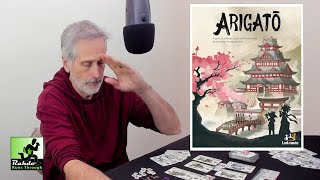
- Artisan competition and ceremonial offerings
- Feudal Japan during a 12-day festival to celebrate the Shogun's birthday
- Array
- Array
- positive
- Year of the Dragon
Mechanics (from transcript analysis)
Video topics + discussion points
Quotes (from this video)
- Folks, this game is great.
- This is very, very likely going to be in my top 10 of the year for 2025.
- There’s so much meaningful interaction between players because of the quasi close hand draft.
- Every round you must bring a new artisan into this town.
- The sacrifices you have to make... the churn...