












Rival Cities Deep Dive
What the Community Thinks About Rival Cities
Rival Cities has quietly made an impression on board game reviewers who have embraced it as a tightly designed two-player Euro experience. Despite minimal mainstream coverage, players who have discovered this 2024 release from designer Andrea Stetting recognize something distinct in its strategic depth and interactive tension. The game generates the kind of measured enthusiasm that suggests staying power beyond first impressions, particularly among enthusiasts of competitive, demanding two-player games.
Core Mechanics That Define Rival Cities
The Rondell and Action Selection
Rival Cities centers on a rondell mechanism that structures player turns with elegant constraint. Rather than unlimited action choices, players move around a fixed dial and select one of two available actions, with the option to pay resources to reach further positions. This elegant gating system prevents runaway turns and maintains constant, meaningful pressure on decision-making. Each action selection feels deliberate; committing to a position means forgoing others, and the cost to advance further demands careful calculation about priorities and timing. The rondell also serves as a pacing mechanism, ensuring that players cannot simply repeat the most powerful action each turn. Instead, they must plan several moves ahead, anticipating which actions will be available when they need them most.
Resource Management and Asymmetric Paths to Victory
The game presents players with four distinct instant win conditions: accumulate three ships; win three lawsuits; collect all four alliance cards; or reach either end of the prestige track. This multiplicity forces tactical vigilance. Players cannot pursue a single strategy; instead, they must watch opponents closely while maintaining their own contingencies. Resources generated through the rondell flow into specific victory paths, and the trade-offs between ship investment, lawsuit prosecution, alliance maintenance, and prestige accumulation create the game's central tension.
The Rival Cities Experience
A Tug-of-War That Demands Constant Pressure
The genius of Rival Cities lies in how its multiple win conditions transform the experience into structured psychological warfare. Rather than racing toward a single objective, players engage in a perpetual dance of pressure and counter-pressure. Falling behind on one track is not automatic defeat if you can impose sufficient threat elsewhere. The game rewards those who understand that sometimes maintaining an opponent's uncertainty matters more than advancing your own score. Every card played and every resource spent sends a signal about your intentions, and skilled players learn to read these signals while masking their own. The result feels like a high-stakes negotiation conducted through card plays and resource allocation rather than words.
Tight Playtime with Escalating Tension
At 30 to 45 minutes, Rival Cities paces itself expertly. The rondell mechanism ensures turns resolve quickly once players understand the action menu, and the game rarely drags despite layers of strategic possibility. Early turns may feel exploratory as players understand which victory paths suit their draws and positions, but the middle game tightens considerably. The final turns often resolve with sudden, dramatic moments when hidden threats materialize. One player may have been quietly accumulating alliance cards while the opponent focused on ship production, and the sudden realization that victory is one move away creates genuine excitement. This escalation curve keeps both players invested from first move to last.
What Makes Rival Cities Stand Out
Instant Win Conditions as Design Philosophy
Most two-player Euros conclude by comparing final scores, but Rival Cities breaks from this expectation early and often. The threat of instant victory hangs over every decision, forcing constant vigilance. This design choice distinguishes the game from competitors like Seven Wonders Duel, where comparable systems exist but feel less integrated into the flow. In Rival Cities, the instant conditions are not tacked-on variants; they are the entire point. The letter tokens that allow extra actions become crucial, enabling clever sequencing that creeps toward victory without obvious telegraphing. Motor City Gameworks has crafted a game where the tension between pursuing your own path and disrupting your opponent's creates deeply satisfying competitive dynamics.
Components and Presentation
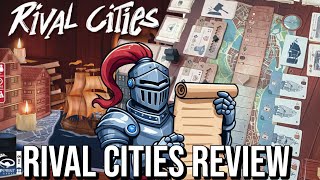
The matchbox-style component boxes are refreshing departures from typical plastic baggies. The cards are well-designed, printing is clear, and dice roll satisfyingly. The board is clear and functional, avoiding unnecessary chrome while supporting the mechanical demands of the rondell and resource systems. The overall presentation suggests a publisher confident in the design rather than one relying on surplus production value to carry weaker mechanics.
Potential Drawbacks
The Replayability Question
Reviewers express measured concern about long-term replayability. With only one play among many, it remains unclear whether the multiple win conditions provide sufficient variety or whether experienced players will begin predicting and countering the same sequences repeatedly. Variable setup helps, as different card distributions and resource timing will shift which victory paths feel most accessible in any given game. The tension between maintaining novelty and preserving balance will determine whether Rival Cities remains fresh through twenty plays or settles into predictable patterns earlier. The game's relatively small card pool means experienced players will eventually encounter familiar combinations, though the rondell positioning adds variability that pure card games lack.
Anticlimactic Finishes in Early Plays
One reviewer reported feeling disappointed when victory arrived through oversight rather than dominance, with the victor having made a stronger overall play but the opponent's crucial misstep delivering the final blow. Whether this stems from the game design or the early-play stumbling common to all games remains an open question. The instant win conditions mean that a single lapse in attention can end the game, which some players find thrilling and others find frustrating. Games where both players are experienced tend to be tighter and more satisfying, suggesting this concern may diminish as players develop familiarity with the threat landscape.
If You Enjoy Rival Cities
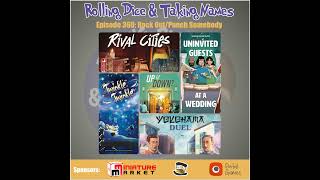
Players drawn to Rival Cities likely appreciate Seven Wonders Duel for its instant win conditions and multiple simultaneous battles, though Rival Cities demands more resource management. Zenith offers similar tug-of-war appeal with even more aggressive player interaction. Lost Cities provides a lighter alternative with similar round-based structure. Yokohama Duel shares the worker placement ancestry and economic depth. Up or Down offers simpler, snappier two-player gameplay.
What Reviewers Are Saying
"It's a little bit reminiscent of Seven Wonders Duel with the instant win conditions and watching the different kind of battles that are happening, but you really have to keep your opponent in check and keep an eye on them because there's the things you can do with those letter tokens where you can pull these kind of clever moves and creep a lot closer to one of the win conditions without your opponent kind of recognizing it."
— All You Can Board
"Rival Cities takes Tug of War to another level. I think you have about six different things that you're competing for in a single round and it's got multiple different ways to win. It's got so much tug of war, by the time that you finished your hands are going to be blistered."
— Board With Steve
"I really like the decision space that you end up being put into. Seven Wonders Duel has it, but I never really identified it as feeling like a tug-of-war game. Because of all the win conditions, tugging on the war victory makes someone tug on the science victory."
— All You Can Board