/pic3021582.jpg)













Royals Deep Dive
What the Community Thinks About Royals
Royals occupies a fascinating space in the board gaming landscape, a deceptively simple cube-pushing game that punches well above its minimalist aesthetic. Reviewers consistently highlight its hidden depth and surprising emotional impact. Despite its dry visual presentation, Royals has earned genuine affection from the gaming community, with multiple prominent reviewers listing it among their favorite designs. The game's appeal lies not in what's immediately visible, but in the brutal elegance of its mechanics and the intense player interactions they create.
Core Mechanics That Define Royals
Area Control Through Card Play
At its heart, Royals is an area control game played across four countries: Britain, France, Germany, and Spain. Players acquire country cards and use them to place influence cubes on contested positions, representing historical noble houses vying for supremacy. The mechanic is straightforward, match the required number of cards to a location to claim it, yet the decision space quickly becomes intricate. Each round focuses player attention on specific countries as the shared deck depletes, creating natural rhythms of conflict and opportunity.
The Intrigue Card Mechanic
The game's true bite comes from intrigue cards, which allow players to forcefully evict opponents' cubes and claim positions for themselves. Playing an intrigue card with the matching country crest lets you remove an enemy piece and replace it with your own, sending their cube to a cathedral, where it remains as a ghost presence for influence scoring but loses positional power. This creates the game's signature moment: watching a position you've spent rounds building suddenly slip into an opponent's hands. The mechanic transforms Royals from a pleasant optimization puzzle into what reviewers describe as a "murderfest," where careful planning collides with sudden betrayal.
The Royals Experience
Relentless Backstabbing and Emotional Swings
Royals excels at creating emotional turbulence wrapped in historical theme. One moment you control an entire country; moments later, multiple opponents have systematically dismantled your position, cube by cube. Reviewers report genuine emotional impact from these swings, spending a full round building toward a country majority only to watch it collapse as opponents coordinate intrigue plays. One veteran described having "feelings hurt" more than willingly admitted, capturing how Royals' seemingly polite facade masks genuine social tension. The game's ability to wound is precisely what makes it compelling: players feel the weight of their losses and the satisfaction of coordinated takedowns.
Tense, Interactive Gameplay With Constant Engagement
Every turn matters in Royals because opponents are always watching what you're building. The game sustains high interactivity throughout, there's no downtime for planning, no moment where a player can safely ignore others. You're perpetually choosing between advancing your own agenda or disrupting opponents, between building toward majorities or denying them to rivals. This constant tension creates a game that feels more confrontational than its component count suggests, with players leaning forward and adjusting strategies based on what others are attempting to control.
What Makes Royals Stand Out
Streamlined Design That Hides Depth
Royals accomplishes something difficult: it plays in under an hour, teaches in five minutes, and yet still rewards strategic thinking and tactical awareness. Reviewers consistently praise its economy of design, the game does in two to three rounds what games twice its playtime often take to achieve. You learn how to play in one complete turn, yet the decision space remains fresh across your entire session. This streamlining appears deceivingly simple, just cards and cubes on a map, but the simplicity is the design's strength, not its weakness. The game trusts players to find its depth rather than overwhelming them with it.
The Underrated Designer Pedigree
Designer Peter Hawes has created something that challenges the conventional wisdom about "dry euros." Reviewers identify him as one of the industry's most underrated designers, someone whose games quietly deliver exceptional experiences without the fanfare of household names. Royals doesn't have the marketing reach of flashier area control games like Game of Thrones, nor does it demand the teaching time of sprawling euro games. Instead, it offers something more focused: a perfectly calibrated design that respects player intelligence while delivering memorable interactions. Hawes' restraint, knowing what to include and what to leave out, creates a game where every component earns its place.
Potential Drawbacks
Aesthetics That Challenge Modern Gaming Sensibilities
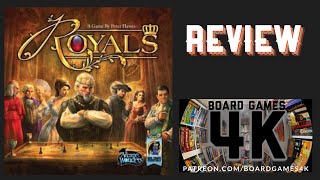
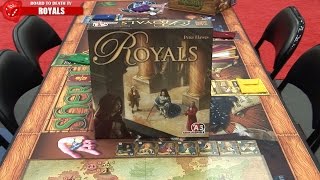
Royals doesn't attempt visual grandeur. The board is a functional map; the cubes are generic scoring pieces; the cards are straightforward utility. Reviewers describe the artwork as "fuzzy" and note that the game feels aesthetically like a throwback to earlier euro design traditions. There's no thematic window dressing, no appealing miniatures, no contemporary graphic design flourishes. For players who value tactile beauty and visual immersion, Royals demands they find satisfaction elsewhere. The game's aesthetic austerity reflects its design philosophy, mechanics first, presentation second, but it's a trade-off that won't suit everyone.
Minimal Theme and Strategic Restraint
Royals presents 17th century European nobility competing for regional control, but the theme is light scaffolding rather than deep integration. The countries and historical references provide context, but the game could function identically with abstract patrons and colored territories. Players seeking thematic immersion, where mechanics reinforce narrative and every action tells a story, won't find that here. Additionally, the game's elegant constraint means it lacks the sprawling options of larger area control designs. Some players may crave more decision points or more granular control options, finding Royals' focused design occasionally limiting rather than liberating.
If You Enjoy Royals
Royals attracts players who appreciate how constraints breed creativity. If you love A Game of Thrones: The Board Game but want something faster and less demanding, Royals delivers the same aristocratic maneuvering in compressed form. You might also enjoy El Grande, another classic from which Royals draws design inspiration, both games center on influence cubes and majority control, though El Grande offers greater sprawl. For those drawn to clean, efficient design that punches above its simplicity, games like Ingenious and Race for the Galaxy share Royals' philosophy: teach in minutes, reward in hours. The game also appeals to players who relish social interaction over solitary optimization, making it ideal for groups that enjoy direct opposition and calculated betrayal.
What Reviewers Are Saying
"What starts is a pleasant game soon turns into a murderfest of killing off your enemies pieces to take control of the region. I've had my feelings hurt in this game more than I care to admit."
— Board With Steve
"Royals is another one of those streamline designs that just captures your imagination even though it's just a map with a few cubes on it. The game doesn't really deserve to be this good, but when you're playing it these rather drab and boring components sort of take on a life of their own."
— BoardGameBollocks
"The best cube pushing game and the best game with no theme and the best game that is drier than a nun's crack."
— BoardGameBollocks