/pic4226770.png)
Sabotage is a game of team stealth tactics. Two teams compete, with spies trying to save the world and the villains trying to stop them. Spies must be clever and quiet, while the villains must deduce and hunt.
The game is played on a 4x4 grid. Both teams have their own copy of the map, separated by a divider. Four dice are rolled each round, and all players program their moves simultaneously by spending those dice. The villains execute their programmed moves first, followed by the spies. When spies take a move action, they must announce some information about their location to the villains, who use this to deduce and track the spies. Both sides have the ability to unlock new tools and get access to more dice each round.
To win, the spies must hack eight times before the villains hit them five times with their weapons.
-description from designer
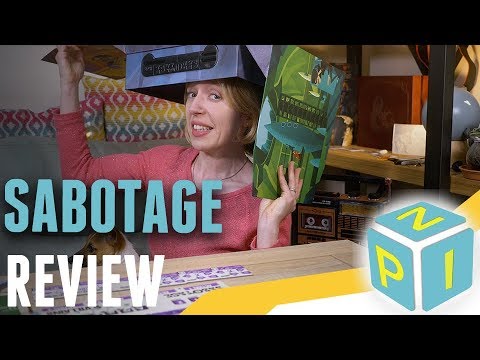
- Fascinating asymmetric spy-vs-villain setup
- Engaging movement/detection mechanics and cheat sheets
- Tension from simultaneous planning on both sides
- Rules teaching can be rough on first play
- Initial plays may feel clunky due to many rules
- Requires careful tracking of modifiers and dice
- secret movement programming; infiltration; doomsday machines
- lair with spies vs villains (asymmetric teams)
- descriptive; asymmetrical gameplay
Mechanics (from transcript analysis)
- asymmetric roles — Two spies vs two villains with different goals and win conditions
- dice-based actions with modifiers — Rounds begin with rolling dice; some modify dice to enable specific actions
- doomsday machines & hacks — Hacks deactivate machines; bonuses awarded to players who help the spies or villains depending on outcome
- secret programming — Tiles program actions; dice are used for actions; cheat sheets show available options to both sides
Video topics + discussion points
Quotes (from this video)
- I love it too when you're playing games the actions that you do and the things that help you out also help out your opponents
- it's a wacky game of area acquisition and control because you are constantly playing cards out to play walls out to buy areas and annex pots from each other
- the game ends once all of the walls are removed from the supply at any one point in the game
- I am really enjoying this game
- this is a simultaneous decision type game
- every single card in your hand has the same exact cost
- you are trying to get resources and then you're spending resources on other spots to build out cards in your tableau
- a really cool thing that I'd love is the fact that some of the cards that you play out into your tableau give you a benefit if the action that you activate has the blocking symbol on it
- this is a fascinating game because it only plays exactly 4 players
- it's an asymmetric secret movement programming style game
- the heuristics of the spies moves are trying to deduce where the opponents are and the villains are trying to damage the spies enough times to slow them down
- this is a paid sponsored tutorial and playthrough for this game that went along with the Kickstarter campaign
- every single round each player is going to simultaneously and in real time build out a city with their tiles
- the game is essentially a deck building tiling real time game
- the person with the most influence at the end of the round is going to get extra perks
References (from this video)

- Wonderful 60s super spy aesthetic
- Fascinating team play (best with 4 players)
- Excellent hidden movement mechanics
- Doesn't overstay its welcome
- Characters have unique player styles and upgrade paths
- Best thing is the tension and satisfaction of finding/hiding
- Loses a lot at 2 players
- Conflicted identity: frivolous vs. competitive
- Incredibly annoying to teach
- Ties between teams can lead to frustration
- Spies attempting to sabotage doom lasers while villains try to stop them
- A scenario with doom lasers
- Two teams, spies and villains, with distinct objectives.
- Captain Soda
Mechanics (from transcript analysis)
- action programming — Each turn, you will pre-program your moves.
- Dice Rolling — Start the turn by rolling your dice and assigning them to actions.
- Hit movement — Each team conceals their actions from the other using the screen.
- Variable player powers — Each spy and villain has their own set of powers.
Video topics + discussion points
Quotes (from this video)
References (from this video)

- Pretty cool
- Fun
- Got my fill, don't think it has any surprises.
- System is learned, ready, see everything upfront.
- World War II themed stealth game
- Assassin's Creed
Mechanics (from transcript analysis)
- card-driven randomness — A deck of cards randomizes some aspects of the game.
- Players vs. Game — Described as 'players against the game', with no game master, just the game system hunting the players.
- Stealth — Players are trying to stay hidden as the game system tries to find and kill them.
Video topics + discussion points
Quotes (from this video)
- you only have five tries to do it
- it's too lucky
- someone can just Crush by getting some good roles
- The core still is flawed
- I want to like it more than I do
- she got that Mr carcasson age
- Kickstarter is still where you gotta go
- we call those people normies
- I like to think that nobody's above the law
- it's a train wreck
- the acting is great
- there's not a weak person weak actor in that group
- the last lost no wow
- absolutely sucks that Lance Reddick is no longer with us
- The Mamas and the Papas I listen to that song a lot
- It was great and then and then they just [ __ ] all over themselves
- it's a little late
References (from this video)
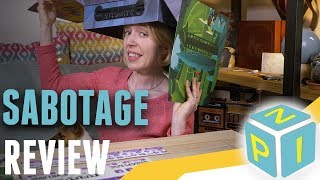
- Innovative fusion of hidden movement with action programming and real-time deduction
- Strong thematic flavor and memorable components/miniatures
- Engaging teamwork dynamics that can reward clever misdirection and planning
- High replayability through upgrades and a variety of villain/spy abilities
- Steep learning curve and a rulebook that can be convoluted
- Base game is four-player only, which limits player-count flexibility
- Can be expensive and setup/teach time is nontrivial
- Outcome can feel unpredictable due to varied upgrades and random elements
- Espionage, stealth, sabotage, and tactical teamwork set against a playful, over-the-top villain aesthetic
- Two teams (spies vs supervillains) operate within a villain lair to disable doomsday devices, using a central screen to obscure location information
- Competitive planning with intermittent information reveals and dramatic misdirections
- Captain Sonar
- Gloomhaven
- Imperial Assault
- Fury of Dracula
- Specter Ops
- Whitechapel
Mechanics (from transcript analysis)
- Deduction — Spies perform scans to locate villains and uncover powers, with information revealed incrementally
- Dice Placement — At the start of each round, players roll dice to determine available actions, which are then assigned to tiles
- Hidden Movement — Players move while a central screen conceals exact positions, fostering deduction and suspense
- programming actions — Players plan all actions for the round in advance, then execute in sequence, creating tension between plan and outcome
- Scan/deduction — Spies perform scans to locate villains and uncover powers, with information revealed incrementally
- Team coordination — Spies and villains collaborate within their own teams to achieve opposing objectives
- Teams — Spies and villains collaborate within their own teams to achieve opposing objectives
- Upgrades and unlocks — Earned unlocks grant new tiles and dice, adding strategic depth and variable options per game
Video topics + discussion points
Quotes (from this video)
- The map is only 16 spaces big
- Best hidden movement game is because the map is so small
- It's clever kooky and continuously engaging
- Sabotage utterly shines with its upgrades and dynamic toys
References (from this video)
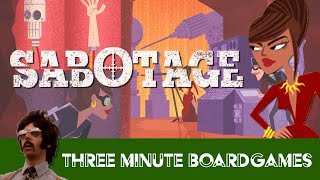
- Intense tension from hidden movement
- Strong team dynamics and unpredictability
- Varied character powers and upgrade paths
- Striking visual presentation
- Difficult to teach due to screen setup and powers
- Two-player experience weaker, with reduced social dynamics
- Tonal inconsistency between light, frivolous play and serious competition
- Espionage, sabotage, and tension between teams
- Two-team spy vs villain sabotage arena with a doomsday device
- Asymmetric, tense, cinematic hide-and-seek
- Captain Sonar
Mechanics (from transcript analysis)
- action programming — Pre-program actions each turn and execute in order
- area scanning and deduction — Motion detectors and scanning declare quadrant info revealing hidden spies
- Combat: Damage Based — Stun gun attack can remove spy temporarily from board
- combat/stun — Stun gun attack can remove spy temporarily from board
- Deduction — Motion detectors and scanning declare quadrant info revealing hidden spies
- Dice pool management — Dice are rolled and allocated to actions to upgrade capabilities
- Hidden Movement — Teams conceal actions and spy/villain positions using a screen
- Programming — Pre-program actions each turn and execute in order
- Unique Player Powers — Each character has unique powers and upgrade paths
- upgrades and power cubes — Upgrading dice and earning powers/power-dice via upgrade cubes
- Variable player powers — Each character has unique powers and upgrade paths
Video topics + discussion points
Quotes (from this video)
- the best thing about this game is a sense of tension you get when you are hiding from the villains
- found you
- it's also incredibly annoying to teach people how to play due to the hidden movement screen and variable powers
- hidden movement is excellent, with only 16 spaces it seems like there's nowhere to hide for the spies
- Sabotage: now my second favorite thing with this name
- one of my all-time favorite computer games is no one lives forever two
- the team play is also fascinatingly well done and sabotage loses a lot when you play it with two players
- everything about the game's presentation is brilliant and it's eye-catching
References (from this video)

- Interesting team-based tension
- Distinct theme
- Rules are quite complex
- Four-player requirement
- team-based deduction and stealth
- Industrial laboratory setting with hidden movement
Mechanics (from transcript analysis)
- Hidden Movement — Two teams attempt to infiltrate or defend a lab while hidden information is used to score points
- Hidden movement / deduction — Two teams attempt to infiltrate or defend a lab while hidden information is used to score points
Video topics + discussion points
Quotes (from this video)
- this is an experiment to see how this goes
- it's an experiment
- this is going to be live live with the chat on screen
- it's not a doom and gloom type thing
- I want to give this a try
References (from this video)
- Team gameplay
- Communication focus
- Creates interesting tension
- social_deduction
- team_game
- sabotage
Mechanics (from transcript analysis)
Video topics + discussion points
Quotes (from this video)
- the fastest-growing boardgame community in the world
- I'm a big fan of Kitchen rush
- why isn't this an everybody toy store this should be sold alongside uno
- I think one of the best low-complexity games over the plate
- my favorite board game reviewer is a channel called alas board games
- so bloody good game
- wow this is I should have played at ages ago
- reckoners is really cool game
- this is a fabulous looking game real-time submarine warfare game