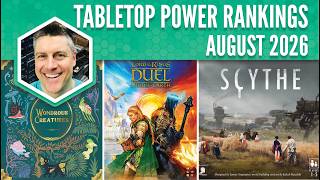
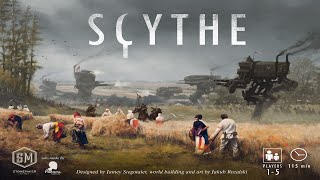
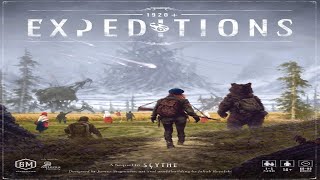
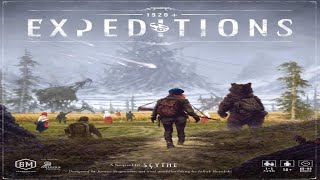
It is a time of unrest in 1920s Europa. The ashes from the first great war still darken the snow. The capitalistic city-state known simply as “The Factory”, which fueled the war with heavily armored mechs, has closed its doors, drawing the attention of several nearby countries.
Scythe is an engine-building game set in a 1920s era, alternate-history. It is a time of farming and war, broken hearts and rusted gears, innovation and valor. In Scythe, each player controls one of five factions of Eastern Europe, all of which are attempting to earn their fortunes and claim their stakes in the land around the mysterious Factory. Players conquer territory, enlist new recruits, reap resources, gain villagers, build structures, and activate monstrous mechs.
Each player begins the game with different resources (power, coins, combat acumen, and popularity), a different starting location, and a hidden goal. Starting positions are specially calibrated to contribute to each faction’s uniqueness and the asymmetrical nature of the game (each faction always starts in the same place). Scythe uses a streamlined action-selection mechanism (no rounds or phases) to keep gameplay moving at a brisk pace and reduce downtime between turns. While there is plenty of direct conflict for players who seek it, there is no player elimination.
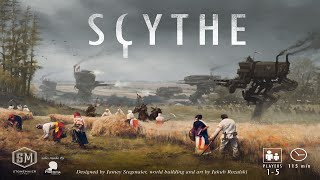
Scythe gives players almost complete control over their fate. Other than each player’s individual hidden objective card, the only elements of luck or variability are “encounter” cards that players will draw as they interact with the citizens of newly explored lands. Each encounter card provides the player with several options, allowing them to mitigate the luck of the draw through their selection. Combat is also driven by choices, not luck or randomness. Every part of Scythe has an aspect of engine-building to it. Players can upgrade actions to become more efficient, build structures that improve their position on the map, enlist new recruits to enhance character abilities, activate mechs to deter opponents from invading, and expand their borders to reap greater types and quantities of resources. These engine-building aspects create a sense of momentum and progress throughout the game. The order in which players improve their engines adds to the unique feel of each game, even if having played one faction multiple times.
What is Worker placement
Scythe Solo - E2 - TURNS 2-9
- Scythe metal coins with a new five red ones
Mechanics (from transcript analysis)
Video topics + discussion points
Quotes (from this video)
- my favorite Ston Meer game is vulture
- I absolutely love the metal lra
- Wingspan Vision friendly cards these are for all the expansions released so far
- rolling Realms I love rolling Realms
References (from this video)
Mechanics (from transcript analysis)
Video topics + discussion points
Quotes (from this video)
- but that sounded really cool
- Expeditions definitely is making progress and sounds like it's on gonna be on the way hopefully this summer
- what's a game that makes you smile or makes your family smile or your friends smile
- my non-stowmeyer game that always brings us joy in my family and makes us smile has to be dice thrown
- the expansion dies Throne Adventures
References (from this video)
- Stunning art and production values
- Distinct faction aesthetics and feel
- Combat often discouraged in practice
- Feels more euro-engine than war game
- Opening strategy can feel scripted
- conquest, resource competition, and factional development
- Alternate history Europe with mechs in a post-war period.
- Array
- Terra Mystica
Mechanics (from transcript analysis)
Video topics + discussion points
Quotes (from this video)
- The theme and the mechanics are completely disconnected.
- Yes, Terrammystica.
- Masquerade looks silly at first. You're given a character card.
- Descent solved the overhead problem by integrating a free companion app that handles almost everything Gloom Haven makes you do manually.
- Station Fall is making your own story.
- Aons is exceptional for people who want depth without the homework.
References (from this video)
- Beautiful components and theme
- tight strategy options
- Attacking costs mobility; fighting punished within mechs context
- economic engine within war game framing
- alternate-history 1920s with mechs
- economic engine with combat mechanics
Mechanics (from transcript analysis)
- area control with mobility costs — movement and combat incur trade-offs.
- economic engine — resources produced and spent to advance on the board.
Video topics + discussion points
Quotes (from this video)
- It's not engagement. It's everyone doing their own puzzle in the same room.
- Gorgeous production quality, but multiple simultaneous subsystems that can feel complex initially for new players.
- Turn order determines a lot in this game's economy.
- One wrong move with how the link network system works, and you've completely invalidated your entire strategy.
- The clue giver walks a razor line between clever and intuitive that new players haven't calibrated.
- Eight-hour day commitment, full group attendance, full mental energy required throughout.
References (from this video)
- Asymmetric boards provide depth and replayability
- Layered action selection creates strategic depth without excessive decision length
- Integration of territory control, production, and economy around victory via stars
- High-quality components and art; polished production
- Balanced mix of Euro mechanics with thematic flavor and minis
- territory control, economic growth, and asymmetric faction power
- Eastern Europe in a stylized, alternate 1920s with a dieselpunk/steampunk flavor
- strategic, faction-driven play with thematic flavor through unique abilities
Mechanics (from transcript analysis)
- Action selection (top and bottom rows) — Players choose one or two actions from the top and bottom rows on their board; upgrading actions can modify future actions.
- Asymmetric player boards — Each faction starts with different resources and a unique set of top/bottom action pairings, creating replayability and variety.
- combat resolution — Combat uses a hidden strength dial combined with optional combat cards; the highest total wins the battle.
- Encounters — Encounter tokens trigger encounter cards read aloud, adding flavor and decisions to movement.
- End-game scoring — Final scores come from coins, territories, resources, popularity, and stars; highest total wins.
- engine building — Produce resources, build structures, and upgrade actions to strengthen the board and future turns.
- Influence Points — A track that increases income and affects outcomes, influencing scoring and power dynamics.
- popularity track — A track that increases income and affects outcomes, influencing scoring and power dynamics.
- Production/building/upgrading — Produce resources, build structures, and upgrade actions to strengthen the board and future turns.
- Star/Objective system — Earn stars for various achievements; the first player to six stars ends the game.
- Territory control and resource production — Units in hexes control territory; resources stay on the board and can be spent when you control a space.
- Upgrade action mechanics — Upgrading moves cubes from top to bottom actions to enhance power or reduce costs.
Video topics + discussion points
Quotes (from this video)
- The best thing is the game leaves the strategy to you.
- Scythe has a lot to offer and a lot of the newer games has actually borrowed their mechanics that is used in this game because it's tried and it's tested and it's true.
- Overall, this is a game designed almost 10 years ago and continues to be played and talked about today.
References (from this video)
- strong artistic presentation and thematic feel
- layered decisions and long-term planning
- lengthy play sessions
- not highly interactive in practice
- potential to fall behind in two-player games
- resource management, engine-building, territory control
- alternate 1920s with a war-game feel
- heavy, strategic, with long-term planning
Mechanics (from transcript analysis)
- Area Control — control vast territories across the board
- engine building — optimize actions to gain efficiency and power
- engine-building — optimize actions to gain efficiency and power
- Resource management — manage workers, resources, and upgrades
Video topics + discussion points
Quotes (from this video)
- Beacon Patrol is a newer title for us, it's a tile-laying game where you are working together and you are moving your boats around these islands to explore them
- you have no agency over how you're going to flip those tiles you have to place them in a single Direction
- I compare it to Dorf Romantic which is one of my favorite games and the freedom the relaxation the open feeling of being able to put those tiles and just build the best way
- I just love the logic of Search for Planet X
- the horror vibe is not my jam
- production quality everything components are amazing is gorgeous
- Darwin's Journey hits in a weird place for me where I'm on the record as being a pretty light gamer I don't particularly care for super heavy games
- it's got a few more plays in it for me
- the big boy everdale the complete collection
- it's enough that I think that's part of what holds us back to true just getting it to the table
References (from this video)
- Deep, multi-path scoring with high replayability
- Asymmetrical factions keep games fresh
- Robust base game with strong expansion potential
- Long and heavy; steeper learning curve
- Can be lengthy at higher player counts
- Resource management, area control and engine progression
- Alternate-history Europe in the 1920s after a great war
- Euro-style strategic with thematic flavor
- Rise of Fenris
- Expeditions
Mechanics (from transcript analysis)
- action selection — Players choose from a diverse action wheel to perform strategic moves.
- Area Control — Players compete for territory and resources to unlock scoring paths.
- engine building — Asymmetrical player powers grow through actions and upgrades.
- engine-building — Asymmetrical player powers grow through actions and upgrades.
Video topics + discussion points
Quotes (from this video)
- "it's the best smelling board game there is"
- "Wingspan Asia is a perfect board game gift because two players can play it competitively learn how to play it"
- "Rise of Fenis has enhanced my love of Scythe"
References (from this video)
- Gorgeous, high-quality components and artwork
- Strong asymmetry and faction variety
- Engaging engine-building with accessible learning curve
- Solid table presence and theme
- Good two-player support and expansion options
- Factions are not perfectly balanced
- Combat can be less central than some players expect
- Some players may prefer more direct interaction at lower player counts
- Resource management, empire building, and engine-building within a dystopian alternate history
- Alternate-history Europe with mechs, inspired by Jacob Rozalski artwork
- Hybrid of thematic story and modular event-driven elements; faction-specific backstory implied by artwork and cards
Mechanics (from transcript analysis)
- action_selection — Each turn you choose a pair of actions, with a top action always available and bottom action if resources permit.
- Area Control — Players spread workers and mechs on a shared map to gain control and bonuses.
- area_control — Players spread workers and mechs on a shared map to gain control and bonuses.
- asymmetry — Five factions with unique abilities, starting positions, and costs create varied playstyles.
- combat_resolution — Conflicts resolved by military strength plus combat cards, with outcomes affecting control and resources.
- Combat: Deterministic — Conflicts resolved by military strength plus combat cards, with outcomes affecting control and resources.
- engine building — Your actions and upgrades push you toward accumulating stars via multiple victory conditions.
- engine_building — Your actions and upgrades push you toward accumulating stars via multiple victory conditions.
- Events — Event cards introduce mini-choices during play; objectives and bonuses vary per game.
- random_event_deck — Event cards introduce mini-choices during play; objectives and bonuses vary per game.
- Resource management — Managing coins, goods, and other resources to enable actions and build upgrades.
- resource_management — Managing coins, goods, and other resources to enable actions and build upgrades.
Video topics + discussion points
Quotes (from this video)
- gorgeous all of that starts with the art
- it's deceptively easy to learn
- engine building is central to Scythe's appeal
- combat tends to be few and far between
References (from this video)
- strong theme with diverse factions
- engaging engine-building and strategic depth
- complex and heavy; long games may deter casual players
- factional asymmetry with mechs and resource engines
- alternate-history 1920s
- epic, strategic conquest
- Terraforming Mars
- Twilight Imperium
Mechanics (from transcript analysis)
- asymmetric factions with engine-building — each faction combines different boards and powers for unique playstyles
- Asymmetric Mechanics — each faction combines different boards and powers for unique playstyles
Video topics + discussion points
Quotes (from this video)
- it's a race to points when someone breaks through that point barrier they win the game so it's really fast it's really tight
- it's a game about magic that feels a little bit like magic
- the tension of when do I take a dice to actually move a camel thus giving other people information
- one of the smartest ways dice are used in any game at all
- it's so mean but it's still so lovely
References (from this video)
- Striking world and art; strong thematic hook
- Flexible play with options for fighting or avoiding combat
- Deep, satisfying engine-building puzzle with varied boards and characters
- Can be heavy; some players may find the combat optional nature reduces tension
- Array
- Alternate-history Europe
- Epic world-building with faction-driven stories
Mechanics (from transcript analysis)
- engine building — Build mechs and structures to enhance resource production and scoring
- Engine-building / Area expansion — Build mechs and structures to enhance resource production and scoring
- Resource management — Main loop centers on harvesting and converting resources to take actions and build engine
- Two-tier Action System — Top actions are basic; bottom actions unlock more powerful options; synergy drives engine
Video topics + discussion points
Quotes (from this video)
- My number 60 is Istanbul and I feel like this is one that flew under the radar a little bit.
- There's still plenty of time to join in the Kickstarter.
- I love the challenge of this game.
- Istanbul big box because we waited for the big box, and it was worth it.
- Jaipur is a two-player specific card game.
- Unlock is an escape room in a box.
- Marvel United does simplicity so so well.
- Cascadia has a theme I love; I grew up near the Rockies.
- Brass Birmingham is such a smart game.
References (from this video)
- Beautiful miniatures and art
- Encounter cards add spice
- Factory dynamics can be strategically strong
- Clear combat aesthetics
- Action boards rigidness limits variation
- Combat cards hoarder behavior reduces suspense
- Endgame scoring and bottom boards create imbalance
- Trading interactions feel awkward and non-political
- Array
- Alternate history 1920s
- grim, world-building
- Twilight Imperium Fourth Edition
Mechanics (from transcript analysis)
- Action Boards — Faction action boards govern available actions; perceived as rigid.
- Area Control — Players clash over territories to gain resources and victory points.
- Area movement — Movement is constrained by map features like rivers; rivers may be removed to speed play.
- Combat / Combat Cards — Fights utilize power and combat cards; players hoard cards reducing suspense.
- Combat: Deck/Hand — Fights utilize power and combat cards; players hoard cards reducing suspense.
- Encounter cards — Encounter cards add variability and spice to gameplay.
- engine building — Players develop their economy through upgrades and buildings.
- Factory / Bottom Board Influence — Factory location and bottom board choices guide strategy and movement.
- Hidden deployment — Mechs are deployed; factions have unique abilities affecting combat and movement.
- Mech Deployment / Enlist — Mechs are deployed; factions have unique abilities affecting combat and movement.
- Movement / Rivers — Movement is constrained by map features like rivers; rivers may be removed to speed play.
- Objectives (Secret/Public) — Players draw secret objectives; optional transition to public objectives for balance.
- Resource management — Players manage multiple resources and convert them into actions.
- Trading — Resource trading occurs but is complicated by end-game scoring and anti-politics design.
Video topics + discussion points
Quotes (from this video)
- I hate rivers; rule number one rivers don't exist anymore
- the action boards are rigid; they're stuck in just those power levels
- i really like encounter cards; they spice up the gameplay
- combat cards hoarding was a problem; there was an unhealthy relationship
- i'd rather play normal Scythe over yesterday because i understand it more
- the game is anti-politics built into it
- factory is super important
- ten stars to end the game but everyone is Saxony
References (from this video)
- Strong theme integration
- Engaging strategic depth
- Array
- Alternate history/Steampunk
- Thematic, cinematic
Mechanics (from transcript analysis)
Video topics + discussion points
Quotes (from this video)
- king of tokyo you pick that
- ti4 has too much dice rolling
- we're playing betrayal tonight you better not betray me
- hey come over here we're playing scythe
- oh yes we are playing this game
- you know what they say my house my rules
References (from this video)
- Epic artwork and world-building
- Mislabeling as a 4X game affecting perception
- Array
- Alternate history with feudal/steampunk elements
- Epic, world-building
- War of the Ring
Mechanics (from transcript analysis)
- Area Control — Players compete for map areas to gain resources and victory points.
Video topics + discussion points
Quotes (from this video)
- we're trying to remove as much bias as we can when scoring
- it's not necessarily about standing out it's more about making content that we would have wished we watched before buying games
References (from this video)
- Deluxe metal coin upgrade increases tactile and aesthetic appeal
- Coin variety and weight enhance the physical experience
- Coins are versatile across games
- Price point for the all-in bundle
- Coins too large for some games' coin slots
- Case is heavy and bulky
- Array
- Alternate history Europe
- Historical-fantasy
- Rising Sun
Mechanics (from transcript analysis)
Video topics + discussion points
Quotes (from this video)
- these coin chips deliver that in Spades
- it's actually pretty tiring to constantly be lifting this case up
- ultimately this is all just for aesthetics and more tangible feel to your games
- obviously for talking games like Rising Sun which already have super thematic coins
- Deluxe coin upgrade for Scythe which is 80 coins for like 30 bucks and usually less on Amazon
- pirate gold isn't a good match
References (from this video)
- Clever Four-Action System
- Rich, multi-layered mechanics
- Milestones and player powers add depth and goals
- Nuanced positioning and threat of combat
- Balanced approach that avoids overemphasizing fighting
- Faction and player-board imbalances can be tricky to spot and may affect balance
- Back-of-the-box framing as a 4X can be misleading; needs reframing as a 4X-inspired euro
- Fights not as frequent as some players might expect for a 4X label
- Array
- Alternative history in a 1920s-era, steam-powered European landscape
- Euro-style strategic with strong thematic flavor
- Wingspan
- Twilight Imperium Fourth Edition
Mechanics (from transcript analysis)
- Area Control — Control of hexes and territories on the map provides resources and strategic advantage, influencing victory potential.
- Combat/Threat of Combat — Combat is a strategic lever with a focus on threat and positioning, rather than constant direct confrontation.
- engine building — Players grow a personal engine over the course of the game, unlocking efficiency and synergy between actions.
- engine-building — Players grow a personal engine over the course of the game, unlocking efficiency and synergy between actions.
- Factions and Player Powers — Distinct faction boards and powers create asymmetry and unique strategic options for each side.
- Four-Action System — Players select from four actions each turn to develop their engine, move across the map, and interact with the opponents.
- milestones — A set of 10 milestones establishes alternate victory conditions and shapes late-game decisions.
Video topics + discussion points
Quotes (from this video)
- scythe is a very nuanced game that has a lot to work off of
- the four action system is clever
- on the back of the box it says it's a 4x
- there's not really that much fighting for this being a 4x
- the imbalances of scythe here are extra bad
- we came up with the term a 4x inspired euro that would work really well on the back of the box
- Wingspan which is a prime example for our scoring system
- not to go too hard on selling fighting as a key point of the game
- it's a giant google doc i remember i spent two whole days going through it
- this is also riddled with retaking shots or just making up shots i forgot to do
- we would say wingspan is a prime example for our scoring system
- the back of the box says it's a 4x but there isn't really that much fighting
References (from this video)
- Array
- Alternate-history 1920s
Mechanics (from transcript analysis)
- Area Control — Territorial control and conflict are central
- engine building — Players optimize actions and resources for progress
Video topics + discussion points
Quotes (from this video)
- house rules are in my opinion one of the best parts of board games as a medium
- we almost never do house rules this isn't because we're like opposed to them
- it's really easy to break something and destroy a game's balance
- i encourage you all to think about what you're looking for in board games
- it's technically possible to be playing a board game incorrectly because you got rules wrong
References (from this video)
- Rich thematic setting and strong engine-building
- High replayability and strategic depth
- Can have downtime and teach-for-combat complexity
- Rule book is dense for newcomers
- territory control, resource management, and faction-driven strategy
- alternate 1920s with mechs and a pseudo-Eastern European war-table setting
- thematic, with a strong atmosphere and storytelling vibes
- Wavelengths
Mechanics (from transcript analysis)
- Area Control — players expand influence to secure resources and victory points
- combat/negotiation — mechs and units clash for advantages, with strategic cost-benefit decisions
- engine building — players optimize actions and upgrades to improve future turns
- engine-building — players optimize actions and upgrades to improve future turns
- negotiation — mechs and units clash for advantages, with strategic cost-benefit decisions
- worker placement — placing workers to gain resources and unlock abilities
Video topics + discussion points
Quotes (from this video)
- the thing about horoscopes is they're daily
- we only got one out of 12
- horoscoping out
- maybe somebody out there matches and wavelengths way better with me than Ilia does
References (from this video)
- Stunning production and aesthetic appeal
- Deep engine-building with multiple viable paths
- Long playtime; downtime for some players
- Confrontation-heavy; may not suit all tastes
- conflict, expansion, and economic growth within a dieselpunk aesthetic
- Alternate 1920 Europe; mechs and resource farming
- thematic storytelling through faction lore and engine choices
Mechanics (from transcript analysis)
- Area Control — Control territories to gain resources and victory points.
- Combat — Strategic engagement with opposing factions for strategic advantage.
- engine building — Develop production and actions to improve efficiency over time.
- engine-building — Develop production and actions to improve efficiency over time.
- Resource management — Balance currencies and materials to enable expansions.
Video topics + discussion points
Quotes (from this video)
- the two ultimate wind conditions are nice but the rest now pass
- all locks and only a little bit of substance
- pandemic legacy is a game played over 12 months in an involving story that I wrote spoiled base basically pandemic you make to play a lot
- I don't mind pandemic I just don't want to play it again after playing it once
- the clues in the name
- it's a contrived under-produced game
- I love this game the first couple of times I played but I played it as a true gateway game into Euro games
- now no I don't want to try it with the expansion I don't care if it makes the game better I want to play a proper euro I'm all grown up
References (from this video)
- cinematic presentation in the Japanese edition imagery
- strong thematic flavor
- can be dense for new players
- mechs, resource management, and conquest
- Alternative-history 1920s with mechanized factions
- thematic, strategic
- Eclipse
- Dominion
Mechanics (from transcript analysis)
- Area Control — compete for territory on the map to gain points
- engine building — build up your faction's production and efficiency via actions
- engine-building — build up your faction's production and efficiency via actions
- Resource management — manage food, wood, ore, and power in a tight economy
Video topics + discussion points
Quotes (from this video)
- I even saw wingspan there translated in Japanese which I really really wanted with all the expansions that was freaking awesome to see
- I managed to find Scout in multiple places
- I would definitely have to pick one game from that day and Le Havre would have been it if that managed to fit in my luggage
- Scythe oh my God in a Japanese how it just looks so cinematic for some reason
- the brand new Agric 15 Edition… there were so many updated titles
References (from this video)
- strong thematic depth
- premium components (metal minis mentioned)
- heavy/complex rules for new players
- mechs, resource control, and victory through expansion
- alternate 1920s, steampunk frontier
- engine-driven, thematic oppression-of-the-map
- Lords of Ragnarok
- Lords of Hellas
Mechanics (from transcript analysis)
- Area Control — control of map regions yields resources and points
- area_control — control of map regions yields resources and points
- engine building — players upgrade actions to create powerful long-term engine growth
- engine_building — players upgrade actions to create powerful long-term engine growth
Video topics + discussion points
Quotes (from this video)
- "the most wholesome themes ever like I loved dog park and forever home"
- "Split Ho is a really fun game how it works is you're trying to meet conditions that are on opposite sides of you"
- "I absolutely love Scythe"
- "I'm very excited with this overall and to compare this versus Lords of helles"
- "Forever Home... Kickstarter is launching September 4th"
References (from this video)
- Rich engine-building with multiple interacting systems
- Two-layered worker placement and active card interplay
- Satisfying mechanics around upgrading, melding, and questing
- Thematic coherence is hard to grasp for newcomers
- Teachability can be challenging; thematic explanations don’t always click
- Not consistently table-friendly for all game groups
- Expansion, exploration, resource management, and territorial influence
- Alternate 1920s-era Europe with steampunk-mechs and post-war reconstruction
- Engine-building with multi-use cards and asymmetric actions; mechanical progression drives player storytelling
Mechanics (from transcript analysis)
- Card-driven engine with tableau — Cards enter from left and move to right, unlocking abilities and endgame scoring through a linear tableau.
- Card/Chit Market — Market-like display and deck mechanics enable acquisition of cards and power-ups.
- end game bonuses — Glory stars are earned by completing goals (quests, upgrades, map tokens, etc.) and end-game scoring aggregates multiple streams.
- Endgame glory and goal tracking — Glory stars are earned by completing goals (quests, upgrades, map tokens, etc.) and end-game scoring aggregates multiple streams.
- Market and card drafting from a central display — Market-like display and deck mechanics enable acquisition of cards and power-ups.
- Resource management — Resources (power, guile) are spent to activate actions, upgrade items, meld meteorites, and complete quests.
- Resource management and upgrade system — Resources (power, guile) are spent to activate actions, upgrade items, meld meteorites, and complete quests.
- tableau building — Cards enter from left and move to right, unlocking abilities and endgame scoring through a linear tableau.
- worker placement — Mechs move around a map; workers and Meeples activate card-driven actions and map-based effects.
- Worker placement (two-layer) / travel engine — Mechs move around a map; workers and Meeples activate card-driven actions and map-based effects.
Video topics + discussion points
Quotes (from this video)
- Thematically disjointed
- I'm not giving it my stamp of approval today
- There’s a lot of really great feel-good moments in this game
- There’s a lot of really great mechanics going on here
- I could see somebody loving this game if they are totally enthralled with this world
- I’m a noob to the Scythe world
References (from this video)
- Distinctive visual and thematic style
- Engaging engine-building with satisfying pacing
- Can have long downtimes with optimal planning
- Rulebook can be dense for new players
- industrial power, nation-building, and resource accumulation
- Alternate-history 1920s Europe with industrial vibes
- mechanics-driven with strong thematic flavor
Mechanics (from transcript analysis)
- Area control and route planning — Control zones and optimize movement on a large board to maximize efficiency.
- engine building — Players optimize actions to gain resources, troops, and points.
- Engine-building and action selection — Players optimize actions to gain resources, troops, and points.
Video topics + discussion points
Quotes (from this video)
- this is a really solid euro game by one of our favorite designers Alexander Pfister and one of our favorite publishers Capstone Games
- the reason we're not drinking this right now is because this is actually a friend's bottle
- it's elevated if you have a glass of wine to go with it
- it's an excellent euro game and alexander definitely has a very distinct style
- it's a very very funny game and also the RPG elements
- this is a really great game to play and you should check it out
- it's a lovely little cocktail try it out
- it's a very popular game
References (from this video)
- Rich theme
- Strategic depth
- Complex for new players
- Industrial/factions and resource control
- Alternate-history 1920s with mechs
- Euro with strong conflict and area control
- Expeditions
- Bordeaux
Mechanics (from transcript analysis)
- area control / engine building — Asymmetric factions with combat and resource management.
Video topics + discussion points
Quotes (from this video)
- This is not my house. This is a vacation property here.
- We're here on a little mini retreat to all work together in the same place for a few days.
- I am in Phoenix, Arizona with all seven of my co-workers.
References (from this video)
- rich engine-building complexity that rewards planning and adaptation
- strong thematic setting with unique flavor and art
- asymmetrical factions create varied, replayable gameplay
- visuals and components are striking and thematic
- low reliance on luck due to deterministic systems
- high learning curve and rules depth can intimidate newcomers
- mid-to-long playtime may challenge lighter game nights
- scales vary with player count and may require adjustments or house rules
- Empire-building around a mysterious Factory in a war-torn, stylized sci-fi fantasy world
- Eastern Europe in an alternate-history 1920s
- grim, aspirational, and mythic with a diesel-punk aesthetic
- Terraforming Mars
- Gaia Project
- Blood Rage
Mechanics (from transcript analysis)
- Area Control — Control of hexes adjacent to the central Factory yields income and strategic advantages; positioning influences combat and movement.
- area_control and area expansion — Control of hexes adjacent to the central Factory yields income and strategic advantages; positioning influences combat and movement.
- auction / starting player mats — Before play begins, players can bid for coveted starting positions and mats that determine initial bonuses and turn order.
- combat and power-based conflict — Engagements occur through power comparison and placement; outcomes affect control, resources, and end-game scoring.
- encounters and card-driven events — Encounter cards and promo/variant cards provide optional objectives and dynamic events that shape player choices.
- engine building — Players develop a personal action engine by acquiring resources, upgrading actions, and chaining sequences to unlock more powerful moves each round.
- engine-building — Players develop a personal action engine by acquiring resources, upgrading actions, and chaining sequences to unlock more powerful moves each round.
- Events — Encounter cards and promo/variant cards provide optional objectives and dynamic events that shape player choices.
- Resource management — Management of core resources (wood, metal, oil, food) to fund actions, deploy units, and complete objectives.
Video topics + discussion points
Quotes (from this video)
- Scythe is now an alpha on board game
- arena Scythe is an engine building game
- this implementation includes promo cards to include extra objective
- Factory and encounter cards and with the opportunity to auction your starting player mats
References (from this video)
- Deep strategic engine-building with strong thematic feel
- High replayability
- Steeper learning curve for new players
- Terraforming Mars
- Zombicide
Mechanics (from transcript analysis)
- Area Control — Players aim to control territories for scoring opportunities.
- engine building — Players develop their faction's capabilities over the game.
- engine-building — Players develop their faction's capabilities over the game.
Video topics + discussion points
Quotes (from this video)
- we have a very round catalogue so we have something for every type of gamer
- it's nice to be able to kind of give something to everybody in every type of gamer
- we look far and wide between our Studios internally and then also external Studios we work with as third parties
References (from this video)
- Deep strategic depth with elegant systems
- Beautiful production values and thematic vibe
- Steep learning curve for new players
- Rule clarity can be dense
- Industrial power, expansion, resource conquest
- Alternate-history 1920s Europe after a great war
- epic strategic
- Terraforming Mars
- Nova Roma
Mechanics (from transcript analysis)
- Area Control — Compete for map influence and objectives through placement and movement.
- area_control — Compete for map influence and objectives through placement and movement.
- card drafting — Choose from a set of cards to shape actions and strategies each round.
- card_drafting — Choose from a set of cards to shape actions and strategies each round.
- engine building — Develop long-term systems to generate resources and reap escalating benefits.
- engine_building — Develop long-term systems to generate resources and reap escalating benefits.
Video topics + discussion points
Quotes (from this video)
- These are my top 10 Udemy board games
- for number ten, I have Bus, a wacky but mean worker placement game.
- For number nine, I have Scythe, an engine building game.
- For number eight, I have Necoima, a much better version of Jenga.
- For number seven, I have Tea Garden, a hand management game with beautiful artwork.
- For number six, I have Mountain Goats, a push your luck racing game.
- For number five, I have Rebel Princess, a trick-T game with asymmetric abilities.
- For number four, I have Andromeda's Edge, a worker placement game, but with a lot of things going on, but it's so much fun.
- For number three, I have Wingspan. You guys know what this is at this point.
- For number two, I have Distilled, where you're making whiskey in this game.
- for number one, I have STI, where you're trying to find extraterrestrial life.
- And this game is beautiful.
References (from this video)
Mechanics (from transcript analysis)
Video topics + discussion points
Quotes (from this video)
- And it's not just small publishers that are being affected.
- The tariffs applied to their products are equal to $14.50 for every $10 that they spend on manufacturing for an estimated total of $1.5 million of additional expenses just in import taxes.
- I do believe that the first step towards inflicting change for the better is for each of us to start finding opportunities to speak up, speak out, speak often.
- Using your voice empowers others to do the same.
- That's why I made this video to use my little voice to hopefully try and encourage all of us to use our voice.
- That's all I got.
References (from this video)
- High strategic depth with elegant design
- Strong ambassador potential for hobbyists
- Complex for casual players
- Less accessible for new gamers
- Resource management and area control
- Alternative 1920s-inspired world with mechs
- Strategic, atmospheric
- Gloomhaven
- Wingspan
Mechanics (from transcript analysis)
- Area Control — Risk-reward battles influencing map control.
- combat and area control — Risk-reward battles influencing map control.
- worker placement — Hidden contracts and buildings to maximize efficiency.
- Worker placement / engine building — Hidden contracts and buildings to maximize efficiency.
Video topics + discussion points
Quotes (from this video)
- Katan almost gives you like this bit of credos because it's like this German game
- Wingspan does that well for me. It makes you want to be a board game ambassador
- Werewolf could create upset or maybe not so much as like diplomacy or something
- Code Names is my favorite game of all time
- Pandemic Legacy that was one of the greatest board game experiences of my life
- If you go to Golden Globes again and played a game after, I think it would be Wingspan
References (from this video)
- heavy and time-consuming
- table space and setup can be daunting
- engine-building, area control, and asymmetric powers
- alternate-history 1920s with a dystopian vibe
- strong thematic world-building through minis and art
Mechanics (from transcript analysis)
- Area Control — expand influence on a map with competitive encounters
- area control and combat — expand influence on a map with competitive encounters
- engine building — assemble actions to maximize production and efficiency
- engine-building — assemble actions to maximize production and efficiency
- multi-path victory conditions — win via several different strategic routes
Video topics + discussion points
Quotes (from this video)
- the thrill of the chase
- it's one of the most unique games that i've ever played
- this game is not for everyone
- it's the game that got me into the hobby
- the mind management world is based off this graphic novel series from matt kindt
References (from this video)
- Beautiful artwork and production
- Grand scale feeling with relatively accessible rules
- Strong diplomacy and player interaction potential
- Good fit at 4 players; supports 3-5 well
- Can feel repetitive after multiple plays without expansions
- Event cards lack thematic resonance for some
- Expansions significantly add cost and complexity
- Long playtime and potential for extended sessions with 5 players
- Industrial expansion, faction power, diplomacy vs conquest
- Alternate history post-World War I with mechs on a war-torn map
- Strategic, asymmetric objectives with a diplomatic flavor; events lack strong narrative
- Warcraft III: The Board Game
- Catan
- Katan (Cities & Knights)
Mechanics (from transcript analysis)
- Area control and map expansion — Players claim territories, unlock bonuses, and build structures to gain points and resources.
- Combat and power resource system — Combat involves power and potential threats, with mechs capable of clashing with opponents.
- End-game trigger via stars — The game ends when a player places six stars on the map by achieving various objectives (workers, mechs, buildings, etc.)
- engine-building and upgrading — Upgrades on your faction mat improve efficiency and future turns.
- Two-action system on player mats (top and bottom actions) — Players choose a top action and/or the corresponding bottom action, enabling production, upgrading, moving, building, or deploying during a turn.
- Worker placement and action economy — Workers and mechs are used to activate actions, gather resources, and control spaces across a large map.
Video topics + discussion points
Quotes (from this video)
- It's for euro gamers, I mean it's for people who like economic games with almost no conflict and you're gonna go whoa there are mechs in here how is there no conflict.
- it's a simple game in disguise grand scale in an inaccessible way
- it's absolutely must-have for me and my five games
- the artwork and the game was created because the author saw the artwork and he thought I need to create a game around this artwork
- 90 is the suggested retail price and I'd say well deserved for what you get inside
References (from this video)
- crunchy, deep decisions
- strong production and art
- steep learning curve for new players
- Euro engine-building and area control
- Alternative-future Europe with steampunk vibe
- Story through relentless engine optimization
- Through the Ages
- Gaia Project
Mechanics (from transcript analysis)
- automa / AI opponent — compete with a strong automa system (and optional AI mode)
- engine-building / area control — build an engine to expand influence and control boards
Video topics + discussion points
Quotes (from this video)
- it's always your turn
- one of the best solo deck builders you can get
- this is one of the most impressive solo titles from GMT
- this is such a fantastic puzzle
- a masterpiece of minimalism
- it's such a satisfying card play
References (from this video)
- epic scope
- beautiful production
- fantastic game
- dual layer boards
- little dials and meeples
- art style doesn't usually appeal to reviewer
- steampunk
- mechs
- alternate history
Mechanics (from transcript analysis)
- engine building
- mini-games
- miniatures
- worker placement
Video topics + discussion points
Quotes (from this video)
- these games have amazing table presence by which i mean people are going to glance across the room and go what is that person playing and i want to play all these games
- stacking games have table presence like nothing else
- looks beautiful it looks like a load of sweets on the board
- one of my favorite games of all time
- i don't like that sort of game i find that one of the most frustrating game mechanisms
- the central marble dispenser is your main draw in this game
- absolutely brilliant strategic game quite complex game
- it's actually my favorite of the mask trilogy
- i'm almost scared to say this but i don't really like azul very much
- biggest most overlooked game on this list
References (from this video)
- Removed from top 10
- Area control with engine building
- Alternate 1920s Europe with mechs
- Dieselpunk
Mechanics (from transcript analysis)
Video topics + discussion points
Quotes (from this video)
- Board Game Geeks top 100 sometimes feels like random people voting random stuff
- This is the way by two random people from Latvia
- Your mind feels like a fog after playing Spirit Island
- Frodo really doesn't want to destroy ring at the end he's like nah I'll go home
- It's a fine game it's super boring it just the same thing over and over
- Wrongfully not in the top 20 yet
References (from this video)
- visually striking with table presence
- deep strategic depth and replayability
- robust solo mode and large player count support
- heavier for casual players
- substantial table space requirements
- Territory control, resource management, and strategic development
- Alternate-reality 1920s with diesel-punk mechs
- Abstract battlefeel with thematic flavor
- Expeditions
Mechanics (from transcript analysis)
- Area Control — players vie for zones to gain resources and points
- area_control — players vie for zones to gain resources and points
- engine building — developing abilities and benefits to gain ongoing advantages
- engine_building — developing abilities and benefits to gain ongoing advantages
- hand management — managing a hand of power and combat cards for planning
- hand_management — managing a hand of power and combat cards for planning
Video topics + discussion points
Quotes (from this video)
- The best thing about this game is the card play I love multiuse cards and chaining combos
- Expeditions it's BattleTech for pacifists
- Expeditions is its own thing and that's a fun midweight engine building and card manipulation game
- it's a solid middle complexity game with a few moving Parts suitable to most hobby Gamers
- Scythe is one of the first big breakout Kickstarter games
References (from this video)
- Streamlined combat system with dials
- Deep asymmetric gameplay
- Beautiful miniatures and components
- Engaging mechanics despite complexity
- Complex endgame scoring
- High component count
- Long play time
- Steep learning curve
- Mechs
- Alternate history
- Resource management
- Territorial control
- Scythe Junior
- My Little Scythe
- Monopoly Junior
- Scrabble Junior
Mechanics (from transcript analysis)
Video topics + discussion points
Quotes (from this video)
References (from this video)
- polish and production value are exceptional
- deep strategic depth with layered decision-making
- dual-layer board design helps keep components organized and stable
- focus on competitive race for achievements and endgame scoring
- industrial expansion, territorial control, and factional asymmetry
- Dystopian alternate history post-World War I with mechs and a rustic-futuristic aesthetic
- strong thematic presentation with polished production and implied lore
Mechanics (from transcript analysis)
- action_selection — turns consist of selecting actions with multiple viable options
- area_control — players contest hexes to gain presence and resources, shaping map control
- engine_building — players develop an engine of actions and bonuses to improve efficiency and endgame score
- resource_management — managing coins, power, combat, and other resources to optimize scoring
- worker_placement — staffing locations yields resources and enables key actions
Video topics + discussion points
Quotes (from this video)
- it's a premier experience where people felt the desire to travel to a convention
- the three-headed operation works well and the event felt very well-run for a first-year convention
- over 650 attendees
- the official source, Dustin, would it stands for whatever you want it to stand for
References (from this video)
- highlighted as a game that could fit on the shelf with other heavy Euros
- classic engine-building vibes
Mechanics (from transcript analysis)
Video topics + discussion points
Quotes (from this video)
- I think this is a fantastic look.
- it's a fantastic collection almost I want it.
- I still don't have eclipse.
References (from this video)
- tight, rewarding engine with strong competition
- beautiful artwork and elegant balance
- can be tight on player interaction for some groups
- learning curve for new players
- industrial ambition, resource gathering, territorial expansion
- alternate-history 1920s with mechs and factional goals
- story-light, engine-building and area control
- Wingspan
- Root
- Gloomhaven
- Frosthaven
Mechanics (from transcript analysis)
- Area Control — control of spaces yields resources and end-game scoring
- engine-building — players perform actions to improve economy and units
Video topics + discussion points
Quotes (from this video)
- board game content channels on YouTube are very wide and shallow
- we're narrowing that down and identifying five categories of videos
- the next year for the channel is really about building back relationships with the community
- I want to bring our channel down to probably about five identifiable series
- defund Kickstarter is an idea we talked about
- we're not going to trade Shabbat for conventions
References (from this video)
- Tightly designed action economy with depth
- Great tension and player interaction
- Requires careful planning and can be unforgiving
- Factions vary in balance
- mechs, expansion, and resource economy
- Alt-history 1920s Europe
- soft narrative with tactic-driven play
Mechanics (from transcript analysis)
- area control and resource management — Control zones and manage resources to score and expand.
- Engine-building and action chaining — Top and bottom actions to optimize turns and combo effects.
Video topics + discussion points
Quotes (from this video)
- these games are phenomenal
- it's a true semi-co-op and not a lot of games do semi-co-op well
- the board in the middle the whole point of terraforming mars is to terra for mars
- this is a foster the meeple favorite
- every deck is unique to that character
References (from this video)
- deep strategic pallet with varied paths to victory
- beautiful production and strong thematic flavor
- territory control and resource strategy
- alternate-history 1920s with mechs and empire-building
- engine-building in a scenic, aesthetic world
Mechanics (from transcript analysis)
- Area Control — control of hex territories yields points and resources.
- engine-building — players develop their production and action engines over time.
Video topics + discussion points
Quotes (from this video)
- two Ninjas they're saying Mission failed
- Mission failed he found us
- it's a math exercise
- this is called Indiana Bones and the Doom Temple
- Santa Claus oh my God she's so small there's a hobbit house somewhere there
- Essen is the capital of board games
- Arc which was the hype in 2024 ... they are fuel cartel
- this is an homage to Kim Stanley Robinson
References (from this video)
- Rich thematic presentation and depth
- Offers a satisfying strategic sandbox
- mechs and resource management
- alternate-history 1920s
Mechanics (from transcript analysis)
- engine-building and area control — Players develop economies and fight for control across the board.
Video topics + discussion points
Quotes (from this video)
- remove cards that add a take that element to an otherwise not take that kind of game.
- It is. And I use the word empowering.
- don't be afraid to remove that card
- pairing people up because when you think about it
- the 3D printing community is very open and sharing
References (from this video)
- sweet spot for player count at 5
- balanced exploration and conflict
- good map density at this player count
- doesn't scale well at other player counts (3-4 too open, 6-7 too tight)
- feels appropriate at 4-5 players but less so beyond
- design doesn't account well for different player counts despite box stating 1-5+7
- exploration
- conflict
- map control
Mechanics (from transcript analysis)
Video topics + discussion points
Quotes (from this video)
References (from this video)
- great art
- tight engine
- map design
- complex rules
- heavy setup
- industrial expansion and faction rivalry
- alternate 1920s earth with diesel-punk vibes
- alternate-history narrative with strategic tension
- Wingspan
- Gloomhaven
- Blood Bowl
Mechanics (from transcript analysis)
- Area Control — control territories on a map
- engine-building — build engines to gain resources and actions
- Resource management — manage workers and resources
Video topics + discussion points
Quotes (from this video)
- we are the wonder twins of the academic board game community
- every game box has a story in it
- the death of the author
- Gloomhaven has already spoken for me; it's a game that continues to give
- what statement is this game making
References (from this video)
- Too complex for 4-6 year olds
- Referenced as example of inappropriate game for children
- Not suitable for young children
- Mechas and farming
- Alternate history
- Complex strategy
Mechanics (from transcript analysis)
- Heavy game — Complex gameplay
Video topics + discussion points
Quotes (from this video)
- a series of videos where I take a bunch of different possible scenarios some of them provided by you the viewers and I shuffle them up into a deck of cards I reveal a scenario and roll a dice to see how many players I've got
- I got in lots of trouble last time for using the word dice as a singular so we'll be sticking with die as long as I remember today
- everything economic uh that I really really love seems to cap out at five players
- I can't imagine how long it would take so I think that would probably ruin ruin game
- frankly I played that with uh two players once and we gave up after about seven hours
- there's some good ones but most games before 1995 would ruin game night if you tried to play them today
- you're not allowed to speak to each other and you're playing against the time so it's very frantic
- the only way you're able to communicate is by tapping this wooden token to say look I need you to do something
- I think Mysterium would fall apart if they didn't speak the language and that's odd isn't it because it does isn't a game that has any text in it
- I think a terrible idea there's not that much interaction and the game gets longer with each player that you add
- I don't understand the people who put down a big you know they stick down Scythe in front of kids or boast about the fact their four-year-old can play sides
- there's no reason to be playing um Snakes and Ladders or or Candyland I would say not that Candyland is a big thing in the UK
References (from this video)
Mechanics (from transcript analysis)
Video topics + discussion points
Quotes (from this video)
- Stonemaier games is 10 out of 10, would definitely recommend
- I'd much rather talk about a publisher who I really like to work with
References (from this video)
- gorgeous, iconic artwork and table presence
- streamlined yet deep engine-building that remains puzzly and satisfying
- fast-turn rhythm that keeps players engaged
- strong blend of euro and ameritrash sensibilities
- rulebook can be dense for newcomers
- combat occasionally feels punishing or exclusionary
- initial hype can set expectations higher than the first few plays
- territory control, resource management, engine development
- Alternate history/post-empire era with mechs and factional conflict
- ambient thematic flavor with asymmetric faction goals
Mechanics (from transcript analysis)
- area_control — Control of map regions yields points and resources; occupancy matters for scoring.
- Combat — Conflicts between players occur with combat consequences and retaliation options.
- engine_building — Players upgrade their player boards to gain more powerful actions over time.
- resource_management — Players collect and spend resources to activate their actions and advance engines.
Video topics + discussion points
Quotes (from this video)
- this game does a great job of mashing together the hybrid systems of like euro games and american games
- the engine building is so satisfying
- turns in this game are extremely fast
- you can be extremely creative and clever with the way you link these clues together
- the familiarity of a game like charades is gonna instantly help other people understand the rules
- an underrated and under-appreciated family-friendly puzzle-style game
- a wonderfully put together game
- the dice being used in weird and wonderful ways
- this is a dry euro, one of the most mechanical and most mathematical games out there
- weathering the storm and overcoming all the obstacles
References (from this video)
- Deep strategic depth for human players
- Complex rules, less accessible to casual players
- Not dog-friendly in theme
- Territory/engine-building and conflict
- Alternate-history 1920s with steampunk/mythic overtones
- Emergent storytelling through engine development
- compromat
Mechanics (from transcript analysis)
- Area Control — Control regions and resolve battles
- area control / combat resolution — Control regions and resolve battles
- engine building — Develop a personal engine to gain points and actions
- engine-building / resource management — Develop a personal engine to gain points and actions
Video topics + discussion points
Quotes (from this video)
- i'm not much of a digital gamer and i don't have any children
- this game doesn't even require a printer just a trip to the recycling bin
- you may be new to the world of board gaming with dogs
- quality gameplay is far more important than fancy artwork and plastic components
References (from this video)
- Smooth solo play thanks to icon-based automa
- Strong integration of AI with the thematic feel
- Rule complexity can be high for newcomers
- Advantageous expansions can influence replay variability
- Territory control and engine-building with autonomous AI via automata
- Alternate-history 1920s with dieselpunk/steampunk motifs in a post-war, resource-rich Europe
- Icon-based AI-driven cards guiding enemy behavior
- Wingspan
- Tapestry
- Other automa-driven games
Mechanics (from transcript analysis)
- Automa system — A built-in solo/2-player AI system using automata decks to simulate opponents
- engine building — Asymmetric powers and resource management to develop your side
- engine-building — Asymmetric powers and resource management to develop your side
Video topics + discussion points
Quotes (from this video)
- this is a space where Mage Knight is described as the best solo game you can get your hands on today
- it's a living breathing world inside a box
- it's like being addicted to heroin... every month a new mythos pack is released
References (from this video)
- Unique mechanisms
- Alternative history theme
- Adds story with expansions like Fenrir
- Multiple paths to victory
- Limited story in base game
- Combat is minimal (once or twice per game)
- Alternative history
- Post-WWI setting
- Mechs
- Territory control
- Dwellings of Eldervale
Mechanics (from transcript analysis)
- Area Control
- Combat
- Resource management
- tableau building
- Territory control
- worker placement
Video topics + discussion points
Quotes (from this video)
- You get resources, you get resources, everybody gets resources
- Euro games are games all about economics, resources, selling resources to get more resources, and at the end of the game somebody gets points and usually wins
- Dune is a better game but Terraforming Mars is a better euro game
- The most unique thing about this game is the actions and how they play out
- It's a fantastic way how to mess up everybody's plans
- This game does the thing all games I think should do is make you feel like you've progressed and built something
References (from this video)
- deep strategy
- high replay value
- can be hard to teach
- learning curve
- engine-building and territory control
- alternate history with mechs
- strategic, thematic
- Gaia Project
- Gaia Project
Mechanics (from transcript analysis)
- Area Control — Control territories for points
- engine-building — Choose paths to build engines and upgrade actions
Video topics + discussion points
Quotes (from this video)
- it's a really cool design and simple to play
- this is one of my go-to social deduction games
- it's simple you know doesn't take too long and still gives you like an interesting story with a lot of freedom
- it's Zen-like bag-builder
- it's a big engine builder with the mechs
- it's a very cool negotiation game