/pic3918997.jpg)
Game Info
Year
2017
Players
1-4
Age
10+
Playtime
30 min
Collection
Ratings
Creator Score
Mechanic profile
Not enough video data yet
Vibe profile
Not enough video data yet
Description
In Seikatsu, players take turns placing tiles into a shared garden area, with each tile showing a colored flower and colored bird. Players score for groups of birds as they place them, but they score for rows of flowers only at the end of the game and only for the rows of flowers that exist from their perspective, i.e., that are viewable as lines from where they sit at the game board.
Seikatsu: A Pet's Life features the same gameplay as Seikatsu, but with players placing tiles that show pets sitting on pillows instead of birds resting on flowers.
Featured Videos


Ask a Rules Question
All mentions
Browse transcript mentions, sentiments, pros/cons, mechanics, topics, quotes, and references.
Total mentions: 5
This page: 5
Sentiment:
pos 2 ·
mix 1 ·
neu 0 ·
neg 0
Showing 1–5 of 5
Video GS-SsFY2RuU
UndeadVikingVideos Discussion at 2:17:26 sentiment: positive
video_pk 86147 · mention_pk 222184

Click to watch at 2:17:26 · YouTube ↗
Overall sentiment (raw)
Mixed to Positive
Pros
- Visually appealing with updated art
- Engaging multiplayer modes
- Satisfying quest-based item acquisition
- Scales of Fate is a cool 2-player version
Cons
- Complex Euro-style gameplay can be overwhelming
- Scanning strategy was weak for one player
- Balance issues in 3-player mode
Thematic elements
- Space exploration (implied)
Comparison games
- Terraforming Mars
- Arknova
- Tran
- Veiled Fate
Mechanics (from transcript analysis)
- Action Point Allowance — Players must manage actions, such as visiting locations, while also fighting.
- Multiplayer/Solo modes — The game offers multiplayer, solo, and 'Assassin mode' options.
- Quest-based equipment acquisition — Players receive quests for equipment, which are presented as cards in a deck, and completing a quest grants the item.
- Scanning strategy — A strategy involving scanning was found to be weak and unrewarding.
- Upgrading abilities — Players can upgrade their abilities, such as scanning.
Video topics + discussion points
No key topics recorded for this video.
Quotes (from this video)
- Playing without Val I mean like the moment you play with Valhalla that's the moment you realize I will never not play with balla
- it is now I believe in my top 30 games of all time
- it's not a looker I mean it's just cards a board
- worst demo of any game ever with that ascendency game
- the rakugan game that's B based in uh the l5r universe
- Roller ball is an incoherent mess a jumble of footage in search of plot meaning Rhythm and sense
- I'm this close to a North American cable deal
- Roller ball has a scene where they they have to all her night vision goggles yeah but but it's like but for you know but for whatever Reon I forget the exact reason is but then the camera goes into the night vision look you know so you can see where the night vision but then they take off their night vision goggles but you continue in the night vision look
References (from this video)
No references stored for this video.
Video 01nTfTLFThA
Watch It Played Rules Teach at 0:00
video_pk 68181 · mention_pk 164539

Click to watch at 0:00 · YouTube ↗
Pros
none
Cons
none
Thematic elements
none
Comparison games
none
Mechanics (from transcript analysis)
Mechanics unknown.
Video topics + discussion points
No key topics recorded for this video.
Quotes (from this video)
- few things rival the beauty of an open garden and a shared garden is easily tended but who has the best view well that's a matter of perspective so join me at the table and let's learn how to play
- this will influence the perspective on the garden as they play
- The pagodas show your perspective of the garden this means that you will look down the rows of tiles from your side of the pagoda
References (from this video)
No references stored for this video.
Video seE9F6uIomE
Brains On Games Review at 1:00 sentiment: mixed
video_pk 60483 · mention_pk 152891
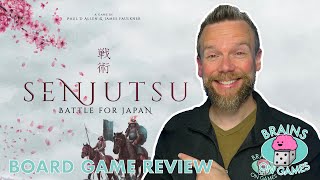
Click to watch at 1:00 · YouTube ↗
Overall sentiment (raw)
mixed
Pros
- Strong thematic flavor with evocative Japanese samurai setting
- High-quality components and versatile terrain
- Modular map and weapon variety allow different playstyles
- Deck-building and core card mechanics provide strategic depth
- Non-dice combat with card-driven resolution
Cons
- Rulebook is intimidating and complex
- Setup and deck construction can be time-consuming
- Limited player count and potential lengthy play due to elimination
- Box organization lacks built-in organizers; can be fiddly
- Memory and cognitive load can be heavy
Thematic elements
- Samurai duels and tactical combat using card-driven actions on a modular battlefield
- Feudal Japan during the Sengoku period
- Asymmetric duels with evolving terrain and deck-driven characters
Comparison games
- Unmatched
Mechanics (from transcript analysis)
- Card-driven actions — Actions are chosen from a hand of cards and resolved based on initiative and card text.
- Deck Building — Players assemble and customize a hand from core cards and a pool of options; preconstructed decks are also available.
- Deck construction and organization — Players can create customized decks or use preconstructed options; setup and organization affect playtime.
- deck-building — Players assemble and customize a hand from core cards and a pool of options; preconstructed decks are also available.
- Facing and positioning — Miniatures' facing matters; movement cards rotate figures to align attack ranges on a hex grid.
- no dice combat — Combat relies on card effects rather than dice rolls.
- Simultaneous Reveal — All players reveal their chosen actions at once; resolution proceeds by initiative order.
- Stance and focus tokens — Stance affects available actions; focus tokens unlock extra actions or card costs.
- Terrain and modular map — A modular board with terrain pieces can alter movement and strategy; can be used with either miniatures or flat pieces.
- Wound, stun, and other card effects — Wound and stun cards remove or weaken players; doom cards fill the hand and influence strategy.
Video topics + discussion points
No key topics recorded for this video.
Quotes (from this video)
- The rule book is quite thick
- You're battling with Miniatures on a little map and you're doing that by playing cards
- I would say 20 minutes is maybe an underestimate
- the theme here is amazing
- I really really enjoyed this game
- there's so much to keep track of
- heavy on working memory skills
- you need to have a big whiteboard in your mind to keep everything straight
- the box organization is not great; there's no organizer or tabs
- memory involvement... it's heavy on working memory skills
References (from this video)
No references stored for this video.
Video N9HYBn3mmG4
Brains on Games Top List at 4:47 sentiment: positive
video_pk 60478 · mention_pk 152886

Click to watch at 4:47 · YouTube ↗
Overall sentiment (raw)
positive
Pros
- Beautiful art and miniatures
- Simultaneous actions feel clever and thematic
- Deck-building depth with preconstructed options for quick play
Cons
- Difficult rules and learning curve
- Elimination can occur in multi-player games, leading to waiting times
Thematic elements
- Japanese history and samurai combat
- Dueling Samurai on a modular battlefield
- Array
Comparison games
- The Crew
Mechanics (from transcript analysis)
- Deck Building — Each player constructs a deck around their chosen character.
- deck-building — Each player constructs a deck around their chosen character.
- Modular maps and miniatures — Small maps with Samurai minis and tactical positioning.
- Simultaneous Actions — Players reveal actions simultaneously, creating tension and misdirection.
Video topics + discussion points
No key topics recorded for this video.
Quotes (from this video)
- These are games I wanted to show my friends I could play and win with after we tested them together.
- Sky Team is such a gorgeous game with that limited communication that really adds tension.
- Senjutsu is a beautiful duel with a clever simultaneous combat mechanic.
- Summoner Wars is a brilliant game with deep factions and a great digital implementation.
- Wizards of the Grimoire is easy to teach and highly portable, which I love.
References (from this video)
No references stored for this video.
Video SklYVWTlIfE
Before You Play Playthrough
video_pk 1153 · mention_pk 166636

Pros
none
Cons
none
Thematic elements
none
Comparison games
none
Mechanics (from transcript analysis)
Mechanics unknown.
Video topics + discussion points
No key topics recorded for this video.
Quotes (from this video)
- It's a really quick game
- Thank you very much, accessible game for younger players
- It's a nice little filler
- You can teach it to anyone as long as they can count points
- The end-game scoring really brings it all together and rewards thoughtful placement
- Three-player games are trickier but still very fun to puzzle through
References (from this video)
No references stored for this video.
Transcript Navigation
Showing 1–5 of 5