/pic4162054.png)



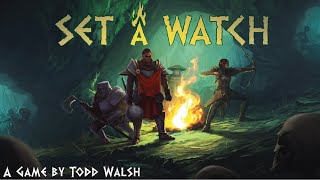










Set a Watch Deep Dive
What the Community Thinks About Set a Watch
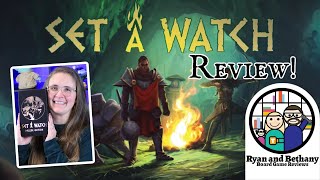
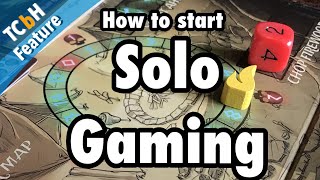
Set a Watch strikes a remarkable chord with reviewers who appreciate cooperative puzzle games. Ryan and Bethany Board Game Reviews discovered this gem at a convention and fell in love with it immediately upon its release. Getting Games praised it as a masterclass in accessible yet challenging design, walking through the mechanics and strategic choices that make each round feel distinct. The Cardboard Herald, reviewing both the original and its sequel, calls it a game that sings in solo and considers it one that is probably best as a solo game, highlighting how the perfect information and lack of hidden elements actually strengthen rather than weaken the solo experience.
Core Mechanics That Define Set a Watch
The Dice-Allocation Combat Puzzle
At its heart, Set a Watch is a dice-allocation puzzle where players roll dice each round to determine what actions they can take against an oncoming line of monsters. Each die can be spent in multiple ways: as direct damage, to activate character abilities, or to perform camp actions. This flexibility is critical, since rolling low is not a failure; it simply forces different tactical choices. According to Getting Games, effectively every turn is a puzzle where the adventurers are trying to figure out how best to use the dice they have rolled as well as their differing abilities to deal with the creatures coming at them. The puzzle tightens further because not all character abilities work on all creatures, and some monsters have special interactions based on their position in the line. Rock Manor Games designed this so that the same creatures can feel entirely different depending on what is in front of or behind them.
The Camp and Watch Rotation
Each round, one of the four adventurers stays at camp performing a worker placement mini-game while the other three take watch and face the monsters. The camp player must manage resources: building the bonfire (which increases how many creatures are visible), refreshing exhausted abilities, and using special camp-only actions unique to each character. This rotation is mandatory and elegant, since every character must tend camp twice across the normal rounds, ensuring all four heroes matter equally. The Cardboard Herald noted that on every round except the last, one player makes camp and takes actions to bolster the rest of the group, while the remaining three set a watch.
The Set a Watch Experience
Thematic Fire and Light Mechanics
One of the game's most praised features is how the campfire mechanics create thematic resonance. The fire's size directly determines how many monsters in the approaching line can be seen. At a small fire, only one creature is revealed; at a large fire, three are visible. This single mechanic ties together theme and strategy: the camp's bonfire is both a literal light source and the party's only way to prepare for danger. Ryan and Bethany observed that the more light you have, the more of the approaching monsters you are going to be able to see. The Cardboard Herald called this one of the coolest moments of thematic resonance and gameplay they have experienced, noting how the amount of wood available to grow the fire impacts the radius of light, meaning more monsters in the line are revealed as they get closer.
A Puzzle That Rewards Optimized Play
Set a Watch excels as a solo game precisely because there is no hidden information and no turn order to enforce, so every player can see everything all the time. In multiplayer this invites alpha gaming, where one experienced player tells others what to do. But solo, this becomes a strength. The Cardboard Herald explained that in solo mode you can lean into those efficiency muscles to your heart's content and feel great about it. Each round presents a genuinely hard optimization puzzle: which monsters to prioritize, whether to refresh abilities or deal damage, how to sequence dice use to chain abilities together for maximum efficiency. Ryan and Bethany loved the scalability, finding plenty of wrinkles even on easier difficulty and a brutal challenge on the hardest mode.
What Makes Set a Watch Stand Out
Every Character Feels Unique and Viable
Reviewers consistently praised the character design. Ryan and Bethany said they liked all the characters, wanted to play with all of them to get a full feel, and were never disappointed with who they had. Each adventurer has a unique camp ability and a small deck of abilities with different effects: some characters have melee-only attacks, others have ranged abilities that unlock tactical options. The Cardboard Herald noted that in the sequel, each character with five abilities feels a bit more specialized and interesting, citing examples like the monk who can permanently upgrade dice, the hunter who bags trophies for effects, and the witch with familiars who can make additional attacks.
The Box Itself Is the Game Board
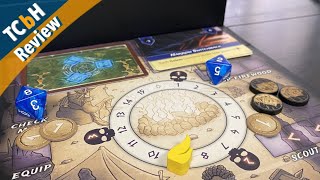
A small but beloved design choice: the game's magnetic box unfolds to become the camp board where one player manages the fire and resources. This means the game takes up minimal table space and uses every component meaningfully. Ryan and Bethany expressed particular enthusiasm, noting they keep a running list of games that use the box itself, and that here the board is part of the box, so you are not wasting any components or leaving dead space. The Cardboard Herald agreed, calling it a gimmick but a very good one.
Potential Drawbacks
The Game Runs Longer Than Expected
Multiple reviewers noted that while the box is compact, a full game takes longer than the footprint suggests. The Cardboard Herald observed that it feels a little bit longer than ideal, since it is a small game that takes up a big space on the table, and the full count of rounds feels a touch too much. With mandatory camp rotations and a final battle where all four heroes are on watch simultaneously, games stretch toward an hour or more depending on decision complexity. This does not diminish the game's quality, but pacing can drag if players spend too long optimizing each decision.
Rules Need Clarification and the Difficulty Curve Is Steep
The Cardboard Herald noted clarity issues, observing that the game could have used another pass by an editor on the rules and some of the card ability terminology. More importantly, the game is genuinely difficult. At normal difficulty it presents a serious challenge; at higher difficulties it can feel overwhelming. The Cardboard Herald described it as very hard and explained that there is not really enough room to avoid analyzing every single action. This means the game demands focus and is not casual; if you want to win, you need to think tactically about every resource spent.
If You Enjoy Set a Watch
Players who love Set a Watch often gravitate toward other cooperative puzzles. Forbidden Island offers similar escalating pressure and group decision-making at a lighter weight. For those wanting more tactical complexity and role-playing flavor, Descent: Journeys in the Dark provides a dungeon-crawl experience with character abilities and monster combat. Gloomhaven shares the tactical puzzle of managing character abilities and planning sequences. Fans of purely solo puzzle games might also enjoy One Deck Dungeon, which distills tactical combat into an even tighter package. For a different genre but similar solo satisfaction, Spirit Island offers that same pleasure of playing multiple characters to their optimum that makes Set a Watch's solo mode shine.
What Reviewers Are Saying
"I love tower defense style games, especially when they're cooperative, and although this didn't have a tower that you were defending, it still had that tower-defense style theming where this parade of monsters comes at you one at a time, and you have to defeat them and decide the best order to fit them in if you have enough range to get there."
— Ryan and Bethany Board Game Reviews
"This tiny little package is such a cool solo game, and this is an example of a game that I think is probably best as a solo game. It's a cooperative game, and one of the things that would frustrate me as a higher player count game is that the solo and the multiplayer are exactly the same; you just divide up the components among other people."
— The Cardboard Herald
"The challenging puzzle, the symphony of your powers and the dice working in conjunction to chip your way down the line, is gripping. While bad rolls and bad card flops can definitely turn things for the worse, the game empowers you with so many options that success and failure feel earned."
— The Cardboard Herald