/pic2060466.jpg)





Shadowrun: Crossfire Deep Dive
What the Community Thinks About Shadowrun: Crossfire
Shadowrun: Crossfire stands out among cooperative deck-builders as a game that commands fierce devotion from those who embrace its relentless difficulty. Reviewers like Rahdo Runs Through and Board Game Replay recognize it as a sharp piece of cooperative design, where every decision matters and teamwork is not optional. Players who appreciate punishing challenges find themselves drawn back repeatedly, while those expecting a gentler experience may bounce off quickly. The consensus is clear: this is a game that rewards calculated plays and tight team coordination over raw card accumulation.
Core Mechanics That Define Shadowrun: Crossfire
Cooperative Deck-Building Under Pressure
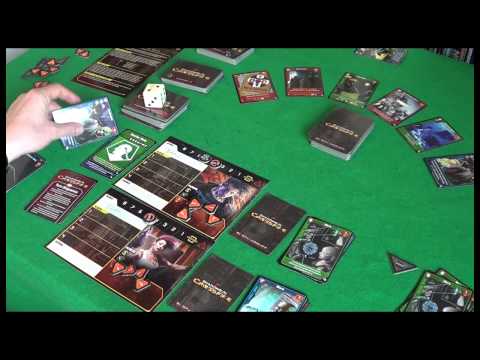
Shadowrun: Crossfire inverts a common genre expectation. Rather than accumulating dozens of cards to power up gradually, players add only a handful of cards across an entire game, yet each addition profoundly shapes their strategy. Cards purchased go directly into hand rather than into a discard pile, creating immediate tactical options. The genius lies in quality over quantity: each addition must justify its place in a lean deck facing constant threats. Players buy from a shared market published by Catalyst Game Labs, so card selection becomes a collaborative puzzle about what the team most needs to survive the next wave of enemies.
The Crossfire System and Escalating Threats
At the start of each round, players draw a Crossfire card that introduces a global effect or danger affecting all runners. These cards accumulate, and the size of that pile raises the difficulty of incoming obstacles. This creates a brilliant pressure valve: teams that defeat obstacles quickly keep the danger low, while stumbles allow threats to compound. The system forces constant decisions about priorities and which enemies to kill first. Reviewers highlight how it generates genuine tension without feeling arbitrary, since skilled play visibly mitigates escalating danger rather than leaving the team at the mercy of bad luck.
The Shadowrun: Crossfire Experience
A Brutal, Cinematic Struggle
The game excels at translating its cyberpunk-fantasy setting into mechanical drama. Players describe feeling like operatives ambushed in the neon-soaked streets of New Seattle, ducking between encounters and scrounging resources before the next wave hits. The arc unfolds naturally: brief moments of respite where the team buys critical cards, followed by intense rounds where enemies converge with overwhelming force. The theme runs through every system, especially the progression layer that tracks karma earned through victories and near-escapes, letting runners unlock new starting abilities. This campaign element keeps repeated plays of the same scenario fresh, as growing power meets escalating challenge.
Team Assistance and Cooperative Depth
What elevates Shadowrun: Crossfire above many cooperative deck-builders is its assist system. Certain cards trigger on teammates' turns, letting one player contribute resources or effects to another's fight without spending their own turn's actions. This transforms the game from parallel solo puzzles into genuine coordination. Reviewers note that teams frequently make surprising mid-turn pivots, where one player realizes another can unlock a devastating combo through an assist, completely changing which obstacles die and when. The best moments see several players contributing to a single obstacle's defeat, distributing the reward and turning a losing position into a small victory that accelerates the team's momentum.
What Makes Shadowrun: Crossfire Stand Out
Skill-Based Difficulty That Rewards Mastery
Shadowrun: Crossfire has a reputation for brutality that is often overstated as unwinnable, yet experienced players win far more often than newcomers expect. That gap reveals the game's true nature: it is brutally hard but fundamentally skill-based. Failure usually stems not from unlucky draws but from poor decisions made rounds earlier. The community respects this distinction, understanding that a loss to a seemingly impossible Crossfire card often traces back to mismanaged resources or wrong buying priorities several turns prior. This design appeals to players seeking real mental challenge, where every turn demands full attention and thinking several moves ahead.
Role Differentiation and Flexible Builds
Each role begins with a different mix of colored cards representing skills, weapons, spells, and hacking, yet the game subverts pure role adherence. Successful players build adaptable decks regardless of starting color: a Street Samurai might buy a spell card for a powerful assist, while a Decker might grab a weapon to solve an immediate threat. Reviewers point to this balance between thematic color-coding and flexible optimization as a key source of replay value, since the right purchases depend less on your role than on what the team and the current encounter demand.
Potential Drawbacks
Extreme Difficulty and Long Decision Trees
Shadowrun: Crossfire's primary barrier is its unforgiving nature. Many players pick it up expecting a medium-weight game and hit a wall of defeat. It demands careful analysis of damage requirements, card synergies, and positioning, and some turns involve juggling multiple cards and calculating damage combinations, which can produce real analysis paralysis. The community acknowledges this openly: players new to cooperative gaming often find the curve steep, and sessions can slow significantly while players learn to spot viable combos. Even relaxed plays require tactical engagement to avoid mission failure.
Limited Deck Additions and Minimal Build Freedom
For players who expect to craft large, thematic decks across a campaign, Shadowrun: Crossfire delivers the opposite. The scarcity of card additions means each purchase is critical, leaving little room for experimental builds or pet strategies. A player might spot a synergy they would love to chase, only to realize they will never accumulate enough cards to fully realize it within a single game. While this scarcity creates tense decision-making, players accustomed to more generous deck-building may feel constrained by the minimalist approach.
If You Enjoy Shadowrun: Crossfire
Players captivated by Shadowrun: Crossfire's punishing cooperative deck-building should explore Aeon's End, another cooperative deck-builder that shares the constant-threat pressure and card scarcity that make individual choices matter. Legendary: A Marvel Deck Building Game offers similar cooperative fundamentals with more forgiving difficulty and far more card variety, making it accessible to players who find Crossfire too unrelenting. For comparable thematic brutality and skill-driven outcomes, Spirit Island delivers a deeply challenging co-op where smart play meaningfully changes the result, and Gloomhaven combines campaign progression, role differentiation, and escalating difficulty that rewards veteran play much the way Crossfire does.
What Reviewers Are Saying
"The difficulty is right on. It's definitely randomized, but it's not a game where you're destined to lose over and over again. You really have to think hard every single time, and you can't just blow through it."
— Board Game Replay
"The cooperative element is very strong in this game; it really does feel like you're working together. It's probably one of the best feelings of co-op that I've seen in a lot of games."
— Box of Delights
"The brutal nature of it makes it so dramatic, so cinematic. I imagine us on the rainy, dark, neon streets of New Seattle, trying to hide out in alleyways while mercenaries catch up with us round after round."
— Rahdo Runs Through