/pic6097488.jpg)










































Skull Deep Dive
What the Community Thinks About Skull
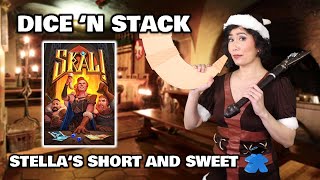
Across a comedic gameplay show, a solo review channel, a couple's review channel, an essay video about art in board games, a genre-specialist duo, and a pub-games list, the verdict on Skull lands the same way every time: it is small, cheap, and quietly excellent. Board Game Critique uses it as their central example in an argument that light, small-box games get underrated by the hobby, calling it "one of the purest, most demanding social games ever designed" and pointing out it can seat anywhere from three to six players. Getting Games reviewed it directly against Liar's Dice and concluded that Skull "pretty much completely replaces" that older favorite for their group. BoardGameBollocks struggled to name a real negative, landing on a ten out of ten and calling it "one of the best bluffing games." Gaming with Edo & Jessica take the most measured line of the group, warning that the game will not win over players who dislike blind bidding or mind games. Actualol keeps it in permanent rotation as a pub game while flagging a genuine learning curve on the first play.
The clearest disagreement in the sources is about player count. Board Game Critique calls it "excellent at any player count from 3 to 6," while BoardGameBollocks specifically says it "doesn't play well with three players" and prefers five or six, and Getting Games says they have mostly played it with six and have never tried three. On teaching, the channels largely agree with each other rather than disagree: both Getting Games and Actualol independently describe a shaky first round that clicks once everyone has played a full turn.
Core Mechanics That Define Skull
Building the Stack and Opening the Bid
Each player starts a round with four discs, three flowers and one skull, per Getting Games and BigPasti's breakdowns of the rules. Everyone simultaneously plays one disc face down onto their personal mat to begin. From there, on a player's turn they can either add another disc to their own stack or stop and open the bidding by naming how many total discs across the whole table they believe they can flip over without exposing a skull. As BoardGameBollocks describes it, once someone opens the bidding, no one can add new discs to their stack; players can only raise the number or pass, going around the table until only the highest bidder remains.
The Challenge and the Skull Penalty
The player left holding the bid has to back it up, and they always start by flipping their own stack first, a detail every source that explains the rules calls out specifically. If they can turn over the stated number of discs without exposing a skull, they win the challenge. Hit a skull instead, and the challenge ends immediately: the bidder loses one of their remaining discs, picked at random by the player whose skull ended the run. Turning over your own skull during a challenge lets you discard a disc of your own choosing instead. Two successful challenges, or being the last player left with any discs at all, wins the game.
The Skull Experience
Reading the Table
Actualol frames a challenge in progress as genuinely gripping: "The tension when someone is flipping over coasters one at a time is brilliant. You look the others in their eyes, you're trying to work out where the flowers are. It's got the excitement of that final reveal in poker." Board Game Critique describes the same skill set in more clinical terms, pointing to "reading body language, managing your credibility across rounds, deciding when to lay a trap, knowing when an opponent is bluffing against you" as the entire source of the game's depth, none of which appears anywhere in the one-page rulebook.
Fast, Loud Rounds
Getting Games contrasts Skull's pacing directly with Liar's Dice: because a win only requires two successful challenges rather than eliminating the whole table, a game can end on an early turn if someone bids well. BoardGameBollocks describe rounds staying short enough to force real risk-taking, since sitting back and passing every round guarantees you never score. The comedic playthrough from No Rolls Barred plays out that same rhythm live, with reactions to a revealed skull landing as a genuine group gasp or laugh rather than a quiet shrug.
What Makes Skull Stand Out
Rules That Fit on One Page
Board Game Critique calls the entire rule set "one page" and argues the game is "a masterclass in psychological depth" precisely because so little of what makes it work is written down. They single it out as proof that a simple rule set and a shallow game are not the same thing, comparing the ratio of Skull's actual table time against heavier games that mostly sit on a shelf, noting that they have never once canceled a game of Skull because someone was tired.
Coasters and Components People Talk About
Getting Games calls the production "a beautiful game" and says that every time they brought the game out and put it on the table, new players reacted to the coasters before they even learned the rules. Gaming with Edo & Jessica echo that reaction almost word for word, repeating that the coasters are "gorgeous" on both sides. BoardGameBollocks point out the flip side of that same design: the mechanics are so minimal that the whole game can be recreated at home with nothing more than beer mats or scraps of cardboard, which is part of why they consider it such an easy game to always have on hand.
Potential Drawbacks
A Bumpy First Teach
Getting Games says that almost every time they have taught Skull to new players, the explanation is met with "a bunch of blank looks" until everyone has played through one full turn, at which point it clicks. Actualol names this directly as the game's one downside as a pub pick, saying it is "tricky to grasp on the first play" and only "comes alive after a few games when you feel the rhythm of it."
Scaling and Randomness
Gaming with Edo & Jessica caution that the game will not convert players who dislike blind bidding or bluffing-heavy mind games, and note that a player who bids and bluffs in a genuinely random pattern, rather than a readable one, can make the whole table's bluff-reading fall apart. BoardGameBollocks raise a separate concern about player count, saying the game "doesn't play well with three players" and that it needs more bodies at the table, ideally five or six, to hit its stride.
If You Enjoy Skull
Getting Games reviewed Skull as a direct answer to Liar's Dice, and after enough plays of both said Skull had essentially replaced it in their collection. BoardGameBollocks draw a line to two other social bluffing and reading games they had already covered, Cockroach Poker and The Mayor, both built around guessing people's behavior from their previous actions. Actualol points pub-game players toward Cockroach Poker and Spicy as faster alternatives for groups short on time.
What Reviewers Are Saying
"I grabbed my copy of Skull, a game that usually drips with gorgeous art, and I abstracted it to its fundamental essence. I swapped out every tile for sticky notes. Just sticky notes. Five little squares, three scribbled lines, and that was enough for each player to play."
— BigPasti
"The tension when someone is flipping over coasters one at a time is brilliant. You look the others in their eyes, you're trying to work out where the flowers are. It's got the excitement of that final reveal in poker."
— Jon Perkis, Actualol
"I really enjoyed playing skull and it's not just me, pretty much everyone I've introduced this game to has really enjoyed it. It's been requested many times since I started teaching it to my group, and I think that it's just a really fun package. It mixes that great bluffing aspect, which is different from lying."
— Getting Games