/pic8689185.jpg)




















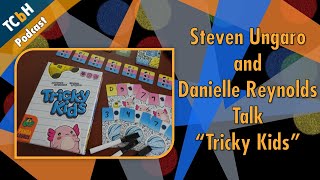
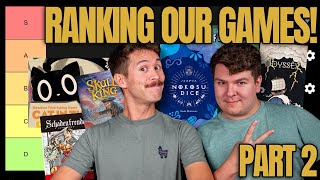


















Skull King Deep Dive
What the Community Thinks About Skull King
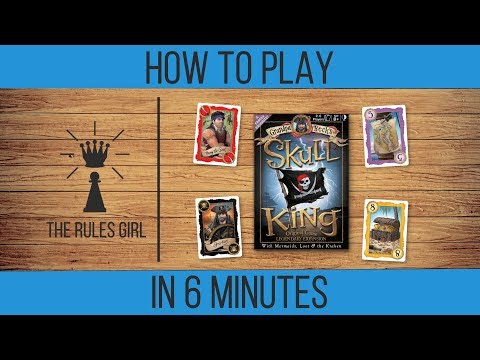
Skull King occupies a rare space in the board game hobby: it is simultaneously a serious trick-taking game and one of the rowdiest, most raucous party experiences reviewers have encountered. Across the community it lands consistently high on personal favorites lists and earns an almost universal recommendation, especially for groups willing to commit to getting loud.
Jamie from Stonemire Games rates it among his top five games of all time, noting that it "scales well up to eight players" and delivers escalating tension through its ramping round structure. Foster the Meeple calls it their number one trick-taking game outright, and no small part of that praise rests on the atmosphere the game demands. Matthew from Watch It Played places it in his personal top 20 games ever, crediting specific late-night gaming memories, including a session at 3:00 in the morning where everyone was shouting bids in German, for propelling it so high. The Neon Gorilla reviewer calls it "the king of trick takers in our house," citing the consistent laughs it produces even when kids groan at being pulled to the table.
The key qualifier reviewers return to is context. Skull King at its best is vocal, competitive, and slightly chaotic. Foster the Meeple puts it plainly: if you play Skull King silently, it is not going to land. The "yo ho ho" bid reveal is not just a cute pirate flourish; reviewers treat it as load-bearing. Those who have seen the game fall flat with certain groups trace it back to the same cause: the table did not lean in.
Compared directly to its closest genre sibling, Wizard, most reviewers find Skull King more engaging, primarily because of its special card hierarchy and layered bonus scoring. No Rolls Barred's full playthrough captures the swings and near-misses that keep the game alive from round one to round ten, and the post-game energy from their group says as much as any verbal review could.
Core Mechanics That Define Skull King
Predictive Bidding and the Ramping Round Structure
The backbone of Skull King is its simultaneous blind bid. Before each round, every player stretches out a fist and then reveals fingers to show how many tricks they intend to win. Get it exactly right and you score 20 points per trick. Miss by even one and you lose 10 points for every trick you are off. The penalty is symmetric in one direction and devastating in another, because the zero bid carries the highest possible reward and the harshest possible punishment in equal measure.
What makes the bidding feel genuinely different from other contract trick-takers is the round structure. Round one deals one card each. Round two deals two. This continues up to round ten with ten cards per player. The Neon Gorilla reviewer highlights this ramp as a key reason the game works across mixed-experience groups: early rounds are nearly trivial and serve to onboard newcomers, while later rounds create the high-stakes decisions that define the game. Jamie from Stonemire Games echoes this, calling the ramp something he loves specifically as a design feature, where the escalation feels earned rather than arbitrary. The zero bid becomes increasingly tempting as rounds grow larger, since a successful zero in round ten earns 100 points, but a failed zero in the same round costs the same amount. No Rolls Barred's table illustrates this tension in real time: players debate aloud whether to chase the big zero or play it safe with a modest trick count, and those conversations are half the entertainment.
The Card Hierarchy and Special Powers
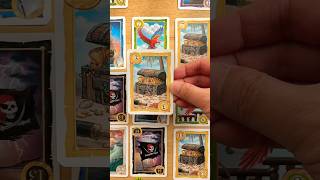
Most trick-taking games resolve cleanly: highest card in the led suit wins, unless a trump is played. Skull King layers a full hierarchy of special cards on top of that foundation. Colored suits (green, yellow, purple) form the base tier. The black Jolly Roger cards act as the trump suit and beat any numbered card. Above them sit the pirates, who beat every numbered card regardless of color or value. The Skull King himself tops the pyramid, defeating all pirates. The mermaids form the key reversal: they lose to pirates but beat the Skull King, making them the most volatile cards in the deck and the source of 40-point capture bonuses.
The Tabletoptiktok reviewer walking through the expansion highlights how this hierarchy generates real strategic texture. Jamie from Stonemire describes playing with the Kraken and White Whale optional cards on a gaming cruise and finding that they added "zany" energy without breaking the game. The Tigress card, which can be declared as either a pirate or an escape at the moment of play, is a consistent source of table drama. No Rolls Barred's group hits a pivotal moment late in their game when the Tigress escapes at exactly the right moment and saves a player's entire zero bid. Adam in Wales places Skull King alongside games like Wizard and Claim in the broader context of contract trick-taking, noting that special-power cards on top of a bidding structure is an ancient tradition, but that Skull King's thematic presentation makes the hierarchy feel vivid rather than mechanical.
The Skull King Experience
The Rowdy, Communal Energy
Every reviewer who loves Skull King ties their enthusiasm directly to the table energy the game creates. Foster the Meeple compares it to Fuji Flush and Camel Up as a game that simply does not work the same way if you bring quiet energy to it. The "yo ho ho" reveal is the ritual that unlocks the experience. The moment bids are shown, the table reacts: someone bid too high and everyone knows it, someone gambled on zero in round eight, and the groans and laughter start immediately, before a single card is played.
No Rolls Barred's full play session is perhaps the clearest demonstration of this dynamic on video. The table fills with improvised negotiation, fake alliance building, and genuine shock as cards flip. When the Skull King is captured by a mermaid and the bonus points cascade, it produces exactly the kind of moment the game is built around. The Neon Gorilla reviewer describes Skull King as "a loud rambunctious time all the way through," contrasting it directly with more cerebral trick-takers. Watch It Played's Matthew frames it as a game where the memories built around the table genuinely elevate how highly he rates it, something he would not say about most games in his collection.
Accessibility and Push-Your-Luck Tension
Despite its boisterous reputation, reviewers are consistent that Skull King is not hard to learn. The round structure handles onboarding organically. By the time a new player reaches round four or five, they understand the hierarchy and the bidding without needing the rules explained again. This makes it one of the few games that can work equally well at a board gamer's game night and at a family or social gathering with casual players.
The push-your-luck tension is built primarily around the zero bid. The Tabletoptiktok reviewer describes her personal strategy as leaning toward sloughing whenever she can pull it off successfully, then immediately acknowledges how badly that can go wrong. Foster the Meeple notes that you are never out of the game because a well-timed zero bid in late rounds can close enormous point gaps. This creates a catch-up mechanism that feels organic rather than artificial: anyone trailing badly has a genuine and plausible path back through aggressive zero bidding, rather than through a rule designed to protect them. The Neon Gorilla reviewer specifically praises this as something Skull King has and Cat in the Box lacks, noting that his kids lose interest in games without a similar recovery mechanism.
What Makes Skull King Stand Out
The Compound Scoring System
Skull King uses what reviewers experience as a compound scoring system, where each round layers multiple point sources on top of each other. The base bid payout is 20 points per correctly predicted trick. On top of that, taking a trick containing a 14 card adds a 10-point bonus (the black 14 adds 20), but only if your bid was correct. Having the Skull King capture a pirate adds 30 bonus points per pirate. A mermaid capturing the Skull King adds 40 points. A successful zero bid pays 10 times the round number.
No Rolls Barred's table unpacks this in real time. A late-round play where the Skull King captures two pirates produces an enormous swing, and the bonus points stack in a way that reshapes the leaderboard in a single trick. These stacking bonuses make the bidding decision richer than a simple trick count. You are not just deciding how many tricks you can win. You are deciding whether to hunt for a pirate capture, whether to protect your zero bid at all costs, or whether to bet aggressively and hope the bonus cards land in your tricks. This layered decision space is part of why experienced players keep returning: the game does not feel solved even after dozens of plays.
Breadth of Player Count and Replay Value
Skull King is genuinely flexible across player counts in a way that many trick-takers are not. Jamie from Stonemire Games plays it frequently at four through eight players. Foster the Meeple argues it plays best at five, with more players adding energy and more opportunities for special card interactions to collide. The Tabletoptiktok reviewer notes the expansion pushes the supported count to nine, adding new pirates, wild cards, and strategic options like the cannon and the walk-the-plank card. The result is a game that can anchor a family game night, a convention hall session, or a rowdy evening between experienced gamers, without requiring significant rules adjustments for any of them.
Potential Drawbacks
Group Dependency and Energy Requirements
The same energy that defines Skull King at its best can make it fall flat with the wrong crowd. Foster the Meeple acknowledges this directly: they know people who played the game and did not understand the appeal, and the follow-up question is always whether the table engaged with the pirate energy or played in near silence. The Neon Gorilla reviewer mentions that even getting kids to the table sometimes involves gentle resistance, though once they are playing they consistently end up laughing. Skull King is a social contract as much as a card game: the table has to agree to make noise together, and that is not a universal ask.
The game also carries luck variance, particularly in early rounds where a single card determines everything. Adam in Wales, reviewing the trick-taking genre broadly, notes this is a common challenge across the category. In Skull King the ramp mitigates this more than most games do, since a bad round one costs almost nothing in absolute terms, but players who arrive expecting consistent skill expression may find card distribution frustrating in isolated rounds.
Complexity of Special Cards for New Players
While the base game is accessible, the full special card suite can create confusion for players still learning the hierarchy. No Rolls Barred's table, playing with experienced gamers, still pauses several times to clarify edge cases: what happens when two pirates are in the same trick, how escape cards interact with the suit-following rule, and whether certain bonus conditions stack. These are not design flaws, but they do mean that teaching a fully loaded game to brand new players requires some patience.
The Neon Gorilla reviewer compares Skull King directly to Cat in the Box and concludes that Skull King, despite its complexity, is the easier game to get to the table quickly, precisely because its special cards build on familiar trick-taking intuitions rather than replacing them. Reviewers generally recommend introducing the base game first and layering in optional cards once the core loop feels natural.
If You Enjoy Skull King
Reviewers who love Skull King most often recommend these games as natural next steps or interesting contrasts.
- Wizard: The game most directly compared to Skull King. Both use expanding rounds and predictive bidding. Watch It Played's Matthew mentions Wizard explicitly as "very similar" but finds Skull King more memorable. Worth playing if you want to explore the same genre with a slightly different feel and simpler special cards.
- Oh Hell: Multiple reviewers, including Foster the Meeple and No Rolls Barred, describe Skull King as a thematic, expanded version of the traditional card game Oh Hell. If you enjoy the concept of Skull King but want something you can play with a standard deck, Oh Hell is the direct ancestor.
- Cat in the Box: Mentioned by the Neon Gorilla reviewer as the game that challenged Skull King's household throne. Cat in the Box replaces card suits with a shared research board and adds meaningful hand management tension. It is more analytical and less rowdy, making it a good pairing rather than a replacement. Foster the Meeple finds it more confusing but rewarding once it clicks.
- Claim: A two-player-only trick-taker with suit-specific powers across factions. Foster the Meeple ranks it among the best two-player trick-taking experiences available, and Adam in Wales highlights it as an example of how special suit powers can reshape the genre. A good choice if Skull King's two-player game does not satisfy.
- Fox in the Forest: Mentioned by Foster the Meeple as the gateway game that introduced them to trick-taking. A lighter, gentler two-player experience with a clear evasion mechanic. Good entry point before committing to Skull King's larger player counts and full card hierarchy.
- Trick and Snipers: Foster the Meeple's top-ranked trick-taker overall. A fast, focused game that can resolve in five to ten minutes and rewards precise card play over bidding strategy. A strong option for groups that love the trick-taking core of Skull King but want something faster and more portable.
- Power Vacuum: Highlighted by Foster the Meeple as a uniquely inventive trick-taker that combines area control with trick-winning structure. Hard to find, but described as one of the most original games in the genre for players ready to move beyond the bidding-focused format.
What Reviewers Are Saying
"Skull King is always a blast. I think it plays best at five. More the merrier in this game. And really getting into it and being like yo ho ho before you bid. If you don't do all of that stuff, if you're playing Skull King silently, it's not going to hit."
— Watch on MindForge)
"It's 3:00 in the morning, everyone's going like 'Hine,' smacking on the table. It's raucous laughter. I've made friends playing that game. So to me, it ranks higher, and that's all there is to it."
— Watch on MindForge)
"Skull King is the king of trick takers in our house. I don't know if it's the theme, the special ability cards, or that we get to yell yo ho ho when we're putting in our bids. It's just caught on with our house."
— Watch on MindForge)