




































Collection Status
Your Rating
Description
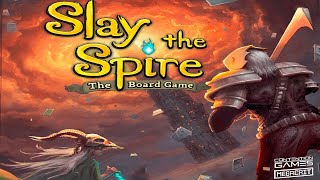
Slay the Spire: The Board Game is a co-operative deck-building adventure. Craft a unique deck, encounter bizarre creatures, discover relics of immense power, and finally become strong enough to slay the Spire!
Slay the Spire: The Board Game, (core edition) includes:
-4 Minis
-Over 730 cards
-Over 450 Art Sleeves
-2 Map Boards
-1 Merchant Board
-4 Player Boards
-1 Die
-50 plastic cubes
-Over 113 tokens
Collector's edition:
4x (3mm neoprene) playermats
1x deck playmat
Bigger box (fits mats)
1x Merchant bag
Metal coins
Kickstarter exclusives and Stretch goals:
1x Merchant pat
Claw die
8x Claw cards
28x Foil Cards
3x Acrylic heart tokens
Year Published
2024
Featured Videos
Playthrough
Even More Slay the Spire 2!
Transcript Analysis
Browse transcript mentions, sentiments, pros/cons, mechanics, topics, quotes, and references.
Total mentions: 31
This page: 31
Sentiment:
pos 24 ·
mix 5 ·
neu 0 ·
neg 1
Showing 1–31 of 31
Video lOLqAcys-kw
Unknown Channel playthrough at 10:33 sentiment: positive
video_pk 62652 · mention_pk 155360
Click to watch at 10:33 · YouTube ↗
Overall sentiment (raw)
positive
Pros
- Strong synergy around zero-cost and orb-based mechanics for the Defect
- Echo Form provides powerful repeated-play opportunities
- Claw/zero-cost engine enables high-damage bursts when drawn and evoked
Cons
- Elites can be brutally punishing, especially without a solid early draw
- Reliance on specific card lines can make early turns feel fragile
Thematic elements
- Array
- A fantasy roguelike deck-building run through a procedurally generated dungeon
- Procedural progression with branching paths and events
Comparison games
- Slay the Spire
Mechanics (from transcript analysis)
- Deck building — Player builds a deck from starting cards and additions found in events and shops to optimize combat outcomes.
- Energy management — Card play is governed by an energy resource; some cards replenish or modify energy for future turns.
- Multi-use cards — Zero-cost cards enable powerful loop combos by returning to hand or recurring each turn.
- Orb Channeling and Evocation — The Defect class uses orbs that are channeled and evoked for defensive/offensive effects.
- Path/Dungeon Encounters and Elites — The map presents dense paths with multiple fights, fires, events, and elites shaping risk/reward.
- Zero-Cost Cards — Zero-cost cards enable powerful loop combos by returning to hand or recurring each turn.
Video topics + discussion points
No key topics recorded for this video.
Quotes (from this video)
- Echo Form's always lovely as well when I remember that it existed.
- I love powers on the defect. Getting big chains of all sorts of powers on the defect is one of my probably my second favorite way to play the defect.
- There is a card in Slay the Spire 1 that is channel some lightning, and from now on your lightning hits everybody instead of a random enemy.
- I like the defect strategy of getting zero cost cards.
- I like channeling and orbing stuff and getting some nice block.
References (from this video)
No references stored for this video.
Video mdiOC4J23dk
Unknown Channel game_review at 0:07 sentiment: negative
video_pk 62509 · mention_pk 155143
Click to watch at 0:07 · YouTube ↗
Overall sentiment (raw)
negative
Pros
- Zero downtime with four players due to simultaneous turns
- Video game–faithful adaptation; act structure preserves roguelike feel
- Large content and long-term progression (ascension) for replayability
- Premium production and components; strong theme integration
Cons
- Time commitment of three or more hours per session; can be hard to justify for casual groups
- High price point (roughly $100–$130) relative to other games
- Learning curve for certain characters (e.g., Defect, Watcher) can slow play
- Long unlock progression can push groups toward longer sessions
Thematic elements
- Array
- Fantasy dungeon
- Procedural, systems-driven roguelike progression
Comparison games
- Aeon's End
Mechanics (from transcript analysis)
- Ascension progression — Long-term progression with unlocks and difficulty modifiers across sessions
- Block resource — Defensive resource (block) to mitigate incoming damage
- boss battler — Three acts with a boss; defeat the boss at the end of an act
- Boss/act structure — Three acts with a boss; defeat the boss at the end of an act
- character asymmetry and progression — Four distinct characters, each with unique mechanics and progression paths
- Deck cycling/shuffling — The deck shuffles before each combat and whenever you cycle through it, affecting draw outcomes
- deck manipulation — The deck shuffles before each combat and whenever you cycle through it, affecting draw outcomes
- Draw/hand management — Draw five cards to form your hand for actions each turn
- Energy — Starting each combat turn with three energy to spend on playing cards
- hand management — Draw five cards to form your hand for actions each turn
- Simultaneous Actions — Players act simultaneously during the combat phase rather than taking turns in a fixed order
Video topics + discussion points
No key topics recorded for this video.
Quotes (from this video)
- Buy Aeon's End. It's more affordable, more accessible, and the Never Shuffle mechanic is genuinely unique in board gaming.
- Zero downtime in a four-player game is huge.
- If you screw up and die, you've ended the entire 3-hour session for everyone.
- Never shuffle represents mages who have mastered dark craft over aons.
References (from this video)
No references stored for this video.
Video NCj0fWMw_Ic
Unknown Channel top_10_list at 8:06 sentiment: positive
video_pk 62506 · mention_pk 155136
Click to watch at 8:06 · YouTube ↗
Overall sentiment (raw)
positive
Pros
- Cooperative play adds collaborative tension
- Strong scaling and card synergy across different characters
- Many players feel it improves on the video game in team play
Cons
- Rule learnability can be a hurdle for some players
Thematic elements
- cooperative roguelike deck-building with team coordination
- Board game adaptation of a solo roguelike; climactic ascent of the Spire
- cooperative strategy with character-specific synergies
Comparison games
- The video game Slay the Spire
Mechanics (from transcript analysis)
- Ascension levels — 13 ascension tiers provide escalating challenge.
- Cooperative Game — Players work together to reach the top of the Spire.
- cooperative play — Players work together to reach the top of the Spire.
- Deck building — Each character has unique cards; players optimize combos.
- deck-building — Each character has unique cards; players optimize combos.
Video topics + discussion points
No key topics recorded for this video.
Quotes (from this video)
- It's approachable enough that new players can learn it in one session, but deep enough that you're still finding new strategies after 30 plays.
- The expansions add modules instead of replacing the base game. So, you're building a collection, not cycling through versions.
- It's Dune. That IP isn't going anywhere. As long as people are watching Dune movies, they're going to want to play Dune games.
- The magic is in the gear shift mechanism.
- It's creating a new genre, strategic deduction.
- "No, you're a ghost now. You still matter."
- "The objectives change every game."
References (from this video)
No references stored for this video.
Video B5G70dA_0c0
Board Game Critique analysis at 12:48 sentiment: mixed
video_pk 62523 · mention_pk 155216
Click to watch at 12:48 · YouTube ↗
Overall sentiment (raw)
mixed
Pros
- Familiar video game feel in board game format
- instant restart memory of learned knowledge
Cons
- Setup time and content replication can be lengthy
- board game pacing differs from digital version
Thematic elements
- cinematic progression through levels
- roguelike deck-building journey
- looped, persistent progression
Comparison games
none
Mechanics (from transcript analysis)
- Deck building — build a deck to defeat increasingly difficult enemies.
- deck-building — build a deck to defeat increasingly difficult enemies.
- roguelike progression — perma-deaths and unlocks across runs.
Video topics + discussion points
No key topics recorded for this video.
Quotes (from this video)
- It's not engagement. It's everyone doing their own puzzle in the same room.
- Gorgeous production quality, but multiple simultaneous subsystems that can feel complex initially for new players.
- Turn order determines a lot in this game's economy.
- One wrong move with how the link network system works, and you've completely invalidated your entire strategy.
- The clue giver walks a razor line between clever and intuitive that new players haven't calibrated.
- Eight-hour day commitment, full group attendance, full mental energy required throughout.
References (from this video)
No references stored for this video.
Video 4luaU84CimA
Danielle game_review at 0:01 sentiment: positive
video_pk 60869 · mention_pk 153301
Click to watch at 0:01 · YouTube ↗
Overall sentiment (raw)
positive
Pros
- High replayability due to modular board and shuffled encounter decks
- Engaging deck-building with meaningful reward choices
- Rich variety of relics, potions, and events
- Solid solo mode with Neow bonuses and boss encounters
- Dynamic combat with dice-driven interactions
Cons
- Act two can be brutally difficult
- Long setup and learning curve for new players
- Rules can be complex and occasionally ambiguous in interactions
Thematic elements
- deck-building, roguelike progression, boss-focused runs
- Dungeon-crawl roguelike with evolving board and enemy setup
- procedural, card-driven adventure with recurring boss encounters
Comparison games
none
Mechanics (from transcript analysis)
- Action economy and blocks — Play attacks and shields to deal damage and mitigate incoming damage; shields can be transferred.
- Deck building — Acquire new cards from rewards, transform or add them to your deck to improve offense/defense.
- deck-building — Acquire new cards from rewards, transform or add them to your deck to improve offense/defense.
- Encounter flow and map — A modular map with enemies, elites, and events that reshuffles each run for replayability.
- Energy management — Each turn provides a limited energy pool to play cards; energy resets periodically.
- Relics, potions, treasures — Collected items modify combat and provide persistent or one-shot bonuses.
- Status Effects — Poison, Weakness, and Strength tokens alter damage and enemy capabilities.
Video topics + discussion points
No key topics recorded for this video.
Quotes (from this video)
- I think it's you know not too complex that a person who's used to playing the video game version wouldn't be able to enjoy the board game version either
- I really like the aspect of Slay the Spire, the randomized map and enemies create replayability
- It's extremely fun building up the deck and seeing what different combos you might be able to do
- Act two has been brutal
- I would love to know which one is your favorite character to play as
References (from this video)
No references stored for this video.
Video v1c8VvYsWAc
Unknown Channel analysis at 2:16 sentiment: mixed
video_pk 59495 · mention_pk 152063
Click to watch at 2:16 · YouTube ↗
Overall sentiment (raw)
mixed
Pros
- More content and variety in the video game (relics, potions, cards)
- Faster, more accessible play sessions with quick battles
- Dynamic scaling of damage and abilities in the digital version
- Strong progression loop and card upgrade feel
Cons
- Board game simplifications reduce depth and interesting decisions
- Loss of social, shared-table experience and tactile aspects
- Balance adjustments in the board game can remove powerful card interactions
Thematic elements
- deck-building progression within a roguelike structure
- Ascending a multi-act tower (the Spire) in a roguelike deck-building setting
- Array
- procedural, escalating encounter design with boss-like challenges across three acts
Comparison games
- Brass
Mechanics (from transcript analysis)
- Deck building — start with weak cards and upgrade/add powerful cards to progress through acts
- deck-building — start with weak cards and upgrade/add powerful cards to progress through acts
- Potions — use consumables to influence combat outcomes
- progression/upgrade — character and deck upgrade paths across acts with choices that shape strategy
- relics — collect artifacts that modify abilities and provide synergies
- turn-based combat with status effects — manage attack/defense and status interactions to optimize damage and defense
Video topics + discussion points
No key topics recorded for this video.
Quotes (from this video)
- this game of course is slay the Spire
- Slay the Spire is a video game that's trying to imitate a board game
- it's this constant feeling of progression that just makes this actually both games feel so good
- this is an easy win for video games here
- the fifth reason is pretty objective it's price
- $172.34 for the board game version
- I don't regret my purchase of this $172 giant box that is derivative of a game I already have
References (from this video)
No references stored for this video.
Video WtNc5DW4GAs
Unknown Channel general_discussion at 0:42 sentiment: positive
video_pk 50832 · mention_pk 151105
Click to watch at 0:42 · YouTube ↗
Overall sentiment (raw)
positive
Pros
- premium look and feel from foil cards amplifies perceived value
- aligns with the game's reward and progression loop
- enhances sense of accomplishment when unlocking rare cards
Cons
- foil edges can warp; not every game benefits from foils
- production costs and durability concerns with foils and sleeves
Thematic elements
- risk-reward, ascent, and personal deck evolution
- Fantasy roguelike dungeon crawl with deck-building progression
- procedural, emergent storytelling driven by card encounters and rewards
Comparison games
- Yu-Gi-Oh
- Pokémon
Mechanics (from transcript analysis)
- card rewards / rarity — acquiring new or rare cards and rewards as you progress, providing a sense of progression
- Deck building — players curate and improve a personal deck as they ascend the Spire, gaining synergy and options
- deck-building — players curate and improve a personal deck as they ascend the Spire, gaining synergy and options
- foil/holo aesthetics — premium foil visuals applied to select cards to emphasize rarity and reward
- roguelike progression — randomized encounters and lasting consequences from choices shape each run
- Turn-based combat — cards are played to attack, defend, or apply effects in a structured turn sequence
Video topics + discussion points
No key topics recorded for this video.
Quotes (from this video)
- I really love holo cards, especially in TCGs.
- Slay the Spire makes a lot of sense because you are unlocking cards and there are rare rewards.
- Now that board games are also incorporating this sort of holof foil premium look to them, I really love that feel.
- The look of these halos. Let me just show you a bunch of them. So that was Ascender's Bane.
- If there's an unlocking structure, then yes, have holof foils.
References (from this video)
No references stored for this video.
Video 0kvvizsTGB8
Slay the Spire playthrough at 0:13 sentiment: positive
video_pk 36891 · mention_pk 152514
Click to watch at 0:13 · YouTube ↗
Overall sentiment (raw)
positive
Pros
- Co-op play fosters collaboration and shared strategic planning
- High variability and replayability through randomized events, shops, and elites
- Rich card synergy potential demonstrated by combos like catalyst with poison and corpse explosion
- Memorable boss and elite encounter design that rewards careful setup and planning
- Energetic, engaging commentary and clear progression across acts
Cons
- Deck management can become bloated and complex to track mid-run
- Some encounters require precise sequencing and setup to maximize payoff
- High cognitive load due to many interacting effects and status conditions
- Commentary pacing can rush or gloss over deeper strategic micro-decisions
Thematic elements
- risk-reward through card drafting, relic collection, and adaptive play
- Fantasy roguelike deck-building run through a tower with acts, elites, bosses, and random events
- emergent, player-driven progression with branching act paths
Comparison games
none
Mechanics (from transcript analysis)
- Cooperative Game — two players each pilot a character with distinct card pools and synergies, coordinating to survive and complete runs
- cooperative play — two players each pilot a character with distinct card pools and synergies, coordinating to survive and complete runs
- Deck building — players curate a personalized deck from a growing pool of cards, balancing attack, defense, and special effects to optimize turns
- deck-building — players curate a personalized deck from a growing pool of cards, balancing attack, defense, and special effects to optimize turns
- Relics and Potions — acquired relics and potions modify baseline stats or grant powerful, sometimes game-changing, one-off bonuses
- roguelike progression — runs are procedurally generated with random encounters, shops, events, and campfires, providing high replayability
- Turn-based combat — combat unfolds in discrete turns using energy to activate cards, with damage, blocks, and status effects dictating outcomes
Video topics + discussion points
No key topics recorded for this video.
Quotes (from this video)
- the board game, Slay the Spire, really shows off the co-op element that I love
- This is not a sponsored video
- It's how I'm able to make these playthroughs
- I would really appreciate it
- Love some adrenaline. Why not?
- Nice fight. I think we are ready to go then
- Adrenaline gives you two energy and two cards
- a potion every fight
- We've got a ton of money already
- Act three next time, I can't wait
- That felt very snappy
- Corpse explosion is a huge swing when coordinated with catalyst and poison
- I think we are going to ignore the relics from an elite or treasure chest and gain the blue key
- Two elites per player, three elites in act two feels about right
- A potion every fight is great for Ironclad
References (from this video)
No references stored for this video.
Video fvVXWji_WYc
Totally Tabled top_10_list at 9:06 sentiment: positive
video_pk 36851 · mention_pk 110661
Click to watch at 9:06 · YouTube ↗
Overall sentiment (raw)
positive
Pros
- Faithful to the video game feel in board game form
- Supports solo play and up to four players with similar rules
Cons
- Can be mechanically dense for newcomers
- Some content may feel light compared to heavier boss encounters
Thematic elements
- Deck-building roguelike with dungeon exploration
- Dungeon-crawl inspired by a card-drafting video game
- Narrative progression through encounters and boss fights
Comparison games
none
Mechanics (from transcript analysis)
- Deck-building, dungeon exploration, relics — Dungeon runs with card drafting and purchasing potions/relics; solo capable and scalable to co-op
Video topics + discussion points
No key topics recorded for this video.
Quotes (from this video)
- Daybreak this is a fantastic solo game
- this is just so fantastic a cooperative game
- two players it's the sweet spot
- I think this one's perfect for sort of a more casual two-player experience
- this is one of the best four-player cooperative games out there
References (from this video)
No references stored for this video.
Video PHIMIHCdvBE
Board Game Co. top_10_list at 11:04 sentiment: mixed
video_pk 35413 · mention_pk 151884
Click to watch at 11:04 · YouTube ↗
Overall sentiment (raw)
mixed
Pros
- strong core loop and high strategic depth
- high replayability due to procedural generation
- flexible solo experience
Cons
- setup and teardown can be lengthy
- some players may prefer the digital version for convenience
Thematic elements
- deck-building and engine-building in a run-based progression
- fantasy roguelike deck-building
- procedural runs with escalating challenges and boss encounters
Comparison games
none
Mechanics (from transcript analysis)
- boss battler — encounters with unique boss mechanics that test deck and strategy
- Boss battles — encounters with unique boss mechanics that test deck and strategy
- Cooperative Game — an optional co-op mode where players contribute to a shared run
- cooperative play — an optional co-op mode where players contribute to a shared run
- Deck building — players construct a personal deck to optimize actions and outcomes in encounters
- deck-building — players construct a personal deck to optimize actions and outcomes in encounters
- roguelike progression — each run is randomized with permanent consequences and evolving difficulty
Video topics + discussion points
No key topics recorded for this video.
Quotes (from this video)
- This does not mean that these games are bad.
- I still own and play.
- Spectral... I debated whether to put on this list because I'm not even sure if it really faded for me.
- Things and Rings is incredible.
- Harmonies is very charming.
- Aridia is one of the best campaign games I've ever played.
- Slay the Spire is an incredible game.
- I would rather play Cascadia.
- Galactic Cruise is still excellent.
- Cortisans has shrunk a little bit to the background.
References (from this video)
No references stored for this video.
Video qSM6Wm3MxXQ
toy tabled playthrough at 0:00 sentiment: positive
video_pk 33657 · mention_pk 100103
Click to watch at 0:00 · YouTube ↗
Overall sentiment (raw)
positive
Pros
- Strong deck-building payoff and satisfying combat combos (e.g., unload + shivs powered by accuracy)
- Clear solo progression with meaningful upgrade choices (campfires, merchants, events)
- Tight theme integration through relics, potions, and encounter variety
- Engaging escalation to boss fights with dramatic payoff
Cons
- Steep learning curve for newcomers transitioning from video game to board game
- High interaction of randomness (die rolls, random encounters) can affect balance across runs
- Rule complexity and rare edge-case interactions may slow early play sessions
Thematic elements
- Deck-building progression with relics, potions, and encounters guiding path
- Fantasy roguelike dungeon crawl with sequential acts and boss encounters
- Story-driven dungeon crawl across act-based progression
Comparison games
- Slay the Spire (video game)
Mechanics (from transcript analysis)
- Boss and elite encounters — Encounter stronger enemies with unique abilities and thresholds that drive strategic decision-making.
- boss battler — One player faces enemies and bosses with AI-style encounter design and turn order.
- Deck building — Acquire and upgrade cards to improve combat options; drawn cards form your hand.
- deck-building — Acquire and upgrade cards to improve combat options; drawn cards form your hand.
- Exhaust mechanics — Some cards exhaust after use (one-use per combat) and later re-enter the deck via certain effects.
- Potions and relics — Random potions and relics provide tactical buffs and new options for combat turns.
- roguelike progression — Move along a path of encounters, upgrading cards at campfires, collecting relics, and managing resources.
- Solo Play — One player faces enemies and bosses with AI-style encounter design and turn order.
- Turn-based combat with energy — Play cards by spending energy; enemies attack or apply status effects; blocking mechanics mitigate damage.
Video topics + discussion points
No key topics recorded for this video.
Quotes (from this video)
- This is a pretty powerful combo.
- Runic Pyramid is too good to pass up.
- We absolutely slaughtered him and took no damage for this entire run.
- The board game version of Slay the Spire nails the feel of the video game.
References (from this video)
No references stored for this video.
Video iHL67dvGNe0
playthrough at 0:02 sentiment: positive
video_pk 32338 · mention_pk 151875
Click to watch at 0:02 · YouTube ↗
Overall sentiment (raw)
positive
Pros
- Faithful to the video game vibe while adding a tactically satisfying board-game layer
- Strong co-op play with clear synergy between Ironclad and Silence
- Rich decision space at events and campfires, with meaningful choices
Cons
- Complex for new players; deck management and ascension tracking can be heavy
- Component wear and setup can be tedious (sleeves, map setup)
Thematic elements
- Strategic deck-building with synergy between character classes and artifacts, combining poison/venom, shivs, and curses to defeat escalating boss threats.
- A roguelike, run-based dungeon crawl set inside the Slay the Spire, where two players cooperatively explore through acts and encounters.
- Array
Comparison games
- Slay the Spire (video game)
Mechanics (from transcript analysis)
Mechanics unknown.
Video topics + discussion points
No key topics recorded for this video.
Quotes (from this video)
- This is my favorite game of 2024, partly due to the obsession I've had numerous times with the video game.
- The board game does its own thing in a very special way.
- Co-op is one of my favorite bits.
- I'm very excited to be doing that.
References (from this video)
No references stored for this video.
Video UZbvDGWHItA
Just the Rogue top_10_list at 2:11 sentiment: positive
video_pk 31816 · mention_pk 151292
Click to watch at 2:11 · YouTube ↗
Overall sentiment (raw)
positive
Pros
- Tensionful, card-driven combat with clear progression
- Good variety and high replay value due to multiple character paths
Cons
- If you haven't played the video game, the physical adaption can feel fiddly, dense, and not very intuitive
- Setup can be lengthy and playtime can stretch with four players in the physical version
Thematic elements
- deck-building with evolving character paths
- roguelike dungeon crawl through a card-driven climb
- procedural, run-based progression
Comparison games
- Hero Realms
- Monumental
Mechanics (from transcript analysis)
- Deck building — players draft and upgrade a deck to tackle encounters
- deck-building — players draft and upgrade a deck to tackle encounters
- dual-sided/upgrade mechanic — cards are upgraded or flipped to gain new abilities
- enemy AI with scripted behavior — enemies have pre-programmed actions to create turn-order planning tension
Video topics + discussion points
No key topics recorded for this video.
Quotes (from this video)
- I'm Rob from just the road.com and these are my top 10 debt building games.
- Let's redo the countdown with a wider definition and some new discoveries from the last 5 years.
- Fingers crossed for a 15th anniversary big box in 2027.
- In Trains, you take the classic deck building formula and drop it onto a map of Japan.
- Undaunted Stalingrad is a two-player storydriven campaign game that blends tactical combat with smart debt building.
References (from this video)
No references stored for this video.
Video kHgss94WXeg
general_discussion at 4:19 sentiment: positive
video_pk 31498 · mention_pk 151896
Click to watch at 4:19 · YouTube ↗
Overall sentiment (raw)
positive
Pros
- Deep, emergent deck-building with high replayability
- Rich variety of relics and events that create unique run experiences
- Clear sense of progression through ascensions and unlocks
- Strong stream-friendly pacing and audience engagement
Cons
- Randomness can heavily influence run outcomes
- Steep learning curve for new players
- Complexity can feel overwhelming without guidance
Thematic elements
- deck-building, roguelike progression, relic-driven power curves
- A roguelike, multi-act tower with random encounters and evolving layouts
- emergent narrative created by item cards, enemies, and events
Comparison games
- Arkham Horror
- Mansions of Madness
- Grifflands
- Monster Train
Mechanics (from transcript analysis)
- ascensions — difficulty modifiers that increase the challenge and alter early-game strategies
- boss battler — special opponents with unique mechanics that cap off each act
- boss/elite encounters — special opponents with unique mechanics that cap off each act
- Deck building — build and optimize a deck of attack, defense, and utility cards as you progress through a run
- deck-building — build and optimize a deck of attack, defense, and utility cards as you progress through a run
- Energy management — play cards using a limited energy resource that can be augmented by relics and potions
- random events — randomized encounters, maps, and choices that influence route and rewards
- relics — collect relics that modify turn-by-turn strategies and synergy with the deck
- Resource management — play cards using a limited energy resource that can be augmented by relics and potions
Video topics + discussion points
No key topics recorded for this video.
Quotes (from this video)
- I love Slay Spire.
- There’s so much cool stuff in this game.
- This is just it in its earliest public form I think Slay the Spire 2.
- It is just one of the best games. We're just saying video games, card games. It is just so good.
References (from this video)
No references stored for this video.
Video kkccPsU4sSI
Board Gaming Doctor game_review at 0:00 sentiment: mixed
video_pk 30254 · mention_pk 89015
Click to watch at 0:00 · YouTube ↗
Overall sentiment (raw)
mixed
Pros
- Faithful adaptation of the video game
- Cooperative and accessible for new players
- Rewards deck per character adds replayability
- Clear iconography and teachability
- Tabletop experience supports solo play and open-table collaboration
Cons
- Long play sessions, especially on-tabletop simulator
- Tedious bookkeeping (HP tracking, deck management)
- Lacks depth and thematic storytelling compared with other co-ops
- Not as strategic or deep as games like Gloomhaven
- Theme is minimal/no story connection
Thematic elements
- Roguelike deck-building with persistent rewards and character-asymmetry
- Dungeon-crawl progression across three acts via a randomized map with encounters, rests, and boss battles
- Procedural, minimal story; relies on encounters and rewards rather than a storytelling arc
Comparison games
- Gloomhaven
- Leviathan Wilds
- Mage Knight
- Clank
- Dune Imperium
- Island Mage Knight
Mechanics (from transcript analysis)
- character_asymmetry — Each character has unique powers and state toggles (neutral, calm, wrath) affecting actions.
- combat_and_defense — Cards focus on attacking, defending, blocking, and applying status effects.
- Cooperative Game — 4 asymmetric characters can support each other; team wins/loses together.
- cooperative_play — 4 asymmetric characters can support each other; team wins/loses together.
- Deck building — Players create and customize their own deck from a central pool of common and rare cards, evolving with rewards.
- deck_building — Players create and customize their own deck from a central pool of common and rare cards, evolving with rewards.
- energy_management — Turns use energy to play cards; managing energy is central to flow.
- reward_deck_exploration — Whenever monsters are defeated, you reveal and choose from a rewards deck to upgrade.
- roguelike_progression — Three acts with escalating difficulty and a final boss; perma-death on player failure.
Video topics + discussion points
No key topics recorded for this video.
Quotes (from this video)
- The adaptation is very faithful and reflects the game the video game very well.
- The rewards deck for every character ... endless content for different cards you can mess around with.
- The decision-making ... the hardest decision I felt like was at the merchant where deciding whether to co or trim my deck down.
- I would rather play Slay the Spire than a game like Gloomhaven.
- The physical version for some is very tedious
References (from this video)
No references stored for this video.
Video -FQWOX-N_Qs
Rolls in the Family top_10_list at 19:19 sentiment: positive
video_pk 13533 · mention_pk 39587
Click to watch at 19:19 · YouTube ↗
Overall sentiment (raw)
positive
Pros
- highly replayable with different character combos
- strong cooperative synergy between players
- appealing to fans of the video game and newcomers alike
Cons
- can feel heavy if you're new to deck-building
- some encounters require careful planning and setup
Thematic elements
- building a synergistic deck and coordinating with a partner
- cooperative deck-building roguelike adventure
- tension-filled, strategy-forward
Comparison games
- Slay the Spire (video game)
Mechanics (from transcript analysis)
- ascension-like progression — difficulty scales through a campaign-like arc
- Cooperative Game — two players cooperate to survive and defeat encounters
- cooperative play — two players cooperate to survive and defeat encounters
- Deck building — players curate and upgrade a deck of powers to defeat foes
- deck-building — players curate and upgrade a deck of powers to defeat foes
Video topics + discussion points
No key topics recorded for this video.
Quotes (from this video)
- Agricola came out in 2007 there are so many people that have gotten to the Hobby in recent years that like should be considering Agricola as a game you know
- the coolest variable player power ever
- Awaken Realms is going to be deluxeified, replacing our treasured revised editions of Agricola
- it's such an easy one... the rule set moves fast and the game can accommodate a large group
- Arkham Horror the Card Game is campaign-driven and has that fail-forward mechanism
- Quacks of Quedlinburg is such a versatile evergreen in the collection
References (from this video)
No references stored for this video.
Video 7K8fkuv9KPc
Rolls in the Family top_10_list at 31:30 sentiment: positive
video_pk 13173 · mention_pk 121767
Click to watch at 31:30 · YouTube ↗
Overall sentiment (raw)
positive
Pros
- faithful translation of the video game into a tabletop deck-builder
- strong cooperative play with meaningful synergy
- high replay potential due to character diversity
Cons
- length can be punishing with certain runs
- some players may prefer solo modes
Thematic elements
- character-driven progression and roguelike upgrades
- fantasy dungeon crawl turned into a cooperative, deck-building board game
- cooperative, run-based storytelling with evolving character builds
Comparison games
- Mage Knight
Mechanics (from transcript analysis)
- Cooperative Game — two players share a deck and collaborate to reach a final goal
- cooperative play — two players share a deck and collaborate to reach a final goal
- Deck building — each character has distinct upgrade paths and card pools
- deck-building with unique character cards — each character has distinct upgrade paths and card pools
- Relics and upgrades — rewards that power up the team as you progress rooms
Video topics + discussion points
No key topics recorded for this video.
Quotes (from this video)
- Age of Innovation feels like it delivers the pinnacle experience of that kind of whole system.
- Twilight Struggle is a borderline masterpiece.
- The arc of Twilight Struggle is so exciting; tension grows across the board.
- This is Mage Knight Ultimate Edition—changing it to cooperative mode is incredible; I’d never go back.
- Eldritch Horror highs are the top board game experiences I’ve had.
- Agricola is the best board game we have ever played and it has stayed at the top for years.
References (from this video)
No references stored for this video.
Video c8xDPDeqvdI
Unknown Channel unboxing at 0:34 sentiment: positive
video_pk 11390 · mention_pk 146634
Click to watch at 0:34 · YouTube ↗
Overall sentiment (raw)
positive
Pros
- High-quality components and insert organization
- Inclusive rulebook layout and companion app
- Feels faithful to the video game with Ascension-like features
- Respectful of solo and cooperative play options
- Extensive content and replay value with cards and boss variants
Cons
- Sleeving issues for some larger cards and boss cards
- Not all cards appear to be sleeved by default; potential sleeves struggle for odd sizes
- Box is large and heavy; setup time could be lengthy
- Component density may require significant storage space
Thematic elements
- Hero progression through acts to defeat the Spire, collecting relics and encounters
- Fantasy roguelike dungeon-crawl inspired by a deck-building video game
- Event-driven with class-based abilities and boss encounters
Comparison games
- Slay the Spire (video game)
- Sleeping Gods
Mechanics (from transcript analysis)
- Acts progression and maps — Multiple acts with different boards and progression, including act four unlocks
- boss battler — Boss cards with unique mechanics for climactic battles
- Boss fights and boss cards — Boss cards with unique mechanics for climactic battles
- Cooperative Game — Dedicated solo mode and cooperative play for up to four players
- Deck building — Construct a deck from class-specific cards to overcome encounters
- deck-building — Construct a deck from class-specific cards to overcome encounters
- Encounters and events — Question-mark encounter cards drive exploration and challenges
- Events — Question-mark encounter cards drive exploration and challenges
- Miniatures and components integration — Figures and board overlays corresponding to the four heroes
- Relics and Potions — Acquire permanent bonuses and consumables that modify deck strategies
- Save/load progress — Ability to save game state between sessions or acts
- Shop and merchant mechanic — In-game shopping phase using shop icons and a merchant bag/board
- Solo and Co-op modes — Dedicated solo mode and cooperative play for up to four players
Video topics + discussion points
No key topics recorded for this video.
Quotes (from this video)
- Ascension-like packs and stuff that you can open for Ascension
- save your game only sa at the end of an act right so you can finish an act
- this is amazing and the daily climb they put everything in here from the video game
- the insert looks pretty cool actually right
- this is like a quality game all right
References (from this video)
No references stored for this video.
Video w7ET-DYK65Q
Good Time Society rules teach sentiment: positive
video_pk 10671 · mention_pk 31492
Overall sentiment (raw)
positive
Pros
- Faithful adaptation of video game
- Complex deck-building mechanics
- Cooperative gameplay
- Varied encounter types
Cons
none
Thematic elements
- Heroic adventurers fighting through challenging encounters
- Roguelike fantasy dungeon
- Cooperative deck-building progression
Comparison games
- Slay the Spire (video game)
Mechanics (from transcript analysis)
- Combat System — Turn-based combat with simultaneous player actions and enemy AI
- cooperative gameplay — Players work together to defeat enemies and progress through the map
- Deck building — Players gradually improve their deck by adding new cards through rewards
- map progression — Players move through different room types with varying challenges
Video topics + discussion points
No key topics recorded for this video.
Quotes (from this video)
- players take on the role of heroic characters progressing through a series of bizarre encounters
- you my friend Rock
References (from this video)
No references stored for this video.
Video GfPEsll9V9o
Brothers Murf general_discussion at 54:15
video_pk 9370 · mention_pk 27603
Click to watch at 54:15 · YouTube ↗
Pros
Cons
Thematic elements
- fantasy / roguelike deckbuilding
Comparison games
none
Mechanics (from transcript analysis)
- deckbuilding / boss encounters — Board game adaptation of a popular deckbuilder; aims to replicate roguelike run progression.
Video topics + discussion points
No key topics recorded for this video.
Quotes (from this video)
- This is truly a gem of the con for us.
- Gen Con was no exception.
- There’s shelf of shame and there’s the idea of actually returning to games we’ve bought.
References (from this video)
No references stored for this video.
Video h9fUWDqdN-0
Rolls in the Family top_10_list at 0:00 sentiment: positive
video_pk 8354 · mention_pk 24597
Click to watch at 0:00 · YouTube ↗
Overall sentiment (raw)
positive
Pros
- captures the feel of the video game in a tabletop format
- high replay with builds and encounters
Cons
- conversion of solo perfecting into a co-op/competitive space may vary
Thematic elements
- procedural runaway with evolving cards and builds
- board game adaptation of a roguelike deck-builder
- run-based, progression-driven, with permadeath-style risk
Comparison games
- Slay the Spire (video game)
- Mage Knight (deck/engine builds)
Mechanics (from transcript analysis)
- deck-building — players build a deck to power their run
- roguelike run structure — every run is unique with random card draws and encounters
Video topics + discussion points
No key topics recorded for this video.
Quotes (from this video)
- "it's a sandbox of fun"
- "the rules are very, very simple"
- "playing the long game"
- "this is one of the best co-op games"
- "the setup time for the size of the box is one of the best ratios"
References (from this video)
No references stored for this video.
Video QFwa6limKSc
Rolls in the Family general_discussion at 12:53 sentiment: positive
video_pk 7789 · mention_pk 23023
Click to watch at 12:53 · YouTube ↗
Overall sentiment (raw)
positive
Pros
- Appeals to fans of the video game
- Accessible entry point to the roguelike deck-builder idea
Cons
- Not as widely played as digital version
Thematic elements
- Deck-building, run-based collaborative strategy
- Based on the video game slay the spire
- Roguelike progression
Comparison games
- Terraforming Mars
- Brass
Mechanics (from transcript analysis)
- Deck building — Acquire cards to form a run-based deck
- deck-building — Acquire cards to form a run-based deck
- Push Your Luck — Progress through encounters with randomization
- Push-your-luck/roguelike progression — Progress through encounters with randomization
Video topics + discussion points
No key topics recorded for this video.
Quotes (from this video)
- I think it might just be the most underrated feature on Board Game Geek.
- I found it to be very very helpful for myself.
- the analyze feature is actually built into every game page.
- Lisboa might be one that I want to check out.
References (from this video)
No references stored for this video.
Video tAU-yL6-g18
Foster the Mele game_review at 26:04 sentiment: positive
video_pk 7170 · mention_pk 121898
Click to watch at 26:04 · YouTube ↗
Overall sentiment (raw)
very positive
Pros
- Faithful/dynamic adaptation of a beloved video game
- Engaging roguelike mechanics in a cooperative format
- Strong variety across characters and encounters
Cons
- Can be heavy for casual players who are new to deck-building
- Requires good teach/initiation, especially for solo/cooperative play
Thematic elements
- deck-building roguelike with progressive map and map-driven decisions
- Cooperative roguelike dungeon crawl translated to a board game
- procedural, story-driven through cards and encounters
Comparison games
- Slay the Spire (video game)
- Slambo
Mechanics (from transcript analysis)
- Cooperative deck-building — Players build and customize a deck as they progress through a dungeon with encounters and campsites.
- Map and progression — Different paths and eras provide varied choices and escalating challenges.
- Resource and health carryover across encounters — Health and currency carry between fights, with decisions to heal or upgrade cards.
Video topics + discussion points
No key topics recorded for this video.
Quotes (from this video)
- I freaking loved it.
- It's tiny. Can I have it?
- This is a very straightforward lane battler.
- It's a great airplane game.
- I would definitely recommend this because it's unique, it's quick, it's fun, it's simple.
References (from this video)
No references stored for this video.
Video M4ZpomSjPLQ
Solo Podcast top_50_list at 37:36 sentiment: mixed
video_pk 6479 · mention_pk 19185
Click to watch at 37:36 · YouTube ↗
Overall sentiment (raw)
mixed
Pros
- Accessible entry to a beloved IP
- Solid co-op/competitive feel
Cons
- Not as tight as digital version for some players
Thematic elements
Comparison games
- Slay the Spire (digital)
Mechanics (from transcript analysis)
- Deck-building adaptation — Board game distills the digital card-building into physical form.
Video topics + discussion points
No key topics recorded for this video.
Quotes (from this video)
- Spirit Island is number one on the list.
- Mage Knight is the hardest but most rewarding on the table.
- Not a fan at all of Marvel IP so I wouldn't put Marvel Champions on the top 10.
- Dune Imperium is a lateral move; some people love it, others not so much.
- Final Girl is thematic and nostalgic—taps into VHS-era horror.
- Sleeping Gods feels like Breath of the Wild for board games.
- Warps Edge has the same appeal as deep space D6 — but lighter.
- The solo scene in board gaming is the best corner of hobby.
References (from this video)
No references stored for this video.
Video -9S3ptTDoRo
Robert's Tabletop Tech Talk top_10_list at 35:16 sentiment: positive
video_pk 4993 · mention_pk 14854
Click to watch at 35:16 · YouTube ↗
Overall sentiment (raw)
positive
Pros
- Faithful to the video game’s core loop and reward cadence
- Compact but deep for solo or two-player games
Cons
- Not as quick as the computer version to reset for a new run
- Some card interactions can be dense
Thematic elements
- Card-driven progression with loot and relics
- Vibrant roguelike deck-builder converted to board form
- Roguelike dungeon delve with persistent upgrades
Comparison games
- Magic: The Gathering
- Mage Knight
Mechanics (from transcript analysis)
- Boss and encounter variety — Multiple paths and boss fights create replayability
- Deck-building with persistent upgrades — Build your deck as you go through multiple runs and unlock cards
Video topics + discussion points
No key topics recorded for this video.
Quotes (from this video)
- it's such a bizarre game
- this is one of the best translations from video game IPs into board game form
- it's basically like Star Wars themed XCOM
- the closest thing you'll get to a first person shooter in board game form
References (from this video)
No references stored for this video.
Video W2x3y1atNIM
Going Analog Podcast analysis at 30:35 sentiment: positive
video_pk 4930 · mention_pk 14676
Click to watch at 30:35 · YouTube ↗
Overall sentiment (raw)
positive
Pros
- strong IP appeal
- bridges video game with board game mechanics
Cons
- adapting video-game pacing to board form can be variable
Thematic elements
- roguelike deck-building
Comparison games
none
Mechanics (from transcript analysis)
- deck-building — Construct and play from a personal deck to overcome encounters.
- roguelike progression — Permanent upgrades and escalating difficulty across runs.
Video topics + discussion points
No key topics recorded for this video.
Quotes (from this video)
- There will be only one topic. Only one.
- We wanted to do our traditional deep dive into this year the 2025 American Tabletop Award winners, nominees, and recommended games.
- To prevent conflicts of interest, we ask people who have any connection to a game … to not submit any game that they have a conflict of interest with during that nomination process.
- The fundamental nature of taxonomic organization, right? There is no one rule that will satisfy every single person for where a game belongs in terms of like is it a good game for people that are getting into gaming?
References (from this video)
No references stored for this video.
Video VEYBzu7VCAc
Unknown Channel game_review at 0:00 sentiment: positive
video_pk 4262 · mention_pk 144655
Click to watch at 0:00 · YouTube ↗
Overall sentiment (raw)
positive
Pros
- High replayability due to varied card pools, relics, and encounters
- Quick setup and smooth gameplay flow
- Clear upgrade paths and unlocks keep decks fresh
- Strong solo and two-player experience
Cons
- Confusion about co-op vs semi-coop mechanics
- Endgame can feel anticlimactic if luck is unfavorable
- Event randomness and dice can introduce swings
- Steep learning curve for beginners
Thematic elements
- Deck-building, boss fights, power progression
- Fantasy dungeon-crawl; roguelike progression across three acts
- Campaign-like progression with unlockable cards and relics
Comparison games
- Harry Potter: Hogwarts Battle
- Dominion
Mechanics (from transcript analysis)
- boss battler — Three acts culminating in boss battles with unique moves.
- boss encounters and acts — Three acts culminating in boss battles with unique moves.
- Cooperative combat — Players cooperate to manage cards, health, and bosses.
- Deck building — Construct and upgrade a personal deck to fight monsters.
- deck-building — Construct and upgrade a personal deck to fight monsters.
- hand management — Strategic choice of which cards to play or discard and upgrade.
- items and relics — Relics, potions, and curses influence builds.
- roguelike progression — Runs with random encounters; permanent unlocks and progression.
Video topics + discussion points
No key topics recorded for this video.
Quotes (from this video)
- Bookkeeping works: one die scales everything down
- Upgrade a card by flipping it; you don't have to search for upgrades in your box
- Mega Giga combos: building your own unique decks is the best part
- This is the best co-op deck-builder
References (from this video)
No references stored for this video.
Video Vve_sl93jxE
Rolls in the Family top_10_list at 7:12 sentiment: positive
video_pk 2879 · mention_pk 8423
Click to watch at 7:12 · YouTube ↗
Overall sentiment (raw)
positive
Pros
- strong thematic through-line from video game
- high replay value with campaign feel
Cons
- rules complexity
- setup and teardown can be lengthy
Thematic elements
- roguelike deck-building conveyed in a tabletop form
- adaptation of a video game into a cooperative/competitive deck-building arc
- campaign/story-driven progression
Comparison games
- Gloomhaven
- Mage Knight
- Dune: Imperium
Mechanics (from transcript analysis)
- Cooperative campaign — shared goals and story-driven progression across sessions
- deck-building — players build and optimize decks to progress through encounters
- variable-map/encounters — encounters and challenges vary by run, driving replayability
Video topics + discussion points
No key topics recorded for this video.
Quotes (from this video)
- two-player Cooperative game dice game about trying to land planes this is Sky Team
- reviews were great and glowing
- it's such a unique game
- the modular map... explores with base players
- cooperative campaigns
- this is the Nemesis experience that I'm going to want to have and play for years to come
References (from this video)
No references stored for this video.
Video PZH0dQsxIYA
Unknown Channel game_review at 0:00 sentiment: positive
video_pk 2430 · mention_pk 102532
Click to watch at 0:00 · YouTube ↗
Overall sentiment (raw)
positive
Pros
- Strong co-op experience that changes how you approach the game compared to solo play
- Faithful translation of the video game’s feel into a board game form
- Shared deck-building creates engaging, collaborative decision making
- Frequent upgrades and relic rewards provide satisfying progress and momentum
Cons
- Longer playtime than the video game, which may affect session planning
- Uncertainty about long-term replay value and whether the novelty wears off
- Two-player focus may limit appeal for solo players or larger groups
Thematic elements
- Cooperation, deck-building synergy, progression through rooms with relic rewards
- Cooperative roguelike dungeon crawl played on a shared table with two players
Comparison games
- Mage Knight
- Too Many Bones
- Slay the Spire (Video Game)
Mechanics (from transcript analysis)
- cooperative actions — Coordinating builds and actions with your partner to maximize efficiency and outcomes.
- Cooperative Game — Shared goal and combined decision-making with awareness of partner strengths.
- cooperative play — Shared goal and combined decision-making with awareness of partner strengths.
- Deck building — Two players collaboratively build a shared deck to trigger synergies and support each other's plans.
- deck-building — Two players collaboratively build a shared deck to trigger synergies and support each other's plans.
- Relics and upgrades — Acquiring relics that grant powerful effects, with a focus on early and mid-game acceleration.
- Replayable run structure — Each run is unique due to deck-building and encounter variety, increasing replayability.
- Room-by-room progression — Rooms present encounters where upgrades and relics are granted, driving the run forward.
- Two-player synergy — Coordinating builds and actions with your partner to maximize efficiency and outcomes.
Video topics + discussion points
No key topics recorded for this video.
Quotes (from this video)
- I know I enjoy these types of kind of big epic cooperative experiences
- the ability to share that experience with another person at the table is huge
- This deck building together, you know, to synergize
- This game just gives you so many frequent upgrades
- we go into the next room and the next room just gives everybody a relic
- it really dialed that in with the video game and were able to bring that experience here to the board game as well
- this is new, exciting, debuting high; it's going to settle a little bit on my list
References (from this video)
No references stored for this video.
Video RZxs9pAv99Y
Unknown Channel top_10_list at 2:12 sentiment: positive
video_pk 1534 · mention_pk 4400
Click to watch at 2:12 · YouTube ↗
Overall sentiment (raw)
positive
Pros
- Innovative adaptation of a popular video game
- Tight cooperative play with emergent strategy
- High replayability via evolving card pool
Cons
- Onboarding can be challenging for new players
Thematic elements
- cooperative roguelike deck-building
- Board game adaptation set in the Slay the Spire roguelike universe
- dynamic progression with evolving card pool
Comparison games
- Slay the Spire
Mechanics (from transcript analysis)
- cooperative play — Players work together against the game to survive and complete the run
- deck-building — Players acquire cards to build powerful combos for a run
Video topics + discussion points
No key topics recorded for this video.
Quotes (from this video)
- Why in the Watcher's name would you make Slay the Spire into a board game when it is already a board game
- Daybreak... it's a miracle
- This game... it's a miracle.
- In it you play either as Sauron or the Fellowship and, just like the famous epic you'll be collecting cards in a tableau to combine abilities.
- There is nothing I can say in a segment that could explain what Arcs actually is
References (from this video)
No references stored for this video.
Video KYb_BEfVTnw
Rolls in the Family top_10_list at 54:56 sentiment: positive
video_pk 733 · mention_pk 87682
Click to watch at 54:56 · YouTube ↗
Overall sentiment (raw)
very positive
Pros
- excellent tabletop translation of a beloved video game, strong replayability, unique character decks
Cons
- can be dense for newcomers, long-term commitment for a full run
Thematic elements
- deck-building, build-your-run, variable enemies
- Board game adaptation of a roguelike video game with a fantasy dungeon crawl flavor.
- cooperative with personal boss-like challenges and evolving decks
Comparison games
- Dominion
- Aeon's End
- Hearthstone (for deck-building feel)
Mechanics (from transcript analysis)
- deck-building engine with modular upgrades — Each character has a unique deck; cards upgrade and new relics shape the run.
- shared boss-style escalation — The group faces escalating threats and strategic decisions in a cooperative but harsh environment.
Video topics + discussion points
No key topics recorded for this video.
Quotes (from this video)
- this is one of the greatest deck building board games I've ever played
- it's pure joy, pure fun
- the energy in the room when Ready Set Bet is going
- thematic immersion in Thunder Road Vendetta is spot on
- Age of Innovation feels like the definitive evolution of this family of games
References (from this video)
No references stored for this video.
Transcript Navigation
Showing 1–31 of 31