/pic764406.jpg)
Pitch: Ancient Egypt... The temple of Sobek is being built and the market place is thriving. Loads of goods arrive by ship for the construction site and it is a race to pick the best items in order to sell them with the most profit.
Of course, with so much at stake, not all the moves are legal, corruption is everywhere and cordiality scarce. Because in the end there can be only one winner!
---
Famous Bruno Cathala's (Cyclades, Dice Town, Shadows Over Camelot, Mr. Jack, MOW...) latest design is a fast paced card game well suited for the whole family, with tactical choices, luck, and a bit of cunning.
Each turn you have to choose if you want to take a goods card, play a character with a special power or display a set of matching goods cards.
While taking a profitable card, you often collect corruption points, which add up in a pile in front of you.
During each round five sets of nine cards are put at the players' disposal. When all cards are gone, there is a scoring for all displayed cards, but beware, the player with the most corruption sigils sees his income almost cut down in half.
The game ends after 3 rounds or if a player has reached a hundred points.

- Tactical acquisition of goods tiles
- Building sets for points and multipliers
- Cool directional Ankh movement mechanic
- Set building with green statues as wilds and character cards for powerful effects
- Penalty for hopping over tiles
- Gathering resources and goods
- Egyptian market along the River Nile
Mechanics (from transcript analysis)
- action selection — Players choose to take any tile in the line of sight of the Ankh token, with a penalty for hopping over tiles.
- Movement — Players move an Ankh token across a grid of tiles, with movement direction determined by the last goods tile taken.
- Set Collection — Players collect sets of goods tiles, with scarab symbols acting as point multipliers. Completing sets of at least three allows acquiring a boat token bonus.
- Variable player powers — Character tiles can be used for powerful effects to disrupt opponent's scoring abilities.
Video topics + discussion points
Quotes (from this video)
- two-player games are perfect for date night
- finding the right two-player game for you can be almost as difficult as finding the correct rules for a game of Uno
- Wow I'm impressed these two player board games have gotten so much better over the years
- forget wine and dining how about wine and a board game good day and enjoy your next game goodbye
References (from this video)
- Fantastic amount of components and quality for the price point.
- Great game, easily a keeper.
- Auto-setting mechanic is wonderful.
- The additional mechanic with tiles on the side of the board feels a bit extra and forces players to make sets early.
- Collecting resources in ancient Egypt
- Sobek (original card game)
Mechanics (from transcript analysis)
- action selection — On their turn, a player can either pick up a tile or drop a set of three or more tiles.
- Push Your Luck — Collecting tiles with gold tokens allows players to draw victory point tokens from a bag. Also, players can acquire 'corruption' by skipping tiles, risking negative points.
- Set Collection — Players aim to collect sets of three or more identical resources to score points.
- tile drafting — Players pick up resource tiles from a central board. The direction of the tile dictates the direction for subsequent tile selection.
- Variable player powers — Players can pick up character cards that grant special abilities to impact the board or player actions.
Video topics + discussion points
Quotes (from this video)
- hey everybody edo here and this is sobek
- this game is fantastic i adore it
- it's so wonderful in that i select and it tells what the next player is going to do and they select
- this is a fantastic amount of components and quality for that price point and i think this is just a great game it's easily a keeper
- hey everybody edo here and thanks for watching gaming with edo reviews over here on this playlist league and insider videos over here on this one subscribe share all that good stuff but most importantly play some great games thanks bye
References (from this video)
- Fantastic game.
- Beautiful appearance.
- Complex interplay between mini-games.
- Timing is crucial.
- Lots of fun despite difficulty in scoring points.
- Fell a bit under the radar.
- Hard to get victory points.
- Mansa Musa
Mechanics (from transcript analysis)
- action programming — those tiles are going to tell you which actions you can do but depending on where you place them and the worker colors on them you have to have specific workers so you can place other workers on top of them like a pyramid
- Tableau Building — you are drafting tiles that you place in your Tableau
- tile drafting — you are drafting tiles that you place in your Tableau
- Worker Placement — you are getting workers you are placing them on these tiles and you are doing the tiles
Video topics + discussion points
Quotes (from this video)
- this year's V-era game
- it's a game of optimization and timing and what do you call it combo
- everything as a package it's really good
- this is a great like combination of dice rolling combat but also Euro stuff
- flip seven is a stupid game it's a silly game but also probably or most played game of the year
- it is just pure fun in a package and I recommend that this is one that you should just have everyone buy it
- it's a heavy big game
- it's so hard to get victory points but you're having so much fun because this game is great and it looks beautiful as well
- we really like this spatial puzzle
- it looks like this simple game like this very nice artwork and then it really has more depth to it than it looks
- unconscious mind is a really good game
- just and so many things to think about
- flip seven is our go-to game to bring to any where we play games also with people who normally don't play a lot of games
- I don't like push your luck usually that's not my favorite mechanism at all but this is just like it's so fast it's so fun when bad stuff happened you just laugh
- just like an amazing game that I think as you said everyone should have
- spectacular is a it just has things I like it has drafting of D drafting of tiles it has placement of D placement of tiles and a spatial puzzle so it's just like everything I like in the game
- it is just a superb game that I love
References (from this video)
Mechanics (from transcript analysis)
Video topics + discussion points
Quotes (from this video)
- I really like this one; it's a fun little puzzle that takes a short amount of time.
- The art in this game is really inviting; the cows are my favorite.
- There is a mind game with your play with your opponent in two-player mode.
- Sobek is not reimplementation; it's like a two-player version of an older game.
- Bandana as a multiplayer game would be cool; Fox and the Forest Duet could also translate well.
References (from this video)
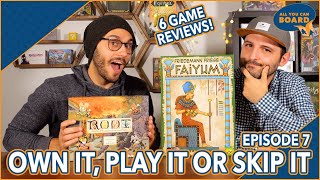
- two-player version improves the experience and adds meanness
- tight, strategic decisions with banter around revealed characters
- excellent integration of hidden information and tile pickup
- teaching new players can be challenging due to hidden characters
- possibly steep learning curve
- two-player asymmetric bidding in a grid of goods
- ancient Nile river goods market with temples and tokens
- mechanistic, with character tiles representing abilities revealed on take
- Targi
Mechanics (from transcript analysis)
- axis-based selection with Ankh token — the Ankh directs which axis you can take tiles from; you can jump over tiles to gain them
- character abilities on reveal — character tiles unlock abilities that affect play
- Compound Scoring — gaining corruption tokens yields negative points at end
- corruption tokens and negative scoring — gaining corruption tokens yields negative points at end
- dynamic end-game scoring — the game ends after board depletion and a second refresh, scoring like King Domino style? It ends when depleted and refreshed
- Simultaneous Reveal — character tiles unlock abilities that affect play
- tile grid with goods and characters — tiles laid on a grid; character tiles are face-down until revealed when taken
Video topics + discussion points
Quotes (from this video)
- I really really like this game
- it's not going to be one of my top 50 but it's going to stay in my collection
- Root is emphatically own for me now
- the expansion comes right in the box which just adds in a few cards with few extra symbols it just puts it over the top for like a 22 dollar gain you really can't go wrong
- not ideal with two players
- the glossary/iconography barrier is real
References (from this video)

- Widely recognized IP with broad appeal
- Fun, accessible theme for families
- Potentially overexposed IP if not executed well
- humor, parody, fairytale tropes
- Far Far Away, fairy-tale mashups
- light-hearted, family-friendly with room for adult humor
- Stranger Things
- Cthulhu Death May Die
Mechanics (from transcript analysis)
- Cooperative/team play — group objectives with humorous twists
- tactical play with familiar characters — character-driven abilities inspired by film
Video topics + discussion points
Quotes (from this video)
- i want a muppets exit game
- i would love to see that
- stranger things is super hot right now
- i think you could do this as a sleeping gods type environment
- it's been done by an author who already has multiple board games for his books
- please somebody do it
References (from this video)
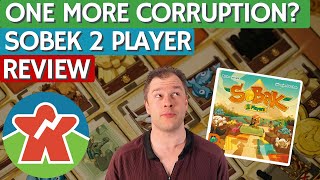
- Solid two-player design with deep tactical decisions and approachable core rules
- Good production value for price, with a nice bag and well-made components
- Arc pawn and corruption mechanics add meaningful tension and strategic depth
- Rulebook is clear and learnable; reference aids help during play
- Iconography can be non-intuitive; players often rely on a reference aid
- Token drawing introduces luck swings; distribution and the chance element can affect balance
- Endgame trigger can surprise players if not paying attention to scoring and corruption
- Set collection and trading with an Egyptian motif and corruption tension
- Ancient Nile river market and trade
- Abstract thematic framing with competitive, tension-filled market tug-of-war
- Jaipur
- Seven Wonders Duel
- Splendor Duel
- Radlands
- Great Plains
Mechanics (from transcript analysis)
- arc pawn directional twist — The ank pawn switches the accessible market lines; moving it twists access and creates tactical positioning.
- character abilities — Each tile can activate a character with a special ability, adding strategic variability.
- endgame scoring via corruption — Taking tiles can push corruption on your track; end-of-game scoring rewards lower corruption and tallies points from sets and tokens.
- perogue (scoring) tokens and discard effects — Selling sets can grant tokens for points or one-off abilities; some tiles grant discard effects leading to more points.
- Set Collection — Draft and assemble sets of goods to score, with multiplier effects from scarabs on tiles.
- tile drafting / market selection — Take tiles from a market on a 6x6 grid, with the ank pawn orientation constraining which tiles are accessible.
Video topics + discussion points
Quotes (from this video)
- Sobek two players forget the tagline it's just basically sobek except now it's only a two player game
- I am evil homer
- for a 20 pound price tag maybe slightly over you're getting a really good amount of components
- it's not a gateway game per se
- the endgame trigger can sneak up on you
- this is another solid two player game that if this is your wheelhouse
References (from this video)
- Strategic depth
- Forward-planning mechanic
- Interesting decision-making
- Competitive shopping
- Ancient Egyptian Market
Mechanics (from transcript analysis)
- Tile Placement — Take tiles from a market line, with each selection determining the next possible moves
- tile selection — Take tiles from a market line, with each selection determining the next possible moves
Video topics + discussion points
Quotes (from this video)
- More than any video I've ever made I would swear by these games
- We've played over a thousand games together