/pic3662558.jpg)
/pic7069368.jpg)
/pic4317571.jpg)
Time for an underwater game of cat-and-mouse, with each of the two teams in Sonar competing to be the first to deal two points of damage to the other. Do that, and you win the game instantly.
In detail, Sonar includes four pairs of maps, and each team takes the same maps in their color. A team can be one or two players, and with two players on a team, each player takes a different role: Captain or Radio Operator. (A one-person team handles both roles.) A divider separates the teams, and each Captain marks their starting location on the map.
On a turn, the Captain calls out an action, typically moving their sub one space north, south, east, or west. When they do this, they call out a direction, mark their new location, and add one energy to their ship's register. The Radio Operator on the other team notes the movement of this sub on a plastic sheet, and through deduction and trial-and-error tries to determine exactly where the opposing sub might be on the map.
Instead of moving, a Captain can also:
Use sonar: Erase two energy from your register; the opposing team must reveal their row or column.
Go silent: Erase three energy from your register; move your sub, but don't gain energy and don't tell the opponents which direction you're moving.
Fire a torpedo: Erase four energy from your register; call out coordinates in your quadrant (e.g., F6); if the opponents are on that space, they take a point of damage.
Surface: Announce your location to the opposing team, then erase your previous path on your map; you can't cross your own path during the game, so sometimes you need to surface in order not to box yourself in.
You can have at most four energy in reserve, so you need to manage movement and the other actions carefully so that you'll be able to fire at the opponents once you know where they are — ideally without being torpedoed in response!
Part of the Captain Sonar family — see Captain Sonar for the combined view.
/pic3662558.jpg)


Top 10 Mechanisms: Dice Games

Boktor | Preview Playthrough

- Crunchy, well-balanced puzzle that rewards careful planning and timing.
- High replayability due to variable setup and the changing feel with different player counts.
- Beautiful thematic integration—gardens, fountains, gems, and vegetation tiles create a cohesive, tactile experience.
- Tense, competitive gameplay with meaningful decisions on blocking opponents and guarding fountains.
- Rule complexity can be a barrier for casual players or first-time reviewers.
- Blocking and competition can feel harsh to some players, potentially reducing accessibility for lighter-weight gamers.
- Component footprint and setup may require a clear, organized playing space to avoid downtime.
- Garden construction, resource management, and competitive placement within a shared oasis of space and water.
- Desert landscape with the mythical Hanging Gardens of Babylon and fountains interspersed among rock and sand spaces.
- expository, enthusiastic, with mythic framing that ties gameplay to ancient garden-building legend
Mechanics (from transcript analysis)
- Area Control — Each garden space can only be occupied by a single assistant, which creates tension around blocking opponents and protecting your own plans. Players must anticipate rivals' garden layouts and attempt to block key spaces or fountains to limit their scoring potential.
- area_control_and_blocking — Each garden space can only be occupied by a single assistant, which creates tension around blocking opponents and protecting your own plans. Players must anticipate rivals' garden layouts and attempt to block key spaces or fountains to limit their scoring potential.
- End Game Bonuses — At the end of the game, players score for control of fountains and the number of visible flower spaces. Additional points come from unlocked skills and trees planted, creating multiple viable routes to victory and rewarding players who diversify their strategy.
- end_game_scoring — At the end of the game, players score for control of fountains and the number of visible flower spaces. Additional points come from unlocked skills and trees planted, creating multiple viable routes to victory and rewarding players who diversify their strategy.
- Resource Management — Gems are earned by placing tiles and are a currency used to buy tree cards and to purchase upgrades. The gem economy drives pacing and strategic timing, forcing players to balance immediate gains against longer-term engine-building potential.
- resource_management — Gems are earned by placing tiles and are a currency used to buy tree cards and to purchase upgrades. The gem economy drives pacing and strategic timing, forcing players to balance immediate gains against longer-term engine-building potential.
- Tile Placement — Players place vegetation tiles on designated rock or sand spaces. Tiles come in two shapes, and placement must be adjacent to a fountain or to an existing vegetation tile. As tiles are placed, flower beds grow and connect to fountains, creating a network of scoring opportunities. The geometry of the board and the placement rules create a path-dependent puzzle rather than pure luck.
- tile_placement — Players place vegetation tiles on designated rock or sand spaces. Tiles come in two shapes, and placement must be adjacent to a fountain or to an existing vegetation tile. As tiles are placed, flower beds grow and connect to fountains, creating a network of scoring opportunities. The geometry of the board and the placement rules create a path-dependent puzzle rather than pure luck.
- tree_card_growth — Players can buy from available tree cards and plant trees in gardens. Trees provide ongoing benefits and can unlock new scoring opportunities, but investing in trees also diverts gems from immediate upgrades or fountain control, introducing a trade-off between short-term momentum and long-term engine development.
- unlockable_actions — There are paired skill and wild icon actions on the player board. The top action is unlocked when you place two gems on the bottom action, creating a tempo-based decision: do you accelerate early gains or invest for stronger late-game options?
- variable_gamefeel — The feel of the game shifts with player count: more players increase competition for access to valuable spaces and fountains, while fewer players can allow deeper, longer-term planning. This variability contributes to replayability and keeps the game feeling fresh across sessions.
Video topics + discussion points
Quotes (from this video)
- Ishtar you should definitely check it out
- don't let the cute looks of it fool you this can be a real nail-biter
- so Rhino says yes to this unique and crunchy little puzzle called Ishtar you should definitely check it out
- the feel of a game can change completely
References (from this video)

Mechanics (from transcript analysis)
Video topics + discussion points
Quotes (from this video)
- I thoroughly enjoyed this game
- the combinations and everything in this game is just magical
- the scores are really high
References (from this video)

- Likes what IV Studio does.
- Artwork is always on point.
- Curious about the theme and mechanics.
- Bidding game with dragons.
- Same world as Fractured Sky
- Fractured Sky
Mechanics (from transcript analysis)
- bidding — A bidding game mechanic is involved.
Video topics + discussion points
Quotes (from this video)
- This game is a very 'cozy' sticker book.
- It's a relaxing experience that you can just zone out with.
- It's like a sticker version of pattern building or tile placement.
- It's got a very charming theme of rescuing cats.
- It's a very positive game about helping animals.
- The artwork is absolutely beautiful.
- It's a very calm and relaxing game.
- It's very satisfying to build out your forest.
References (from this video)

- Vibrant, engaging theme described as the best theme in board games this year
- Innovative twist on a classic trick-taking mechanic
- Clear hype and excitement for the title's potential impact in 2024
- Appeals to players who enjoy Trio and similar trick-taking games
- Strong first-impression energy that suggests high replay value and discussion
- Limited concrete mechanical detail available from early impressions
- Small sample size of playthrough in the clip; no quantified metrics or scoring scheme revealed
- Ridiculous, enthusiastic fantasy theme; high-energy flavor around Zotar
- A humorous, fantastical world centered on trick-taking gameplay
- playful, energetic, promotional
- Trio
Mechanics (from transcript analysis)
- Trick-Taking — Players engage in traditional trick-taking while a twist/modifier mechanic alters how tricks are won or scored, creating a fresh dynamic within a familiar framework.
- Trick-taking with a twist — Players engage in traditional trick-taking while a twist/modifier mechanic alters how tricks are won or scored, creating a fresh dynamic within a familiar framework.
Video topics + discussion points
Quotes (from this video)
- Conor you're ruining the shot
- go play zotar
- the theme is ridiculous and it's the best theme in board game this year
- this is going to be a contender for a very high spot in our best games of 2024
- if you love trick taking with a Twist
References (from this video)
- Fast, tight turns with quick enemy activations
- Strong sense of progression via XP and upgradable abilities
- Unique hero designs encourage varied strategies
- Modular tiles and expansion potential support replayability
- Clear co-op synergy during non-active turns
- Exciting boss encounter dynamics with escalating challenge
- Rules can be dense; beginners may need a playthrough to grok the flow
- Boss health scales are fixed per tyrant level, not per players, affecting balance
- Spawns from portals can overwhelm if portals are concentrated
- Expansion risk and component complexity could increase setup time
- Managing multiple trackers (XP, energy, vortex, health) can be fiddly for new players
- Team-based heroics against escalating threats in a fantasy dungeon with magical portals and dynamic enemy waves.
- Cooperative dungeon crawl with modular tiles, portals, and periodic tyrant boss encounters.
- Procedural encounter-driven progression; boss-centric finale with a multi-phase tyrant.
- Tiny Epic Dungeons
Mechanics (from transcript analysis)
- Boss Battler — Boss Gallios requires accumulating enough experience to spawn, then tests players with increasingly challenging health; final defeat requires coordinated hero actions and sustained damage.
- Boss tyrant mechanics — Boss Gallios requires accumulating enough experience to spawn, then tests players with increasingly challenging health; final defeat requires coordinated hero actions and sustained damage.
- Character-specific attack rules — Every hero has unique attack ranges, hit thresholds, and action costs, requiring different tactical choices per character and per target.
- Cooperative Actions — XP cards offer one-time or ongoing bonuses that alter attack damage, healing, or movement, enabling players to tailor their build toward crowd control or boss damage.
- Crowd control and synergy via XP cards — XP cards offer one-time or ongoing bonuses that alter attack damage, healing, or movement, enabling players to tailor their build toward crowd control or boss damage.
- Energy management — Each hero starts with a small pool of energy and gains energy during the hero phase; energy is spent to move, attack, or activate powers, reflecting resource control.
- Experience deck and level-up wheel — Each hero has a personal XP deck; after choosing two cards at start, players draw and replace to upgrade abilities and unlock new actions as the wheel advances.
- Health and KO management — Heroes track health and can be KO'd; healing and recovery effects exist (for example, on scrolls or via XP cards) to bring players back into the fight and sustain the team.
- Line of Sight — Attacks require a straight line of sight across tiles; no cutting corners or attacking through walls unless a hero ability ignores line of sight.
- Line of sight and range — Attacks require a straight line of sight across tiles; no cutting corners or attacking through walls unless a hero ability ignores line of sight.
- Portal-based enemy spawning — There are portal locations where monsters spawn at the start of rounds; if multiple portals exist, multiple monsters appear and threaten nearby heroes.
- Terrain types and tile effects — Tiles are not uniform; some confer benefits or penalties (fire, ice, poison, etc.), affecting movement, attack costs, and success thresholds.
- Tile-based exploration with level tiles — Tiles are revealed over time; tiles have levels that determine the encounter difficulty and spawn patterns, including portals and healing tiles.
- Tile/Map Shifting — Tiles are revealed over time; tiles have levels that determine the encounter difficulty and spawn patterns, including portals and healing tiles.
- Turn structure and multi-phase combat — Each round has a hero phase (energy and actions) and a monster phase (enemy activation). Turns flip between players, creating a rhythm that accelerates as enemies accumulate.
- Vortex wheel and skull timer — There is a vortex track that advances with certain cards; reaching the skull symbol triggers a loss, adding a timer element independent of killing the tyrant.
Video topics + discussion points
Quotes (from this video)
- This game has a vibe of Tiny Epic Dungeons where you're going around, you have these mele tokens that you're using, attacking, leveling up, and then eventually you're going to have to take on a tyrant.
- This plays so fast, even at four and five, and the turns click.
- I love the unique ways you attack and your unique XP cards.
- Expansion will add more enemies, more tyrants, more heroes, and more tiles for exploration.
References (from this video)
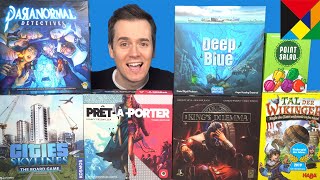
- Bruno Cathala’s signature depth in a relatively accessible tile-laying game
- Strong spatial puzzle with clear thematic flavor
- Can feel abstract to newcomers without the designer's cueing
- Some players may prefer more player interaction
- Tile-laying garden growth and adjacency strategy
- Desert oasis; garden development
- Elegant, think-y yet approachable with Bruno Cathala's design language
Mechanics (from transcript analysis)
- area adjacency scoring — Score for flowers in connected gardens; topography affects expansion
- Asymmetric Player Powers — Player boards unlock top-row abilities that shape ongoing scoring
- asymmetric progression — Player boards unlock top-row abilities that shape ongoing scoring
- Compound Scoring — Score for flowers in connected gardens; topography affects expansion
- tile laying / territory growth — Place tiles to connect gardens to fountains and expand flowerbeds
- Tile Placement — Place tiles to connect gardens to fountains and expand flowerbeds
Video topics + discussion points
Quotes (from this video)
- Babylonia pulls you between the competition over cities and ziggurats
- Deep Blue is an incredible game
- Ishtar is a tile laying game in which you're growing gardens in the desert
- Pret-a-Porter is not a game for the light hearted or like-minded
- I am in love with how well Kings dilemma tells its story
- Letter Jam is a cooperative word building game from the makers of Code Names
- City Skyline is based on the popular video game and SimCity
- Valley of the Vikings is my top pick for a kids game at Essen this year
References (from this video)
- more complex than lighter fare
- Euro resource management
- quick to play
- enjoyable
- more depth
- city building
- pirates
- resources
- Roman Poker
Mechanics (from transcript analysis)
Video topics + discussion points
Quotes (from this video)
- Formula D is really the epitome of roll and move games in the modern era
- Settlers of Catan which was perhaps the most significant euro game that really sparked this whole new wave of modern board games
- Yahtzee has become a mechanic in its own right
- epitomises dice games really and how far they've come
- this is a bit of a tricky one to learn, it's well worth the effort
- ridiculously more fun than it should be
- playing with children it's fantastical
- absolutely brilliant
- this is my top 10 different ways to use dice in wooden board games
References (from this video)

- Pristine writing
- Poignant, moving
- Power of quiet life
- Can be depressingly quiet
- meaning of life, persistence, literature
- Midwest United States; academia
- understated; restrained; evocative
Mechanics (from transcript analysis)
Video topics + discussion points
Quotes (from this video)
- it's an easy five stars because I still think about it and I just purely enjoyed it
- she's trying to infiltrate like a French leftist movement and get them to do something bad so that they can come in and arrest people
- it's just super interesting to watch all this play out in the novel I just thoroughly enjoyed it
- honestly it is maybe the best fantasy Trilogy I have ever read
- it's like life-changing good
- the writing is just pristine like if you like understated writing where not a word is wasted everything is very tight and yet everything is also very evocative
- what is it to live meaningfully and what is it to make something of yourself