

Song of Blades and Heroes: Revised Edition Deep Dive
What the Community Thinks About Song of Blades and Heroes: Revised Edition
The discussions treat Song of Blades and Heroes: Revised Edition as a practical, low-friction skirmish game rather than a competitive or highly detailed one. The most extensive coverage comes from the Tabletop Minions channel, where the host returns to the game several times when comparing the cost of different wargames. In that discussion, the game is presented as one of the cheapest ways into the hobby, with a rulebook that costs little and figures that cost little more. The same host also brings it up in other videos as a game worth teaching, and the enthusiasm in those segments is consistent.
Reviewers show little direct disagreement about the rules. The praise centers on accessibility, speed of play, and how easily the game can be shown to a new player. The discussions contain few explicit criticisms of the game itself, so the drawbacks below center on the practical cost of entry and the simplicity of the ruleset rather than complaints about how the system plays.
Core Mechanics That Define Song of Blades and Heroes: Revised Edition
Stripped-Down Two-Stat Profiles
The clearest mechanical point in the discussions comes from the Tabletop Minions channel, where the host contrasts Song of Blades and Heroes with games that demand constant tactical weighing of rules and modifiers. The game is described as one where a unit has essentially two statistics, which keeps each model easy to read and each decision easy to make. Published by Ganesha Games, the game uses this stat-light approach to keep the focus on positioning and the flow of the battle rather than on looking up values. For a newcomer, the reduced profile is the main reason the game can be taught in a single sitting.
Small Warbands and Shared Table Roles
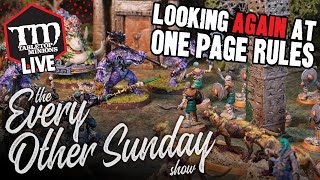
Song of Blades and Heroes is built around small forces, with roughly five to ten models per player, and the discussions show how that scale shapes the table. In a convention demonstration described by the Tabletop Minions channel, the host controls a force of skeletons while convention visitors take command of the heroes, using pre-painted miniatures. That arrangement lets newcomers play a meaningful role without needing to build a list or learn a large rulebook first. The same small scale also means a single battle can be set up quickly, which suits a demonstration table that changes players every few minutes.
The Song of Blades and Heroes: Revised Edition Experience
Approachable, Pick-Up Fun
The dominant feeling in the discussions is that the game is meant to be picked up and enjoyed quickly. The host sees it as a tool for drawing people into the hobby, pitching it to attendees who may have never played a miniatures game before. The emphasis is on a relaxed table where the rules get out of the way. That tone matches the host's broader approach to teaching, which favors letting newcomers try both sides and avoiding crushing their first game.
A Showcase of Painted Figures
The other strong feeling is the pleasure of a well-presented table. Reviewers in these discussions stress that painted miniatures and attractive terrain change how a game is received. One host explains that when a demonstration table looks finished, passersby stop to watch and join in, while bare or primed figures look like clutter. The experience of Song of Blades and Heroes is therefore tied to the visual side of the hobby: the game rewards players who take the time to make their table look inviting, even though the rules themselves are simple.
What Makes Song of Blades and Heroes: Revised Edition Stand Out
A Very Low Cost of Entry
Reviewers consistently point to price as the game's most distinctive strength. The Tabletop Minions host describes the rules as an $8 PDF that provides the entire rulebook, then pairs it with Reaper Bones miniatures at roughly three dollars each. The estimate is that a player can assemble a playable force for around $40, a figure contrasted with the much higher cost of starting a Games Workshop army. Within the wider discussion of wargaming expense, this makes the game a reference point for players who want to start without a large upfront commitment.
Easy to Teach at Conventions
The second standout is how readily the game can be taught to people who have never played. The Tabletop Minions host enjoys teaching it at conventions, and the simple statistics make that practical. The convention demonstration described in another video shows the same idea in action: a shared table where visitors take the heroes and the host runs the undead, which allows people to learn by playing rather than by reading. The game's approachability in that setting is one of the qualities reviewers highlight.
Potential Drawbacks
The Low Price Still Requires Building and Painting
The discussions are careful to note that a cheap rulebook does not remove the work of the hobby. The Tabletop Minions host points out that a budget force still has to be assembled, primed, and painted before it looks finished. Players who want to avoid that work will need to pay someone to paint their figures, which adds to the expense. For those who enjoy the building process, this is part of the appeal, but for others it is a real barrier to starting.
Limited Depth Compared With Crunchier Systems
The stripped-down profiles that make the game easy to teach also limit how much tactical texture it offers, and the discussions suggest that some players will feel the difference. The host describes the game as having "like two stats pretty much," which is a strength for teaching but may feel thin to players who want a larger set of options per unit. Players who expect a deeper campaign or more granular decisions will want to compare the full rules before committing.
If You Enjoy Song of Blades and Heroes: Revised Edition
Players who enjoy the game's fast, small-force skirmishing will find a natural neighbor in Malifaux, which the Tabletop Minions host describes as a skirmish game with models considered as good as Games Workshop plastics. A starter book at about $15, a crew at $40 to $50, and a fate deck at about $12 make it a comparable entry point with more tactical depth. Players who value the simple, prepainted feel of the game may also enjoy HeroClix, which the same host cites through its Blackest Night starter at about $30. Players who want a fast, easy-to-learn skirmish system with a clear teaching path will recognize the appeal of X-Wing, whose starter box is described as a strong introduction for two players. For players drawn to the army-scale side of the hobby, Age of Sigmar is the comparison the host uses to show how far a starter force can go for around $85, with free rules available.
What Reviewers Are Saying
"There's a game I've talked about plenty of times here before called Song of Blades and Heroes. Song of Blades and Heroes is an $8 PDF that you buy and download. You get your entire rules booklet."
— Tabletop Minions
"One of my favorite old school games that I love to teach people the, you know, at, at conventions and stuff like that is called Song of Blades and Heroes by Ganesha Games. You have like two stats pretty much, and it's so yeah it just makes sense."
— Tabletop Minions
"When you go to a convention and you're trying to get somebody to come and play your game and demo your stuff, if everything's painted and you've got nice looking terrain, it's really easy to get them to come over and play. If all these guys were either just primed or not even painted at all, you're not going to get too many people coming to your event."
— Tabletop Minions