/pic3924771.jpg)

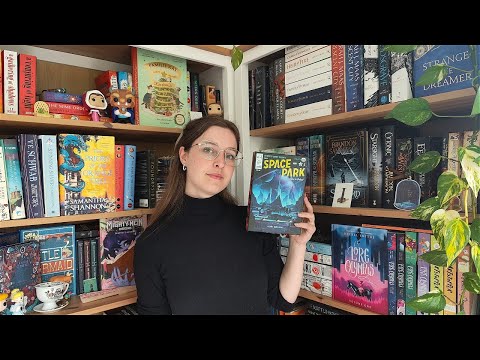






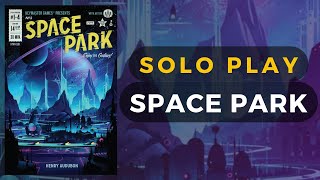






Space Park Deep Dive
What the Community Thinks About Space Park
Space Park has earned consistent praise from board game reviewers for being exactly what it promises: a quick, elegant space exploration game with beautiful production and surprising strategic depth. Reviewers highlight its accessibility as one of its greatest strengths, noting that the game teaches in minutes but offers meaningful decisions that keep players engaged throughout. The consensus is that Space Park strikes a rare balance between simplicity and substance, making it equally appealing to veteran gamers looking for a snappy filler and newcomers discovering modern board games for the first time.
Core Mechanics That Define Space Park
The Rocket-Rotation Destination System
At the heart of Space Park sits an elegant modular board where seven destinations form a circle, with three rockets anchored at specific locations. When a player chooses a destination, they gather resources from that location and then move the rocket onward clockwise, shifting which destinations are available to the next player. This action-following mechanic creates a dynamic puzzle: your choice does not just benefit you, it directly shapes what your opponents can do next turn. Keymaster Games' thoughtful design shines here, since reviewers note that the board literally snaps together in different configurations each game, ensuring the puzzle remains fresh across multiple plays. Each location offers distinct advantages: some produce crystals, others let you trade resources, and a few trigger special abilities, creating constant tactical decisions.
Crystal Collection and Exploration Badges
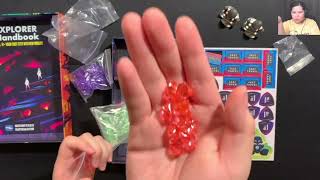
The economy of Space Park revolves around gathering exotic crystals in three colors and converting them into exploration badges at Outpost 13. These badges are your path to victory, with each card you purchase representing a specific badge type that grants points and often bonuses, like extra crystals when you visit certain locations. The set-collection feel taps into that satisfying sense of building toward a goal, since reviewers describe hunting for specific crystal colors and then racing against the deck to convert them into badges before the game ends. The modular badge market also adds discovery, since not all badges are available at once, forcing players to adapt their strategies based on what is offered.
The Space Park Experience
Quick and Breezy, Yet Never Rushed
Space Park feels like a breath of fresh air from more complex euros. At around thirty minutes per game, it moves at a genuinely snappy pace, and reviewers consistently note that it goes quickly and praise the five-minute teach. Yet the game never feels trivial. There is a cozy, almost meditative quality to it: you are exploring destinations, gathering resources, and executing small plans. The thematic artwork and retro exploration aesthetic reinforce this sense of breezy adventure, since each location feels like a mini-destination you are actually visiting rather than just a mechanical node. Solo players get a special treat, since racing against Scout (the automated opponent) and a shrinking deck creates genuine tension. Winning is not automatic, and losing does not feel punishing, just like a good adventure that did not quite pan out.
Gateway Game That Doesn't Talk Down
Reviewers consistently cite Space Park as an ideal gateway game, but not because it is dumbed down. Rather, it teaches complex game concepts intuitively. The iconography is clean and readable once you have heard the rules once; the modular board setup is explained clearly with printed helpers; and the rocket-movement system, while elegant, becomes obvious after a single round. One reviewer noted their experience was that it was really easy to pick up, really easy to play, and it just looks really cool. Newcomers immediately grasp that their destination choice affects others, that resource management matters, and that timing your badge purchases is crucial. Experienced players, meanwhile, appreciate the delicate balance of not wasting crystals, reading the market, and understanding which destination sequences set up future turns.
What Makes Space Park Stand Out
Keymaster Games' Commitment to Thoughtful Design
Space Park is published by Keymaster Games, the team behind Parks, and that pedigree shows. Reviewers praise the entire experience: the satisfying box, the beautiful artwork, the intuitive iconography, and even the small touches like setup guides printed on the board itself. The modular board mechanic, snapping together in different configurations, is not just a gimmick; it is a design choice that guarantees meaningful variety. Keymaster clearly designed this game thinking about what players would actually experience from moment one, from the unboxing through the first teach to repeated plays where the board looks different every time. This level of care across all aspects elevates Space Park from a clever little game to a generously designed experience.
Modular Replayability and Solo Excellence
The randomized board setup is not just flavor; it genuinely changes which location sequences are available and how tightly packed the destinations are. One play might have two key locations right next to each other; another spreads them across the circle. Combined with the shuffled badge market and Scout's unpredictable deck, Space Park generates remarkable variety from a small box. Solo players particularly rave about this: the game against Scout becomes a genuine race where deck luck matters, where you are hunting for specific colors, and where the tension ramps as the deck depletes. Reviewers describe the solo mode as offering a real challenge without artificial difficulty, since you can lose not because the rules are harsh, but because the resources did not align. Multiplayer likewise benefits, since the action-following system ensures downtime vanishes and choices stay fresh.
Potential Drawbacks
Luck Can Overshadow Strategy in Short Plays
For some players, the crystal draws and card-market shuffles can feel swingy, particularly in solo mode where a bad deck run or missing key colors can end your hopes early. A few reviewers noted frustration when they could not find the right combination of badges or when crystals did not arrive when needed. In the solo game especially, this creates moments where you can play well but still lose due to deck order, which some see as tension-building and others as luck-heavy. Multiplayer softens this somewhat, since you can adapt around what is available, but the core draw-based economy means no two games feel entirely fair.
Modular Board Lacks Persistent Challenge
While the snapping-together board mechanic is clever, it is also random. Some players might crave more strategic depth in board layout, or wish for scenario-based variants that present specific positional puzzles. The game's accessibility and breezy runtime are features, not bugs, but players seeking weightier euro-style positioning or more elaborate engine-building will find Space Park a bit light. The badge collection is straightforward enough that mastering optimal paths is possible relatively quickly; it is not a game that reveals new strategic layers across dozens of plays.
If You Enjoy Space Park
If Space Park clicks for you, look toward Parks, from the same publisher, with similar production values and a more elaborate set-collection system. For quick alternatives with resource collection and elegant rules, try Ticket to Ride or Splendor, both of which deliver swift gameplay and a satisfying engine. Solo and family players who love the meditative resource-gathering feel should also explore Cascadia. For a deeper action-selection game with modular elements, 7 Wonders offers drafting, simultaneous play, and clean iconography in a similarly approachable package.
What Reviewers Are Saying
"In Space Park your goal is to become the galaxy's next great explorer by riding a rocket to extraordinary destinations. It's a nicely designed and fast-paced space odyssey that lasts for about half an hour, and it plays one to four players."
— Cardboard Rhino
"I love this game, I think it's so cute. It's very easy to play, it's easy to set up, and all these cards are separate, so it makes the game more diverse because at the start of the game you just shuffle these and put them down, so the order is different every time you play."
— Crimson Boardgames
"Space Park takes like five minutes to teach and has some smart things, like the board snaps together in different ways every time you play, so I can see a lot of variety even in that. I think it's immediately going to be one of our go-to games to just teach people."
— Going Analog