/pic6669791.png)
Space Station Phoenix is a worker-placement and resource management game set in one of Earth’s possible futures. The players are representatives of the Galactic Council, sent to Earth to build space stations to observe and perhaps interact with humanity.
Players begin the game with nine ships and a station hub. These ships act as action spaces that players use to gather resources, explore the nearby planets, and build their stations. Turns are fast and straightforward; either take ship action or take income.
Many games start players off with a small resource engine which they build up to a bigger one. In Space Station Phoenix, players start with the best production engine they will ever have and proceed to break it down part by part. As the game progresses, their actions get more efficient, but the number of ways to take those actions starts to diminish.
Space Station Phoenix also features deep re-playability with millions of possible starting positions and station parts combinations.
—description from the publisher



- Highly enjoyable and surprising
- Offers a different experience each time
- Clever gameplay
- Unique theme
- Destroying ships to build a station
Mechanics (from transcript analysis)
- Race — A race aspect exists in building up the station.
- Tableau Building — Players build up a tableau.
- Variable player powers — Many different factions offer different experiences.
Video topics + discussion points
Quotes (from this video)
- The people who run RageCon are just a dang delight.
- The Rage Bucks thing going on, and let me tell you what a great program.
- It's fantastically simple to do. It's really easy to figure out where the game is going to be, how many players you want.
- The space worked great. There was plenty of space. You didn't feel crowded.
References (from this video)

- Unique reverse engine building mechanic
- Focus on efficiency makes for tight gameplay
- Fewer games start players at their peak strength
- Turns are fast
- Haven't played it yet
- Might not be well-known
- Managing a space station.
- Exodus: Fleet
Mechanics (from transcript analysis)
- action selection — Players select actions to manage their space station.
- Dismantling components — Players take apart their own ships to improve other parts of their engine.
- Engine Building — Players build and refine their engine, uniquely by dismantling existing components.
- Resource Management — Gathering and utilizing resources is key.
Video topics + discussion points
Quotes (from this video)
- this Ultimate Edition has all the expansion materials you know everything out for it and also really nice wooden you know tokens and stuff so it makes it it's this is the best version like if you can find this this is this is the best
- it has one of the best senses of exploration
- this is a super unique worker placement game where your cards your workers are cards
- this is just this is just a classic
- this one for all intents of purposes killed Firefly because you're pretty much doing the same thing but it's a smaller smaller footprint like and it's doesn't take nearly as long
References (from this video)
- exciting mechanics (engine building/destruction)
- variable setup with millions of starting positions
- great table presence and visuals
- high replayability
- space
- space station
- Res Arcana
Mechanics (from transcript analysis)
- Engine Building — build and deconstruct an engine to generate resources while maintaining efficiency
- engine-building — build and deconstruct an engine to generate resources while maintaining efficiency
- variable setup — millions of possible starting positions and station part combinations
Video topics + discussion points
Quotes (from this video)
- it's the mechanics that are really really exciting to me
- millions of possible starting positions and station part combinations
- you're essentially designing these five different districts racing against other planners
- the timing of when you do things is where it all of a sudden becomes this grueling amazing experience
- unbelievable table presence
- it's going to be an absolute joy to bring out
References (from this video)
- Space station building
- Worker placement and resource management
- The concept of breaking down the best production engine could be seen as negative.
- Sci-fi, space station building, observation of humanity
- Space, Earth
- Eclipse
Mechanics (from transcript analysis)
- Engine Building — Players start with the best production engine they'll have for the whole game and then they'll proceed to break it down part by part.
- Resource Management — Players will be worker placing and resource managing.
- Worker Placement — Players will be worker placing and resource managing.
Video topics + discussion points
Quotes (from this video)
- Rising from the flames, I'm Matthew and welcome to the Watch It Played news.
- Libertalia is one of those staple classics in the board game hobby from the distant time of 2012 when things were simple.
- I think the next announcement from Stonemaier is the Viticulture expansion.
- Don't bother interacting with us humans, we'll ruin it.
- Typical human stuff.
- I got shivers the first time I read the blog for this game.
- Otherwise have had 10 years of experience making games.
- Unlike all the wonderful comments that are being left below this video.
- The afterlife is going to be so petty.
- Competition to Kickstarter as a platform is in my personal opinion a very good thing.
References (from this video)

- neat space station concept
- modular, asymmetric play hub
Mechanics (from transcript analysis)
- asymmetric hub — each station has an asymmetric hub with different opportunities
- ship-based space station building — rip apart ships to build your space station; ships are work placement spots
- Work replacement — work replacement interactions and cross-ship visits
Video topics + discussion points
Quotes (from this video)
- it's a relatively lightweight card game
- looks very pleasant
- i would love to try at some point
- aesthetically pleasing vibe
- i'm genuinely curious to learn more about this
References (from this video)

Mechanics (from transcript analysis)
Video topics + discussion points
Quotes (from this video)
- I think I might be kind of done with it
- the best solution for us right now is my iphone
- we filmed two more playthroughs and those realistically should be the first ones that go public
- I really can't wait to hear what people think
- we're hoping to put out the gallerist later this month
References (from this video)
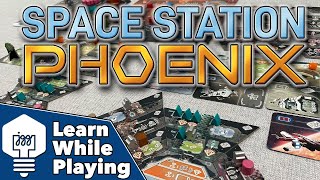
- variety of sector tiles and end-game scoring options
- strong diplomacy track rewards
- integration of residents and aliens with synergies
- income-driven resource generation with multiple paths
- game seems heavy and complex; setup and rules are many
- resource management and space to place residents can be tight later
- building and managing a multi-species space station with diplomacy
- space station orbiting Earth in the future
- educational tutorial and live-play demonstration
Mechanics (from transcript analysis)
- activate action card — activate a card in front of you during your turn, paying its cost and performing the actions shown.
- construct sectors — build level 1, 2, and 3 sectors in color-winged zones of your space station.
- diplomacy board — move tokens up on diplomacy columns to gain bonuses; higher position yields better bonuses.
- dismantle — dismantle ships to gain metal, reducing fleet size over time.
- End Game Bonuses — end the game when a station is fully completed, aliens are depleted, or a score threshold is reached.
- endgame triggers — end the game when a station is fully completed, aliens are depleted, or a score threshold is reached.
- income phase — reset actions and gain resources based on cards and occupied sectors.
- resident/alien placement — place humans and aliens into available resident spots to activate sector bonuses.
- terran expedition — perform expeditions by rolling dice to gain resources and potential humans.
- transport action — transport aliens to your station using a set of options with varying costs and outcomes.
- Worker Placement — place humans and aliens into available resident spots to activate sector bonuses.
Video topics + discussion points
Quotes (from this video)
- there are three endgame triggers
- gems are not considered a resource but metal water and food are
- first thing we get is one gem for every two humans we have on our station
References (from this video)

Mechanics (from transcript analysis)
Video topics + discussion points
Quotes (from this video)
- this sounds really boring but essentially i built a database of all of the content that i've made over the last eight years
- it's an incredible number i was shocked to see that
- it's now publicly available to everybody you can go to johngetsgames.com/games and that'll take you right to a read-only version of it
- these are essentially passion projects that i'm working in amongst the paying work that I do
- this is essentially a 1.0 version of the junkets games database
- it's possible at some point i will upgrade this into an actual website
References (from this video)

- asymmetric abilities add variety
- space station construction with perks
- replayability across different player counts
- actions are somewhat homogeneous across turns
- asymmetric powers and perks
- space station construction
Mechanics (from transcript analysis)
- Asymmetric powers — each player has an asymmetric set of abilities (24 options)
- build space station with metal — spend metal to build out your space station
- destroy work replacement spots to gain metal — you destroy work replacement spots to obtain metal to build the space station
- dice-based resource generation — roll dice to gain resources
- perks from stations — stations provide perks that can be turned into various effects
Video topics + discussion points
Quotes (from this video)
- Space Station Phoenix: seven times played shows strong interest
- kate may is a game that came out from thunder works games
- there's going to be a Kickstarter campaign for that one going out in July
References (from this video)

- fascinating core conceit
- arc of action spaces creates meaningful late-game options
- downtime with more players
Mechanics (from transcript analysis)
Video topics + discussion points
Quotes (from this video)
- this game has a really cool action selection system
- the fact that you can sell stocks in Union Station is fascinating
- it's a tile L game
- the clock of the game
- I really like Caesar it's an excellent two-player game
- there are Dice and cards, so this is a must follow trick-taking game
- fully Cooperative kind of escape room type game
- it's an incredibly mean game
- this is a cube rails game about dinosaur magnates
- the incentives make you feel like you should do terrible things
- Hatchi train is a climbing shedding card game
References (from this video)
- Fantastic
- Great engine builder
- Elegant design
- Lore missing in the intro
- Building a space station
- Space
- Lore missing in the intro
- Corrosion
Mechanics (from transcript analysis)
- Dismantling components — the way you get metal is by dismantling the ships that you use to get to the place where you're building the space station.
- Engine Builder — it's just such a great engine builder.
- Tableau Builder — You're building the stations in quadrants and those quadrants or sectors they call them.
Video topics + discussion points
Quotes (from this video)
- That game makes me happy every single time.
- I enjoy what's going on because the little stories and the stories are just my kind of kind of weird and whimsical and silly.
- I have a lot of joy teaching that game and so it was the most joyful to say, listen, I love these newspapers and we put the um my favorite critic is the Chimera because it brings two critics.
- It's definitely a top five game for me. I will never not play it.
- I want to say that if Mark Dainty, Luke Lori, and Will Brown had not had not gone through this procedure to bring recall to a table, there is no way I would have picked this game up.
- Kudos to whoever like the rule book is 16 pages.
- This game blew me away.
- I mean just smashed it and it was like two days before the con and I was like well here we go. And I loved it.
- It's just a joy. It's always a joy to get to the table and playing with the new expansion content was a lot of fun.
- The amazing thing that happens with games is how much they grow over time and how much fun I had playing on TTS. That is not a fun medium, people!
- This is not I mean it is it is a baguer and it is uh probably up there with the weight of people have been debating if Andromeda's Edge is heavier or Whisperwood's heavier.
- It has turned out to be uh the best moment of the year. Uh I I just appreciate that that gaming time with some friends.
References (from this video)
- Very clever game concept.
- Played very late at night, impacting the overall experience.
- Building a space station
Mechanics (from transcript analysis)
- Dismantling ships — Players start with ships that have abilities but must dismantle them to build their space station.
- Engine Building — Implied by the starting abilities of ships that are used to construct the space station.
Video topics + discussion points
Quotes (from this video)
- And what a clever game.
- Really a clever clever game.
- I really think is an underrated title and it's one that's always gonna stay on my shelf.
- And that brings me to the number one game of the comp for me, and that was Theology.
- I think the powers of each of the gods are very, very powerful in that way that I love where everybody has a broken power, but since everybody's got a broken power, nobody's broken
- it has tons of situational effects, which I really like.
- It was such a wonderful first game of so many people who didn't play and I got crushed.
- But there you have it folks. That is Dundracon. my thoughts on it, what can be improved, and my top 15, really 16 games of the con.
References (from this video)
- Really enjoying the game
- Space Station
Mechanics (from transcript analysis)
- Engine Building — Players build up an engine to perform actions and score points.
Video topics + discussion points
Quotes (from this video)
- The strategies are varied. It's never boring, you're never just going through a rote experience with it.
- It is just this fun open world kind of romp that you go on.
- It just has beautiful art on these cards.
- And it's just so clever. So clever.
- Every card has like five different options that you can interact with and it's just so clever. So clever.
- I really have a hankering to play Sweetlands again.
- Very, very heavy. Gorgeous to look at. You're going to love the production.
- This really cool thing by using cards that you can either play for their abilities or sometimes you can play them and keep them and they will keep activating over and over again.
References (from this video)
- cool game
- really had a good time playing that
- had fun doing it
- It's a weird little game.
- neither original Don or I was close to beating the designer
Mechanics (from transcript analysis)
- Tableau Building — Building your space station.
- Worker Placement — You're going to be using these worker placement spots. And if you want to use somebody else's worker placement spot, not only have to pay for it, you got to pay a little more, you got to give them a little kickback so they can use it. But, once someone's used it, you can't use it or someone can come and block you out of your own stuff.
Video topics + discussion points
Quotes (from this video)
- It is so hard to get to the table because, in my players going, all five players need to understand the game or it will fall apart.
- HOW DO YOU KEEP GETTING AWAY from me?
- The best game I played at KublaCon Prime 2026 is Red Dragon Inn Battle for Greyport.
- If you are a fan of a cooperative deck building game that my favorite thing I always say is you get more cards, but you always get a card.
- I love it so much I played it twice at one con.
- I still say it is the one to go to in the Bay Area, bar none.
References (from this video)
- Outstanding game
- Really, really great game
- Insane amount of variability
- Fairly simple rule set
- Super dope
- Very cool
- Really like it a lot
- Generic look and name
- Rio Grande dumped it and never did anything about it.
- Rio Grande tendency to not push their games very hard.
- Building a space station
- Space
Mechanics (from transcript analysis)
- action selection — Players choose actions from a central board, with benefits for players who are leading or tied for specific actions.
- Alien placement — Aliens of various colors (brown, teal, pink, gold) need to be placed into matching sectors, with gold aliens being wild. Humans can go anywhere. Sectors provide income, endgame scoring, or abilities.
- Endgame scoring — Points are awarded for completed sectors, residents (aliens and humans), and majorities in alien types, with potential bonuses from hubs and built sectors.
- Engine Building — Building out the space station with various sectors enhances income and abilities, creating an engine.
- Hubs — Players start with a unique hub that provides different general strengths, scoring opportunities, or special powers.
- Modular Board — The space station is built out with modular sector tiles.
- Resource Management — Players collect resources like food, water, metal, and gems to activate cards, build sectors, and acquire aliens.
- Set Collection — Collecting sets of aliens and humans is a key part of the game for scoring and abilities.
Video topics + discussion points
Quotes (from this video)
- And then like still ultimately a fairly simple rule set in terms of the actions you can take. There's only a few action types. They're all easy to understand.
- But the types of builds you can make is kind of infinite in the space station.
- Rio Grande just dumped it and sort of never did anything about it. And the fact, we're not going to do an expansion. I'm like, yeah, that sounds like a Rio Grand kind of move to do. Uh, let's just just not give a crap about the games we make.
- My guess is this is a typo because of the fact that you get a brown sector cuz why would you get a brown sector for gold aliens specifically? Why would you get a pink one or a blue one?
- The whole kind of thing that you kept going like speedrunners are effing crazy.
- It's like, Shut Sit Down are not a big YouTube channel. No, they're just not like compared to other parts of YouTube.
- It's like, yeah, it gets difficult. Um, and the way they do a lot of them is very clever, but it does sometimes have um difficulties because of the way it works.
- So, I mean, people still find stuff constantly of like how you're able to if you can like wedge yourself in this corner and then do this. You can like build up speed and then you eventually let it go to go you can go to like again Mario 64 speedrunning has like alternate dimensions and stuff in it. They're called parallel universes. It's a whole thing.
- But it's like, yeah, like I'm going to I know people are going to speedrun this. It's a very speedrunny kind of game and so I'm going to actively like lean into that.
- But, you know, it's a it is a very good tool and it's very very cool. But there's certain games where I'm like, man, I'm struggling out here because I just can't I can't see everything.
References (from this video)

Mechanics (from transcript analysis)
Video topics + discussion points
Quotes (from this video)
- it's been a few months since we played it and i still love that game it is so good
- arc nova is a game that i really like it's it's honestly one of the best games to come out last year
- spoiler alert i loved space station phoenix i can't wait to play that game more
- i was pretty frustrated playing unfathomable
References (from this video)
- Extreme variability thanks to 24 hubs and 72 sectors, yielding many distinct setups and end-game goals.
- Clear iconography and usable components; cards and station pieces are sturdy and legible at the table.
- Solid integration of engine-building with dexterous diplomacy and action-card interaction.
- Smooth overall run with a focus on puzzle-like decisions rather than overly abstract mechanics.
- Good fit for mid-weight Euro players who enjoy planning and long-term strategy with some interaction.
- Not particularly beginner-friendly; can be daunting for new gamers or players who struggle with balancing short-term moves against long-term planning.
- Some thematic visuals (alien shapes and sector colors) could be more distinct to avoid setup/readability confusion.
- Pace and feel can vary significantly with player count, which may frustrate groups seeking a consistently fast or consistently slow rhythm.
- engine-building, resource management, diplomacy, and fleet/space station construction within a competitive multi-actor environment.
- A competitive space-era scenario focused on constructing and optimizing a modular space station, amid ship-teardown and resource competition.
- mechanics-first Euro with light thematic flavor; puzzle-driven planning rather than cinematic storytelling.
Mechanics (from transcript analysis)
- Card interaction and theft — Action cards on shuttle cards can be played by paying their costs; players can dismantle or steal opponents' actions, creating dynamic counterplay.
- Crystal payment and card-specific costs — Actions are paid with crystals; if paying for your own card you pay the higher cost, and if paying for an opponent's card you pay both the higher cost to the card and the lower cost to the owner as a tax.
- Diplomacy tracks and bonuses — A diplomacy board provides tracks where leading moves yield bonuses (gems, points, resources) whenever others perform certain actions.
- End Game Bonuses — The game ends when a player passes 40 points, finishes their space station, or there are four or fewer aliens remaining.
- end-game triggers — The game ends when a player passes 40 points, finishes their space station, or there are four or fewer aliens remaining.
- Engine-building via ship cards and station components — Players draft and/or acquire ship cards and space station parts to assemble and upgrade their hub; destroying action cards yields metal to fund building.
- High variability (hubs, sectors, and ship cards) — The game ships with 24 hubs and 72 sectors across colors, creating a wide matrix of setups and goals that shift each game.
- Resource Management — Gaining resources via cards or dice and using them to recruit alien residents to the station, with diplomacy track progress providing bonuses.
- Resource management and aliens — Gaining resources via cards or dice and using them to recruit alien residents to the station, with diplomacy track progress providing bonuses.
- Turn structure: action vs income — On each turn players choose either take an action (build, gain resources, manipulate cards) or take income to refresh resources and reset card options.
Video topics + discussion points
Quotes (from this video)
- Space Station Phoenix is very much a Euro game the theme is there and you will feel it to an extent but for the most part this is mechanics first which is not at all a knock it just means the sort of players that are gonna most enjoy this game will be those that like solving those Euro puzzles rather than those that want a real space themed experience as far as that puzzle goes.
- Space Station Phoenix certainly gives you a lot of stuff in the box and for the most part it is pretty good.
- The game ends when someone is either past 40 points or finished their space station or there are four or fewer aliens remaining.
References (from this video)

- rich engine-building feel
- opponent's cards can be used to disrupt others
- complex setup for new players
- resource management via action cards
- space station construction
- engine-building in space
Mechanics (from transcript analysis)
- Card Crafting — destroy/remove actions to obtain the metals needed for construction.
- card destruction to acquire resources — destroy/remove actions to obtain the metals needed for construction.
- Engine Building — build a scalable space station by selecting cards that trigger actions.
- engine-building with cards — build a scalable space station by selecting cards that trigger actions.
Video topics + discussion points
Quotes (from this video)
- it's such a good Gateway game
- the art on the cards looks fantastic
- it's one of those simple flip and write games that you just want to play again and again
- the lazy Susan is genius
- Planet Unknown just knocks our socks off
References (from this video)

- Very consistent enjoyment across plays
- Strong core experience
- Highs can be more stable than explosive
- Engineering, space infrastructure
- Space station building and resource management in a sci-fi setting
- Mechanistic / consistent gameplay
Mechanics (from transcript analysis)
- Engine Building — Actions provide ongoing benefits across turns
- Engine-building style actions — Actions provide ongoing benefits across turns
- Resource Management — Players gather and allocate resources to achieve objectives
- Resource management with set collection — Players gather and allocate resources to achieve objectives
Video topics + discussion points
Quotes (from this video)
- it's a euro style game that plays up to six
- it's fully simultaneous
- Concordia Venus ... brings in team play and that lets you play two on two which is a four player game and it also lets you play two versus two which is a six player game
- not a euro game really it's more of a deduction style game where it's one versus many
- I started to work on that video and I'm hoping to make it happen
- Miniatures don't do anything for me
References (from this video)
- very large, table-filling component set that still scales well at two
- two-player gives clearer plan and better table management
- board space can be enormous; still challenging to lay out at higher counts
- space exploration and station management
- building out a modular space station hub
- thematic, modular setup with variable board states
- Imperium
- Gloomhaven
Mechanics (from transcript analysis)
- Resource Management — managing a large set of components and ships to optimize actions
- tile/section drafting and placement — revealing and placing station sectors and ships to expand your board
Video topics + discussion points
Quotes (from this video)
- Don't cross in front of my light again
- Please play this game. No one plays this game.
- Pure greed. Score points is fun.
- Two players is very popular player count.
- Cinema's a lie. Narnia is not real.