/pic7293764.png)















Splito Deep Dive
What the Community Thinks About Splito
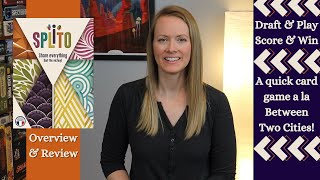
Splito has resonated with reviewers as a streamlined, elegant take on shared, neighbor-based play. Channels like Tabletop Tolson, The Board Game Garden, and Tim Chuon praise its speed, accessibility, and surprising strategic depth, highlighting how it delivers the interactivity of heavier drafting games in a compact, portable format. It has found particular enthusiasm among players who want a game that keeps two neighbors engaged every round rather than enduring long downtime.
Core Mechanics That Define Splito
The Split-and-Choose Framework
At its heart, Splito employs a closed-drafting mechanism where you divide cards and your neighbors choose. Each round, you split a set of cards into a left group and a right group and offer them to the players on either side, who each take part of what you laid out. This I-divide-you-choose dynamic creates a delicate negotiation between self-interest and partnership, since you must balance offering desirable cards to neighbors while still advancing your own scoring. The constant focus on your two specific neighbors means no one is sidelined waiting for distant players to finish.
Simultaneous Scoring and Strategic Tension
Splito's scoring compounds the tactical complexity. Players multiply their score from one side by their score from the other to determine final points, which creates powerful incentives to build roughly balanced scoring across both neighbors, since neglecting one side leaves a low multiplier that drags your entire total down. Players manage multiple overlapping scoring colors, each tracking different combinations, creating layers of decision-making that unfold across the whole game while still resolving quickly.
The Splito Experience
Quick Filler with Lively Table Dynamics
Splito's brevity masks its interactive richness. Games run a brisk 15 to 20 minutes, making it an ideal filler or opener, yet the shared-neighbor mechanic transforms the experience into something genuinely engaging rather than mindless. Players report moments of table-wide negotiation and light-hearted tension as neighbors appeal to each other for favorable plays. The constant interaction keeps everyone leaning in, and because it is just a deck of cards, it travels easily to a bar, restaurant, or game night.
Scales Well at Higher Player Counts
While the game accommodates a wide range of players, reviewers consistently emphasize that the experience improves with more at the table. At lower counts the dynamic feels thinner, but as the group grows, the tension crystallizes: every split is visible to multiple audiences and the negotiation intensifies. With larger groups, Splito becomes a social centerpiece where players lean in, call out appeals, and celebrate favorable card combinations. The light rules and quick pace mean setup and teaching take seconds, and downtime is genuinely minimal.
What Makes Splito Stand Out
Elegant Abstraction and Clean Design
Splito favors clear colors and numbers over heavy theme and illustration. This abstraction serves a design purpose: the rules are instantly intuitive without rulebook friction, and the game stays engaging on replay because players focus on the interaction and the multiplier math rather than thematic flavor. The card design is clean and readable, communicating information at a glance, which keeps the simultaneous reveals snappy and the decisions transparent.
Bridges the Party Game and Strategy Divide
Unlike typical party games that rely on humor or charades, Splito delivers genuine strategic choice in a lightweight frame. Unlike heavier strategy games that demand a full hour of focused attention, Splito wraps its decisions in a quick window of pure social engagement. This positioning makes it a go-to for groups that want more substance than a simple bluffing game but cannot commit to a heavy euro, and the transparent mechanics let players of mixed experience levels compete comfortably.
Potential Drawbacks
Thinner Experience at Lower Counts
The game's reliance on shared neighbors means it is at its best with a fuller table. With only a couple of players, the opportunity for maneuver shrinks and the social tension softens. The multiplication scoring can also punish a player who falls badly behind on one side, so a player who misreads several splits early can find it hard to recover, which is more pronounced when fewer neighbors are involved.
Light Theme and Limited Long-Term Hook
The abstract scoring cards mean no game feels narratively distinct from the last. While this abstraction aids learning, players seeking strategic depth may want more novel decision spaces or asymmetric powers to discover across sessions. The speed is a strength for social play but a limitation for those who want to study optimal lines or build a long mastery curve. After many plays, some groups find the core loop a touch mechanical, though most keep returning because the social payoff stays consistent.
If You Enjoy Splito
Splito shares DNA with several neighbor-focused titles. If you enjoyed the shared drafting of 7 Wonders, you will appreciate Splito's tighter focus on just two neighbors and faster pace. Between Two Castles of Mad King Ludwig delivers the same build-with-both-neighbors energy in a longer, more thematic package. Between Two Cities also uses the neighbor-sharing mechanic and plays in a similar window. And Point Salad offers comparable set-collection lightness and quick card selection, though without Splito's neighbor-specific multiplier scoring.
What Reviewers Are Saying
"This is a fascinating card game that really condenses or simplifies that concept and gives you that experience in a short card game that plays up to eight players."
— Tabletop Tolson
"Splito is a really fun game. How it works is it starts off kind of cooperative, because you're passing out cards around a group at the table. It's just a deck of cards, so it's really easy to bring and travel."
— Tim Chuon
"You are trying to score the most on both sides, and have them as balanced as possible, because the higher both scores are on both sides, the higher your multiplied ending score will be."
— The Board Game Garden