/pic4654146.png)



































Sprawlopolis Deep Dive
What the Community Thinks About Sprawlopolis
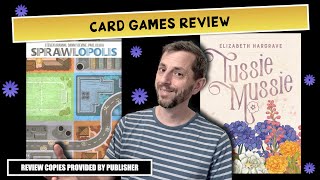
Across the channels that have put Sprawlopolis on the table, the verdict lands in the same place: an 18-card wallet game from Button Shy Games that punches far above its size. Reviewers keep circling back to the same three qualities, that it teaches in minutes, travels anywhere, and rewards repeat plays because the scoring conditions are drawn fresh from the deck every time. Carlo of All You Can Board frames it as the safer, more approachable entry point into the Button Shy city-building line, calling it the game to start with before moving on to spinoffs like Agropolis. Adam Porter of Adam in Wales - Board Game Design rates it highly on an engagement scale and singles out the stress and challenge of the puzzle as its strongest quality.
Where the channels split is on interaction. Carlo and Adam Porter both find Sprawlopolis is at its best played solo, where a single player controls every decision. Adam Porter goes further, arguing that with more players the cooperative shell barely holds, since nothing stops one confident voice from directing every placement. Robert of AzureDeath | Solo Board Gaming, reviewing the spinoff Naturopolis, describes Sprawlopolis itself as the harder, more punishing sibling in the family, a reputation Robert had already warned other players about before Naturopolis softened the formula. No Pun Included takes the most enthusiastic position of the group, arguing the wallet format hides a game that beats out full-size city builders on its own terms.
Core Mechanics That Define Sprawlopolis
Draw, Play, and Pass the Hand
The base structure is a pick-and-pass card game. In the solo rules described by Carlo, a player draws three cards, plays one to the growing city, then draws a replacement to keep the hand at three. In the multiplayer version Adam Porter outlines, the start player deals themselves three cards while everyone else gets one, then each player plays a card and passes the remaining ones to a neighbor, so the hand keeps refilling as the round moves around the table. A new card has to be placed adjacent to the existing layout, and Carlo notes players can also lay cards on top of earlier ones, which lets a city keep changing shape as the game runs its 15 turns.
A Different Puzzle Every Sitting
What varies from game to game is the target itself. Before anyone plays a card, three of the deck's cards are drawn and set scoring side up, and their point values are added together to set the score everyone is trying to beat. Each of those cards also lists its own scoring condition, so a session might ask for the biggest block of park tiles that never touches the map's edge, or industrial blocks that only sit next to commercial and other industrial blocks. Carlo points out that some of these conditions are simple one-line asks and others are more layered, combining several requirements at once, which is part of why no two plays of Sprawlopolis feel the same.
The Sprawlopolis Experience
A Puzzle Built for Solo Play
Carlo describes Sprawlopolis as easiest and most enjoyable solo, since a single player has full control over the layout without waiting on anyone else's plan. Carlo clocks a solo round at around ten to fifteen minutes, sometimes as quick as five to seven when a loss ends things early and the deck gets reshuffled for another attempt. Adam Porter agrees it works particularly well as a solitaire puzzle, and both reviewers describe returning to it casually and often, the kind of game that comes out for a short break rather than a dedicated game night.
Thin Interaction at the Table
That same solo strength becomes a weakness once more players join. Adam Porter argues Sprawlopolis is not really interactive as a group game, closer to a solo puzzle that several people happen to work on together, since the deck offers very little secret information and nothing stops the table from talking through every card out loud. Adam Porter points to that same openness as the reason an alpha player can end up steering the whole city while everyone else just watches. Carlo reaches a similar conclusion from a different angle, having tried Sprawlopolis with two players but preferring it solo, and expects a table of three or four to slow the game down considerably as everyone debates how to fit the scoring conditions together.
What Makes Sprawlopolis Stand Out
A Big Game Folded Into a Wallet
No Pun Included spends much of its review arguing that Sprawlopolis earns a spot above established city builders like Suburbia, Quadropolis, Between Two Cities, and Le Havre, calling it the genre's most surprising representative precisely because it never looks like a contender on the shelf. The channel highlights the same overlapping-cards trick that lets a completed neighborhood get demolished and rebuilt by a later card, comparing the shifting layout to a real city where nothing stays where it was put. Carlo makes a related point about scale, saying Sprawlopolis feels much bigger than its component list would suggest, partly because the finished cityscape takes up real table space and partly because every one of its 15 cards gets deliberated over before it goes down.
A System Built to Keep Growing
Both Adam Porter and Carlo point to how much the Button Shy system has expanded around the base game. Adam Porter counts at least six expansion packs for Sprawlopolis plus standalone entries in the same family, including Agropolis, which focuses on farmland, and Naturopolis, which reworks the formula around landscapes. Carlo, reviewing Agropolis directly against Sprawlopolis, tells viewers to start with Sprawlopolis first since it is the more forgiving entry point, then move on once a table wants a longer or trickier follow-up.
Potential Drawbacks
Roads Can Punish an Unplanned Layout
Every road built through the city costs a point at the end of the game, and reviewers describe that penalty as sneaking up on new players. No Pun Included walks through a turn where a single placement looks like it only adds one connected road, only for the next few cards to keep splitting and rejoining that road until the count balloons past what was planned for. Carlo adds that Sprawlopolis mixes some very simple scoring conditions with others that are more finicky, involving combined adjacency requirements that can be easy to misjudge on a first read.
A Steep Puzzle for New Players
Robert of AzureDeath | Solo Board Gaming warns that the scoring in Sprawlopolis can be brutal, with cards that demand very careful, deliberate placement rather than a relaxed approach. Robert contrasts that directly with Naturopolis, found more elegant and fair by comparison, in part because it uses fewer roads and therefore punishes mistakes less severely. Adam Porter's alpha-player concern doubles as a related drawback for group play, since a table without much secret information can let one confident player dictate outcomes rather than sharing the puzzle around.
If You Enjoy Sprawlopolis
Reviewers who compared Sprawlopolis to other games mostly pointed toward the rest of its own family and a handful of city-building peers. Adam Porter names Honshu as the game Sprawlopolis most resembled, while preferring Sprawlopolis for leaving out Honshu's trick-taking draft. Carlo recommends following Sprawlopolis with Agropolis once a group wants a longer, more intricate challenge from the same designers. Robert of AzureDeath | Solo Board Gaming points toward Naturopolis for players who want the same core puzzle with a gentler, more forgiving scoring curve. No Pun Included places Sprawlopolis alongside Glasgow, Suburbia, Quadropolis, Between Two Cities, and Le Havre as company it belongs in among city-building games, arguing it holds up against every one of them despite its pocket size.
What Reviewers Are Saying
"It's basically a solo puzzle you can play together. It's certainly possible to work it all out together in a small group, but there's very little secret information and communication is not limited, so there's nothing to stop an alpha player bulldozing the cooperative experience."
— Adam Porter, Adam in Wales - Board Game Design
"I've seen some people say they really struggle to beat Sprawlopolis. Other people, not so much. There is a lot of spatial awareness and a surprising amount of long-term planning that comes into a lot of this, so it can be pretty tricky."
— Carlo, All You Can Board
"That is why Sprawlopolis is the only one of these games that makes me experience what a kick in the groin city planning is. Nothing is where you put it, people keep messing with your grand vision, and the entire thing feels like it's about to tilt 45 degrees and slide off into the ether. All of that, and just 18 cards and no compromise, as the French say."
— No Pun Included