/pic3363466.jpg)
/pic3737133.jpg)
/pic3363466.jpg)










Star Wars: Destiny Deep Dive
What the Community Thinks About Star Wars: Destiny
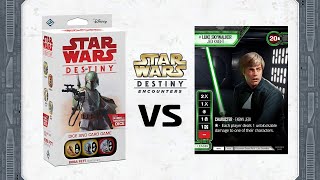
Across the videos that still cover it, Star Wars: Destiny draws genuine enthusiasm from people who built real decks and played real matches, even though Fantasy Flight Games discontinued the line in early 2020. AzureDeath of AzureDeath | Solo Board Gaming calls it the most played game in their collection, with more than 150 plays, and describes it as gaming nirvana. Adam in Wales - Board Game Design talks about getting pulled into buying random booster packs after a friend named Tom introduced them to the starter set, and says they were hooked once they started playing. Rolling Dice & Taking Names named it their Breakout Game of the Year, a game that kept getting brought back to the table.
Where the channels diverge is on what the collectible format costs. AzureDeath treats the cancellation as a silver lining, since discontinued stock now goes on clearance and singles can be found cheaply or proxied. Rolling Dice & Taking Names and Adam in Wales describe the opposite side of that coin from when the line was still active, joking about needing second jobs and a second mortgage to keep buying booster boxes and expansions, and admitting to an addiction to picking up random packs without knowing what dice or cards would be inside.
Core Mechanics That Define Star Wars: Destiny
Delayed Dice Resolution
Adam in Wales walked through the core system: when a player rolls their dice, the nice thing is that they don't immediately resolve them. A player rolls, lays the results out, and the opponent takes a turn in response, playing cards that might manipulate those dice, rolling their own dice, or otherwise changing the outcome to defend against the attack. Only then does the first player resolve their dice, one at a time, on each individual turn. Adam contrasted this with dice games that lean on a simple roll-and-reroll mechanism, saying they were drawn to one that worked differently.
Deck Building Around Characters
AzureDeath explained the deck-building around characters, comparing it, across two separate list appearances, to constructing a Commander deck in Magic: The Gathering. A player goes to their character binder the way a Magic player reaches for a legendary creature, and builds a deck either for thematic reasons or because a character's printed mechanics suggest a particular strategy. AzureDeath described assembling those character-driven matchups, more than resolving them, as where most of the game's replay value comes from.
The Star Wars: Destiny Experience
A Fast, Focused Duel
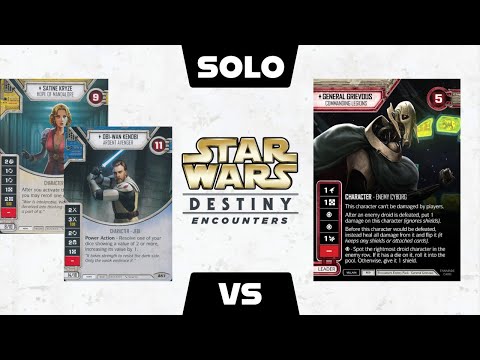
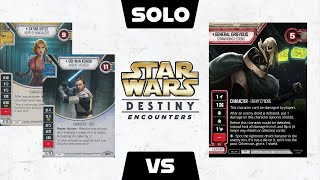
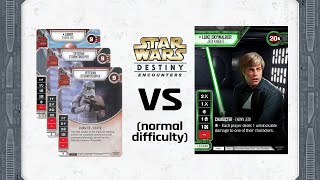
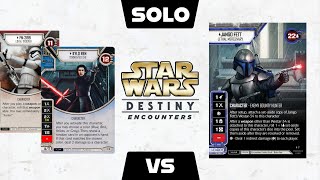
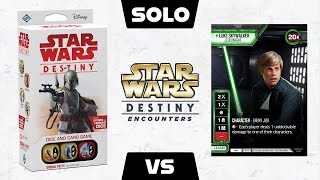
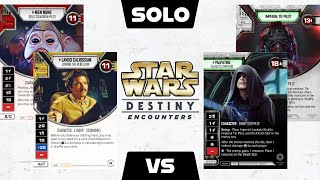
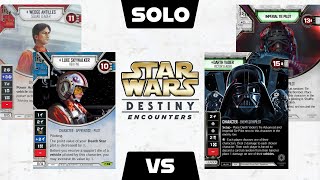
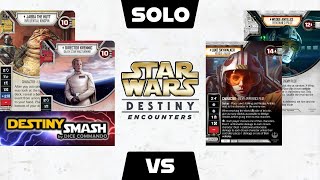
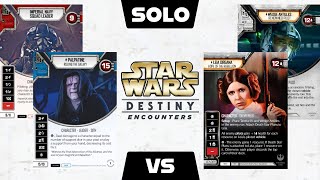
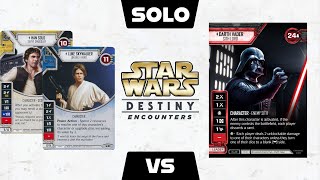
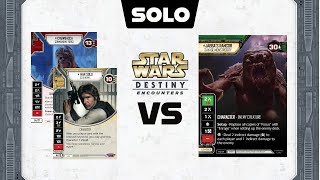
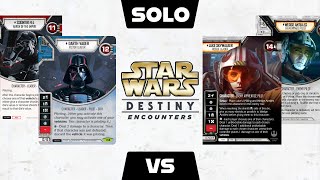
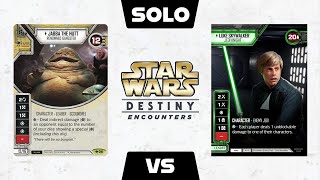
AzureDeath loved how quickly a match comes together: grab a deck, grab an opposing deck, shuffle, and the game is ready to play within minutes, delivering a dueling trading-card-game experience with Star Wars flavor. They wanted an officially supported solo or co-op Star Wars card game badly enough, with nothing like it available from Fantasy Flight Games, that they spent a year building their own fan-made variant, called Destiny Encounters, modeling it on Marvel Champions' villain-deck structure so they could run Star Wars Destiny decks solo against AI-controlled villains such as Vader.
Getting Pulled Into Collecting
Adam in Wales described getting drawn into the game itself as much as any mechanic: they went into a shop and bought a random booster pack, not knowing what cards or dice they would get, and found themselves unable to stop picking up more. They said their friend Tom, a huge Star Wars fan, got them playing the starter set, and that they were hooked even though they had gone in skeptical. Rolling Dice & Taking Names captured the same pull from the collecting side, joking that the game they had just crowned Breakout Game of the Year would also have viewers breaking out their wallets to feed their need to acquire it and its future expansions.
What Makes Star Wars: Destiny Stand Out
Interactive Dice That Reward Deep Design
Adam in Wales praised the depth that comes from letting an opponent respond to laid-out dice results before they resolve, calling it a design choice that opens up a huge amount of design space, with thousands of cards doing different things specifically because of that delay.
Thematic Artwork and Character-Driven Decks
Adam in Wales also praised the Star Wars artwork, saying the cards were not just stills from the films but nicely drawn original pictures that stayed thematic while still leaving room for silly, personal scenarios, like giving a character a lightsaber purely for the fun of it. AzureDeath's version of the same praise centered on building a deck around a favorite character, the way a Magic: The Gathering Commander player builds around a chosen legendary creature, pulling from a binder of characters each with their own feel.
Potential Drawbacks
A Cancelled, Now Patchwork Product Line
AzureDeath acknowledged upfront that Star Wars: Destiny is a cancelled trading card and dice game that Fantasy Flight Games discontinued in early 2020, meaning a full collection now depends on a mix of leftover retail stock and reprints a fan committee has kept producing since, including cards tied to the newer Disney-era films. Rolling Dice & Taking Names, reflecting on their other Fantasy Flight card game habits, joked darkly about the cumulative cost of following Lord of the Rings Living Card Game, Arkham Horror Living Card Game, and Star Wars Destiny all at once, saying they would need second jobs and a second mortgage to keep up.
No Official Solo Mode
AzureDeath pointed out that there was no official solo or co-op way to play Star Wars: Destiny, despite the comments they say they received from people wishing Fantasy Flight Games had made one. That gap mattered enough to them that they spent a year building their own fan patch, Destiny Encounters, to fill it themselves, rather than there being an official answer from the publisher.
If You Enjoy Star Wars: Destiny
AzureDeath repeatedly compared building a Destiny deck around a favorite character to constructing a Magic: The Gathering Commander deck around a legendary creature. They modeled their own solo adaptation of the game directly on Marvel Champions' villain-deck structure, named Lord of the Rings: LCG alongside it as the kind of solo and co-op Fantasy Flight game they wished existed for Star Wars before they built one themselves, and pointed to KeyForge Adventures' solo mode as a direct inspiration for how they put their own encounter decks together.
What Reviewers Are Saying
"If you've played Magic, and especially Commander, this might sound familiar to you. You'll see a commander, or a legendary creature, and you're going to want to make a deck around it. Well, in Star Wars, here you build your deck around one or more characters, and here it's, it's very similar to Commander in that sense."
— AzureDeath | Solo Board Gaming
"I cannot believe that. I mean, Lord of the Rings Living Card Game, oh my goodness, Arkham Horror Living Card Game, now Star Wars Destiny. I'm scared in 2017 as to what they're going to come out with."
— Rolling Dice & Taking Names
"When you roll your dice, the really nice thing is that you don't immediately resolve them. I roll them, I've got my results laid out there. Now my opponent takes a turn, and they can play cards which might manipulate my dice, they could roll their own dice, they can do various different things to change the outcome, to defend themselves against my attack."
— Adam in Wales - Board Game Design