/pic3764376.jpg)

















Star Wars: Legion Deep Dive
What the Community Thinks About Star Wars: Legion
Star Wars: Legion has captured the miniatures gaming community with its elegant mechanics and thematic depth. The game brings the iconic conflict between Rebels and Imperials to the tabletop with a level of accessibility that appeals to both experienced wargamers and those new to the hobby. Since its 2018 release, Legion has established itself as one of the most compelling miniatures games available, offering players tactical decision-making wrapped in the beloved Star Wars universe.
Core Mechanics That Define Star Wars: Legion
The Command Card Initiative System
At the heart of Star Wars: Legion lies a sophisticated initiative system that sets it apart from traditional miniatures games. Rather than simple I-go-you-go turns, players secretly select command cards each round, with fewer pips granting first activation. This creates meaningful strategic tension: commit to aggressive orders for your elite units like Luke Skywalker or Darth Vader, or spread orders across your army for flexibility. The command system generates constant decision-making moments where the right choice only becomes clear after both players reveal their hands. This is the game's soul, creating what reviewers describe as equal amounts of opportunity and unpredictability.
Weapon Flexibility and Tactical Depth
Legion's combat system empowers players with meaningful choices about how units engage. Multiple weapons can combine into the same attack, applying all their abilities together. An AT-ST walker can fire its rotary blaster, grenade launcher, and turret in concert, each ignoring cover or adding dice as appropriate. Alternatively, a single unit with multiple weapons can split fire between different enemies in the same activation. This level of tactical nuance means that how you resolve an attack matters as much as whether you roll well. Cover, armor, shields, and surges create layered defense mechanics that reward careful positioning and measured aggression.
The Star Wars: Legion Experience
Thematic Immersion and Character Abilities
The game excels at making unit abilities feel like Star Wars. Luke Skywalker can jump over terrain obstacles with his Force-assisted parkour, landing in position for a devastating melee charge. Speeder bikes must perform mandatory full-speed movement, exploding if they hit terrain, perfectly capturing their reckless nature. Darth Vader's relentless ability lets him perform free attacks after moving, while his Force choke directly eliminates enemy troops with terrifying efficiency. These mechanics don't feel arbitrary; they emerge from what these characters actually do in the films, creating moments where the gameplay IS the Star Wars experience.
Table Presence and Cinematic Moments
The physical presence of Legion armies on the table creates an immediate visual impact. Beautifully sculpted stormtroopers, iconic characters like Vader and Luke, and massive vehicles like the AT-ST dominate the battlefield. Terrain pieces create natural focal points for dramatic confrontations. The combination of custom dice, specialized measuring rulers, and detailed miniatures creates a high-production experience that feels weighty and cinematic. When Luke cuts through a unit with his lightsaber or an AT-ST's weapons ravage enemy positions, the moment carries genuine dramatic weight.
What Makes Star Wars: Legion Stand Out
Accessibility for Newer Players
Unlike many miniatures games where measurement and rule lookups slow play, Legion streamlines the experience. Movement measures only from the unit leader, with other models bimbling along without individual positioning checks. Card references list point costs and relevant rules, keeping answers at your fingertips. The core rules are intuitive: roll dice, count hits, defenders roll defense dice, shields block. This approachable framework lets new players jump in without months of learning, though depth emerges for those who explore optimization and positioning nuance.
Iconic Miniatures and Expanding Content
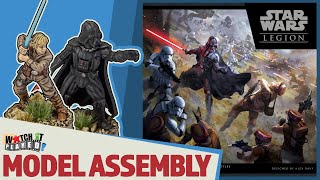
The starter set launches with Luke Skywalker, Darth Vader, and recognizable troops, immediately appealing to Star Wars fans. The expansion roadmap began strong with iconic AT-ST walkers and impressive multi-piece models that reward assembly and painting. The core miniature designs carry authentic Star Wars aesthetic, even if some players note that character sculpts didn't perfectly capture likenesses. Legion miniatures are larger than standard 28mm, nearly 35mm scale, which increases table presence but adds to painting workload. For hobbyists who want meaningful assembly and painting projects, this becomes part of the appeal.
Potential Drawbacks
Reliance on Proprietary Components
Fantasy Flight Games' design philosophy includes custom dice and specialized rulers, both featured in Legion. Players must use these components, though their necessity is debatable. The jointed rulers used in games like Armada don't clearly improve Legion's infantry-focused gameplay, and some players question why specialized measuring tools matter when units move freely along rulers anyway. Custom dice add production value but require purchasing multiple sets for longer campaigns. For budget-conscious players, these requirements increase the initial investment beyond just purchasing miniatures.
Model Quality and Painting Commitment
While the starter set includes unpainted figures, which some praised as opportunity for hobbyists, others found the sculpts underwhelming compared to Games Workshop's standard. The models require assembly and painting, this isn't a pre-painted game like X-Wing. For casual players seeking quick table-ready armies, this becomes a significant barrier. Additionally, as expansions continue, players worry about repetition: will future releases offer the same thematic imagination as early iconic units, or gradually rely on variants and secondary characters that lack the immediate Star Wars appeal of Vader and Luke?
If You Enjoy Star Wars: Legion
Players drawn to Legion might explore the rich world of miniatures gaming more broadly. X-Wing Miniatures Game shares elegant design philosophy with pre-painted accessibility. Warhammer 40,000 offers deeper customization and larger army-building alongside complex mechanics. Kill Team provides skirmish-scale tactical gaming. For those specifically invested in Star Wars, the Shatterpoint board game serves skirmish-scale conflict through a different mechanical lens. Each offers distinct pathways for developing your miniatures gaming interests.
What Reviewers Are Saying
"Star Wars Legion is one of the best miniatures wargames I have ever played. In some ways Legion plays out exactly like any miniature wargame, each player will build an army and give it upgrades based on predetermined point limitation, place them on opposing ends of a map and roll dice into each other until six rounds are over or everybody on the opposing side is dead."
— No Pun Included
"The really clever thing about Legion is that one unit with multiple weapons can fire them at different enemies with the same attack. This is great because you might have made a position in the key location but then the rest of your troops are an uncoordinated mess, whereas on the opposite side you can coordinate the troops."
— No Pun Included
"The games play very quickly. The idea is you can play a best out of three in probably 45 minutes. These are models you build and paint, not prepainted. It comes with all kinds of cards and tokens, and they were showing plastic ones as well, which are really nice sculpts. The strategic stuff of it is great and you can see the quickness to it."
— Tabletop Minions