/pic7503747.jpg)


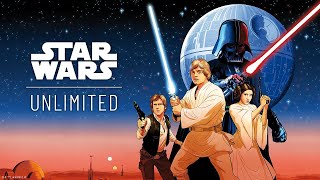





















Star Wars: Unlimited Deep Dive
What the Community Thinks About Star Wars: Unlimited
Star Wars: Unlimited has generated considerable anticipation in the collectible card game community since its announcement by Fantasy Flight Games. Reviewers recognize the game's ambition to enter a market dominated by Magic: The Gathering and Pokemon, leveraging one of the most iconic franchises in entertainment. The gaming community sees Unlimited as a significant risk - a new trading card game launch when most recent entries have struggled to gain traction. Yet early enthusiasm centers on Fantasy Flight's thoughtful design approach and commitment to accessible gameplay alongside competitive depth.
What distinguishes the conversation around Unlimited is the framework within which reviewers evaluate it: not as a replacement for any existing game, but as a fresh entry to a historically difficult market. Seasoned card game players emphasize that execution matters far more than the Star Wars license alone. The verdict, emerging from preview discussions, is cautiously optimistic - the game shows promise, but success depends entirely on whether the gameplay experience justifies investment from both casual and competitive players.
Core Mechanics That Define Star Wars: Unlimited
Leader-Driven Deck Building and Resource Strife
At the heart of Star Wars: Unlimited lies the leader card, a design element that shapes every aspect of deck construction. Similar to the commander format in Magic: The Gathering, the leader card's color and identity dictate which cards players can include. This vertical restriction forces deckbuilders to commit to a strategic identity rather than mixing all available power into one pile. Reviewers appreciate this as a meaningful constraint that breeds creativity - building around a leader becomes a puzzle of discovering synergies within permitted colors and themes rather than simply assembling the strongest cards across the entire card pool.
The game introduces a two-front battlefield system: space and ground. Units are restricted to one arena or the other, preventing absurd matchups (like Chewbacca facing off against a TIE Fighter). This separation creates two parallel games happening simultaneously, requiring players to manage resource allocation between fronts. Reviewers noted that this design prevents any single powerful unit from dominating all interactions and forces deck builders to consider how their strategies split across the available theaters of war.
Fast-Paced Turn Structure and Engagement
Fantasy Flight designed Unlimited for speed, implementing alternating single actions per turn. Players execute one action, then pass to their opponent - a stark contrast to the multi-phase turns common in modern card games. Developers stated that the target game length is 15 to 20 minutes per match, enabling four to five games per hour. This tempo is deliberate: fast enough to avoid the analysis paralysis that plagues longer card games, yet structured enough to preserve meaningful decisions. The turn economy demands that each action count. Reviewers compare this favorably to Star Wars: Destiny (the dice-based predecessor that suffered from production issues rather than design flaws) and to other quick-resolution card games like Netrunner, where two players could complete matches in 45 minutes and maintain engagement throughout.
The Star Wars: Unlimited Experience
Accessibility by Design - Both Mechanical and Economic
A defining promise from Fantasy Flight is that every card in Star Wars: Unlimited will be accessible to casual players. The rare and super-rare slots will be filled by alternate-art and foil versions of cards that are easy to obtain in non-premium forms. This inverts the traditional collectible card game economy: the base version of any card needed for competitive play is readily available, while the "chase cards" are purely cosmetic variants. Reviewers emphasized how significant this design choice is - it preserves the traditional thrill of opening booster packs and chasing rare pulls, but decouples that chase from competitive viability. A casual player can build a complete, functional deck without spending extravagant sums. A collector can hunt foils and alternate arts with the understanding they are not gaining a gameplay advantage.
This philosophy addresses a long-standing criticism of collectible card games: the "pay-to-win" perception. Reviewers noted that many lapsed card game players stepped away specifically because the cost of competitive cards climbed beyond reasonable hobbyist spending. Unlimited's stated accessibility promises to lower the barrier to entry while preserving the collecting experience for those who want it.
Building a Community Around Draft and Casual Play
Fantasy Flight explicitly prioritized draft as a core experience from day one. Drafting - where players build decks on the fly from a pooled card selection - has been the most successful format for sustaining engagement in collectible card games. It levels the playing field by ensuring everyone has access to the same cardpool and requires skill in real-time evaluation rather than card wealth. Reviewers recognized this as a smart commitment: the community talks about drafting constantly, while constructed competitive play has become increasingly niche and expensive.
Organized play support, developers indicated, will emphasize casual and local events alongside competitive tournaments. This acknowledges that the health of a card game depends on local store engagement and casual league play, not just Grand Prix-style competition. Reviewers who have played in the early playtest events reported that the game's turn structure and 15-20 minute game length make casual event play extremely feasible - a store can run drafts or constructed tournaments with minimal scheduling headaches, allowing more games per evening and more flexible participation windows.
What Makes Star Wars: Unlimited Stand Out
The Challenge of Entering a Crowded Market
Reviewers openly acknowledged that Star Wars: Unlimited faces a formidable competitive landscape. Magic: The Gathering and Pokemon have entrenched positions reinforced by decades of organized play, professional circuits, and community depth. In the past eight to nine years, nearly every new collectible card game has struggled to gain sustainable traction - with the sole exception of Flesh and Blood, which carved out a niche but did not break mainstream. The graveyard of failed new card games is long: from Warhammer Champions to Marvel Champions' competitive format, each found audience limitations.
Yet reviewers identified differentiators that matter. The Star Wars license carries genuine cultural weight. Fantasy Flight has proven expertise in card game design and community support through Marvel Champions and Arkham Horror. And critically, the developers have invested three years in development - not three months of design and a rushed release. This extended timeline suggests playtesting depth and iterative improvement, reducing the risk of obvious mechanical failures that plagued some competitors.
Leader Specialization and Deck Diversity
The leader system creates natural deck archetypes without requiring excessive card pool manipulation. Each leader is a compelling identity that rewards exploration. Reviewers compared this to the commander format favorably: Magic's commander format thrives because the 100-card singleton restriction and commander color-lock force creativity. Unlimited's leader approach provides similar creative constraints in a faster, more accessible package. The two-front battlefield further fractures the card pool, as units cannot optimize for both space and ground - a clever way to prevent any single strategy from overwhelming all others.
Potential Drawbacks
The Sustainability Question and the Balance Challenge Ahead
Reviewers cautioned that all competitive card games eventually face a common problem: once expansions begin to ship, unforeseen combinations emerge. Playtesting catches obvious combos, but the community discovers synergies that designers missed. Magic, Netrunner, Arkham Horror, and Lord of the Rings all experienced errata (rule text corrections), card bans, or rotation policies to manage balance. Star Wars: Unlimited will inevitably face the same pressure. The fast turn structure and two-front system provide some built-in resilience - broken combinations are harder to execute when each player gets one action per turn - but reviewers remain cautious about whether the design can survive 2-3 years of expansions without balance patches becoming necessary.
Beyond balance, reviewers flagged the publishing and supply chain challenges inherent to trading card games. Collectible card games are expensive to produce at scale. Print runs, distribution, allocation to retailers, and secondary market dynamics all require careful management. Fantasy Flight will be relying on the same supply partners that have served Pokemon and Magic, which means it inherits all the supply scarcity and distribution drama that characterizes the industry. Any shortages or stock issues risk dampening early enthusiasm and frustrating collectors.
The Lorcana Competition and Market Saturation
Disney Lorcana is entering the market in the same window as Star Wars: Unlimited, and both are trading card games positioned at similar price points competing for the same consumer wallet. Reviewers noted that the proximity of launch is unusual and potentially problematic - the CCG audience has finite bandwidth, and both games are asking players to invest time and money simultaneously. While Lorcana's simpler, kid-friendly ruleset appeals to casual family audiences, Unlimited's faster play and leader-driven complexity appeal to experienced players. Reviewers differ on which will resonate more widely, but all agree the simultaneous launch creates marketing noise and puts pressure on both to deliver stronger gameplay experiences to stand out.
If You Enjoy Star Wars: Unlimited
Players who appreciate Star Wars: Unlimited are likely to enjoy Magic: The Gathering's commander format, which shares the leader-driven identity system and the emphasis on creative deckbuilding within constraints. The faster-paced action resembles Star Wars: Destiny (the dice-based card game predecessor), though Unlimited replaces randomness with more consistent mechanics. For those who prefer the certainty of non-random card pools, Marvel Champions and Arkham Horror (both living card games from Fantasy Flight) offer similar satisfaction without booster randomness. Netrunner, the defunct asymmetric card game, captured a similar sense of quick, engaging turns with meaningful decisions. Fans of draft as a format should explore Flesh and Blood, which has sustained a healthy draft community. Those wanting a Star Wars experience without the card game investment can explore Outer Rim or the Imperial Assault board game, both offering thematic Star Wars gameplay with complete information and no randomness.
What Reviewers Are Saying
"The whole goal is to gain money by you chasing the rares - that's what [collectible card games] need to do. They need to make money, it makes perfect sense. But what Fantasy Flight said is, we want to make sure that if you're a casual player, we want you to have easy access to every card. But if you're in it for collecting and chasing, it's the chase cards that will be rare - the alternate art or foils. The existing cards will be easy to get."
— watch it played
"You have a leader - which is kind of like a commander in Magic where the commander's colors dictate what goes in your deck. It looks like the leader for Star Wars will dictate what goes in your deck. They have the idea of two battlefronts: space and land. So that's kind of different. You have two fronts that you're going to be fighting on. I thought that was kind of interesting."
— Watch It Played
"They said from day one we've made sure to have drafting as an option in this game, because we know it is so loved in the Magic community. One thing that's drawn me to Unlimited over Lorcana is the fact that you have a leader, and the idea of two battlefronts. Those little things just sound interesting to me. I just can't wait to see more rules."
— The Discriminating Gamer