/pic6037615.png)






























Stardew Valley: The Board Game Deep Dive
What the Community Thinks About Stardew Valley: The Board Game
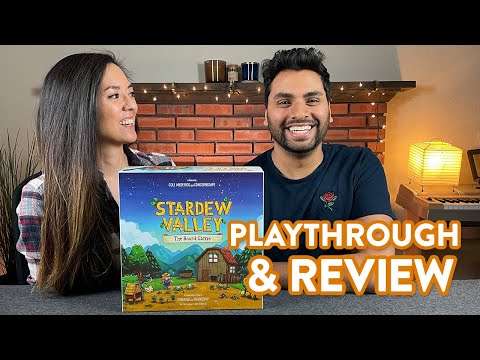
Stardew Valley: The Board Game arrived on tables expecting a cozy farming experience. What players discovered instead is a deceptively brutal cooperative challenge that punishes luck and demands constant optimization. The gap between the beloved video game and its board game adaptation has sparked passionate debate among reviewers, with opinions ranging from enthusiastic endorsement to cautious appreciation tempered by frustration over mechanical difficulty.
The board game has proven surprisingly polarizing. Some reviewers praise its faithful translation of the source material and creative problem-solving, while others criticize its reliance on randomness and the grinding feeling that emerges at higher player counts. Despite these tensions, Stardew Valley: The Board Game has earned recognition as a solid cooperative experience for video game fans willing to accept that the board version plays more like an action optimization puzzle than a relaxing farming simulation.
Core Mechanics That Define Stardew Valley: The Board Game
Cooperative Worker Placement With Shared Resources
The foundation of Stardew Valley: The Board Game rests on cooperative worker placement where players share one communal pool of money and resources. Players take turns placing their pawns on action spaces around the village map, then move to new locations to perform additional actions. This shared economy creates both synergy and tension, as one player's resource spending directly impacts what others can accomplish on their turns. The mechanic forces constant communication and coordination, making the game feel genuinely collaborative rather than a series of parallel single-player puzzles. Every decision ripples across the entire group, and reviewers have noted that miscommunication about resource allocation can breed table frustration at higher player counts.
Variable Phase Order and Seasonal Progression
Each round begins with resolving a season card that randomizes what happens before players take actions, then proceeds through a planning phase where players discuss strategy, an action phase where they execute turns, and finally an end-of-turn phase for tool upgrades and stair construction. This variable phase order prevents the game from becoming routine, keeping players adaptive as weather symbols on seasonal cards randomly discard fish, transform crops to quality, or trigger other effects. The game progresses through four seasons with four rounds each, creating a natural time pressure that reviewers describe as both challenging and thematically appropriate.
The Stardew Valley: The Board Game Experience
Deceptively Brutal Difficulty
Despite its charming art and cozy theme, Stardew Valley: The Board Game plays far harder than newcomers expect. Reviewers consistently note that the game is a "brutal cooperative experience" where players rarely have enough time and resources to complete all required goals. The fishing and mining mini-games demand significant time investments, with mine floor 12 alone capable of consuming an entire player's turn. Winning requires flawless execution and favorable luck, creating a challenging but achievable puzzle that motivates multiple playthroughs. 3 Minute Board Games expressed surprise that the board game "crushes you" if you approach it expecting the video game's relaxation, making this a game better suited for players seeking genuine challenge rather than thematic atmosphere.
Randomness as a Double-Edged Sword
Dice rolling drives critical moments, particularly in mining and fishing, introducing luck elements that can derail carefully laid plans. Some reviewers embrace this randomness as difficulty variance, arguing that overcoming bad luck creates satisfying challenge. Others find the luck frustrating, spending 45 minutes in a single mine descent only to have bad rolls destroy their progress. The collaborative puzzle of coordinating specialized roles (one player focused on mining upgrades, another on fishing bundles) feels genuinely satisfying when it works, but the randomness can make success feel unearned or failure feel unfair. Reviewers acknowledge this as a design choice that fits thematically but creates mechanical tension between strategic depth and random outcomes.
What Makes Stardew Valley: The Board Game Stand Out
Faithful Theme Integration
The game's strongest asset is its thematic authenticity. The board literally displays the familiar Stardew Valley map with locations players recognize from the video game. Gameplay mechanics mirror video game activities: watering crops with upgraded tools, mining through multiple floors to find resources, fishing specific species in particular seasons, befriending villagers through gift-giving. The community center mechanic from the video game appears here as hidden bundle cards that players reveal by spending hearts earned through friendships. This deep thematic coherence resonates powerfully with video game fans, making the board game feel like a legitimate translation rather than a generic farming sim using the IP as window dressing.
Meaningful Role Specialization
Each player chooses a profession and starting tool at game start, granting asymmetric abilities that encourage role-based strategy. A player selecting the mining profession gains advantages in mine exploration, while selecting a foraging profession provides benefits when collecting resources along travel paths. The watering can upgrade path differs from the pickaxe path, naturally dividing labor and rewarding different strategic approaches. This specialization creates genuine interdependence rather than everyone doing identical actions, making cooperation feel strategic rather than mandatory.
Potential Drawbacks
Overwhelming Complexity at Higher Player Counts
The game scales poorly beyond two players. At four players, resource scarcity becomes suffocating and decision-making paralysis can set in, making gameplay feel grindy rather than engaging. Reviewers noted that goals scaling per player multiply the workload without adding strategic depth, making the experience feel like more busywork than more interesting decisions. Two players emerges as the clear sweet spot, where cooperation stays manageable and resource flow remains dynamic. Four-player sessions test patience as players wait for turns that accomplish less than anticipated.
Luck Can Override Strategy
The dice-rolling systems that make thematic sense mechanically undermine agency and planning. Players can execute perfect strategy yet fail completely due to unlucky rolls on mine floors or fishing attempts. A reviewer spent an entire session planning an optimal path to floor 12 only to have consecutive floors of bad rolls force repeated level progression, consuming all available time. For players who value strategic agency and reward for correct play, this luck dependence feels punishing rather than challenging. The game essentially tells players that superior planning cannot guarantee success, which some embrace as appropriate difficulty and others reject as unfair design.
If You Enjoy Stardew Valley: The Board Game
Consider Mithland for a genuinely cozy cooperative experience with abundant actions and minimal pressure. Try Ano 1800 for similar farming mechanics in a competitive rather than cooperative format. For deep Euro game experiences with similar strategic optimization, Tend and Three Sisters offer more control over outcomes and less reliance on dice luck. Both deliver satisfying puzzle design, though without the video game nostalgia hook. Obsession provides a large-box cooperative experience with Victorian-era systems and area interaction. Concordia offers elegant resource management and area control with hidden scoring that rewards foresight.
What Reviewers Are Saying
"Despite its appearance, this game is far from cozy. Stardew Valley the board game is a brutal cooperative game where you rarely have enough time and resources to complete the staggering number of varied goals your group has."
— 3 Minute Board Games
"The cooperative puzzle of coordinating different roles where one person focused on mining and getting pickaxe upgrades and another on fishing to complete fish bundles felt really satisfying when it worked out. The synergy felt good."
— Before You Play
"If you're a devoted fan of the video game and you're willing to overlook mechanical flaws for theme, buy it. If you enjoy cooperative games where role specialization matters and you can frame luck as difficulty variance, buy it. But if you care about strategic agency, luck undermines it consistently."
— Board Game Critique