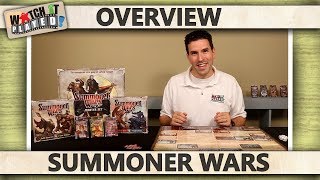
GAME SYSTEM
This entry is to allow for discussion/rating of the game system as a whole. It is not for a specific product or release. Versions will appear on the individual item pages.
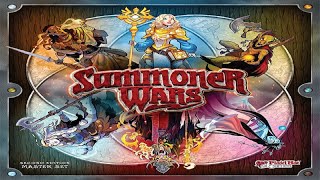
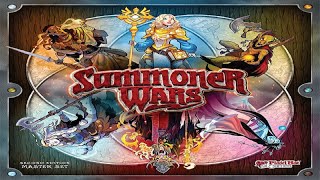
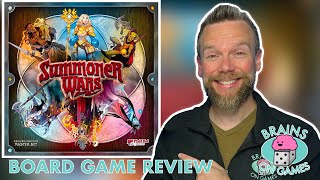
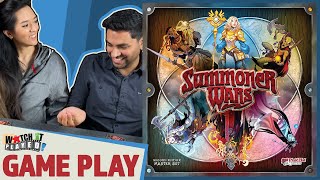
Summoner Wars is a fast-playing, action-packed 2-4 player card game. Players take on the role of Summoners: powerful beings who harness the power of mysterious Summoning Stones to lead their race to conquest on the war-torn planet of Itharia. These Summoners wield terrible magic on the battlefield, freezing their foes in place, draining their enemies of power, and even bringing rains of fire down from the heavens. But most notoriously, they summon their great race’s hordes of warriors to the battlefield, to clash in the never-ending struggle for supremacy. A Summoner is both mage and general, and must combine their wizardly might with clever tactics to defeat the enemy Summoner on the opposite side of the battle.
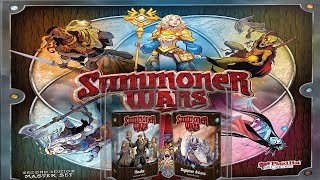
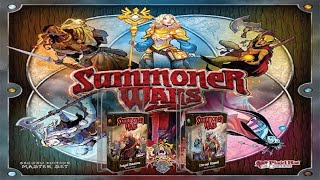
Each Starter Set of Summoner Wars contains 2 complete, battle-ready Factions, ready to jump you and an opponent into the thick of the War for Itharia. Each Faction is a unique race or civilization with its own secret goals, be it wild-eyed Elves bent on revenge, or blood-crazed Goblins who merely want to set the world ablaze. Starter Sets also include everything you will need to play, including a Battle Mat, Wound counters, dice, and a rulebook.
But the war doesn’t end there! Summoner Wars is fully expandable with entirely new faction decks such as the hideous Undead of the Fallen Kingdom, or the righteous and knightly Human Vanguards. In addition, each Faction will have its own expansions, adding new warriors, summoners, and abilities to allow for a never-ending mix of combat options and surprises. Expansions will also include Mercenary units - warriors who care nothing for politics and will fight for any side that can afford them!
Summoner Wars uses a simple but deep rules set to capture both the strategy of deck construction and card playing, with the tactics of miniature war games. By purchasing expansions or multiple Starter Sets, players can customize their Faction Decks to suit any style of play and to keep their opponents guessing. During the game, players summon and move their various warriors about the battlefield using their unique powers and abilities to wreak havoc on the enemy lines. In the course of a game each side will inflict terrible casualties upon the other in their brutal quest for victory.
Mechanics (from transcript analysis)

Video topics + discussion points
Quotes (from this video)
References (from this video)
- Clear, accessible core rules that are easy to teach
- Rich faction variety with strong thematic coherence
- Helpful app/online deck tester to explore options before buying
- High replay value due to many factions and deck combinations
- Satisfying dice-based combat and tactical decision-making
- Strong thematic art and cohesive world-building across factions
- Compelling strategic depth arising from faction-specific abilities
- Potential power creep as new expansions release
- Learning curve for mastering multiple faction-specific rules
- High cost to collect all decks and master set
- Not a Euro-style game; it is a direct head-to-head combat experience
- Complexity can scale with expansions and new factions
- Rule familiarity required for newer players when factions are unfamiliar
- asymmetric faction warfare driven by card-driven armies, mana management, and dynamic board manipulation
- fantasy battlefield where two players command armies of summoned creatures and structures, battling to defeat the opponent's Summoner.
- skirmish-focused with strong faction identities shaping playstyle and narrative flow
Mechanics (from transcript analysis)
- board control via gates and melee/ranged engagement — movement and placement around gates creates tactical positioning and engagement decisions.
- buffs and debuffs via potions and events — special cards can buff allied units or debuff enemies, often with lasting or turn-based effects.
- closed economy — a mana pool is earned and spent to summon and activate abilities; certain cards modify mana generation or costs.
- combat dice resolution — combat uses dice with symbols (swords/arrows) to determine damage, integrating luck with unit stats and buffs.
- Combat: Dice — combat uses dice with symbols (swords/arrows) to determine damage, integrating luck with unit stats and buffs.
- Deck building — each player builds a personal army deck from a pool of cards, enabling a wide range of synergies and strategies.
- deck-building — each player builds a personal army deck from a pool of cards, enabling a wide range of synergies and strategies.
- faction-specific abilities — each faction has unique cards and events that drive distinct playstyles and strategic decisions.
- Mana economy — a mana pool is earned and spent to summon and activate abilities; certain cards modify mana generation or costs.
- Phase-based action economy — players execute a fixed sequence of phases (start of turn, summon, move, build, attack, magic, draw) before the opponent acts.
- structure-building — cards can create structures (including gates) that influence battlefield dynamics and resource generation.
- summoning from gates — units are summoned adjacent to gates by spending mana, creating strategic positioning options around limited gateway points.
Video topics + discussion points
Quotes (from this video)
- very clear rule set it is very clean and simple and easy to understand
- in a unbelievably satisfying way
- head-to-head beat them up screw you Style game
- there is so much joy in this game
- replay and strategic Joy there is in this game
- a wonderful wonderful game
- not ready to put this in my top five two-player head-to-head games yet but I probably will
- the app is amazing
- keep playing and keep trying new things and getting stuff that you don't even need
- Chuck and dice
- this is not a cheap game
- what do I like about this game: the very clear rule set
- thematic depth comes from the diverse factions and their distinct abilities
- the cards allow a huge variety of strategic paths and combos
- the master set is packed with content and the expansions keep adding value
References (from this video)
- Huge replayability with six diverse factions
- Strong asymmetry and positioning invites tactical play
- Dice combat and component quality feel satisfying
- Clear, diagram-rich rule book with glossary
- Long-term value and potential for deck-building variety
- Asynchronous digital play option
- Theme and unit design feel faithful to each faction
- Short game length per match (40-60 minutes)
- Rulebook lacks some clarifications; some edge-case moves unclear
- No Mulligan included; card counts not listed in the rulebook
- No included organization; needs bags or organizers
- RNG on dice can dominate outcomes; some games feel unbalanced
- Undead faction is notably weaker; balance concerns persist
- Turns can be long with little interaction on opponent's turn
- Card layout and lack of clear symbols can cause eye strain
- Deck-out risk and heavy discard decisions can feel punishing
- Array
- Fantasy battlefield
- Analytical review with gameplay examples
- Blitz Ball
- Legacy's Allure
- Chess
Mechanics (from transcript analysis)
- Combat: Damage Based — Health is tracked with tokens, two-sided; damage reduces Health; tokens flip to show higher damage.
- Deck building — Players construct their starting decks by combining faction decks and events, with a huge variety of options.
- deck manipulation — Players discard cards to generate magic; discard strategy affects deck size and late-game options.
- Dice rolling — Attacks are resolved by rolling dice determined by unit attack strength, with symbols indicating melee, range and hit probability.
- event cards — Event cards provide buffs, heals, protections and movement adjustments lasting until the start of the next turn.
- Events — Event cards provide buffs, heals, protections and movement adjustments lasting until the start of the next turn.
- Gates/Spawn Points — Gates are structures that act as spawn points and positioning tools; can block spawns, spawn adjacent to Summoner, and be cluttered to control fronts.
- Health Tokens — Health is tracked with tokens, two-sided; damage reduces Health; tokens flip to show higher damage.
- Magic System / Card Discard — Players discard cards to generate magic; discard strategy affects deck size and late-game options.
- Movement — Units can move up to two spaces per unit, up to three units can move per turn; no diagonal movement; lines of attack depend on adjacency.
- Summoners and Asymmetry — Each Summoner has a unique deck and abilities creating asymmetric play, with Champions that scale with cards nearby.
Video topics + discussion points
Quotes (from this video)
- Deck building offers incredible replayability across six factions.
- Turns can be long with little interaction on an opponent's turn, which can slow the game.
- The Master Set provides enormous value with six distinct factions and many possible matchups.
References (from this video)
- Deep faction balance and variety
- Massive replayability
- Digital implementation for remote play
- Portable relative to other larger war games
- Complex and potentially intimidating for newcomers
- Many components and counters to manage
- Deck-driven combat with tactical decisions and unique factions
- Fantasy battleground with factions and Summoners
- Array
- Wizards of the Grimoire
- The Crew
Mechanics (from transcript analysis)
- App Assisted — Long-distance play supported by a digital app.
- Card-based warfare — Decks power units and actions; combat is driven by cards.
- Combat: Deck/Hand — Decks power units and actions; combat is driven by cards.
- Combat: Dice — Combat uses dice pools to resolve attacks.
- dice pools — Combat uses dice pools to resolve attacks.
- digital app integration — Long-distance play supported by a digital app.
Video topics + discussion points
Quotes (from this video)
- These are games I wanted to show my friends I could play and win with after we tested them together.
- Sky Team is such a gorgeous game with that limited communication that really adds tension.
- Senjutsu is a beautiful duel with a clever simultaneous combat mechanic.
- Summoner Wars is a brilliant game with deep factions and a great digital implementation.
- Wizards of the Grimoire is easy to teach and highly portable, which I love.
References (from this video)
- high replayability through multiple factions
- deep tactical decisions and variety
- steeper learning curve for new players
- set-up and rules can be lengthy
- asymmetrical strategy and tactical combat
- fantasy warfare with faction-specific lore
- faction-driven world with distinct decks
- Star Realms
- Chess
Mechanics (from transcript analysis)
- Asymmetric Mechanics — different win conditions and mechanics per faction
- asymmetrical factions — different win conditions and mechanics per faction
- Combat: Damage Based — map-based skirmish with positioning considerations
- deck-building with faction-specific decks — each faction has its own deck of units and spells
- grid-based tactical combat — map-based skirmish with positioning considerations
Video topics + discussion points
Quotes (from this video)
- I think I'm going to have to consider going to my gaming group and my family and saying listen I'd like to explore some of these games a little more deeply
- think about you know personally what do I like in games that help make them more replayable for me
- I imagine that at least a couple my selections will be games that have that scenario based play, event decks, things that have narrative story elements that change each time that you play
- I want us to think what is it about games that makes us want to play them over and over again
- think probably a couple my choices will be something in the living card game format as well because this will offer the benefits of repeated play and getting better at a game
References (from this video)
- Cinematic, dragon-assisted combat with strong faction flavor (Drake Sun Rebellion highlighted as particularly appealing).
- Clear, satisfying combos that feel intuitive once learned (the deck is described as 'comboic' yet easy to grasp).
- Excellent faction variety and thematic depth, with memorable abilities (recalling units, boarding mounts, etc.).
- Rule complexity and interactions can be overwhelming for new players.
- Certain abilities (e.g., Queen Maldaria recall) create tricky-to-counter or high-variance moments.
- Online app format and chat distractions can affect the learning curve and pacing.
- Summoner-based warfare featuring dragons, dwarves, and other fantasy factions with cinematic, high-mobility battles.
- Fantasy battlefield where summoners command units on a grid with gates, walls, mounts, and magic elements.
- Flavored combat emphasis with cinematic moments (dragon mounts, recalls, and flashy abilities) highlighted during play.
Mechanics (from transcript analysis)
- Adjacency and proximity effects — Many effects trigger from units that are adjacent or near friendly/enemy units; some cards provide buffs or debuffs based on adjacency.
- Attack phase with dice-based resolution — Attacks use dice; swords on dice correspond to hits. Each unit can attack once per attack phase, with some units having special attack traits (e.g., quick strike).
- Fire/ongoing effect zone — Some cards create ongoing zone effects (e.g., on-fire damage at the start of a turn).
- Gates and walls as deployable structures — Gates serve as deployment points with varying life; walls and gates influence positioning, defense, and combat options.
- Magic phase and resource management — Discard cards to gain magic and unlock extra moves or effects; the magic phase provides a different economy for action efficiency.
- Mounts and flying units — Certain units can mount dragons or other mounts, granting extra movement and special interaction rules (jumping onto a target and dismounting into combat).
- neighbor interaction — Many effects trigger from units that are adjacent or near friendly/enemy units; some cards provide buffs or debuffs based on adjacency.
- orthogonal movement — Units move up to two spaces per move phase in orthogonal (non-diagonal) directions.
- Summoner-based victory condition — Win by reducing the opponent's summoner health to zero or achieving other boss/structure conditions as dictated by the faction rules.
Video topics + discussion points
Quotes (from this video)
- I love the cinematic nature of jumping on the back of a dragon, barreling down your opponent's throat, leaping off, getting a bonus when you do that.
- One of my favorite factions for the game.
- This deck is comboic, but they're easy to understand combos.
- THE QUEEN MALDARIA must fall.
- Dude's a beast.
- The Drake Sun Rebellion... one of my favorite factions for the game.
References (from this video)
- top-rated two-player on the channel
- deep tactical decisions
- complex for new players
- asymmetric factions can be tricky
- skirmish warfare between factions
- fantasy battlefield
- Gloomhaven: Jaws of the Lion
- Descent
Mechanics (from transcript analysis)
- deck-building — players customize decks to lead factions in tactical skirmishes
Video topics + discussion points
Quotes (from this video)
- it's a great simple trick taking game for kids where you don't see your own cards
- the top rated two-player game for us on this channel
- exit could be a good option as a co-op game
- Skull here we go a super great little party game about bluffing
- Sleeping Gods the other great great story game here is a area control game in ancient Egypt you're playing Gods Railroad
- Leave a comment down below and I think if you would share this video with somebody who also would comment underneath
References (from this video)
- deep tactical depth
- varied factions
- board setup
- complex interactions
- tactical skirmishes, faction play
- fantasy world with Summoners and units
- cards and board with summoned armies
- Runewars
Mechanics (from transcript analysis)
- Area movement — move units to contest zones
- deck-building into combat — summoner and units battle on board
Video topics + discussion points
Quotes (from this video)
- Forest Shuffle is a super quick good good looking game
- it's actually a really really good Bard game
- War of the ring this is the most thematic board game ever created
- quick easy to teach game
- this game can end if Mr Nixon wins by stalling
- it's almost like a Miniatures game where you have a board
- it's hot right now that we only have the expansion box
- you are playing a pilot and a co-pilot and trying to land a plane
References (from this video)
- Strong faction variety and theme
- Extensive expansion options
- Two-player tactical depth
- Can have heavy setup and rule overhead
- Not as frequently played in this collection lately
- Asymmetric faction-based tactical combat
- Fantasy realm where rival Summoners command factions of magical troops
- Fantasy, tactical confrontation between rival factions
- Betrayal at House on the Hill
Mechanics (from transcript analysis)
- Area Control — control space and achieve strategic objectives through unit placement and card effects
- area control or objective-based play — control space and achieve strategic objectives through unit placement and card effects
- faction-based asymmetric play — each side controls a distinct faction with unique units and abilities
- grid-based tactical combat — play on a modular grid where units move and fight
- hand/deck management and summoning — players manage a deck to summon units and activate abilities
Video topics + discussion points
Quotes (from this video)
- it's a two-player
- it's a very popular game you know it's spawn loads and loads of expansions
- we back the deluxe version with the big box and all the scenarios in there
- it's a wonderful going we have done our unboxing
- it's a deck of cards with all these celebrities and superhero characters all just different types of people
- times up right so we've talked about it almost also but on the showdown this is a surprisingly fantastic party game
References (from this video)
- discussed as a worthy 1v1 / two-player option
- noted for its deck-based tactical play
Mechanics (from transcript analysis)
Video topics + discussion points
Quotes (from this video)
- I think this is a fantastic look.
- it's a fantastic collection almost I want it.
- I still don't have eclipse.
References (from this video)
- two-player-focused head-to-head depth
- variant factions for variety
- combat strategy with unique factions
- fantasy dueling with modular factions
- Netrunner
- Watergate
Mechanics (from transcript analysis)
- asymmetric factions — each faction has a distinct set of abilities and win conditions
Video topics + discussion points
Quotes (from this video)
- I guarantee that 90 of the games here I think you will enjoy
- this shelf is like this any game you pull out you know you can immediately play even if you don't remember all the rules
- I want it as well
- you have to move with the culture next to the wine I think he's a fan of me
- two players two player versus games exactly
References (from this video)
- factions are highly unique and flavorful
- deep tactical play with meaningful decisions
- dice variability can inject randomness
- not as widely supported as some modern games
- asymmetric warfare and tactical deck-building
- fantasy battle between unique factions
- heroic, faction-driven skirmishes with evolving card-decks
- Cosmic Encounter
- Race for the Galaxy
Mechanics (from transcript analysis)
- area_control — combat and positioning determine control of zones on the board
- deck_building — players construct and customize their decks from factions
Video topics + discussion points
Quotes (from this video)
- the box is worn, it is beaten, and yet it is still holding strong
- you've got to have four people and you have to play it with people that you're going to be able to play with again
- the tension of those things... I love the stress and the bet of 'is this the right move?'
- it's the granddaddy of the genre
- Race for the Galaxy sits the top of the list
References (from this video)
- tight, polished second edition improvements
- strong theme and tactical depth
- flexible play with different faction combinations
- asymmetry can create a learning curve
- older player base may expect more expansions
- asymmetric faction battles with summoned units and tactical positioning
- fantasy arena skirmish where rival factions vie for control of the battlefield
- flavor text through cards; individualized faction lore
- Goblins (OG) faction from Summoner Wars
- Gauntlet-style dueling games
- Terra Mystica (indirectly through world-building and asymmetry)
Mechanics (from transcript analysis)
- asymmetric factions — each faction has unique abilities and a distinct playstyle
- Card-driven unit deployment — cards determine which units are available and when they can act
- grid-based tactical combat — combat resolved on a hex grid with unit placement and movement
- hexagon grid — combat resolved on a hex grid with unit placement and movement
Video topics + discussion points
Quotes (from this video)
- Second Edition is just a solid in that it takes everything
- it's a brain burner
- the floor for this game is just so high
- when the wife keeps begging to pull it out you just keep saying yes
- it's the one she's always asking to play
References (from this video)
- Chess with dice feel
- Deep faction diversity
- Can have a steep learning curve
- Strategic skirmish with asymmetrical factions
- Fantasy war between rival summoners
- Challenging tactical combat with dice and troops
- Dominion
Mechanics (from transcript analysis)
- asymmetric factions — Each faction has distinct decks and mechanics.
- Dice-based attacks — Dice determine attack success and outcomes.
- Troop placement and movement — Strategic deployment on a shared board.
Video topics + discussion points
Quotes (from this video)
- Dominion is the greatest deck building game of all time.
- It's a chess with dice.
- It's a horse betting simulator for the whole family.
- The biggest draw of Massive Darkness is that each hero is hugely asymmetric.
- In Space Base, you have your own fleet of ships that are flying into space to generate cash.
References (from this video)
- Deep strategic options for two players
- Strong fit for two-player top lists
- Can be complex for newcomers
- tactical miniatures feel via card combat
- Fantasy battlegrounds with factional combat
- fantasy warfare
- Codenames
- El Dorado
Mechanics (from transcript analysis)
- Card-based combat — Resolve battles using cards, not dice
- deck-building — Build a deck to power your summons and actions
- duel / area control — Move units on a board to defeat the opponent's summoner
Video topics + discussion points
Quotes (from this video)
- this is visually appealing
- I am going to pitch you 10 games
- they will pick collection to take home
- it's a card game where you're going to play elves Orcs
- Planet X is a deduction game
- Galaxy Trucker and this is super silly fun
References (from this video)
- Tight two-player dueling; strong tactical depth; scalable with future editions
- Rules can be dense for new players
- Tactics and deck-building
- Fantasy battlefield duel
- Strategic, chess-like with card-driven play
- Chess
- Magic: The Gathering
Mechanics (from transcript analysis)
- Deck-building / faction-based combat — Players build decks to summon units and engage on a grid
- Spatial tactics — Positioning and terrain influence combat outcomes
Video topics + discussion points
Quotes (from this video)
- This goes to Times Up Title Recall. Ryan's now calibrating how many more plays.
- Carcassonne is a classic. I would totally be down to still play Carcassonne.
- The OG of Quacks of Quedlinburg. We have the OG of it.
- This is Summoner Wars being a fantastic game.
- The decks have their own identities. Day-long KeyForge experiences are special.
- The 3D Santorini with god powers is just incredible.
References (from this video)
- asymmetric factions with deep tactical depth
- relatively quick for a skirmish game
- learning curve for new players
- bookkeeping complexity
- deck-driven skirmish with unique factions
- fantasy battle between summons and armies
- mythic combat
Mechanics (from transcript analysis)
- deck-building / faction powers — each side uses a distinct deck of cards with units and abilities
- grid-based positioning — maneuver units and attack on a tactical board
Video topics + discussion points
Quotes (from this video)
- it's absolutely must
- it's top three game of all time
- it's a betting game where you bet on horses
- it's like a borderline party game
- Sleeping Gods is a massive Story game
- you read the stories, make your choices, upgrade
- it's the biggest thing why you don't like it is sometimes you'll play a card to create a ship and then I'll play a card to cancel your ship creation
- you both have a Summoner and an army you have wars
- it's still a must have for both turns
References (from this video)
- highly tactical two-player experience
- new edition improvements (dice differentiation for melee vs. ranged)
- balance between champions and common units in the latest edition
- requires two players and some setup
- steep learning curve for new players
- tactical dueling with asymmetric factions
- fantasy warfare on a battle map with multiple factions
- opposition-focused, tactical combat
- Unmatched
- Heroescape
Mechanics (from transcript analysis)
- asymmetric factions — each faction has unique units and strategies
- combat tokens and resource management — boost tokens and other resources influence actions and attacks
- grid-based combat and positioning — tactical movement and range considerations on a map
Video topics + discussion points
Quotes (from this video)
- it's such an easy game for people to enjoy because you're kind of doing your own thing
- you have all the scoring cards visible up front and you know they're going to score, twice over the course of the game
- it's really quick to teach
- this one really hits the spot
- the tactical gameplay of this is so good
- there you go. Sold you on it
- I am really hooked on this one
- it was one of those unbelievable moments that sometimes only dexterity games can provide
References (from this video)
- Deep strategic depth
- Rich asymmetry
- Fast, tactical bouts
- Learning curve
- Complex setup and rules
- Asymmetric faction warfare with strategic planning
- Fantasy battlefield where rival summoners command factions
- Rule-driven tactical dueling between equal factions
Mechanics (from transcript analysis)
- asymmetric_factions — Each faction has unique units and abilities, creating unbalanced but balanced playstyles.
- deck_based_resource_management — Players draw and manage cards to summon units and cast actions.
- grid_based_combat — Units move and fight on a hex grid with positioning influence.
Video topics + discussion points
Quotes (from this video)
- The hobby business is from different sides.
- It's a wonderful experience.
- This podcast has brought me a lot of joy.
- The experience at PAX Unplugged was wonderful.
- The passion and generosity of publishers is special.
References (from this video)
- strong asymmetry and flavor
- excellent for online/asynchronous play
- tightly designed turns
- can be complex to teach
- board setups vary by faction
- asymmetric faction battles with card-driven action
- fantasy battleground with distinct factions
- fantasy combat with modular faction flavor
- Root
- Champions of Midgard
Mechanics (from transcript analysis)
- asymmetric factions — each faction has unique abilities and win conditions
- Deck/hand management — players manage cards to summon units and cast effects
Video topics + discussion points
Quotes (from this video)
- it's a net extreme positive
- the stress that i was experiencing in my job is completely gone
- there are no weekends when you work for yourself
- the discovery aspect of content creation
- learning multi-cam editing changed my life
- we call games three times a year for the math trades
References (from this video)
- Very quick setup and easy first turns
- Balanced and accessible for non-gamers
- High replayability due to deck variety and mixable decks
- Tight two-player duel experience with deep strategic options
- Beautiful, welcoming artwork on decks
- Price around $50; relatively expensive for a quick two-player game
- Powers on opponent's cards can be easy to miss, leading to mistakes
- Playtime can be variable (roughly 20–60 minutes) depending on decks and pace
- Dice randomness may frustrate players who prefer deterministic combat
- Strategic duels between summoners using decks unique to each summoner
- Fantasy arena where two summoners command rival armies on a modular board
- Abstract tactical skirmish with cinematic flavor
- KeyForge
- Unmatched
Mechanics (from transcript analysis)
- Deck variety and deck mixing — Six included decks with the ability to mix decks or build new deck configurations for varied strategies.
- Deck-driven units/spells/structures — Each summoner uses a unique deck containing units, spells, and structures that define their playstyle.
- Dice-based combat — Attacks are resolved with dice, introducing tempered randomness into combat outcomes.
- Resource management via magic points — Discarding cards generates magic points used to summon units and cast spells.
- Summoner-based victory condition — Each summoner has health points; the main objective is to reduce the opponent summoner's health to zero.
- Turn structure: move, build, attack, discard/play, draw — On a turn you move units, build structures, attack, optionally discard for magic and play cards, then draw up to five cards.
Video topics + discussion points
Quotes (from this video)
- the main task for you is to kill the other summoner
- on your turn you will play units from your hand you will move units you will build new structures you will attack with those units
- it's really really quick
- it's easy to get into because usually versus games like have tons of little icons
- i really like the balance of this game
- it's the perfect balance for this game which is it's fun yet challenging
- there's a lot of challenge here everyone actually can kind of play it
- there's no useless card
- the artwork is welcoming
- you should definitely try if not own
- i remember why i loved it so much
- KeyForge is a fun two-player game as well
- Unmatched
References (from this video)
- fantasy flavor and tactical depth
- varied faction decks
- balance between factions can vary by edition
- tactical combat and deck-driven strategy
- fantasy realm with summoned races
- fantasy skirmish with summoned units
Mechanics (from transcript analysis)
- board movement & combat — move units on a grid-like board and attack opponents
- deck-building — each player uses a unique deck to summon creatures and perform actions
- structure/building and summoning — build structures and deploy powerful units to gain the advantage
Video topics + discussion points
Quotes (from this video)
- the back of the card is unique and the name of the deck is unique
- this deck there is no other like this deck in the world
- in mind bug you have to kill the other player by taking away his three life points or making sure he kind of runs out of cards
- I could use a mind bug and steal that card
- it's super quick, it's super simple
- Summoner Wars is an amazing two-player tactical battle
- the best game of all time for two people that get together and want to punch each other's faces with cards
References (from this video)
- fast two-player duels
- asymmetrical factions
- tight pacing
- learning curve
- setup complexity
- faction-based duels with tactical combat
- fantasy battle arena with modular factions
- asymmetrical faction warfare
Mechanics (from transcript analysis)
- deck-building — build a deck to summon units and cast actions
- grid-based tactical combat — play on a modular board with combat resolution
Video topics + discussion points
Quotes (from this video)
- board games are the most accessible form of gaming
- no screen if you want to play a video game what do you need a screen
- Should you sleeve your board games? yes, it depends
References (from this video)
- tight two-player design with strong tension
- clear combined arms feel with deck-building and tactical play
- asymmetric factions can have a learning curve
- older release but still very solid for head-to-head play
- Team-based tactical combat with deck-driven units
- Two-player fantasy clash with different factions
- Skirmish-driven with faction-specific lore
Mechanics (from transcript analysis)
- Area movement — A tactical grid-style engagement with dice for combat resolution.
- area movement and combat — A tactical grid-style engagement with dice for combat resolution.
- Combat: Deck/Hand — Each player uses a custom deck to summon units and cast effects.
- two-player card-driven combat — Each player uses a custom deck to summon units and cast effects.
Video topics + discussion points
Quotes (from this video)
- the story is fantastic
- production wall used through the roof
- tons to do if you're a sucker for Space theme
- it's a huge campaign game
- it's the only game you can't really get right now because it was just on Kickstarter
- my favorite solo game hands down this year
- it's a two-player card game
- the odds are always in your favor
- it's a drafting game
- every action does that
References (from this video)
- fast-paced arena-ish feel
- clear tactical decisions
- balance can be uneven across factions
- some players find it less modern than competitors
- tactical combat and territory control
- fantasy skirmish with summoned factions
- tabletop skirmish storytelling
- XCOM: The Board Game
- Gloomhaven
Mechanics (from transcript analysis)
- Card-driven combat — Cards determine actions and outcomes rather than pure dice luck
- unit movement on a map — Players move units across a board with cards representing actions
Video topics + discussion points
Quotes (from this video)
- I'm a board game sommelier right
- it's not a zombie game it's a survival game that has zombies
- Dead of Winter is a brilliant game and I really like the first time I played it at a convention
- Mansions of Madness second edition is a cooperative game where you play investigators and you choose a mystery and you're trying to solve it
- Nyctophobia is all experience I think for sure
- Pandemic Legacy Season One it's like playing a movie and all these twists and turns in the narrative were really really great
- Tales of Arabian Nights is a board game experience
- Dominion was really the one that made that genre super popular
- Too Many Bones is a game and it it's about playing these weird gnome type people and it felt like a chore
- Summoner Wars which on a map and these cards represent different units so it's sort of like you're moving them a few steps at time
- Tales of Arabian Nights is a board game experience is a cool game that evokes different experiences