/pic486114.jpg)
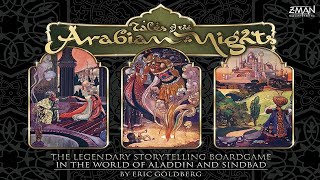
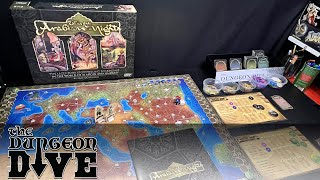
In Tales of the Arabian Nights, you are the hero or heroine in a story of adventure and wonder just like those told by Scheherazade to her spellbound sultan! You will travel the land seeking your own destiny and fortune. You will learn stories and gain wisdom to share with others. Will you be the first to fulfill your destiny? The next Tale is yours to tell! There is, of course, a winner in Tales of the Arabian Nights, but the point of the game is less to see who wins and more to enjoy the unfolding and telling of a great story!
Players choose a character card, a quest, select a set skills, and move across the board to fulfill the quest. A player's movement is based on their wealth and each player draws an encounter card at the end of their move. Dice are thrown and these determine the player's responses to the encounter based on their character card. In a very simplified sense, it's a very big Choose Your Own Adventure game - with the added spice that the players to your right and left control the matrix and the Book of Tales during your encounter - so the game moves along at a good pace. The first player to finish their quest wins.
The Book of Tales is huge and offers a huge amount of the variability and replayability. Solitaire modules can be purchased separately.


- Engaging narrative experience
- High player agency
- Humorous and unpredictable outcomes
- Can be complex to track all statuses and rules
- Significant amount of reading involved
- Dice rolls can lead to frustrating setbacks
- Storytelling
- The world of Aladdin
Mechanics (from transcript analysis)
- Character Stats — Players track various stats like Destiny, Story, Wealth, and Skills.
- Dice Rolling — Used to determine outcomes of encounters, movement, and other game effects.
- Movement — Players move their pieces across a board representing various locations.
- questing — Players have specific quests or goals they need to complete.
- Status Effects — Characters can gain or lose various statuses like 'lost', 'wounded', 'outlaw', 'imprisoned', 'ensorcelled', 'scorned', etc.
- Storytelling — The core mechanic where players read encounter paragraphs and make choices that drive the narrative.
Video topics + discussion points
Quotes (from this video)
- The legendary storytelling board game in the world.
- This is a hard one this is really scripty and small.
- My quest is the pool of the sea.
- I cannot believe you make him go all the way down.
- You were wounded before you can flee.
- God all right what treasure did you get to buy disrobing for the vizier or the sultan selling the robe.
- My turn, I made it.
- The game is over almost over can you just please move me on to my destination.
- You have died congratulations you win.
- I'm still lost like a loser.
- You think I'm just praying in general I don't think comparing to him.
References (from this video)
- Impressive for its time in terms of narrative depth and outcomes.
- Creates unique and often humorous stories.
- Whimsical and engaging theme.
- Good with a group of 3 players for pacing.
- Lack of meaningful player agency or control.
- Highly reliant on luck with little strategic depth.
- Gameplay can feel aimless or like 'fluff'.
- Can be too long for the gameplay experience.
- Some thematic elements are outdated and potentially offensive by modern standards.
- App support would greatly improve the experience due to book lookups.
- Arabian lore, stories of Aladdin and Sinbad
- Middle East
- Player-crafted narrative through random encounters and choices
- Near and Far
- Sleeping Gods
- Agents of Smurfs
Mechanics (from transcript analysis)
- Dice Rolling — Dice rolls determine outcomes and interact with character skills and encounter cards.
- Set Collection (Goals) — Players have objectives related to 'story points' or 'destiny points', but their impact on winning is downplayed.
- Skill checks — Players acquire skills that can influence encounter outcomes, though their relevance is debated.
- Storytelling/Narrative — The core of the game involves reading from a large book of paragraphs based on player choices and dice rolls, creating unique stories for each player.
Video topics + discussion points
Quotes (from this video)
- this is the game and i use that term very very loosely when i say game
- the board is almost just an excuse to read yeah to each other it's it's a very impressive bit of fluff
- it's literally just the luck of the role the luck of the draw uh that is absolutely this game you have no control over what what skills you get
- i guess i could say this game didn't age well
- the i will say this game in today's day and age uh would technically not be pc
References (from this video)
- Rich and engaging narrative
- Deep storytelling choices
- Excellent book and component art
- Satisfying skill system
- High replayability due to many permutations
- Classic and fascinating theme
- Can be a little hard to track skills and matrix entries
- Slightly clunky at two players
- Difficulty can be high at times
- Adventures in the Arabian Nights setting
- Arabian Nights
- Choose your own adventure book style with branching narratives
- Tales of the Arthurian Knights
- Mansions of Madness
- The Dark Quarter
Mechanics (from transcript analysis)
- Book as Game Board — The core gameplay involves navigating through a massive book, with numbered entries corresponding to different story events and choices.
- Modular encounters — Encounters can be based on terrain, characters, locations, or places of power, with different outcomes depending on dice rolls, skills, and time of day.
- player interaction — While primarily a solo or cooperative experience, some elements involve other players placing quest markers, and a tie-breaker for winning can involve comparing skills.
- Resource Management — Players manage Destiny points and Story points, aiming to reach a target total to win the game.
- Skill System — Players have skills, and having mastery in certain skills can lead to better outcomes or unique options during encounters.
- Variable player powers — Players can gain different statuses (blessed, cursed, beast form) and use skills that affect their capabilities.
Video topics + discussion points
Quotes (from this video)
- So, that's a lot of years, right? It's a lot of times past since there were no iPads, there were no iPhones. There were no personal computers 40 years ago like that where people, you know, had them in their home as much.
- The whole point of this game is having fun and telling stories.
- It's a nine out of 10 game. Is a fantastic game.
- Own it if you can. Just the books alone from Arththeran Knights and Arabian Knights just on the shelf look good.
References (from this video)

- board is really gorgeous
- looks nice
- Arabian Nights
Mechanics (from transcript analysis)
Video topics + discussion points
Quotes (from this video)
- it cost me two things actions and resources
- the print is that small cuz it does not need to be
- the thing that I thought was cute with one piece is the same thing here is at the beginning of the game you take seven cards off the top of your deck and that's your life and when you take damage you take one of the life cards and discard it but there may be a trigger on it which does something like maybe puts it to your hand I thought that was kind of unique
- Evolution 2.0 that's right Evolution one of my favorite games
- this game is for those of you that enjoy Evolution but want to play with people who have never played
- I'm loving the concept I'm loving the idea of the um individual modules and the various biomes that they're picking
- you can make the deck so the the game so that okay there's not a lot of player interaction not of a lot of attacking or could be there could be a lot of attacking
- we were completely mesmerized by these things cuz they are very cool
- they are actually very helpful for even people of advanced age because it's 4 through 99
- the fact that it's a magnetic setting where you put an overlay in the box and you are sticking these pieces to it just blew us away
- teaching people how to use chopsticks
- this is the miniature game for board gamers
- 45 minutes okay now I'm paying a lot more attention
- this is a skirmish game
- an army is only like 15 Miniatures I could put those together real quick and paint those real quick
- we did another draft event tonight oh my gosh 64 people sign up for the event
- my leaders were all of the villain the dark side that I had
- don't judge a book by its cover
- she made it look easy and I played that leader the night before and I felt like I was an idiot
- you know what am I dealing with here and she just I was like wow
References (from this video)

- It's in my all-time favorites.
Mechanics (from transcript analysis)
Video topics + discussion points
Quotes (from this video)
- All their boxes are the exact same size.
- Mwah, chef's kiss.
- It's in my all time favorite favorite favorite favorite favorite favorite favorite favorites. All time
- This is a super, super party game. It's really fun. One broom, 1 minute, one secret word.
- We are going to recreate the Big Bang.
- Um, I specifically like Oh, I forgot what it was called.
- You guys should see the all play area.
- My My ancestors got kicked out of Scotland because they were Jacobites, and worse than worse yet, they were Lutherans, which most Jacobites were Catholic.
References (from this video)
- Comes with a big thick book.
- Personally enjoy it more as a two-player game.
- Adventures inspired by The Arabian Nights
- Choose your own adventure, storydriven
Mechanics (from transcript analysis)
Video topics + discussion points
Quotes (from this video)
- Welcome back to Watch It Played. My name is Rodney Smith.
- The decider perk level allows people to vote on what game we do next.
- I want to reassure you that's not what I intend at all.
- I want to assure you the long format playthroughs are what I personally enjoy the most as well.
- So, my goal here is to explain each of these games in less than 15 seconds.
- Unfortunately, your opponents are trying to throw sharks and sea monsters and whales at you to sink your boats and eat your people. Lots of nasty fun.
- Anyway, war game but light war game, not a heavy war game.
- So, it's a lot of backstabbing and wheeling and dealing.
- And the game comes with a pair of sunglasses for the president to wear while he or she is the president.
- Well, that's it for now. In the next episode, hopefully we'll be continuing our Super Dungeon Explore playthrough.
References (from this video)

- Fun, ridiculous, and entertaining experience
- Encounters generate varied and humorous stories
- Rules can be loose; often played with house rules and not taken seriously
Mechanics (from transcript analysis)
- Choose-Your-Own-Adventure style — Players move around a map and encounter adventures based on landings.
- large encounter book and options pamphlet — A gigantic book of encounters (over 1500) with a separate pamphlet showing options.
- story-driven outcomes with randomness — Outcomes depend on encounters and choices rather than fixed rules.
Video topics + discussion points
Quotes (from this video)
- this is definitely a big thumbs up for the salsa expansion
- it's essentially choose your own adventure
- we laughed constantly throughout the whole time
References (from this video)

- storytelling element with tile collection
- aesthetic artwork on the box
- tile collection and storytelling
- Arabian Nights-inspired world
- storytelling with tiles
Mechanics (from transcript analysis)
- pick-up and deliver, storytelling — tiles with icons to collect and weave a story
Video topics + discussion points
Quotes (from this video)
- the quickest meanest knife fight for veteran and 18xx style players
- it's supposed to be a 90 to 120 minute game
- adorable
- i'm going to be playing this game tonight
- i actually purchased a copy of this about 30 minutes ago
- this expansion adds in a few new things which seemed like they would slot in quite well
- this just sounds so cool
References (from this video)

- The stories it tells of character's journeys through this world is still one of the best experiences that we've ever had with a board game
- The scoring system is completely and utterly meaningless
- Adventures in the style of Arabian Nights
- Middle East
- Story-driven, with choices based on character abilities influencing encounters drawn from a book of tales.
Mechanics (from transcript analysis)
- Card-driven encounters — Encounter cards direct players to entries in a book of tales.
- Storytelling — A story-driven game where players have choices based on character abilities.
Video topics + discussion points
Quotes (from this video)
- if your favorite board games aren't on this list then that is because a we haven't played them or B it's because we think they're [ __ ]
- but until then wait for the next installment of this list right we'll see you next
- do you agree with our list if you don't leave a comment down below and we'll come around your ass and kick your [ __ ] head in
References (from this video)

- Great for the story.
- The scoring mechanism is pointless and ignored.
- The second edition has content that doesn't need to be there.
- The artwork of the second edition looks like [__] [__].
- Storytelling and adventure
- Map of Asia
- Paragraph-based encounters from a book of tales.
Mechanics (from transcript analysis)
- Dice Rolling — Implied through the decision making process.
- Storytelling — Wander around a map, somebody will read a paragraph and you'll have a decision to make.
Video topics + discussion points
Quotes (from this video)
- remember if your favorite game of all time isn't on this list that's because a we haven't played it or B we think it is complete another dog
- Castles of Burgundy is a masterpiece of design that never gets old.
- it's just complex enough to give me a [__] brain ache and simple enough to make it accessible
- Jamie should stay off the [__] wine mate
- Escape curse of the temple set the bar that high for these Real Time games
- Blocky mountains a sleeper hit in our house.
- Scythe is a fantastic production it's a fantastic game
- We are there solely for the story
- Can't Stop is one of the best push luck games you can get today
References (from this video)
- Engaging narrative with player choices
- Replayability due to varied encounters and quests
- Good for cooperative or solo play
- Simplified mechanics compared to older versions
- Offers a sense of adventure and discovery
- Camera setup can be wobbly
- Repeating encounters can occur due to bad luck
- Some mechanics might be confusing (e.g., when to draw new quests)
- Difficulty in tracking all the status effects and skill advancements
- Seeking adventure and renown to be remembered
- The realm of Arthur
- Reading from a book of adventures with choices leading to different story branches and skill tests.
- Tales of the Arabian Knights
- Agents of Smush
Mechanics (from transcript analysis)
- Dice Rolling — Dice are rolled for skill checks and to determine outcomes.
- questing — Players undertake quests with specific objectives and rewards, which are placed on the map and must be completed.
- Resource management (Destiny) — Players need to manage Destiny points, which contribute to winning the game.
- Set Collection — Players can gain skills and renown, and some treasures offer unique abilities.
- Skill checks — Players make skill checks (e.g., Nature Law, Diplomacy, Mounted) to determine the outcome of certain events, with bonuses for relevant skills.
- Status Effects — Players can gain or lose temporary and permanent status effects that alter gameplay, such as 'accompanied', 'ensorcelled', 'enraged', or 'beloved'.
- Storybook game — The game uses a large book of adventures with numbered paragraphs that players read and interact with based on choices.
Video topics + discussion points
Quotes (from this video)
- It's just a great big Storybook game going around having Adventures competitive all that stuff
- you will be read a story you will make a choice that will take you to a different bit of the different branch of that story and then you will probably make a test and see if you succeed at that or not
- statuses unlike in Arabian Knights are temporary in this you don't have to go and like find a person that's going to get rid of that they will tick down and only last so long
- you're not supposed to know if you succeeded or not you're supposed to just read the story and you will discover through the story whether you've succeeded or not at the test
- There is a great big book of Adventures that's I know for how Hefty it is surprisingly light
- Although my armor is indeed prismatic its powers derived from Merlin himself and not the cathic lady whom the Knights of the prism serve
References (from this video)
- Sold out by the time we went to that store.
Mechanics (from transcript analysis)
Video topics + discussion points
Quotes (from this video)
- I just got back from the UK Games Expo. I had a great time as always and I just wanted to make a quick video talking about all of the games that I acquired during the expo.
- The brig and buy was was great, but it was very chaotic and long long cues and longer than we've had before.
- So, definitely um was at capacity. Yeah, the brig and buy was was great, but it was very chaotic and long long cues and longer than we've had before.
- So, I definitely recommend going at least once if you have the faintest bit of interest.
- But for everybody else, I'll see you next time on Chairman of the Board. Bye-bye.
References (from this video)

- The Arabian Nights is just super boring.
- There are no meaningful choices in this game. It boils down to luck and dice rolling.
- Arabian Nights
Mechanics (from transcript analysis)
- Card Drafting — It boils down to luck and dice rolling.
- Storytelling — The game is a story book.
Video topics + discussion points
Quotes (from this video)
- Battle Station's Lightseed, that would be great. I could use another pair of eyes on it.
- Don't all volunteer at once, y'all.
- I feel like that that that needs to be a a card that you can get in the uh Empire's End expansion or after the Empire expansion. Politically motivated and grouchy.
- So that's homework for next week. Bring bring those three and and we'll uh we'll discuss.
- I would say my favorite game designer is Ryan Mock basically because he somehow managed to make a really good game lugging that anchor Evan behind him.
References (from this video)

- still a game that I like a lot
- still needs a big book
- still is crazy and wild and random
- still has a few oddities in the rules
- adventure
- Arabian Nights
- storytelling through a big book
Mechanics (from transcript analysis)
- Dice Rolling — Still is crazy and wild and random.
- Storytelling — Still needs a big book.
Video topics + discussion points
Quotes (from this video)
- Elect yourself president from Parker Brothers.
- It's all it takes to buy your presidency.
- Flip It Jackpot endorsed by television personality Flip Wilson.
- Nightrider.
- Chips.
- The Bionic Woman.
- $6 Million Man.
- Thunderbirds.
- Pre Matt Lecock.
- Get smart.
- I love this.
- I love this book.
- This is my favorite one that I've ever pulled off the shelf.
References (from this video)
- Incredible and amazing solo mode.
- Solo mode is the most complete way to play the game.
- Nothing is taken away from the original game in solo mode.
- Layered choose your own adventure style questing system for solo.
- Looks great and plays great.
- Retains wild sense of imagination and randomness.
- Solo mode adds more statuses and treasure.
- The new board design looks great and pops on the table.
- The game is awesome and fun to play.
- Cards feel a little cheap.
- Component quality feels a little bit cheaper than desired.
- Storytelling, exploration, and random encounters
- Middle East/Arabian setting
- Passages from a Book of Tales, choose your own adventure style quests in solo mode
- Deep Regrets
Mechanics (from transcript analysis)
- Choose Your Own Adventure — The solo mode introduces a questing system that plays more like a choose your own adventure with milestones and story passages.
- Dice Rolling — Used for skill tests and to determine outcomes of encounters, with a standard D6 and a fate die.
- map exploration — Players move their characters around a map, visiting locations and encountering events.
- Narrative Choice — The solo mode introduces a questing system that plays more like a choose your own adventure with milestones and story passages.
- Player Powers/Abilities — Characters have different starting stats and can learn/upgrade skills like wisdom, weapon use, and beguiling.
- questing — Players undertake specific quests, often involving milestones, in both competitive and solo modes.
- Set Collection — Players collect treasures and items as part of quests or encounters.
- Status Effects — Characters can gain positive or negative status effects that alter gameplay or abilities.
- Storytelling — Core mechanic where players read from a Book of Tales, leading to random encounters and story progression.
- Unique Player Powers — Characters have different starting stats and can learn/upgrade skills like wisdom, weapon use, and beguiling.
Video topics + discussion points
Quotes (from this video)
- As a matter of fact, not only are they they are not a lesser version of the game, but in many ways, the solo mode for this is the most complete edition.
- It's the most complete way. It's the best way now to play Tales of the Arabian Nights
- It's still a total random fest. But that is something that I enjoy and I have fun with.
- By the beard of the prophet. you exclaim, dragging your bruised body up from the dusty Baghdad street.
- Man, that's brutal.
- they knocked it out of the park.
- if you've always wanted a really cool, really good solo mode for Tales of the Arabian Nights, well, this is it.
References (from this video)
- Narrative adventure game inspired by the tales of the Arabian Nights.
- Player experiences unfolding narratives with potentially whimsical or strange outcomes.
Mechanics (from transcript analysis)
- Storytelling — The game is known for its narrative-driven gameplay.
Video topics + discussion points
Quotes (from this video)
- Unfathomable, a new game in the Arkham Horror Files universe.
- Does this sound a lot like the reprint of Battlestar Galactica that was rumored with an Arkham Horror theme? Big time.
- Valor and Villainy: Ludwig's Labyrinth, a one to six player co-op adventure game.
- Disney Sidekicks: It's all about the true hero's journey, the sidekick.
- Divinus: Ancient Greece is being invaded by the Pantheon of Nordic gods.
- Savannah Park, designed by renowned designer duo Kramer and Kiesling.
- Tales of Arabian Nights: Z-Man are closing the book on the game and putting it to bed.
- King Domino Origins: takes the kingdom back to the stone age.
- Bella Magicka: has you play as an evil lord recruiting monsters.
- Neoville: building a harmonious city of skyscrapers and nature.
- Zoom in Barcelona: a fantastic hand management, photo collecting love letter to Barcelona.
- The Queer Games Bundle 2021: a collection of over 200 titles for $60, supporting queer creators.
References (from this video)
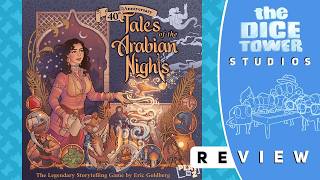
- The silliness of the stories
- Streamlined compared to the original
- Cool stories in the game
- Well-written and enjoyable book of tales
- Fun experience to play with family
- Mad cap and fun
- The secret goal rule at the beginning is dumb
- The game can be interminably long with too many players
- Some people will despise it due to lack of strategy and choices
- The game purports to take itself seriously but nonsensical stuff happens regardless
- Storytelling game where players are characters from Arabian Knights
- Arabian Nights
- Arthurian Legends Tales
Mechanics (from transcript analysis)
- Book of tales — Many encounters require the player to open a book of tales and find a specific paragraph based on a roll or situation.
- Card drawing — Players draw cards from an encounter deck which present different situations.
- City cards — Players start with city cards, and if on that city, can roll dice for an event instead of drawing an encounter card.
- Dice Rolling — Players will draw a card from the encounter deck and often roll dice to determine outcomes.
- Quest cards — Players have quest cards that sometimes let them put quest markers on the board and have objectives to complete for rewards.
- secret goals — Each player is going to write their secret goal down.
- Skill System — Players start with skills and can gain or lose them, affecting outcomes.
- Storytelling — A storytelling game in which you are one of the people who the Arabian Knights is told about.
Video topics + discussion points
Quotes (from this video)
- this is a game where the rules are a structure and a construct, and I don't know that it matters that much. They're there just to keep you having a fun and entertaining time.
- This is a game that people will hate or love. I happen to very much like it, but I know people who would despise it because of the lack of things and strategy and choices that you have.
References (from this video)
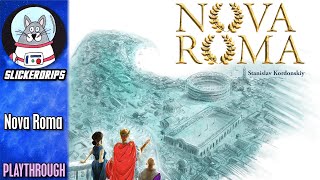
- Really cool.
- Had to be cut short due to room closing times.
- Adventure stories
- Arabian nights
- Storytelling
Mechanics (from transcript analysis)
- Storytelling — The game involves creating and experiencing narrative tales.
Video topics + discussion points
Quotes (from this video)
- GridCon was amazing. Probably the best con thing this year.
- It was really intense and a proper roller coaster and amazing fun.
- It wasn't like a great big multiplayer Arkham thing, but we played the new Midwinter Gala.
- And we ended up winning against all odds in that one.
- It's a really cool action system.
- The two-player game works is mean, and I don't like it.
- It's not a Care Bear friendly mode because it's like you place...
- But, it's nice and snappy for Nova Roma.
- I feel like I I've let myself down in round three.
- I lost sight of what was important.
References (from this video)
- The silliness of the stories
- The game retains the silliness
- Subverts expectations
- Wildly random and that's fine because it's silly and funny
- Tales
- Arabian Nights
Mechanics (from transcript analysis)
Video topics + discussion points
Quotes (from this video)
- I love the silliness of the stories.
- The game still retains that silliness of sorts.
- subverts expectations by you're never quite sure what the right thing to do.
- It is wildly random.
- I don't mind that the game is wildly random because it's silly and funny.
References (from this video)
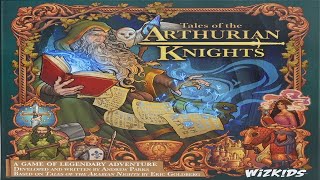
- Holds a special place due to its chaos and memories
- Had very strange and whimsical moments
- Offers a 'beer and pretzels' experience
- Arbitrary setup mechanics
- Confusing or nonsensical encounter options due to the matrix system
- Brutal difficulty and potential for early failure
- Less streamlined and cohesive narrative compared to the Arthurian version
- Arabian
- Storybook, choice-driven encounters with a matrix system
Mechanics (from transcript analysis)
- Arbitrary setup — Required an arbitrary setup to determine destiny points and required players to return to Arabia once certain scores were met.
- Matrix system — Used a matrix system on the board to determine how players could interact with encounters, sometimes leading to very weird or nonsensical options.
- random encounters — Players draw encounter cards that lead to sections in a book, with options often presented through a matrix that could lead to unexpected results.
Video topics + discussion points
Quotes (from this video)
- for all intents and purposes, a better game.
- It's just such a better streamlined process.
- The writing is very very well done.
- Tales of the Arabian Knights was brutal.
- This is clearly just better. It's it's more cohesive, more streamlined, more structured, uh more detailed. It it is better writing.
- Arabian Knights just had a more wacky, whimsical, silly vibe to it.
References (from this video)
- Array
- Array
- adventure, storytelling, destiny versus free will, romance, intrigue
- Array
- Baghdad and surrounding cities in a fantastical, Arabian Nights-inspired world
- Array
- Array
- Array
- positive
Mechanics (from transcript analysis)
Video topics + discussion points
Quotes (from this video)
- This is a fantastic game of wild adventure
- I had an absolute blast playing this game today
- The book of tales is a really is a book of Adventure
- the characters are pretty cool in this game I actually enjoy them quite a bit
- you have to be willing to have fun even when bad stuff is happening and it can still be fun just because of how random and crazy the things that happen in this game are
- this is a game that I always have fun playing
- you really never know what is going to happen in this game
References (from this video)
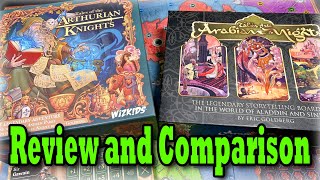
- Chaotic randomness can create lively, unpredictable sessions
- Good fit for multiplayer with flexible storytelling
- Quicker reading pace compared to Arthurian Knights, reducing downtime in group play
- Expanded quest structure and advanced quest options offer more variety
- Longer and heavier passages can be a drain for some groups
- Less structure and more randomness may feel less narratively cohesive
- Reading load can be significant in multiplayer sessions, potentially slowing play
- destiny, chance, and narrative exploration through a more chaotic, open-ended structure
- Arthurian legend milieu; broader set of encounters and tales in the Arthurian world
- reaction-matrix-based, more open-ended and chaotic narrative
- Tales of the Arthurian Knights
Mechanics (from transcript analysis)
- Chaos-driven randomness and shorter passages — Encounter texts are shorter but more chaotic, yielding a looser narrative connection.
- Grand quests and era-based progression — Similar in spirit to Arthurian Knights but with a different emphasis and pacing.
- Multiple players and cooperative play via legacy-style cards — Designed to support multiplayer with shared narrative control and variable outcomes.
- Narrative Choice — Encounter outcomes rely on reaction matrices that guide multiple narrative branches.
- Reaction matrices and paragraph-based encounters — Encounter outcomes rely on reaction matrices that guide multiple narrative branches.
- Two-tier storytelling with finite text blocks — Read passages that are generally shorter than the Arthurian Knights book, enabling quicker sessions.
Video topics + discussion points
Quotes (from this video)
- it's effortlessly fun
- the stories are more directed and tailored to what you are actually expecting to encounter
- I am very happy to own both of them
- this game is effortlessly fun
- I think the stories are more directed
References (from this video)

- strong storytelling focus
- unique pick-up-and-deliver mechanics
- theme may be niche for some players
- availability may depend on publisher cycles
- story-driven, thematic journeys and quests
- pickup-and-deliver storytelling adventure
- story-first with rich narrative options
- Talisman
- Gloomhaven: Jaws of the Lion
Mechanics (from transcript analysis)
- Narrative Choice — reader-driven outcomes and quests
- story-driven choices — reader-driven outcomes and quests
- Tile Placement — tile-placement to build routes and stories
Video topics + discussion points
Quotes (from this video)
- it's a pure euro that is nicely connected to the theme more than you would anticipate
- money is super tight in this game which adds a lot of tension
- the rondelle with dice worker placement it has contracts and there's a market that changes the values of all the items
- it's a game i can get my wife and kids to play with me yet still a very enjoyable game for me
- the weight and the length of the game is just a perfect scenario for me
References (from this video)

- High thematic focus and storytelling emphasis
- Strong replayability due to a vast encounter book and diverse outcomes
- Fun social dynamics with players reacting to evolving stories
- Limited mechanics can feel shallow for some players
- Luck/dice outcomes can dominate, leading to frustration
- Can be chaotic for players seeking strict game balance
- Story-driven, fate and destiny, moral choices with magical and fantastical encounters
- Baghdad and surrounding regions, with travels across Africa and beyond into various locales
- Giant, branching, choose-your-own-adventure–style storytelling guided by an expansive book of tales
Mechanics (from transcript analysis)
- Character setup and skill selection — Players pick three unique skills from a side-pool to influence encounters and options
- Destiny and story points — Players accumulate story points and destiny points to determine victory
- Encounter-driven progression — On each turn, players encounter a location-based scenario, resolved via a book of passages and dice/skills
- Quest cards — Each player draws a quest card to establish rough goals or aspirations
- Status Effects — Characters gain statuses that modify dice rolls, actions, and interactions with others
- Wealth-based movement — Movement is constrained by wealth level, affecting range and travel options
Video topics + discussion points
Quotes (from this video)
- It's the giant choose your own adventure book.
- This game is just the same thing, but I get to watch my friends choose things.
- It's not really a game.
- You could play this game a hundred times and you're still receiving different outcomes.
- It's the best creative bedtime story ever.
References (from this video)
- memorable storytelling experiences
- generates unique narratives
- randomness can feel uneven
- story-driven adventures with random outcomes
- fantastical storytelling adventure around a map
- choose-your-path storytelling
- Dungeons & Dragons storytelling games
Mechanics (from transcript analysis)
- story deck/entries — random story prompts drive player actions and outcomes
Video topics + discussion points
Quotes (from this video)
- probably the greatest party game of all time
- it's a betting racing game
- this is basically one huge massive rondell of a game
- I hate painted miniatures
References (from this video)
- strong narrative flavor and thematic immersion
- high replayability due to branching encounters
- varied setting and character arcs
- cohesive integration of destiny and outcome tracking
- solves the urge for interactive storytelling in tabletop form
- rule complexity and potential downtime
- narrative randomness can frustrate expectations
- long play sessions and setup
- imprisonment and penalty cycles can feel punishing
- can be fiddly to manage as a group with multiple players
- adventure, fate, storytelling, and moral choices across encounters
- Arabian-inspired fantasy world spanning deserts, bustling cities, seas, and magical realms
- episodic, choice-driven, player-narrated outcomes with encounter-based storytelling
- The 7th Continent
- Fiasco (narrative storytelling game)
- Storytelling/roleplay-driven adventure games
Mechanics (from transcript analysis)
- artifact/treasure collection — Acquire and manage items/artifacts that affect future encounters
- character interaction/roles — Engage with a cast of characters (princes, viziers, imps, genies) impacting the arc
- city travel and destination slots — Move between cities and use destinations to shape the journey
- Combat: Deck/Hand — Draw and resolve encounter cards that drive the story and player decisions
- destiny points — A resource that fuels and limits actions, reflecting fate and consequences
- encounter deck — Draw and resolve encounter cards that drive the story and player decisions
- imprisonment/escape mechanic — Risk of imprisonment and the possibility of escape or continued penalties
- Narrative Choice — Story points guide pacing and create branching outcomes based on player choices
- resource and status management — Track statuses (like imprisoned) and resources as you pursue objectives
- Resource Management — Track statuses (like imprisoned) and resources as you pursue objectives
- story-point pacing and branching — Story points guide pacing and create branching outcomes based on player choices
- Storytelling — Players narrate outcomes and influence resolutions within the frame of the encounter
- storytelling/narrative control — Players narrate outcomes and influence resolutions within the frame of the encounter
Video topics + discussion points
Quotes (from this video)
- you observe as long as you can later your encounter what you have seen is so vivid that your truthfulness cannot be doubted
- secret trapdoor it wasn't a secret use
- the attendants have taken your clothes and your belongings
- you are beneath my amusement but perhaps the guards will enjoy toying with you
- the lake of colors
- destiny one to lose respected you lose this right
- the secret trapdoor - three fights that we choose
- hidden behind the door in the middle of the thicket
References (from this video)
- Unpredictable storytelling
- Humorous outcomes
- Not a strategic game
- Randomness can be frustrating
- Narrative adventure
- Arabian-inspired world
- Randomized storytelling
Mechanics (from transcript analysis)
- Narrative Choice — Players choose responses to random events
Video topics + discussion points
Quotes (from this video)
- these are my top five morbidly dark themes in games that make me laugh
- do not play it boring just like you're trying to score points tell the story