/pic6949932.jpg)




























Terracotta Army Deep Dive
What the Community Thinks About Terracotta Army
Terracotta Army holds a special place in the board gaming community as one of 2022's most celebrated releases. Board and Dice published this strategic masterpiece, and reviewers consistently praise it as a standout title that rewards careful planning and tactical positioning. The game balances thematic immersion with engaging mechanics, creating an experience that feels both historically resonant and mechanically satisfying. What impresses players most is how the game's central wheel mechanism drives meaningful decisions while the beautiful miniatures and board create an inviting table presence that draws players back repeatedly.
Core Mechanics That Define Terracotta Army
The Rotating Wheel of Actions
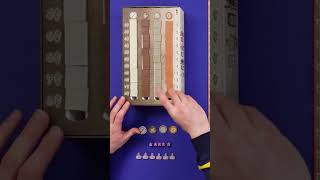
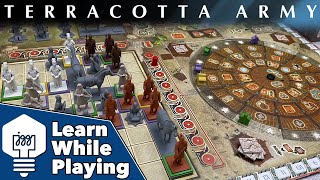
At the heart of Terracotta Army sits an elegant triple-layered wheel with pie-wedge segments that contain action combinations. Players place workers onto these segments to execute the actions depicted within those slices. What makes this system brilliant is the ability to spend coins to rotate the wheel, allowing players to access different action combinations if the current alignment doesn't suit their strategy. This creates a constant tension between spending resources now for better actions versus accepting the current layout and preserving capital for later turns. The wheel elegantly transforms a traditional worker placement mechanism into something dynamic and interactive, preventing the game from ever feeling static.
Area Control Through Miniature Placement
Players construct the Terracotta Army by placing warrior miniatures onto the mausoleum board, competing for dominance across rows and columns that score at the round's end. The game's brilliant compound scoring evaluates multiple conditions: who controls the most pieces in a row or column for dominance points, who has any presence for participation points, and how warriors connect into groups for endgame scoring. Different warrior types and special statue pieces like horses and musicians interact with these conditions in unique ways, rewarding careful spatial planning. By round five, the board transforms into a complex puzzle where one misplaced warrior blocks entire strategies, making every placement consequential.
The Terracotta Army Experience
Strategic Depth That Reveals Itself Gradually
New players often feel overwhelmed by the number of systems at play, yet experienced reviewers note that the initial complexity dissolves once players grasp how the wheel, resources, and board positioning interconnect. What emerges is a deeply satisfying engine-building experience where early investments in building upgrades or positioning create cascading advantages. Players develop their own strategies, some focus on military dominance through resource gathering, others specialize in political faction support, and some orchestrate elegant endgame combinations. This mechanical richness means that the same game plays differently depending on which economic path each player pursues.
Table Presence That Demands Attention
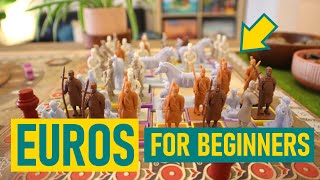
Few games command as much visual interest as Terracotta Army. The painted warrior miniatures nestled in their storage organizer, the central rotating wheel with its satisfying mechanical clicks, the clear grid of the mausoleum, every component serves both functional and aesthetic purposes. Players often comment on how the game's physical presence creates an immersive atmosphere that complements the historical theme. Placing a beautifully sculpted warrior onto the board feels meaningful in a way that abstract wooden cubes cannot replicate. The tactile satisfaction of manipulating components combines with the visual appeal to create memorable moments throughout the game.
What Makes Terracotta Army Stand Out
The Innovative Wheel Mechanism
While worker placement games exist in abundance, Terracotta Army's rotating wheel distinguishes itself through dynamic action selection. Unlike traditional worker placement where all actions remain static, here players can influence the available options mid-round by paying coins to rotate the wheel. This transforms action selection from a pure puzzle into an economic decision: is accessing better actions worth the investment, or should I optimize my current resources? Reviewers frequently highlight this mechanic as genuinely innovative, rewarding both careful planning and tactical adaptation.
Beautiful Miniatures as Functional Components
Board and Dice's decision to include painted warrior miniatures elevates Terracotta Army beyond typical euro games. These are not merely decorative, they drive core scoring mechanics and create a powerful connection to the historical theme. The clever storage organizer doubles as the draw container for available warriors, solving a practical problem while maintaining the game's aesthetic coherence. This attention to how components serve both mechanical and thematic purposes reflects design thinking that elevates the entire experience.
Potential Drawbacks
Analysis Paralysis from Layered Decision Trees
The game's depth comes at a cost: turns can stretch uncomfortably long as players calculate optimal placements, wheel rotations, and resource allocations. Groups prone to analysis paralysis may find themselves waiting extended periods while careful players contemplate their options. The interconnected scoring systems mean that seemingly small decisions carry large consequences, creating a mathematical optimization puzzle that appeals to some players while frustrating others seeking faster-paced experiences. Managing table time requires players who can balance thorough planning with reasonable decision speeds.
Frustration When the Wheel Doesn't Align With Strategy
Despite its elegance, the rotating wheel can sometimes force uncomfortable compromises. Players occasionally find themselves unable to execute their planned strategy because the current wheel rotation offers no viable actions. While rotating the wheel costs resources, sometimes players lack the coins needed to manipulate it toward their preferred combination. This can create moments where players feel constrained rather than empowered, especially in early rounds when capital is limited. The tension between the wheel's limitations and player agency makes the game tactically demanding but occasionally frustrating.
If You Enjoy Terracotta Army
Players captivated by Terracotta Army's blend of elegant mechanisms and thematic immersion should explore other Board and Dice releases, which consistently prioritize innovative mechanics paired with beautiful components. Those drawn to the area control scoring systems will appreciate the compound victory conditions found in games like Carcassonne and modern games such as Sagrada. Players who love worker placement mechanics with meaningful resource management should investigate Wingspan's action economy or the deck-building elements found in games like Xi'an: Terracotta Army's spiritual predecessor. The historical theme appeals to those seeking euro games with narrative weight beyond mere point accumulation.
What Reviewers Are Saying
"It's much better on the table you know the game is a euro game with a fun way to take actions it has a wheel where you match up three actions together to then perform them but before you choose you can turn one of the wheels by paying money to do so and get better actions."
— Meeple Mountain
"This is a game that is just different from other games and this one is going to be published by board and dice which is actually one of the biggest hooks for me because to be honest everything they put out so far I've really enjoyed. The mechanisms advertised here are area majority, you've got worker placement and workers of different types as well."
— Chairman of the Board
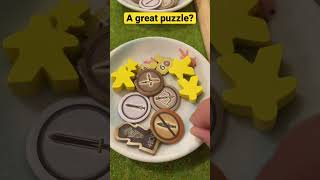
"It's a big strategic puzzle especially because at the end of the game the grid scores a little bit differently you want to have warriors who are of the same type grouped together with a group that's that's at least two or more pieces."
— Before You Play