Terraforming Mars: Ares Expedition is an engine-building game in which players control interplanetary corporations with the goal of making Mars habitable (and profitable). You will do this by investing mega credits (MC) into project cards that will directly or indirectly contribute to the terraforming process. In order to win, you will want to accumulate a high terraform rating (TR) and as many victory points (VP) as you can. Players raise their TR by increasing global parameters: oceans, oxygen, and temperature. TR also determines each corporation's basic income, and, at the end of the game TR counts as VP. Additional VP and production capabilities are awarded for building project cards and other actions taken during the game.
The game is played in rounds, and each round the players will choose one of five phases, which determines which activities will take place during that round. This means every round is different, but can consist of building new project cards, taking general and project-specific actions, producing income and resources (plants and heat), or researching to draw more project cards. Every player will take all the phases selected for the round, and will receive a special bonus during the phase that they selected. To speed up the game, within each phase, players can act simultaneously without waiting for each other!
The game board has tracks for oxygen, temperature, and terraform rating, as well as a place for all of the ocean tiles that will be flipped over the course of the game. The game ends when there is enough oxygen to breath (14%), oceans enough to allow Earth-like weather (9), and the temperature is well above freezing (+8°C). It will then be possible, if not comfortable, to live on the surface of Mars!
The winner is the player with the most VP at the end of the game.

- streamlined variant of Terraforming Mars
- more approachable for new players
- good pacing for mid-weight game
- some depth from base game is reduced
- may feel less thematic to long-time Terra fans
Mechanics (from transcript analysis)
- card drafting — Draft and play project cards to terraform Mars through actions and resource management.
- set collection/resources — Acquire and allocate resources to advance terraforming metrics and score victory points.
Video topics + discussion points
Quotes (from this video)
- The crew packs in so much depth in such a small package that I really can't recommend it highly enough the bang for the buck is just astronomical.
- Summer Camp has a really high replayability right out of the box and seven different skills that you can earn merit badges for.
- If you're looking for a nice entry-level deck builder with an awesome theme that'll make you want to make a bonfire and roast some s'mores ASAP.
- Red Rising is a card drafting hand management game for one to six players that plays in about 45 minutes to an hour and is based off the dystopian novel series by Pierce Brown.
- The rules of this game are super simple and you can usually get into playing in about 15 minutes or less.
- Azul is a really great game from Plan B Games, tile placement kind of abstract, with beautiful little tiles that look like starbursts.
References (from this video)

- deep strategic potential
- expands the Terraforming Mars concept in a compact form
- industrial terraform progression
- Mars terraforming ecosystem expansion
- system-driven with thematic backstory
Mechanics (from transcript analysis)
- card drafting — draft and play project cards to terraform Mars
Video topics + discussion points
Quotes (from this video)
- you never know what questions Derek is gonna pull out of the bag
- this is going to be an hour of gaming goodness
- what board game world or board game right so just board game would you like to see turned into a tv show or movie
- the move happens because like a lot of people know late last year kickstarter announced we are pivoting to the blockchain to blockchain technology
- i would watch a TV show of Fallout board game
- you never know what's going to come out of the grab bag
References (from this video)

- Improved components and artwork over Terraforming Mars
- Recessed boards prevent tokens from sliding
- Clearer rule book; easier to learn than the base game
- Two-player and solo modes offer quicker play
- Long play time with 3-4 players; still lengthy
- Limited player interaction; largely solitaire
- No card drafting reduces strategic depth
- Solo mode is luck-dependent and frustrating
- engine-building and terraforming via card-driven actions
- Mars colonization
- compact, table-driven engine-building with phase-card selection
- Terraforming Mars
- Race for the Galaxy
Mechanics (from transcript analysis)
- Card-driven actions — Draws from deck; no drafting; cards raise production or enable actions
- phase resolution with ordering — Phases execute in order 1-5 with potential duplication consequences
- production tracking — Track resources on a production line with tiles and cubes
- scoring via tokens and cards — End-game scoring via resources and card effects
- secret phase selection — Players secretly choose one of five phases each round, revealed simultaneously
Video topics + discussion points
Quotes (from this video)
- the rounds are endless
- multiplayer solitaire
- two player max
- I've got to admit I do like the fact you do get a ton of these cards but you still basically playing these cards down
- it's basically the same sort of thing condensed down
References (from this video)
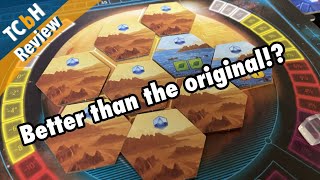
- Shorter setup and takedown compared to vanilla Mars
- Polished production quality and components across the board
- Dense engine-building core with multiple viable strategies
- Reduced downtime due to simultaneous turns and streamlined phase interactions
- Reduced player interaction and a leaner multi-layered competition
- Milestones and rewards from the original are stripped away, which can lessen conflict
- Turn resolution can feel less dynamic for players who crave tighter interactivity
- Corporate privatization and planetary terraforming
- Mars colonization era
- engine-building, card-driven economic strategy
- Terraforming Mars
Mechanics (from transcript analysis)
- Card drafting / phase card selection — Players choose phase cards and reveal simultaneously to determine round actions.
- engine building — Blue cards provide ongoing abilities; red cards offer powerful, one-off abilities; developments boost production.
- Resource management / production — Manage money, plants, heat, oxygen, water; production and project cards drive terraforming progress.
- Simultaneous phase resolution with shared resolutions — If multiple players pick the same phase, the round resolves once for all players, with potential bonuses for phase founders.
Video topics + discussion points
Quotes (from this video)
- the martian elephant in the room which is how does it compare to its older brother
- ares expedition takes the absolute best parts of the original distills them adds more mechanical and cosmetic polish
- you move through so many cards you collect so many resources it doesn't feel like less of a game it just feels like it has a different structure
- setup and takedown are shorter and the components are a massive step up in quality
- if your primary reason for coming to terraforming mars is to build up an engine of synergistic awesomeness this does that really well
References (from this video)
- Clear, structured rule explanation suitable for new players
- Detailed walkthrough of setup, phase flow, and card interactions
- Includes discussion of unique aspects like production tracking, discounts, and end-game scoring
- terraforming, engine-building, card-driven action selection
- Mars, terraforming the planet to support life
- instructional
- Terraforming Mars
- Terraforming Mars: Ares Expedition
Mechanics (from transcript analysis)
- card-driven — Cards provide ongoing effects, instant bonuses, and prerequisites that interact with production and TR.
- engine-building — Players develop production tracks (Mega credits, cards, heat, plants) and specialized capabilities (steel, titanium) to enable stronger plays.
- phase-based actions with planning and resolve — Rounds consist of planning, resolving selected faces, and end-of-round adjustments; actions are often simultaneous with phase-specific bonuses.
- tile and board interaction — Oceans, forests, and other board features influence oxygen, temperature, and TR, driving scoring and progression.
Video topics + discussion points
Quotes (from this video)
- which is a standalone streamlined version of the very popular terraforming Mars game
- two-player Cooperative mode and also a solo mode
- the game is played in rounds and this continues until all three terraforming conditions have been met
- let's move to the table and start
References (from this video)
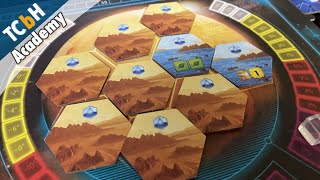
- Strong card draw and science-tag synergy
- Deep engine-building with flexible card play
- Engaging solo mode with dynamic phase resolution
- Some cards are weak or inefficient in solo
- High complexity and micromanagement can be challenging
- Expensive late-game cards can slow progress
- corporate competition to terraform Mars
- Mars; terraforming and colonization
- card-driven engine-building with solo mode
- Terraforming Mars (base game)
Mechanics (from transcript analysis)
- card drafting/hand management — Players draft and manage a hand of cards to build a personal engine, with synergy around science and space-tag cards.
- card synergies and tag interactions — Blue/red cards, science tags, and microbes/plants interact to create combo potential.
- engine-building/resource management — Players convert resources into production and progress on the terraforming parameters.
- solo mode with dummy player and phase cards — Solo variant uses a dummy opponent and phase cards to determine actions and round timing.
- terraforming track progression — Global parameters (oxygen, temperature) and ocean tiles drive terraforming rating and victory conditions.
Video topics + discussion points
Quotes (from this video)
- card draw is extremely powerful in aries expedition
- synergy is happening science is synergy
- anti-gravity technology card
- this is a monster of an action phase
- i love all of these cards
References (from this video)
- Deep strategic depth and strong synergy between cards
- High replayability due to many cards and corporation choices
- Tight end-game tension and player interaction
- Complex iconography and rules can be confusing on first play
- Digital/tabletop UI can require patience and setup to learn
- terraforming, resource engine-building, and card-driven development
- Mars terraforming and colonization
- card-driven, highly interactive, with chain-building strategies
- Terraforming Mars
Mechanics (from transcript analysis)
- action phase sequencing — Turns progress through planning and production phases; players choose actions that affect future rounds.
- card drafting — Players draft, draw, and play development cards to gain effects.
- corporation / player powers — Each player has a starting corporation with a unique effect affecting costs and production.
- engine-building — Players build a personal engine by acquiring cards that generate resources and actions.
- Resource management — Heat, plants, steel, titanium, and money are managed to perform actions.
- terraforming track — Terraform rating increases with actions, providing end-game scoring opportunities.
Video topics + discussion points
Quotes (from this video)
- we are saving the planet great which planet mars specifically not ours we're probably abandoning our planet
- we're not going to die we are gonna save the planet
- gosh it's expensive
- this is a really good combo
- rich dude over here
References (from this video)

- Science fiction terraforming and engine-building
- Outer space terraforming corporation era
- Competitive engine-building with card-driven actions
Mechanics (from transcript analysis)
Video topics + discussion points
Quotes (from this video)
- we want to play them and share these hot games with you
- we love this community that we're building
- we're going to try to play them too
References (from this video)

Mechanics (from transcript analysis)
Video topics + discussion points
Quotes (from this video)
- we are having a giveaway yes yes from inside up games yes yes summit
- Summit is so thematic
- it's a gateway game
- we're going to meet people at the Cardboard Caucus
References (from this video)
- Clear articulation of core end-game conditions and TR-based scoring.
- Highlights the card-driven engine and the importance of building a flexible resource engine.
- Emphasizes how global parameters drive pacing and determine the end of play.
- Some terminology in the narration is nonstandard (e.g., 'faces' instead of 'phases'), which may confuse newcomers.
- Rule specifics are summarized rather than itemized; players should consult the official rulebook for precise interactions.
- Terraforming, planetary engineering, resource management
- A near-future Mars terraforming project where players collaboratively and competitively modify climate and geography to render Mars habitable.
- rule-explanation and strategic guidance with concrete examples
- Terraforming Mars
Mechanics (from transcript analysis)
- Card-driven engine building — Players acquire and utilize project cards to drive engine-building, growth, and scoring opportunities.
- global parameters and end-game trigger — Global climate parameters (temperature, oxygen, oceans) are advanced to predefined thresholds; when achieved, the game ends and scoring occurs.
- hidden action/phase selection — Rounds involve a set of phases where players secretly select which phases to execute; non-selected phases are skipped for that round.
- Resource management — Players manage resources (e.g., mega credits, cards, and planetary tokens) to perform actions and optimize growth trajectories.
- terraforming rating (TR) as a victory parameter — TR increases as players advance the terraforming process, serving as a key scoring/CV resource and end-condition driver.
Video topics + discussion points
Quotes (from this video)
- in the game players are trying to make Mars inevitable by bringing its temperature to Plus 8 degrees by increasing its oxygen level to 14 and by creating nine oceans on the planet
- the game ends when the required temperature oxygen and water levels are achieved
- and players proceed to scoring the
- the player with the most victory points will win
- Terraforming Mars Aries Expedition
- the game is played in rounds which consists of five faces
- when the required temperature oxygen and water levels are achieved the game ends
References (from this video)
- More card-driven and portable than the base game
- Faster setup and playtime with streamlined components
- Phase-based engine adds depth and allows reading opponents
- Smaller board preserves thematic feel while staying compact
- Clear color-coding helps quick comprehension of card functions
- Limited visibility of card interactions beyond described rules
- Balance questions due to new resource and phase dynamics
- Removal of milestones/awards may affect long-term goal variety for some players
- Compact board may reduce the sense of scale for some entrants
- corporate competition to terraform Mars with emphasis on pacing, phase management, and engine-building
- Mars during the terraforming era, corporate-driven colonization; a compact, portable iteration of the terraforming Mars concept
- expository overview with comparative commentary to the original game
- Terraforming Mars
Mechanics (from transcript analysis)
- Card color-coding and function — Cards are color-coded to indicate generation/resources or actions (green for development, red for construction, blue for production) and related effects.
- Card discard for currency — Players can discard cards at any time to gain mega credits.
- Face-up events — Event cards are played face-up rather than flipped face-down.
- Milestones and awards removed — Milestones/awards are removed in favor of other scoring mechanics.
- New resource for card generation — A new resource allows earning cards during the resource step.
- No generations — There are five phases per turn but no generation track; turns are phase-based rather than generation-based.
- Phase selection with phase-reveal — Each player privately selects one of five phase cards to reveal; only revealed phases are executed that turn.
- Phase-based action economy — Each turn is defined by revealed phases; players choose a phase that will be executed that turn, shaping tempo and strategy.
- Phase-trigger bonus — The phase-triggered player receives a special bonus (e.g., construct two cards) while others may be limited to standard actions.
- Resource reinterpretation — Energy no longer transfers to heat as a collectible resource.
- Smaller board and ocean management — Board is smaller with nine ocean tiles; ocean tiles are flipped to reveal prizes instead of laid out.
- Starting hand and hand size limit — Players start with eight cards; a hand size limit of ten is enforced, with discard options for credits.
- Steel and titanium simplification — Discounts from titanium apply to space-related projects; the discount is permanent since the track is not spent.
Video topics + discussion points
Quotes (from this video)
- "it's the best way to keep up to date with everything we do here at board game coffee"
- "remember have fun keep gaming be social see you next week"
References (from this video)

- tight, streamlined Mars feel
- fast compared to base game in some plays
- not as satisfying long-term as base game for some players
- may feel too lean for dedicated fans
- industrial-scale terraforming
- Mars terraforming under corporate teams
- card-driven engine-building with phase revelation
- Terraforming Mars (base game)
Mechanics (from transcript analysis)
- card drafting — collect and deploy cards to power actions
- phase selection — reveal and execute production phases each round
Video topics + discussion points
Quotes (from this video)
- it's still a must have
- the twist to this role play is that you all text in a WhatsApp group
- it's a semic which means you all are stuck in the ship and want to get out together
- it's not fantastic, not even fantastic; it's very good
- the game is not simple
References (from this video)

- condensed, snappy version of Terraforming Mars
- maintains core decisions with less downtime
- loses some flavor of the original
- less milestone/award system for tracking progress
- terraforming and corporate competition condensed
- colonize and transform a barren planet
- accelerated, punchy strategy
Mechanics (from transcript analysis)
- card drafting — cards drive engines and events; players draft to optimize actions
- engine-building — build a production engine to generate resources and points
Video topics + discussion points
Quotes (from this video)
- spirit island is really in my heart of hearts it's a game that i love solo and playing multiplayer it has unending amount of replayability and the synergy between the thematic resonance and the mechanical aspect of it the clock working and puzzle as you figure out every single scenario is just outstanding
- it's a condensed and succinct version it doesn't completely strip things away and it does add new mechanics to it
- distilling a larger concept into its most germane elements
- Between two castles is as far as i'm concerned one of the unsung heroes of the tabletop gaming world
- the cat's pajamas