/pic7077185.jpg)



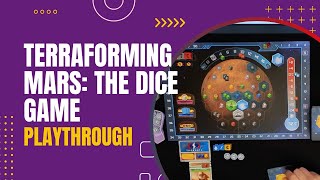





Terraforming Mars: The Dice Game Deep Dive
What the Community Thinks About Terraforming Mars: The Dice Game
Terraforming Mars: The Dice Game arrived as a streamlined sibling to one of board gaming's most beloved economic engines. Launched by FryxGames and Stronghold Games in 2023, this version trades the cube-based resource management of the original for a dice-driven system that fundamentally reshapes how players interact with the core loop. The reception has been split: reviewers like The Board Game Garden celebrate it as an accessible entry point to the Terraforming Mars universe, while The Cardboard Herald feels it sacrifices some of the strategic depth that made the original special.
Core Mechanics That Define Terraforming Mars: The Dice Game
Dice as Resources
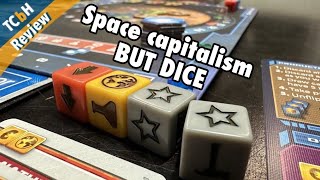
The game's central innovation replaces traditional resource cubes with custom dice. Each die type represents a different resource category, with colored dice showing different resources on each face, so rolling and die orientation become central to every decision. Instead of gaining static amounts of resources each turn, players roll their production dice and see what comes up, then spend actions to rotate those dice to show the faces they need. Yellow dice generate credits and science, green dice provide plants and animals, blue dice produce water and oxygen, red dice generate heat, and gray dice supply steel and titanium. This creates a visual, tactile experience where your resources are literally in your hands and can be manipulated through careful action management.
The Production and Action Economy
Every turn, players choose between a production turn or an action turn. On production turns, you roll the dice tied to your engine of project cards and refresh your hand. On action turns, you first take a mandatory support action (gain a die, flip a die to any face, discard a die to draw a card, or spend a card to gain any die) followed by a main action where you play cards, raise temperature, place oceans and forests, or build cities. This structure gives constant mitigation against bad rolls, but it requires careful resource investment to make those mitigation tools available, which is the heart of the puzzle.
The Terraforming Mars: The Dice Game Experience
Fast and Accessible Gameplay
The game lives up to its design goal of playing in roughly an hour. The iconography is clear and self-explanatory, making it far more accessible than the original game's wall of text. New players can pick it up without extensive rules overhead, and the constant flow of rolling dice creates an engaging tactile experience. The turn structure moves quickly because support actions give you ongoing options to fix bad rolls rather than forcing you to wait for the next production cycle.
The Power Fantasy Arc
Early play feels tight and restricted. You have few resources and limited ways to manipulate them, making card purchases feel like a struggle. But as you develop your engine, rolling bigger fistfuls of dice each turn becomes deeply satisfying. By the late game, you are producing several colors of dice and have multiple ongoing card effects at your disposal. This progression from scarcity to abundance creates a clear power fantasy, even if it does not always deliver as smoothly as the original's economic system.
What Makes Terraforming Mars: The Dice Game Stand Out
Solo Play Excellence
The dice game shines in solo mode. The randomness that frustrates some multiplayer players becomes a natural solo difficulty knob. You can adjust challenge through milestones and awards, and the straightforward solo rules require minimal bookkeeping. Several reviewers specifically praised the solo experience, noting that the game is surprisingly forgiving and enjoyable when you are not competing for the dice pool or specific card access.
The Milestone and Award System
Milestones reward players for reaching specific accomplishments on the board, while awards are determined by rolling random dice at game start and then granting victory points to whoever has the most matching icons on their project cards. This system creates a dynamic early-game puzzle: you see which icons will be valuable and chase them through your card selections. It adds strategic depth without overwhelming new players.
Potential Drawbacks
The Luck Question and Perceived Agency
The game's heavy reliance on dice creates moments where a carefully planned strategy collides with unfortunate variance. Some players feel they lack meaningful agency when they roll the wrong symbols repeatedly. Even with support actions available, you are sometimes forced to cycle through your hand looking for a card that matches the dice you actually rolled, rather than executing the engine you built. One reviewer described it as feeling like a slot machine at times, where the outcome depends more on fortunate rolls than deliberate strategy.
Engine Building Versus Luck Mitigation
In the original Terraforming Mars and in Ares Expedition, engines feel purposeful: you know what resources you will generate and can reliably chain combos. Here, even with multiple cards to manipulate dice, some games feel grindy. You are producing resources but not finding the cards in hand that need them, or the reverse. This can make the mid-game feel less smooth than expected, especially compared to the sharp economic elegance of the original.
If You Enjoy Terraforming Mars: The Dice Game
You might also appreciate Terraforming Mars: Ares Expedition, which streamlines the original while preserving its card-selection economy and adds the interactive action selection the dice game does not attempt. If you love dice rolling and manipulation, King of Tokyo and Dice Throne make randomness a feature rather than a frustration. For a deeper terraforming experience, Terraforming Mars remains unmatched in complexity, though it demands a longer session and a larger table. Solo players who enjoy elegant difficulty curves will also find a lot to like in Spirit Island.
What Reviewers Are Saying
"The game looks super easy to play, because on the board you have this legend that basically tells you all your actions and what they cost based on the dice you have. So it'll say something like trade in two red dice to raise the heat of the planet, or trade in three green dice to plant yourself a forest."
— Board Game Coffee
"I really enjoyed this one. I don't really see any problem with the dice rolling. There are a bunch of different things you can do and spend to mitigate your dice and really get what you need, so I didn't have a huge issue with that."
— The Board Game Garden
"That's where Terraforming Mars: The Dice Game kind of loses the thread, because it's not a more tactical game. You're doing essentially the same thing, it's just now you have dice in different colors for different categories, and you're constantly working against them to get the precise outcomes you need to play the cards you want."
— The Cardboard Herald