/pic2648303.jpg)































The 7th Continent Deep Dive
What the Community Thinks About The 7th Continent
Reviewers agree on one thing before anything else: The 7th Continent is unlike anything else on the table. It is a card-driven, choose-your-own-adventure exploration game built around numbered decks, hidden clues, and a curse that has to be lifted before the story can end. Totally Tabled, working through a personal top-100 list, expected to fall in love with it on paper and found a ton of enjoyable ideas and innovations inside the box, but the exploration itself never clicked, leaving that channel describing the game as a slog and feeling lost and directionless rather than driven forward by the mystery.
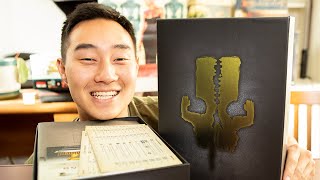
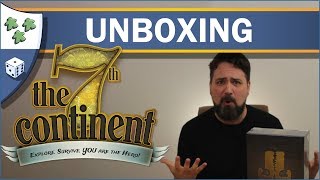
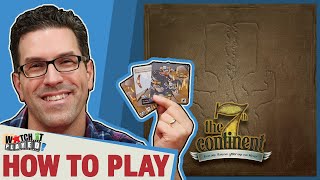
Other channels land much closer to enthusiastic. Nights Around a Table, hosted by Ryan, unboxed the game after spending more on it through crowdfunding than on any other title in the collection, and singled out the magnifying glass and hidden-marking system as something never seen in another game, alongside comparisons to the numbered card packs of Charterstone and the tile-laying of Carcassonne. Actualol's now-playing segment called the storytelling amazing and the exploration completely unlike anything else played, while still wondering whether an eighteen-to-twenty-hour scenario can sustain that feeling to the end. Meet Me At The Table's playthrough kept returning to how cool the growing map and artwork looked as new tiles were revealed. BoardGameTeacher and Watch It Played each produced straightforward rules walkthroughs rather than personal reviews, teaching setup, the action deck, and the saving system without weighing in on how the game feels to play. Publisher Serious Poulp sponsored the Watch It Played episode, which teaches the classic edition alongside the original release.
Core Mechanics That Define The 7th Continent
The Action Deck as a Shared Life Force
Every action, whether attacking, exploring, praying, climbing, fishing, or hunting, draws a set number of cards from a shared action deck, and success depends on how many of those cards show a success symbol. Actualol described the system as clever and simple precisely because it scales across the whole game: the same deck of cards resolves a fight or a search, and hunting and eating are ways to feed cards back into it rather than burn it down for good. That deck also doubles as the group's survival clock. BoardGameTeacher's walkthrough explains that once the action deck runs out, the discard pile is reshuffled and set face down, and drawing a curse card from that reshuffled pile ends the game immediately.
Numbered Decks, Tile-Laying, and Card Crafting
The map itself grows out of numbered card packs rather than a preset board. Nights Around a Table placed the structure alongside Charterstone, where packs of numbered cards are added over a campaign, and Carcassonne, where a tile-laying map builds out as it is explored, except that here the tiles are called for by specific number rather than drawn at random. Layered on top of that tile-laying is a card-crafting twist unique to this game: a magnifying glass is used to spot tiny hidden markings on cards already on the table, letting players swap in cards that reveal new artwork and augment what is already in play, a mechanic Nights Around a Table called completely new.
The 7th Continent Experience
A Slow, Immersive Unraveling
Sessions are built to be lived in rather than rushed. Meet Me At The Table's playthrough opened with character backstories read straight from the box, discovering the curse and the cast of explorers piece by piece before a single tile was placed. Actualol described genuinely not knowing what to look for as the map unfolded, calling every new numbered card an unread page and staying excited to see what was around the next corner even seven hours into a single scenario. A built-in save-and-resume system, highlighted by both BoardGameTeacher and Watch It Played, lets a session stop mid-adventure and pick back up later, which both channels frame as necessary given how long a full playthrough runs.
When the Pace Turns Against the Player
That same slow unraveling is exactly what soured the experience for Totally Tabled, who felt frustrated rather than curious while turning over new locations, and found the survival elements oppressive enough to slow the whole game down rather than add tension. The story and mystery were not compelling enough on their own to pull that channel forward, even after conceding the game might click with more plays. Actualol raised a related concern from the opposite side of the fence: with no clear structure to the scenario, comparable to something like Time Stories, it becomes an open question whether an interesting first few hours can still feel worth it eighteen hours later.
What Makes The 7th Continent Stand Out
Components Built for Discovery
Nights Around a Table dwelled on the physical presentation as much as the rules: a card hopper for bad draws, dozens of small figures and standees, and the magnifying glass used to hunt for hidden numbers on cards already on the table. Meet Me At The Table's playthrough echoed the same reaction to the game's presentation, repeatedly calling the artwork and the way the continent takes shape tile by tile really cool as it grew across the table.
A Massive, Ambitious Scope
Actualol framed the game as a beast in the best sense, a huge Kickstarter project with trays of cards representing skills, items, and an entire unexplored continent, calling it a really impressive achievement for what seemed like a first-time publisher and designer. The scenario in that playthrough was said to potentially run twenty hours, and even at seven hours in, the amount of unseen content and the amount of effort and love put into the artwork stood out as the reason to keep exploring.
Potential Drawbacks
A Serious Cost of Entry
Nights Around a Table was blunt about the price of admission, describing the base game, its sequel, and additional card packs together as the most money ever spent on a single board game. That crowdfunded structure of base game plus expansions plus card packs makes the full experience a significant investment before a single tile is ever placed.
Exploration That Can Lose Its Way
For Totally Tabled, the exploration that other channels praised became the game's biggest weakness: turning over the next location brought frustration instead of excitement, the survival systems felt oppressive rather than tense, and the mystery driving the story was not enough to compensate. Actualol's own hesitation points at the same fault line from a more forgiving angle, questioning whether a scenario that can stretch past eighteen hours has enough structure to guarantee its ending pays off the journey.
If You Enjoy The 7th Continent
Nights Around a Table drew a direct line from this game's numbered card packs to Charterstone, and from its tile-by-tile map building to Carcassonne, though noted that here the tiles are called for by number rather than drawn randomly. Actualol, weighing whether the lack of a fixed scenario structure works in its favor, compared the open-ended pacing unfavorably to the tighter structure of Time Stories.
What Reviewers Are Saying
"I love survival and I love exploration. And honestly, there's a ton of different ideas and mechanisms in the 7th Continent that I really enjoy. Lots of cool little innovations, but unfortunately, exploration just didn't work for me in this game."
— Totally Tabled
"This is another crazy thing about this game that I've never seen any other game do: this is like a magnifying glass! Because the whole game is played out in these tiles that you lay down that build out this map, and there's hidden stuff."
— Ryan, Nights Around a Table
"I would say I would recommend trying this game because it's completely new. It's completely unlike anything I've ever played and I'm having a blast with it."
— Actualol